
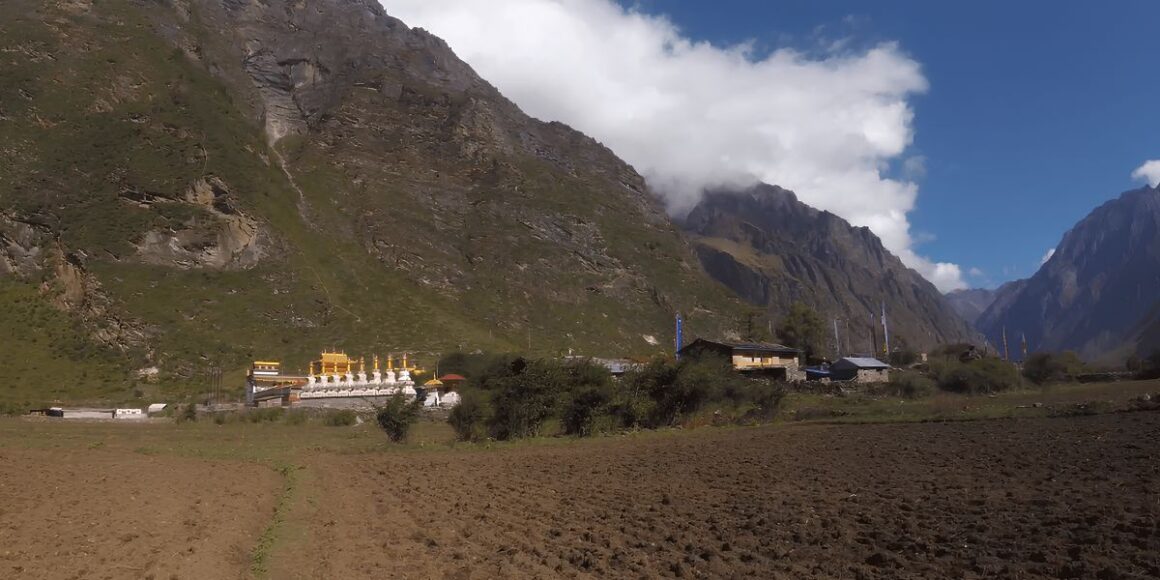
Tsum Valley
Summary: Tsum Valley sits at 28.5°N, 85.1°E in the northern Gorkha District of Gandaki Province, Nepal, tucked between the Ganesh Himal and the Tibetan border inside the Manaslu Conservation Area. This restricted valley opened to outsiders only in 2008, and its monasteries, Mu Gompa and Rachen Gompa among them, still anchor a living Buddhist culture. What follows covers the treks, permits, and season planning you need before you go.
Tsum Valley: Hidden Himalayas
Tsum Valley sits tucked between towering Himalayan peaks in the Manaslu region of Nepal, where the Tibetan border meets ancient Buddhist traditions. This restricted area, a valley located in the northern Gorkha district of Nepal, is part of the Manaslu Conservation Area. The valley lies sheltered from the outside world, having opened to outsiders only in 2008, making it one of the last hidden valleys where prayer wheels still outnumber mobile towers. Consequently, the valley remains protected from mass tourism, preserving a way of life that has stayed largely unchanged for centuries.
The sacred Tsum Valley serves as both a spiritual pilgrimage site and a challenging high-altitude trekking destination for adventurers seeking authentic Himalayan experiences. This Himalayan valley is home to ancient monasteries, stunning Ganesh Himal views, and communities practising Buddhism with a devotion that shapes every aspect of daily existence. Furthermore, understanding the geography, culture, and logistics of this region becomes essential before embarking on the journey.
This guide addresses trekkers planning their first trek to Tsum Valley, cultural travellers researching Buddhist heritage sites, and adventure seekers comparing the Tsum Valley and Manaslu routes with support and local insight from Nepal Hiking Adventure. It also covers practical details, including the trek itinerary, Manaslu Conservation Area permit requirements, village characteristics, seasonal planning, and safety considerations. In this way, you will find clear, practical answers that help you prepare properly and travel with confidence.
History and Culture of Tsum Valley
Local Communities and Traditions
The people of Tsum belong to the Tsumba ethnic group, closely related to Tibetan communities yet distinct in their customs and dialect. Tsum Valley remained isolated from mainstream Gorkha district developments until road construction reached nearby areas in the early 2000s. However, electricity arrived only in select villages around 2008, coinciding with the opening of this restricted area to trekkers.
| Aspect | Details |
| Religion | Tibetan Buddhism (Nyingma and Kagyu traditions) |
| Language | Tsumba dialect, distinct from Nepali |
| Livelihoods | Subsistence farming (barley, potatoes), yak herding |
| Social Structure | Historically polyandry, now shifting to monogamy |
| Governance | Managed by committees formed by the Manaslu Conservation authorities |
The culture of Tsum revolves around monastic life, seasonal festivals, and communal decision-making. Consequently, the most respected figures in the valley include lamas, village elders, and monastery caretakers. Moreover, religious devotion influences architecture, daily routines, and trail etiquette throughout the entire Tsum Valley.
The people of Tsum Valley are known for their deep commitment to preserving ancient Buddhist customs passed down through generations. Key cultural practices observed throughout the valley include the following:
- Circumambulation of mani walls (always clockwise)
- Strict non-violence principles (no hunting)
- Communal labour for monastery maintenance
- Preservation of ancient Buddhist texts
Monasteries and Spiritual Sites
Tsum Valley functions as a sacred Himalayan pilgrimage valley, hosting monasteries that serve as spiritual and community centres. Notably, Mu Gompa stands as the highest monastery, while Rachen Gompa houses nuns pursuing meditation studies. Moreover, these sites remained operational even during Nepal’s political upheavals, demonstrating remarkable cultural resilience.
Mu Gompa (3,700 m): The trek to Mu Gompa offers panoramic views of Ganesh Himal, Sringi Himal, and Tibetan border ranges. Additionally, the gompa hosts Losar festivals, attracting regional pilgrims.
Rachen Gompa (3,240 m): This active nunnery in upper Tsum houses approximately 80 nuns maintaining daily prayers and scriptural studies. Furthermore, retreat caves surround the monastery grounds.
Gumba Lungdang (3,200 m): Near Chhokangparo, this monastery features ancient murals and hosts seasonal ceremonies.
| Monastery | Altitude | Significance | Access Time |
| Mu Gompa | 3,700 m | Highest monastery, panoramic views | Full day from Chhokangparo |
| Rachen Gompa | 3,240 m | Active nunnery, meditation retreats | 1.5 hours from Chhokangparo |
| Gumba Lungdang | 3,200 m | Ancient murals, community hub | Adjacent to Chhokangparo |
The valley is also dotted with mani walls, chortens, and prayer flags marking territorial boundaries. Therefore, walking these paths feels like participating in ongoing spiritual geography rather than mere sightseeing.
Festivals, Customs, and Way of Life
The Tsum Valley calendar follows Buddhist lunar cycles, determining festivals, agricultural activities, and construction timing. Consequently, those who visit Tsum Valley during festivals experience deeper cultural immersion alongside busier trails.
Primary Festivals:
- Losar (Tibetan New Year): February or early March, featuring monastery dances and traditional celebrations.
- Faning (Horse Festival): Summer months, showcasing horsemanship and archery.
- Dhacyhang Festival: An autumn harvest celebration thanking deities.
Daily life in Tsum Valley follows rhythms dictated by altitude, season, and religious observance. Moreover, mornings begin with monastery bells, farmers tending terraced fields, and teahouse preparations. Nevertheless, the valley remains rich in authenticity because tourism stays secondary to subsistence activities.
Customs to Respect:
- Remove shoes before entering monasteries.
- Walk clockwise around religious structures.
- Avoid pointing feet toward altars.
- Request permission before photographing.
- Dress modestly (covered shoulders and knees).
- Refrain from public displays of affection.
The people of Tsum maintain reciprocal relationships through trade, marriage alliances, and festivals. Therefore, despite isolation, social networks extend across the Manaslu region and into the Nepal and Tibet borderlands.

Tsum Valley Trek Overview
Trek Difficulty and Suitability
The Tsum Valley trek is one of Nepal’s more accessible high-altitude journeys, yet it demands proper acclimatisation and reasonable fitness. Unlike technical climbs, this high trek requires no mountaineering skills, though Mu Gompa at 3,700 m exceeds altitudes where altitude sickness becomes a concern. Therefore, previous trekking experience helps, but beginners with good cardiovascular fitness can complete this challenging trek successfully.
| Factor | Rating | Details |
| Altitude Gain | Moderate-High | 1,400m to 3,700m over 8–10 days |
| Daily Walking | 5–7 hours | Varies by itinerary, with rest days included |
| Trail Conditions | Moderate | Well-defined paths, suspension bridges |
| Accommodation | Basic | Teahouses, shared facilities, homestay |
| Physical Demand | Moderate | Sustained uphill, altitude adaptation |
Fitness preparation should include cardiovascular training for 6–8 weeks before departure. Moreover, building leg strength through weighted pack hiking simulates actual conditions. However, the trek rewards persistence more than peak fitness.
Ideal Trekkers:
- Those comfortable with basic accommodation.
- Cultural enthusiasts willing to walk several hours daily.
- Photographers seeking uncrowded Himalayan landscapes.
- Adventurers comparing different trek options beyond standard circuits.
- Solo travellers (guides mandatory, groups form easily).
Popular Trek Routes and Duration
The Manaslu Tsum Valley trek runs 12–14 days from Kathmandu, including drive time. However, itinerary variations exist depending on whether you combine with the Manaslu Circuit trek or focus exclusively on the valley. Consequently, planning your route to Tsum Valley requires deciding between cultural immersion or extended Himalayan exploration.
Standard 12-Day Itinerary:
| Day | Route | Altitude | Duration |
| Day 1 | Kathmandu to Soti Khola | 730 m | 7–8 hour drive, trek start point |
| Day 2 | Soti Khola to Machha Khola | 870 m | 6–7 hours |
| Day 3 | Machha Khola to Jagat | 1,340 m | 6–7 hours |
| Day 4 | Jagat to Lokpa | 2,240 m | 6–7 hours. The trek diverges from Manaslu Circuit |
| Day 5 | Lokpa to Chumling | 2,386 m | 5–6 hours. Entering lower Tsum |
| Day 6 | Chumling to Chhokangparo | 3,010 m | 5–6 hours |
| Day 7 | Acclimatisation day. Trek to Mu Gompa and return | — | 7–8 hours |
| Day 8 | Chhokangparo to Nile | 3,360 m | 4–5 hours |
| Day 9 | Nile exploration: visit Rachen Gompa | — | 4–5 hours |
| Day 10 | Nile to Chumling | — | 6–7 hours descent |
| Day 11 | Chumling to Jagat | — | 6–7 hours |
| Day 12 | Jagat to Soti Khola, drive to Kathmandu | — | — |
Alternative Routes:
- Combined Manaslu Circuit and Tsum Valley trek: 18–21 days for comprehensive exploration.
- Tsum Valley extension: Add 3–4 days for side valleys and extra rest days.
- Shortened version: 9–10 days focusing on lower Tsum villages only. This base camp trek option suits those with limited vacation time but sacrifices upper Tsum access.
- For those seeking a lighter, village-focused experience, a base camp trek through the lower settlements still delivers meaningful cultural encounters without the demands of upper Tsum.
The Tsum Valley trek begins when you turn north from Jagat, as trail traffic decreases and cultural immersion intensifies. Moreover, this trek in Nepal offers a unique blend of accessibility and authenticity.
Key Highlights Along the Trail
The highlights of the trek vary by individual interest, yet certain experiences consistently impress visitors. Consequently, balancing physical effort with cultural encounters creates the most satisfying journey.
Cultural Highlights:
- Monastery visits: Mu Gompa and Rachen Gompa offer insights into active Buddhist monastic life.
- Village interactions: Chumling, Chhokangparo, and Nile preserve traditional architecture and customs.
- Festival participation: Timing your trek for Losar or Faning provides ceremony access.
Natural Highlights:
- Himalayan panoramas: views of Ganesh Himal (7,422 m), Sringi Himal (7,187 m), and the Manaslu massif.
- Wildlife spotting: Blue sheep, Himalayan tahr, Musk deer, and Himalayan monal pheasants.
- Glacial landscapes: Upper Tsum approaches alpine meadows and historical trade routes.
- River gorges: Suspension bridge crossings and waterfall viewpoints.
Photography Opportunities:
- Monastery interiors (with permission).
- Village architecture and prayer flags.
- Mountain vistas at dawn or sunset.
- Cultural portraits (always request permission first).
The trek gives you time to absorb elements gradually rather than rushing. Therefore, allowing flexibility enhances satisfaction more than rigid schedules.
Best Time and Seasons for Tsum Valley
Autumn and Spring Treks
Autumn (September–November) and spring (March–May) represent the best seasons to trek in Tsum Valley, offering stable weather and clear views. Consequently, roughly 80 percent of trekkers choose these windows, creating moderately busy trails without overwhelming crowds.
| Season | Temperature | Conditions | Best For |
| September | 12–20°C at 2,500m | Post-monsoon clarity | Early starters |
| October | 8–18°C at 2,500m | Peak season, crystal skies | Most trekkers |
| November | 5–15°C at 2,500m | Cold mornings, stunning views | Cold-tolerant hikers |
| March | 10–18°C at 2,500m | Rhododendron blooms | Flower enthusiasts |
| April | 15–22°C at 2,500m | Optimal stability | Photography |
| May | 18–25°C at 2,500m | Pre-monsoon warmth | Heat-tolerant trekkers |
Autumn brings harvest festivals, making it a culturally rich time. Moreover, days of trekking typically feature calm mornings and minimal precipitation. However, nighttime temperatures drop below freezing above 3,000 m.
Shared Advantages:
- Minimal rainfall interference.
- Stable weather patterns.
- Clear Himalayan visibility.
- Comfortable temperatures.
- Reliable teahouse operations.
Monsoon and Winter Considerations
Monsoon (June–August) and winter (December–February) present significant challenges that discourage most trekkers. However, adventurous visitors willing to accept greater risks can still access the valley during these months.
Monsoon Challenges:
- Heavy afternoon rainfall and muddy trails.
- Cloud cover obscures mountain views.
- Leeches in forested sections.
- River crossings become hazardous.
- Limited teahouse operations.
Winter Challenges:
- Severe cold (below -15°C).
- Heavy snowfall closes trails.
- Many teahouses shut down.
- Short daylight hours.
- Avalanche risks.
Consequently, choosing the right season requires understanding these limitations. Nevertheless, monsoon offers lush greenery, while winter provides solitude for experienced adventurers.
Weather Tips for Planning
Successfully timing your trek to Tsum Valley requires understanding micro-seasonal variations and altitude-dependent patterns. Therefore, proper preparation accounts for Himalayan unpredictability.
Altitude Weather Zones:
- Below 2,000 m: Subtropical, warm year-round.
- 2,000–3,000 m: Temperate, comfortable in spring and autumn.
- Above 3,000 m: Alpine, potential snow year-round.
Preparation Tips:
- Check 10-day forecasts but expect daily variations.
- Pack layering systems rather than single heavy jackets.
- Bring quality rain gear even during dry seasons.
- Include sun protection for high-altitude UV.
- Prepare for 20–25°C temperature swings.
- Monitor local guide advice on regional patterns.
The valley trek can be done year-round technically, but optimal timing balances weather, crowds, and cultural events. Consequently, flexibility in travel dates helps optimise all three factors.
Permits, Regulations, and Costs
Restricted Area and Manaslu Conservation Permit
Tsum Valley operates under special restricted area regulations requiring permits beyond standard documentation. Consequently, independent trekking remains prohibited. The valley was declared restricted to preserve cultural integrity and control tourism impact within the Manaslu Conservation Area.
Required Permits:
| Permit Type | Cost (USD) | Validity | Authority |
| Manaslu Conservation Area Permit | $30 | Trek duration | Nepal Tourism Board |
| Restricted Area Permit | $35/week (Sep–Nov), $25/week (Dec–Aug) | 7 days max | Immigration Department |
| TIMS Card | $30 | Trek duration | TAAN/ |
The Manaslu Conservation Area permit supports environmental protection and community development. Moreover, fees fund the Manaslu Conservation Area project, employing local staff and operating checkpoints for the Manaslu Conservation entry points.
Note: USD 7 per person per day for stays beyond one week.
Application Process:
- Contact a registered trekking agency (mandatory).
- Provide passport copies and photos.
- The agency submits to the Immigration Department.
- Processing takes 2–3 business days.
- Collect permits before trailhead departure.
- Present at checkpoints: Jagat, Lokpa, and Chumling.
Consequently, you cannot trek without a registered guide, even with extensive experience. Furthermore, regulations require a minimum of two persons per group.

TIMS Card and Trekking Rules
The TIMS card provides emergency contact information for search and rescue operations. Therefore, this system has improved safety outcomes across Nepal’s trekking regions.
Trekking Rules:
- Mandatory guide: Licensed guides from registered agencies only.
- Group minimums: At least two trekkers per group.
- Permit validity: Seven days from entry. Extensions require a return to Kathmandu.
- Route restrictions: Follow approved trekking itinerary paths only.
- Cultural respect: Photography restrictions at monasteries.
- Environmental: No littering. Designated toilets only.
- Wildlife protection: No hunting or disturbing wildlife.
Violations can result in permit cancellations or fines. However, enforcement focuses on education rather than punishment.
Permit Costs and Guide Requirements
Total trek cost varies depending on trek package inclusions, group size, and season. Consequently, budget trekkers can complete the journey for $1200-1800, while premium services reach $1,800–$3000.
Cost Breakdown (12-Day Trek):
| Category | Budget (USD) | Details |
| Permits | $210 | Fixed government fees |
| Guide fees | $30-45/day | Experienced trek leader |
| Porter fees | $25-35/day | Carries 20–25 kg |
| Accommodation | $5–$10/night | Teahouse rooms |
| Meals | $30-50/day | Three meals plus snacks |
| Transportation | $200-300 return | Kathmandu to Soti Khola |
| Insurance | Depend on insurance company | Emergency coordination |
| Miscellaneous | $200-400 | Tips, extras |
Total: $1,000–$1,500 through a reputable agency, excluding international flights.
The following items are included in this trek package: all permits and government fees, a licensed guide for the entire duration, teahouse accommodation, three daily meals, guide and porter insurance and meals, and emergency support coordination.
Additional Costs:
- International airfare.
- Nepal visa ($30–$50).
- Kathmandu hotels.
- Travel insurance.
- Equipment rental.
- Beverages and snacks.
- Hot showers, charging, and WiFi.
- Tips (customary).
Selecting agencies based solely on price often means accepting less experienced guides. Therefore, the decision to trek with us should prioritise safety and ethical treatment over minor price differences.
Villages and Sights in Tsum Valley
Chumling, Chhokangparo, and Nile
The three primary villages each offer distinct characteristics representing traditional settlement patterns. Consequently, spending time in all three provides a comprehensive understanding of how altitude and trade routes shape community life.
Chumling (2,386m)
The valley’s largest settlement sits where the trek diverges into upper and lower branches, making it a natural rest stop. Moreover, Chumling functions as the administrative centre, hosting government offices and the most teahouses in the valley.
| Aspect | Details |
| Population | Approximately 300 permanent residents |
| Altitude | 2,386 m (comfortable for most) |
| Teahouses | 8–10 operating lodges |
| Features | Longest mani wall, basic shops, active monastery |
Key Characteristics:
- Stone houses with slate roofs (traditional construction).
- Terraced barley and buckwheat fields.
- A school serving surrounding hamlets.
- Trail junction to upper Tsum Valley and lower villages.
Chhokangparo (3,010m)
Gateway to upper Tsum, Chhokangparo serves as the base for Mu Gompa day hikes. Furthermore, this village in the Tsum Valley maintains strong monastic connections and traditional architecture.
- Altitude: 3,010 m (acclimatisation important).
- Teahouses: 5–7 family-run lodges.
- Monastery Access: Gumba Lungdang (15 minutes), Mu Gompa (4–5 hours).
- Cultural Significance: Traditional architecture preservation.
- Scenery: Views of Ganesh Himal and prayer flag forests.
The valley narrows dramatically at Chhokangparo, creating cliff-side settings. Additionally, village elders here are among the most respected people in the valley, making cultural exchanges particularly meaningful.
Nile (3,360m)
The highest permanent settlement represents the upper limit of year-round habitation. Consequently, this secluded Tsum hamlet sees fewer trekkers despite stunning high-altitude scenery.
- Population: 50–70 residents in summer. Many relocate in winter.
- Altitude: 3,360 m (acclimatisation essential).
- Teahouses: 3–4 basic lodges with limited facilities.
- Access: Rachen Gompa (1.5 hours), Tibetan border viewpoints.
Village Highlights:
- Traditional polyandry is occasionally practised.
- Organic high-altitude farming (buckwheat, potatoes).
- Yak herding as the primary livelihood.
- Ancient stone granaries.
- Minimal infrastructure (inconsistent electricity).
The trek from Lokpa to Nile via Chumling and Chhokangparo typically takes 4–5 days, allowing proper altitude adjustment. Moreover, each village offers unique perspectives on how people in Tsum Valley live and have adapted over centuries.
Mu Gompa and Rachen Gompa
These monasteries represent the spiritual heart of the valley, functioning as active religious institutions rather than tourist attractions. Consequently, visits require cultural sensitivity and respectful behaviour.
Mu Gompa (3,700m)
The highest monastery sits dramatically against cliffs, serving as the symbolic endpoint for many journeys. Furthermore, Mu Gompa hosts 30–40 monks maintaining daily prayers.
Key Features:
- Altitude: 3,700m. The highest point of the Manaslu trek routes.
- Access: 4–5 hour return from Chhokangparo.
- Architecture: Traditional Tibetan design with a prayer wheel corridor.
- Significance: Sacred texts, annual festivals, and meditation retreats.
- Views: Panoramic Ganesh Himal, Sringi Himal, and Tibetan border ranges.
Visitor Guidelines:
- Remove shoes before entering halls.
- Photography restrictions apply inside (ask permission).
- Donations are welcome (50–100 rupees is appropriate).
- Avoid active prayer ceremonies unless invited.
- Clockwise circumambulation is required.
- Dress modestly (long trousers, covered shoulders).
The trek to Mu Gompa typically involves an early morning departure, reaching by midday for exploration, then returning before dark. Moreover, altitude can affect some trekkers, making the return more challenging despite the downhill direction.
Rachen Gompa (3,240m)
This active nunnery provides rare insights into female monastic life, where nuns pursue rigorous spiritual training.
| Aspect | Details |
| Residents | 70–90 nuns (young novices to elderly practitioners) |
| Schedule | Pre-dawn prayers, studies, meditation, community work |
| Facilities | Dormitories, prayer halls, library, retreat caves |
| Visitor Access | 9 AM–5 PM (respect prayer times) |
| Cultural Role | Buddhist education for young women |
Rachen Gompa demonstrates how the valley is rich in maintaining living Buddhist traditions. Additionally, conversations with nuns reveal perspectives on monastic life rarely discussed in typical contexts.
Photography Etiquette:
- Always request permission for photographs.
- Interior photography may require a donation or may be prohibited.
- Respect restricted area signs.
- Avoid flash near ancient murals.
- Group photos are acceptable in courtyards only.
- Understand that some individuals decline for personal or religious reasons.
These sacred sites demand recognition as active spiritual spaces. Therefore, enjoy the trek by practising quiet observation, respectful circumambulation, and appropriate donations rather than rushing through.

Scenic Spots and Natural Attractions
Beyond cultural sites, Tsum Valley offers natural beauty from dramatic gorges to alpine meadows. Consequently, maintaining awareness enhances your chances of capturing memorable landscapes and wildlife.
Notable Locations:
- Shiar Khola Gorge: A deep canyon with waterfalls, suspension bridges, and forest wildlife.
- Alpine Meadows: High-altitude grazing lands near Nile, with wildflowers in spring.
- Prayer Flag Viewpoints: Strategic hilltops offering Ganesh Himal panoramas.
- Glacial Streams: Crystal-clear mountain water from snowfields.
- Old Trade Routes: Remnants of Nepal and Tibet commerce paths.
Wildlife Spotting
The Manaslu Conservation Area protects diverse species, though sightings require patience.
Common Sightings:
- Himalayan langur monkeys (below 2,500 m).
- Pheasant species, including the Himalayan monal.
- Lammergeiers and golden eagles.
- Pika in rocky areas (above 3,000 m).
Rare Encounters:
- Blue sheep on cliff faces.
- Himalayan tahr in rocky terrain.
- Snow leopard (extremely rare). Mostly indirect evidence.
- Red panda in forested areas (very rare).
The valley is also home to medicinal plants and alpine flowers harvested sustainably under conservation authorities. Therefore, responsible trekking and leave-no-trace principles support ongoing conservation efforts.
Accommodation, Food, and Services
Teahouses and Homestays
Tsum Valley accommodation consists of basic teahouses with simple meals and minimal amenities. Consequently, managing expectations prevents disappointment and allows genuine appreciation of authentic hospitality.
| Village | Lodges | Room Type | Facilities | Heating |
| Chumling | 8–10 | Shared or private | Shared toilets, some hot showers | Wood stove dining |
| Chhokangparo | 5–7 | Mostly shared | Basic toilets, limited hot water | Wood or yak dung stoves |
| Nile | 3–4 | Shared only | Pit toilets, no showers | Limited heating |
Standard Features:
- Rooms: Twin beds, thin mattresses, shared blankets. Bring a sleeping bag liner.
- Bathrooms: Shared squat toilets. Cleanliness varies.
- Dining: Communal rooms with wood stoves, which serve as evening gathering spots.
- Electricity: Limited hours (6–9 PM). Solar power available in some lodges.
- Hot Water: Bucket showers ($3–$5) or washing water (50–100 rupees).
Homestay Opportunities:
Some villages offer genuine homestays that provide deeper cultural immersion. However, comfort levels decrease and language barriers increase.
- Authentic family life insights.
- Traditional meal preparation observation.
- Stronger connections with the people of Tsum.
- Direct economic benefits to families.
Nevertheless, homestay conditions are very basic. Floor mattresses are common, facilities are shared, privacy is limited, and dietary restrictions are difficult to accommodate.
Local Cuisine and Water Options
Food revolves around staples adapted to high-altitude conditions and limited transportation. Consequently, menus lack variety but offer nutritious meals that fuel daily walking.
Standard Menu Items:
- Dal bhat: Lentil soup, rice, and vegetable curry (unlimited refills).
- Thukpa: Tibetan noodle soup with vegetables.
- Momos: Steamed dumplings (vegetables, cheese, or yak meat).
- Tibetan bread: Fried flatbread for breakfast.
- Sherpa stew: Potato and vegetable stew.
- Porridge: Oatmeal or cornmeal breakfast.
- Eggs: Boiled, fried, or scrambled (availability varies).
Beverage Options:
- Black tea (chiya): Ubiquitous and safe.
- Milk tea: Available, but quality varies.
- Instant coffee: Generally poor quality.
- Hot lemon and honey: Good for altitude.
- Bottled drinks: Expensive and environmentally problematic.
Water Purification (Critical):
Tap water remains unsafe throughout the trek. You will need to purchase boiled water ($1–$2 per litre) or use personal purification.
- Tablets: Chlorine or iodine-based. Lightweight but leaves a slight taste.
- UV Purifiers: SteriPEN. Effective but requires batteries.
- Filter Systems: Sawyer or LifeStraw. Reliable and battery-free.
- Boiled Water: Purchase from teahouses. Supports lodges and reduces plastic use.
Food Safety Tips:
- Choose freshly cooked, hot meals.
- Avoid raw vegetables at higher altitudes.
- Peel fruits yourself.
- Stick with purified water exclusively.
- Carry emergency snacks for long days.
Connectivity and Essential Services
Tsum Valley remains largely disconnected from modern networks, creating both challenges and digital detox opportunities. Consequently, planning ahead prevents frustration.
Mobile Coverage:
- Chumling: Nepal Telecom (intermittent), Ncell (minimal).
- Chhokangparo: Very limited NTC only.
- Nile and higher: No coverage.
- Throughout: Reception is unreliable where it theoretically exists.
Internet and WiFi:
- Chumling teahouses offer WiFi (400–500 rupees per hour, slow speeds).
- Higher villages typically have no internet access.
- Expect connection drops and an inability to send large files.
- Consider purchasing a local SIM card in Kathmandu (NTC recommended).
Electricity and Charging:
| Service | Chumling | Chhokangparo | Nile |
| Power Hours | 6–10 PM | 6–9 PM | 2–3 hours (evening) |
| Charging Fees | 200–300 rupees | 300–400 rupees | 400–500 rupees |
| Reliability | Moderate | Low | Very low |
Power Management:
- Bring multiple fully charged power banks.
- Use solar chargers during sunny days.
- Prioritise essential devices.
- Turn off unnecessary phone functions.
- Share chargers with fellow trekkers to reduce fees.
ATMs and Money:
No ATMs exist anywhere in Tsum Valley. The final reliable ATM is in Kathmandu.
- Withdraw sufficient rupees in Kathmandu ($20-30 daily minimum).
- Budget for meals, drinks, charging, shower fees, and tips.
- Keep small denominations (100 and 500 rupee notes).
- Carry emergency extra cash (20–30 percent above your estimate).
Medical Facilities:
Basic health posts in Chumling and Chhokangparo have limited supplies. However, serious issues require evacuation to Kathmandu, making comprehensive insurance absolutely essential.


Safety, Health, and Altitude Tips
Altitude Sickness Awareness
Altitude sickness represents the primary health risk, occurring when bodies fail to acclimatise properly. Consequently, understanding symptoms and prevention stops mild discomfort from escalating into life-threatening conditions. This is particularly important at high altitude, where the body’s oxygen intake drops significantly.
Altitude Effects:
- Below 2,500 m: Minimal effects.
- 2,500–3,500 m: Mild symptoms possible (headaches, breathlessness).
- Above 3,500 m: Significant AMS risk without proper acclimatisation.
AMS Symptoms:
Mild:
- Headache (the most common first sign).
- Nausea or appetite loss.
- Dizziness or lightheadedness.
- Fatigue beyond normal exhaustion.
- Difficulty sleeping.
Serious (requires immediate descent):
- Severe, persistent headache unrelieved by painkillers.
- Vomiting or inability to keep food and water down.
- Confusion, disorientation, or difficulty walking.
- Chest tightness or breathing difficulty at rest.
- Blue lips or fingernails.
Prevention Strategies:
- Gradual ascent: Follow the established itinerary with built-in acclimatisation days.
- Hydration: Drink 3–4 litres daily.
- Nutrition: Eat even without appetite.
- Rest days: Honour planned acclimatisation periods.
- Communication: Report symptoms honestly to guides.
- Avoid alcohol and sleeping pills: as they can impede respiration.
- Diamox: Consult a doctor beforehand (125 mg twice daily).
Golden Rule: Never ascend while experiencing AMS symptoms. Moreover, if symptoms worsen at the same altitude, descend immediately.
Emergency Support and Medical Tips
Medical infrastructure remains minimal, placing the responsibility on trekkers to prepare thoroughly and maintain insurance coverage.
Personal First Aid Kit:
- Altitude medication (Diamox, ibuprofen, and paracetamol).
- Antibiotics for bacterial infections.
- Anti-diarrhoeal medication (Imodium and rehydration salts).
- Blister treatment (moleskin, tape, antiseptic).
- Wound care (bandages, gauze, antiseptic wipes).
- Personal prescriptions (carry double the usual amount).
Pre-Trek Medical Consultation Recommended For:
- People over 60 years of age.
- Those who have breathing problems, high blood pressure, or cardiac diseases.
- Anyone with previous altitude sickness experiences.
- Individuals with chronic conditions requiring medication.
Insurance Requirements:
Comprehensive travel insurance must include medical treatment ($100,000 minimum), helicopter rescue (up to 6,000 m), repatriation if necessary, trek cancellation coverage, and personal liability.
Evacuation Procedures:
- The guide assesses severity and decides on descent.
- If a helicopter is required, the guide contacts the agency.
- The agency coordinates with the helicopter company and insurer.
- Weather permitting, the helicopter arrives within 4–8 hours.
- The patient is flown to Kathmandu hospitals.
Potential Delays:
- Weather can prevent flying for several days.
- Night rescues are impossible (no landing lights).
- Clouds, fog, and winds ground helicopters.
- Monsoon creates extended delays.
Therefore, choosing the best season to trek also considers emergency response capabilities.
Trekking Safely with Guides
The mandatory guide requirement significantly improves safety outcomes. Consequently, viewing guides as safety partners transforms the experience from solitary endurance into a supported adventure.
How Guides Enhance Safety:
Local Knowledge:
- Trail condition updates from recent travellers.
- Weather pattern recognition for the Manaslu region.
- Alternative routes if landslides block trails.
- Cultural mediation prevents problems before they arise.
Medical Expertise:
- First aid certification.
- Altitude sickness recognition training.
- Serious symptom identification.
- Basic treatment capabilities.
Navigation Security:
- Prevention of wrong turns.
- Route-finding in poor visibility.
- Bridge crossing assistance.
- Awareness of unstable terrain.
Communication:
- Translation with locals.
- Custom explanation and etiquette guidance.
- Emergency communication support.
Maximising Guide Relationships:
- Communicate openly about fitness concerns.
- Trust their judgement on rest days and route changes.
- Ask questions about culture and the environment.
- Respect their expertise, even when it contradicts expectations.
Your trek leader balances satisfaction with safety, sometimes making unpopular decisions that prevent serious problems. Moreover, guides carry legal responsibility for client welfare.

Packing and Preparation Tips
Trekking Gear Essentials
Essentials for trekking include well-fitted trekking boots, layered insulated clothing, a weatherproof down jacket, a cold-rated sleeping bag, supportive trekking poles, a balanced backpack, and a basic first aid kit, all chosen to manage weight without compromising safety at altitude.
Clothing Layers:
| Layer Type | Items | Purpose |
| Base Layers | Merino wool tops and bottoms (2–3 sets) | Moisture wicking, warmth |
| Insulation | Fleece jacket, down jacket, insulated trousers | Warmth at altitude |
| Outer Shell | Waterproof jacket and trousers | Weather protection |
| Trekking Clothes | Quick-dry shirts, convertible trousers (2–3) | Daily comfort |
| Accessories | Warm hat, sun hat, gloves, buff | Head and hand protection |
Footwear:
- Trekking boots: well broken-in, waterproof, with ankle support. This is the single most critical item.
- Camp shoes: Lightweight sandals or trainers for evenings.
- Socks: Merino wool (4–5 pairs) plus liner socks.
Essential Equipment:
- Sleeping bag: Rated to -10°C minimum.
- Sleeping bag liner: Silk or synthetic, for warmth and hygiene.
- Headlamp: With spare batteries.
- Trekking poles: Reduce knee strain.
- Daypack (30–40 litres): For daily essentials.
- Duffel bag (60–80 litres): Porter-carried main gear.
Technical Items:
- Water purification system.
- Sunglasses (Category 4 for UV protection).
- Sunscreen (SPF 50 or above, plus lip balm).
- Personal medications and first aid supplies.
- Power bank(s) for charging.
- Quick-dry towel.
Documents:
- Passport with Nepal visa.
- Permit copies (physical and digital).
- Insurance documents.
- Sufficient Nepali rupees.
- Credit card for emergencies.
Physical Preparation and Training
The trek demands physical preparation and training like cardiovascular fitness, leg strength, and mental stamina. Consequently, investing 8–12 weeks in structured training produces a significantly better experience on the trail.
Cardiovascular Base (4–6 weeks):
- 3–4 weekly sessions (running, cycling, or swimming).
- Increase duration from 30 to 60 or more minutes.
- Include interval work.
- Monitor heart rate (60–75 percent of maximum).
Hiking Conditioning (6–8 weeks):
- Weekly long hikes with increasing elevation.
- Carry a weighted pack (build from 5 kg to 8–10 kg).
- Include downhill sections for knee strengthening.
- Practise on varied terrain.
Strength Training (throughout):
- Leg exercises: squats, lunges, step-ups, and calf raises (2–3 times weekly).
- Core stability: planks, bridges (2–3 times weekly).
- Upper body: light work for pack carrying.
Flexibility:
- Daily stretching (calves, hamstrings, quadriceps, hip flexors).
- Yoga or Pilates weekly.
- Address existing injuries before departure.
Mental Preparation:
- Research realistic day-by-day expectations.
- Practise patience and flexibility.
- Prepare yourself for basic facilities.
- Set realistic goals focused on experience rather than achievement.
Physical preparation transforms a challenging trek into an enjoyable adventure. Moreover, arriving fit means appreciating views instead of focusing on breathing difficulties.
Budgeting and Practical Advice
Realistic budgeting prevents mid-trek stress and enables appropriate tipping. Consequently, careful planning benefits both your experience and the local economy.
Budget Breakdown (12-Day Trek):
| Category | Cost (USD) | Notes |
| Pre-trek (Kathmandu) | $200–$400 | Hotels, meals, gear, permits |
| Trek package | $1200-2000 | Permits, guide, accommodation, meals |
| Extra expenses | $150–$250 | Showers, charging, drinks, snacks |
| Tips | $100–$150 | Guides ($10–$15/day), porters ($8–$10/day) |
| Emergency buffer | $200–$300 | Delays, extra nights, medical needs |
| Insurance | $150-500 | Helicopter evacuation coverage |
| TOTAL | $2450-4100 | Excluding international flights |
Money-Saving Strategies:
- Join group departures (shares guide costs).
- Trek during shoulder seasons.
- Bring your own sleeping bag and jacket.
- Limit hot showers and charging.
- Choose all-inclusive meal packages.
Premium Upgrades:
- Private guide and porter.
- Higher-quality teahouses.
- Extra Kathmandu rest day.
- Additional porter for a lighter daypack.
Tipping Guidelines:
- Guide: $30-50 per day ($360-600 total).
- Porter: $25-40 per day ($300-480 total).
- Assistant guide: $30-50 per day.
Tips are given at the conclusion of the trek in Nepali rupees, often in an envelope with a thank-you note. However, exceptional service warrants higher amounts.
Money Management:
- Divide cash between multiple locations.
- Keep some US dollars as emergency backup.
- Record serial numbers of large bills.
- Bring a calculator for conversions.
- Start each day with small denominations.
The trek cost reflects value in safety, cultural access, and environmental protection. Therefore, fair pricing and appropriate tipping ensure sustainability in a region where tourism benefits local communities.
Tsum Valley: Final Insights
Tsum Valley represents far more than a trekking route through Nepal’s Manaslu region. It offers a journey into living Buddhist culture, where ancient monasteries still anchor daily life and the Tibetan border peaks remind you of geographical and cultural connections spanning millennia. The sacred valley designation reflects genuine spiritual significance that respected figures in the valley maintain through devotion, ritual, and community commitment to preserving traditions even as modernisation reaches surrounding areas. Therefore, approaching this trek with cultural humility and environmental consciousness elevates it from a physical challenge into a meaningful cross-cultural encounter.
The logistics, permits, acclimatisation requirements, and physical demands create genuine adventure rather than commercialised tourism. Moreover, mandatory guides, restricted area regulations, and basic infrastructure ensure that Tsum Valley has remained relatively untouched compared to Nepal’s more famous trekking circuits. Consequently, those willing to accept simple accommodation, limited connectivity, and altitude challenges gain access to communities, landscapes, and spiritual sites that reward patience, respect, and openness.
Your Tsum Valley trek success depends less on peak fitness or expensive gear than on realistic preparation, cultural sensitivity, and flexibility when weather, health, or circumstances require adaptation. The entire Tsum Valley awaits those ready to walk slowly, observe carefully, and appreciate that the best trek gives experiences measured not in kilometres covered but in moments of connection. With mountain landscapes, monastic communities, and perhaps yourself discovered anew through sustained physical effort in extraordinary settings, the journey stays with you long after the trail ends.
Plan your journey with Nepal Hiking Adventure and contact us for expert guidance, local insight, and personalised support for your Tsum Valley trek.

Tsum Valley: FAQs
Can Beginners Take the Tsum Valley Trek?
The trek suits moderately fit beginners willing to train and accept a gradual pace. The acclimatisation schedule and mandatory guides make it manageable even for those without prior high-altitude trekking experience.
Do I Need a Guide or Porter?
Yes, a licensed guide is legally required due to the restricted area status, so independent trekking is not possible. Porters are optional but recommended, especially if you carry heavy camera equipment or extra gear.
How Much Does the Trek Typically Cost?
The total cost falls between $1,500 and $2,500 per person, covering permits, guide fees, accommodation, and logistics. Joining group departures and travelling during shoulder seasons can bring costs toward the lower end.
Can Solo Trekkers Go?
Solo travellers can complete the trek by joining an organised group with a licensed guide through registered trek agencies. Walking alone is not permitted, but shared group departures let individuals meet minimum group requirements while keeping costs down.
How to Choose the Right Itinerary?
The standard 12–14 day itinerary works best for most first-time visitors, balancing acclimatisation, cultural site access, and schedule flexibility. Those with more time can opt for extended 18–21 day routes combining the Manaslu Circuit and Tsum Valley for a fuller experience.
What Makes This Trek Different from the Manaslu Circuit?
The Tsum Valley Trek is more focused on Buddhist monasteries, village life, and cultural experiences than the Manaslu Circuit Trek. The Manaslu Circuit crosses Larkya La Pass at 5,160m, while combining both routes offers cultural depth, high-altitude scenery, and a longer mountain journey. Your choice depends on trekking duration, altitude comfort, and whether you prefer cultural experiences or greater physical challenges.


Our History in Service Excellence


