



Tilicho Lake Trek
 (79 reviews in Google)
The Tilicho Lake Trek is a remarkable journey to one of the most iconic destinations in Nepal, Tilicho Lake. Tilicho Lake is a lake, recognized as the highest lake in the world at an altitude of 4,919 meters. This trek takes you into the heart of the Annapurna Sanctuary, showcasing awe-inspiring landscapes with challenging adventure. Thus, making it a dream for trekkers and nature lovers.
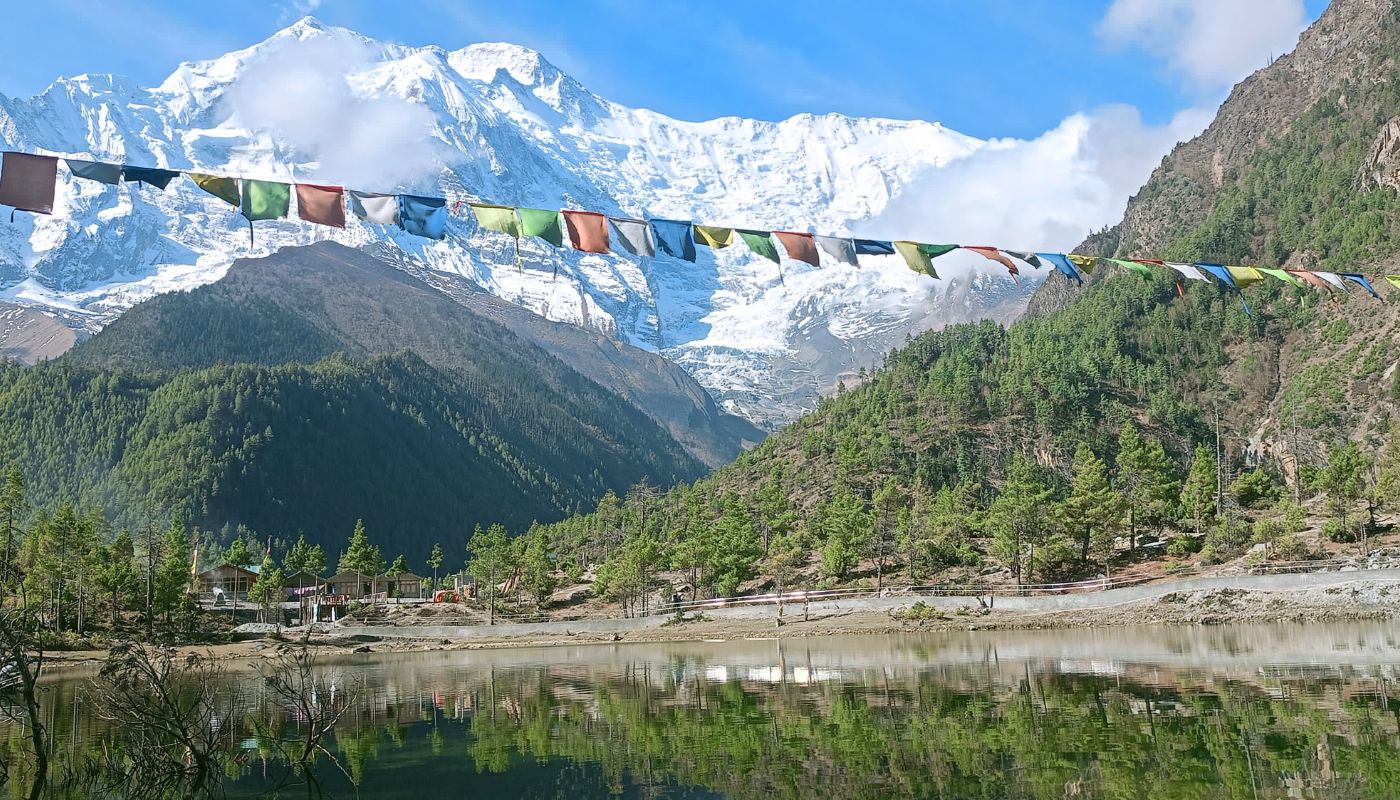
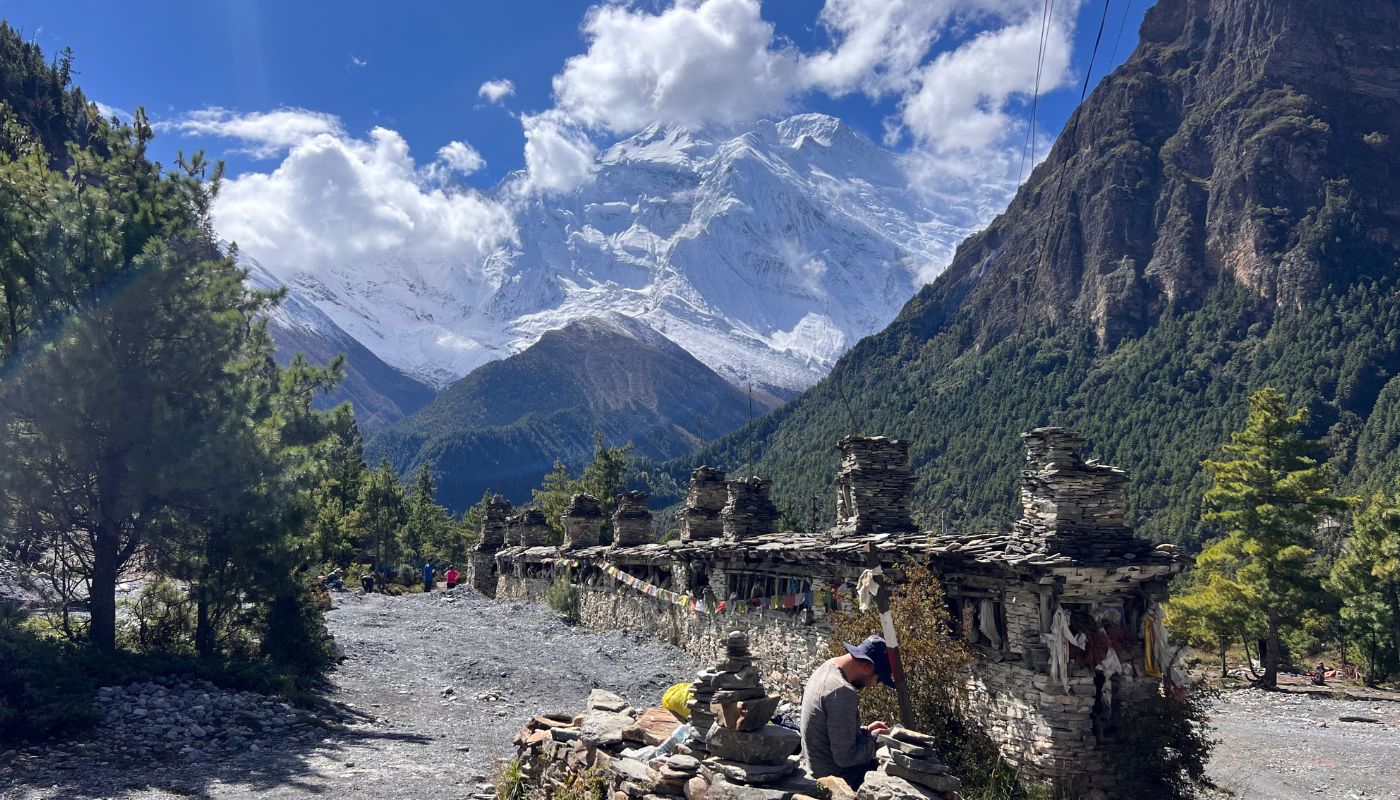
The trek typically begins in Dharapani or Chame. Then, it leads you through a tapestry of diverse landscapes as you pass through lush green forests, picturesque waterfalls, and terraced fields before entering the rugged, alpine terrain surrounded by towering peaks like Annapurna II, Gangapurna, and Tilicho Peak. As you ascend, the scenery keeps changing with every step, which makes it more exciting and rewarding. Beyond its natural beauty, this Tilicho Base Camp Lake Trek offers a window into Nepal’s rich culture. You will walk through traditional villages inhabited by Gurung, Thakali, and Manangi communities. These ethnic groups are famous for their warm hospitality, local foods, and old traditions. Moreover, it is a journey rich in spirituality with colorful prayer flags, ancient monasteries, and a serene atmosphere that gives a peaceful spiritual experience.
Furthermore…
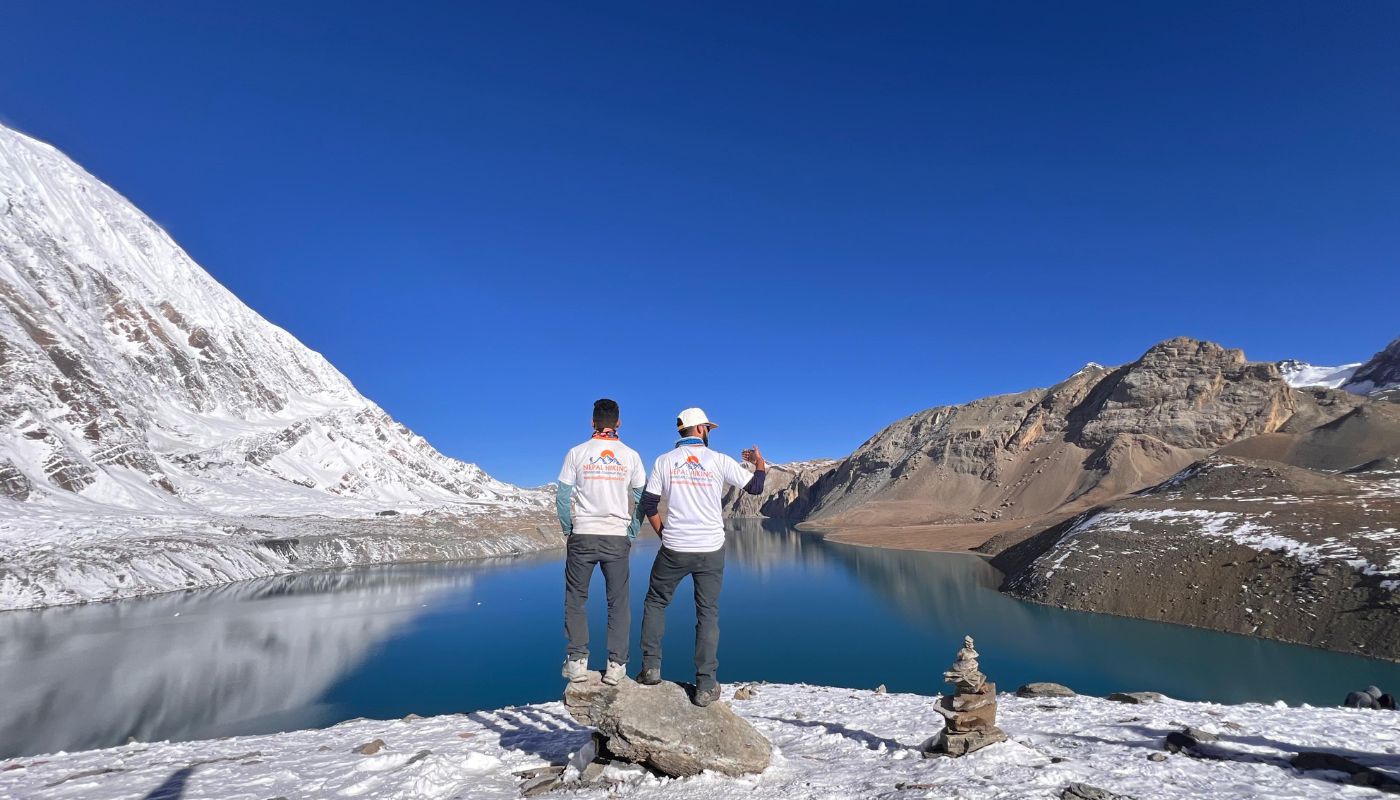
When you finally reach Tilicho Lake, the sight is nothing short of magical. The turquoise waters framed by snow-covered peaks create a tranquil and otherworldly scene. Whether you visit in summer when the lake glistens under the sun or in winter when it freezes over, the experience is unforgettable.
Tilicho Lake trekking can also be combined with the Annapurna Circuit Short Trek, as it offers an opportunity to hike the famed Thorong La Pass. While the trek has challenges such as high altitude and steep trails, the rewards are immense. Tilicho Lake Trek is more than just a hike; it is a path to self-discovery, a dive into rich cultural traditions, and an encounter with the breathtaking natural wonders of the Annapurna Region.
Trip Highlights of the Tilicho Lake Trek
- Trek to Tilicho Lake (4,919m), the highest lake in the world, surrounded by snow-capped peaks.
- Experience the dramatic landscapes of the Annapurna Sanctuary, from lush forests to arid alpine deserts.
- Enjoy breathtaking mountain views of Annapurna II, Annapurna III, Gangapurna, Lamjung Himal, and Tilicho Peak.
- Start your journey from Dharapani and Chame, following the scenic Marsyangdi River valley.
- Walk through traditional Gurung, Thakali, and Manangi villages, experiencing their warm hospitality and culture.
- Visit ancient monasteries in Braga and Ngawal, and witness colorful Buddhist prayer flags fluttering in the wind.
- Explore Manang (3,540m), one of the most beautiful mountain towns in Nepal with a unique Tibetan influence.
- Trek through peaceful trails filled with pine forests, waterfalls, and terraced farmlands.
- Stay overnight at cozy mountain lodges, offering comfort, warm meals, and scenic sunrise views.
- Reach the serene Tilicho Base Camp (4,150m) before making the final ascent to the lake.
- Witness the turquoise waters of Tilicho Lake, reflecting the mighty peaks in a magical, mirror-like view.
- Encounter yaks grazing, rivers glistening, and the changing beauty of high-altitude landscapes.
- Capture stunning photographs of Himalayan panoramas and remote villages.
- Ideal blend of adventure, culture, and spirituality in the heart of the Annapurna region.
- Optional connection to the Annapurna Circuit Trek via the Thorong La Pass for extended adventure.
Drive from Kathmandu (1,400 m) to Dharapani (1960 m)
The journey to Dharapani begins with an early morning drive from Kathmandu, taking around 8-9 hours. Leaving the city behind, the landscape shifts dramatically. Lush valleys unfold, terraced fields climb the hillsides, and the road twists and turns through the mountains.
The Marsyangdi River accompanies you with breathtaking views of nature. As you climb, the road gets rougher and bumpier, adding a touch of excitement to the journey. Dharapani, a charming village influenced by Tibetan culture, greets you with its warm hospitality and serene mountain ambiance. After the drive, rest at Dharapani and prepare for the trek ahead.
 Accomodation: Lodge
 Duration: 8-9 hours drive
 Meal: Lunch
 Distance: Around 140km (drive)
Trek from Dharapani (1960 m) to Chame (2670 m)
The trek from Dharapani to Chame starts with a steady climb through dense pine and rhododendron forests, accompanied by the soothing sound of flowing rivers. The trail winds through charming villages like Bagarchhap and Timang, a beautiful village with traditional Tibetan-style houses and fluttering prayer flags adding a touch of cultural charm.
As you ascend, the views become increasingly stunning, with Annapurna II and Lamjung Himal towering in the distance. The journey to Chame gets more exciting as you cross suspension bridges over rushing rivers, and the surrounding visuals constantly change, from lush greenery to rugged terrain.
Chame, the district headquarters of Manang, awaits with its welcoming tea houses and natural hot springs, perfect for relaxing after a day of trekking. Hence, an ideal village to lie down with mountain serenity.

Accomodation: Lodge
Duration: 5-6 hours scenic trek
Meal: B.L.D
 Ascent: +710m
Distance: Around 12km
Ascent: +710m
Distance: Around 12km
Trek from Chame (2670 m) to Pisang (3200 m)
On Day 3, the trek from Chame (2,670 m) to Pisang (3,200 m) offers stunning views and a variety of landscapes. The trail begins with a gentle climb through pine forests and passes through traditional Tibetan villages and monasteries. As you ascend, the lush greenery gradually gives way to more barren, rocky terrain, providing panoramic views of Annapurna II (7,937 m) and other surrounding peaks.
The elevation gain offers a unique experience; you will encounter yaks grazing as you enter the alpine landscapes. Pisang, situated at 3,200 meters, is divided into Lower and Upper Pisang, with Upper Pisang offering the most breathtaking views of the Annapurna range. It provides a peaceful and traditional atmosphere, which makes it a perfect place to rest after a rewarding day of trekking.

Accomodation: Lodge
Duration: 5-6 hours trek
Meal: B.L.D
Ascent: +530m
Distance: Around 10km
Trek from Pisang (3200 m) to Manang (3540 m) via Ngawal
On Day 4, you’ll trek from Pisang (3,200 m) to Manang (3,540 m), a 6-7 hour journey through diverse landscapes. The trail gradually ascends, offering stunning views of the Annapurna range, including Annapurna III and Gangapurna. As you move higher, the lush vegetation gives way to a more arid, desert-like environment, typical of the Manang Valley.
You’ll pass through villages like Hongde, Ngawal and Braga, where you can explore traditional Tibetan architecture and experience local culture. Ngawal is a charming village with traditional stone houses and small monasteries, providing a peaceful glimpse of local life. In Braga, the ancient monastery is a peaceful stop, with panoramic views of the surrounding mountains.
The altitude gain becomes more noticeable as you approach Manang. So it’s important to take your time and stay hydrated. At 3,540 meters, Manang is the largest settlement in the area, offering teahouses, shops, and even a small hospital. The village’s calm and welcoming atmosphere is a perfect spot to acclimatize before continuing the trek.

Accomodation: Lodge
Duration: 6-7 hours trek
Meal: B.L.D
Ascent: +340 m
Distance: Around 12km
Trek from Manang (3540 m) to Khangsar (3740 m)
On Day 5, you’ll trek from Manang (3,540 m) to Khangsar (3,740 m) in about 4-5 hours. The trail gradually ascends through a rocky and barren landscape, which offers expansive views of Annapurna III and Gangapurna. As you move higher, the path becomes more remote with scattered houses and fields along the way.
Khangsar is a quiet, traditional village where life moves at a slower pace, providing a peaceful traditional lifestyle of the higher altitudes. The atmosphere here is calm and cool, with the stunning Himalayan backdrop making it an optimal location to rest and acclimatize.

Accomodation: Lodge
Duration: 4-5 hours trek
Meal: B.L.D
Ascent: +200m
 Descent: -40m
Distance: Around 8km
Descent: -40m
Distance: Around 8km
Trek from Khangsar (3740 m) to Tilicho Base Camp (4150 m)
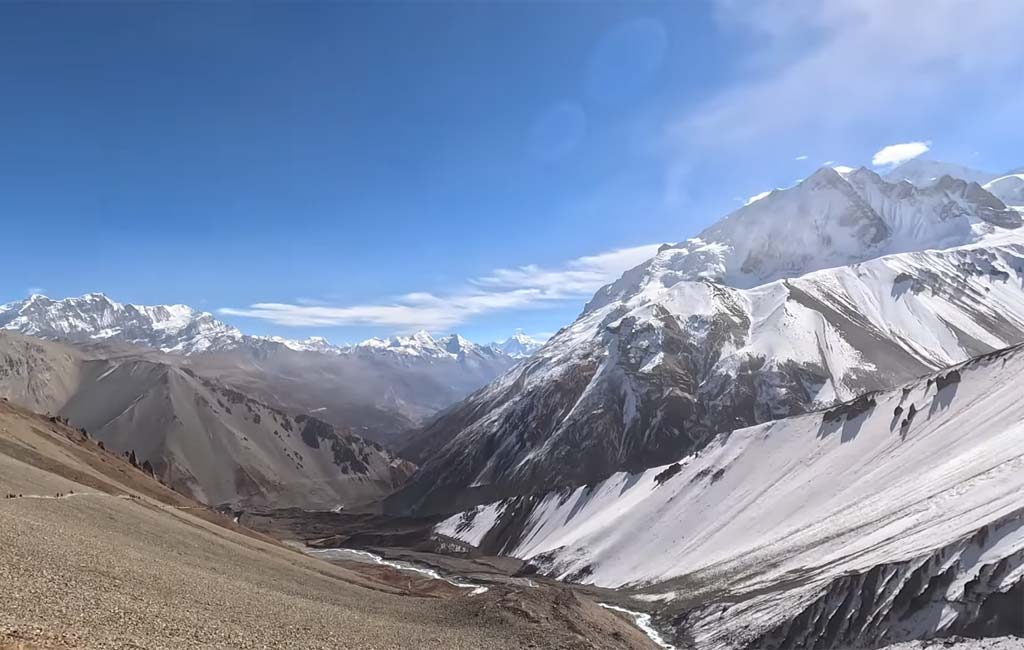
Day 6 takes you from Khangsar (3,740 m) to Tilicho Base Camp (4,150 m), a 6-7 hour trek through rugged, high-altitude terrain. The trail gradually climbs through rocky paths, with increasingly dramatic views of the surrounding snow-capped peaks, including Tilicho Peak (7,134 m). The landscape becomes more barren as you ascend, with fewer signs of vegetation and small seasonal settlements dotting the path.
As you pass high-altitude pastures, where yaks graze, the air grows thinner, and the altitude begins to affect your pace. So, take regular breaks, as it is essential for acclimatization. As you reach Tilicho Base Camp, the peaceful, heavenly setting, surrounded by breathtaking views of the surrounding mountains, welcomes you. After a challenging day of trekking, Tilicho Base Camp serves as an ideal place to prepare for the final leg of the journey to the lake.

Accomodation: Lodge
Duration: 6-7 hours trek
Meal: B.L.D
Ascent: +410m
Distance: Around 12km
Trek from Tilicho Base Camp (4150 m) to Tilicho Lake (4919 m) & return
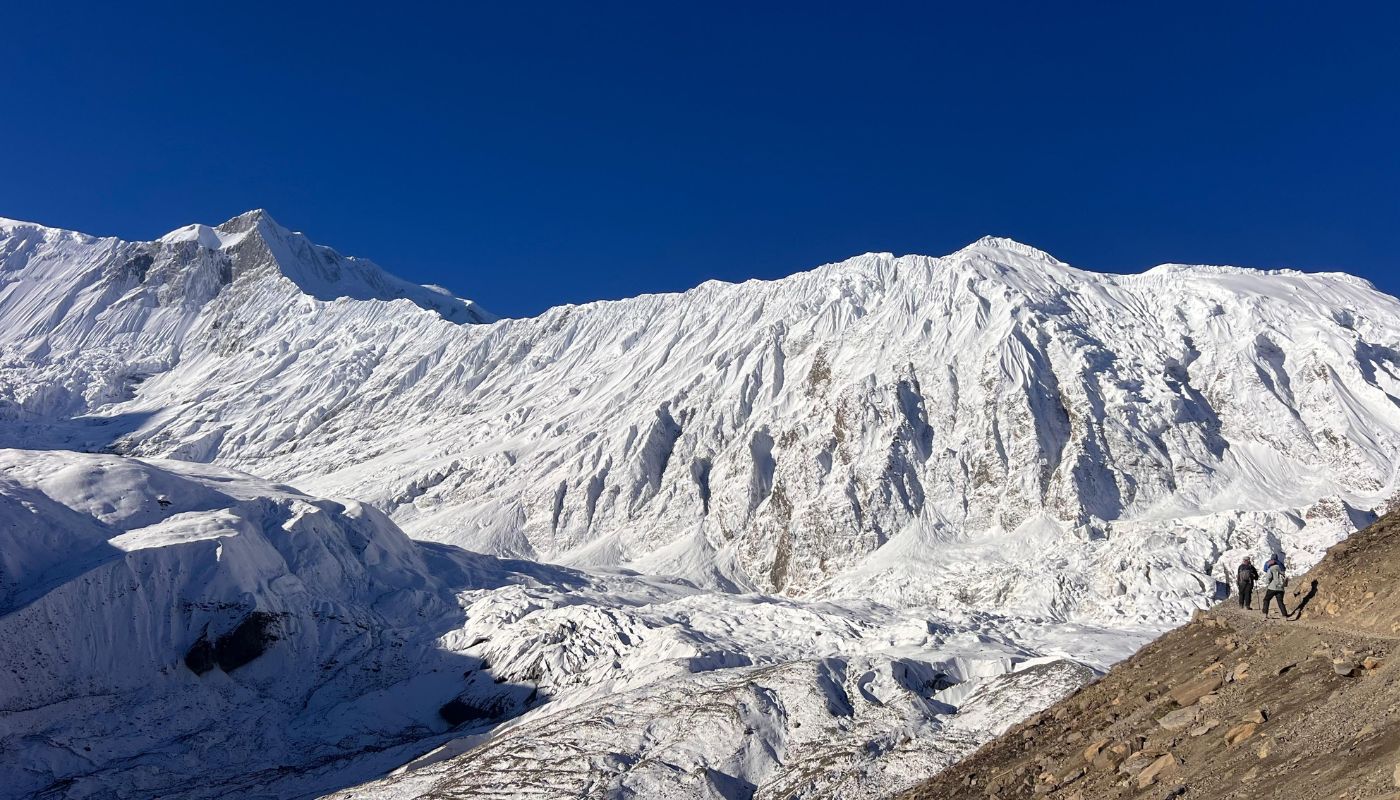
Day 7 is the pinnacle of this 10-day Tilicho Lake Trek, as you embark on a challenging hike to Tilicho Lake (4,919 m) and back to Base Camp (4,150 m). Starting early, the trek ascends steadily from the base camp, navigating rocky and icy terrain. The higher you climb, the more rugged the path becomes, offering increasingly stunning views of Tilicho Peak (7,134 m) and the surrounding mountains.
Upon reaching Tilicho Lake, the sight is truly awe-inspiring. The shimmering turquoise waters of the lake surrounded by towering snow-covered peaks create a surreal and peaceful atmosphere. Standing at the world’s highest lake makes you realize time has stopped, with only the vast blue sky, cool breeze whispering, and absolute quietness of the mountains giving you company.
The return journey is a mix of descending and adjusting to the altitude, which can be physically demanding. The entire round-trip hike takes 6-8 hours, depending on the pace and weather. Once back at Base Camp, you’ll have time to rest and reflect on the accomplishment of reaching one of the highest lakes in the world before preparing for the next stages of your trek.

Accomodation: Lodge
Duration: 6-8 hours trek
Meal: B.L.D
Ascent: +769 m
Descent: -769m
Distance: Around 14km round trip
Trek from Tilicho Base Camp (4150 m) to Manang (3540 m)
On Day 8, you’ll descend from Tilicho Base Camp (4,150 m) to Manang (3,540 m), a journey of 5–6 hours through rugged yet familiar terrain. The descent is less demanding but still requires careful footing on rocky paths. As you trek, the barren, high-altitude landscapes gradually transition into the more vibrant Manang Valley.
The trail offers stunning views of Annapurna III and Gangapurna, with opportunities to pause and appreciate the beauty around you. Passing through Khangsar village, you can take a short break before continuing to Manang. Arriving in Manang feels comforting, with its welcoming teahouses and lively atmosphere.

Accomodation: Lodge
Duration: 5-6 hours trek
Meal: B.L.D
Descent: -610m
Distance: Around 12km
Trek from Manang (3540 m) to Chame (2670 m)
Day 9 takes you from Manang (3,540 m) to Chame (2,670 m), a 6-7 hour walk, and the trail gently winds down, and the thinner air of the high altitudes is replaced by a richer, more breathable atmosphere. As you move through pine forests and cross rushing rivers, the towering peaks of Annapurna and Lamjung Himal continue to grace the horizon.
Passing through familiar villages, you’ll feel a connection to the path you’ve traveled. The descent is steady, offering time to reflect on the journey so far. This is your last day at Mountain Lodge; you can enjoy your day with trip members.

Accomodation: Lodge
Duration: 5-6 hours trek
Meal: B.L.D
Descent: -870m
Distance: Around 16km
Drive from Chame (2670 m) to Kathmandu (1,400 m)
On Day 10, you’ll journey back to Kathmandu with a long 7-8 hour drive following the same highway. The road winds through lush valleys, dense forests, and alongside rushing rivers, offering a last look at the breathtaking Himalayan scenery. As you descend, the crisp mountain air gives way to a warmer, more tropical climate, and the landscapes transition to terraced fields and bustling villages. Reaching Besisahar marks the end of your 10-day Tilicho Lake trek, leaving you with memories to cherish forever.
The change in scenery from the high mountains to the lush countryside marks the end of your Himalayan adventure. As you approach Kathmandu, the tranquility of the rural landscape slowly fades, replaced by the rising hum of city life, the once peaceful surroundings giving way to the busy rhythm of the urban world. Finally, you will leave the Kingdom of Mountains, Nepal, knowing that the memories will stay with you long after.
Accomodation: Lodge
Duration: 7-8 hours drive
Meal: Breakfast, Lunch
Distance: Around 140km

Fixed Departure

Cost Includes
- All land transportation by shared vehicle as mentioned in the itinerary
- All meals [Breakfast, Lunch & Dinner] During the Trek
- Tea House Accommodation during the Trek.
- Two kinds of the permit, ACAP (Annapurna Conservation Area Permit) & TIMS (Trekker’s Information Management System)
- Experienced trekking guide/porter.
- Required Number of Porters “2:1 Ratio” (single supplement charge will be applied)
- Staff food, clothing, salary & insurance.
- General first aid kids box.
- All tax, VAT, and necessary paperwork
- All kinds of company service charges.
Cost Excludes
- Personal Travel Insurance
- Personal nature expenses
- Bar bill and all kinds of drinks and personal expenses.
- Rescue & Evacuation
- Tips for staff

Temperature Chart
Altitude Chart

Useful Info
Why book with Nepal Hiking Adventure Company?
- Guided by our founder and management team with over 25 years of expertise in Himalayan trekking and mountaineering.
- Established in 2010, Nepal Hiking Adventure delivers authentic trekking experiences across the Himalayas.
- Kathmandu-based offices manage all logistics including transport, accommodation, meals during the trek, and luggage handling.
- All required permits, such as ACAP and TIMS, are arranged as part of the package for a hassle-free experience.
- Customizable itineraries designed to match your fitness, interests, and schedule.
- Flexible group sizes and private departures, suitable for solo travelers, couples, or groups.
- Safety is a top priority with experienced guides trained in first aid, altitude awareness, and emergency planning.
- Sustainable and eco-friendly trekking practices that benefit local communities and preserve the environment.
- Immerse yourself in local culture through visits to villages, monasteries, and traditional communities.
- Transparent booking with clear pricing and no hidden costs.
- Extensive network across Nepal’s major trekking regions including Annapurna, Everest, Langtang, Manaslu, Mustang, and Helambu, plus off-the-beaten-path destinations like Ganesh Himal, Arun Valley, Makalu Base Camp, and Dudh Pokhari.
- Licensed and featured on trusted travel platforms such as TripAdvisor, GetYourGuide, and Trustpilot.
- Local guides with deep knowledge of Nepal’s mountains, culture, and terrain.
- Years of satisfied clients, building trust and strong reputation.
- Comfortable tea-house accommodations on high-altitude treks, balancing adventure with basic comfort.
- Complete support before, during, and after the trek, including pre-trip guidance, packing lists, health and altitude advice, and post-trek assistance.
- Responsive customer service via email or phone before and during your trek.
- Excellent value for money, offering high-quality services at competitive rates.

Best Seasons For Tilicho Lake Trek
The ideal time to embark on the Tilicho Lake Trek is during spring (March to May) or autumn (September to November), when the weather is most suitable for trekking adventures. In spring, the trails are adorned with vibrant blooming flowers and lush greenery, thus creating a lively and colorful environment. Daytime temperatures are mild, ranging from 10°C to 20°C, while evenings can be cooler, offering a refreshing contrast. Spring is also a quieter time to trek, with fewer visitors, allowing for a more tranquil experience.
Among the top seasons, autumn stands out as Nepal’s peak trekking season. It offers unparalleled clarity in the skies and breathtaking mountain vistas. This period boasts crystal-clear skies and breathtaking views of towering peaks like Annapurna and Tilicho. With daytime temperatures averaging between 15°C and 25°C, the weather is perfect for trekking, though the nights can be significantly colder. The season’s popularity attracts a larger number of trekkers, offering opportunities to meet fellow adventurers along the trail.
While spring and autumn are the preferred seasons, adventurous trekkers can also explore the Tilicho Lake Trek in winter (December to February) or summer (June to August). Winter brings serene, snow-covered landscapes but demands preparation for freezing temperatures. While summer introduces the monsoon season, with lush greenery but the challenge of rainfall and slippery trails.
Tilicho Lake Trek Difficulty & Altitude Sickness Tips
The Tilicho Lake Trek difficulty is rated moderate to challenging, mainly due to the high altitude and steep ascents.
The trek reaches Tilicho Lake at 4,919 meters, so trekkers must be prepared for thin air and potential altitude sickness.
To avoid AMS (Acute Mountain Sickness):
- Ascend gradually.
- Stay well-hydrated and avoid alcohol.
- Carry Diamox or other prescribed altitude medicines.
- Inform your guide immediately if you feel headaches, nausea, or dizziness.
With good physical fitness and preparation, the Tilicho Lake Trek is achievable for most trekkers.
Tilicho Lake Trek Route Map Overview
The Tilicho Lake Trek route follows a section of the Annapurna Circuit trail, offering a mix of natural beauty, culture, and adventure.
This trail begins from Dharapani or Chame after a scenic drive from Kathmandu. Trekkers then follow the Marsyangdi River Valley toward Manang, passing through dense pine forests, charming villages, and snow-capped Himalayan peaks.
From Manang, the route branches off from the classic Annapurna Circuit trail toward Khangsar Village, Tilicho Base Camp, and finally Tilicho Lake (4,919m), the highest lake in the world. The return journey retraces back to Manang, and you can either end the trek or continue to Thorong La Pass (5,416m) and Jomsom for an extended adventure.
For continuing the trek to Thorang La Pass and Jomsom, you can check out the Annapurna Circuit Trek.
Standard Route:
Kathmandu → Besisahar → Dharapani → Chame → Pisang → Manang → Khangsar → Tilicho Base Camp → Tilicho Lake → Return to Manang → Thorong La Pass (optional) → Jomsom (optional)
This route offers breathtaking views of Annapurna II, Gangapurna, Tilicho Peak, and Lamjung Himal, along with authentic encounters with Gurung and Manangi communities.
Tilicho Lake Trek vs Annapurna Circuit – What’s the Difference?
The Tilicho Lake Trek is actually a side trip of the Annapurna Circuit Trek, leading trekkers to the world’s highest lake (4,919m). While the Annapurna Circuit continues toward Thorong La Pass (5,416m) and Jomsom, the Tilicho route diverts from Manang to Khangsar Village and Tilicho Base Camp before returning.
If you have limited time, the Tilicho Lake Trek is perfect for those wanting a high-altitude adventure with stunning scenery.
If you want a longer and more challenging journey, the Annapurna Circuit Trek includes Tilicho Lake plus the Thorong La crossing.
Both offer breathtaking mountain views, cultural villages, and incredible landscapes, but the Tilicho Lake route focuses more on the lake experience and alpine beauty.
Tilicho Lake Trek Cost
The Tilicho Lake Trek cost varies based on itinerary, accommodation, and whether you travel independently or through a trekking agency.
On average, a 10 to 14-day Tilicho Lake Trek package costs USD 900 to 1,400 per person, covering:
- ACAP and TIMS permits
- Licensed guide and porter
- Accommodation and meals in tea houses
- Ground transportation between Kathmandu and Dharapani/Chame
Permits Required for Tilicho Lake Trek (ACAP + TIMS)
To trek to Tilicho Lake, you must obtain the following trekking permits:
- Annapurna Conservation Area Permit (ACAP)
- Trekkers’ Information Management System (TIMS) Card
You can get both permits at the Nepal Tourism Board (NTB) in Kathmandu or Pokhara, or through a registered trekking agency.
Keep your permits handy during the trek, as there are several checkpoints along the Tilicho Lake route.
Accommodation and Meals During Tilicho Lake Trek
Accommodation on the Tilicho Lake Trek mainly includes traditional tea houses and mountain lodges run by local families. These lodges provide a warm and authentic Himalayan experience, making your stay both comfortable and memorable during the trek.
Rooms
Most tea houses offer twin-sharing rooms with warm blankets to protect against the cold mountain nights. Bathrooms are usually shared, though some lodges in lower regions such as Chame and Manang provide attached bathrooms.
Facilities like hot showers and Wi-Fi are available in these towns, allowing trekkers to relax and stay connected before reaching higher altitudes.

Meals
During the Tilicho Lake Trek, trekkers can enjoy a mix of Nepali, Tibetan, and Western dishes served fresh at the lodges along the route.
The most popular meal is the famous Dal Bhat (a combination of rice, lentils, and vegetable curry), loved for its high energy and nutritional value. Other common dishes include noodles, soups, pancakes, pasta, momo (dumplings), and a variety of tea and coffee options.
At higher points, like Tilicho Base Camp, meal choices become simpler due to the remote location, but you’ll always find hot, freshly cooked food and warm drinks to keep your energy levels up in the cold mountain air.
Whether you’re enjoying a hearty Dal Bhat in Manang or sipping tea with views of the Himalayas, the Tilicho Lake Trek offers a unique taste of Nepalese mountain hospitality.

How to Get to Tilicho Lake from Kathmandu
To reach Tilicho Lake from Kathmandu, start with a 6-7 hour drive to Besisahar by bus or private jeep.
From Besisahar, take another jeep or trek to Chame or Dharapani, the starting point of the Tilicho Lake trekking route.
From there, follow the Annapurna Circuit trail through Pisang and Manang, then branch off to Khangsar Village, Tilicho Base Camp, and finally Tilicho Lake (4,919m).
The complete journey typically takes 8-14 days, depending on your fitness and itinerary.
Conclusion of Tilicho Lake Trek
Tilicho Base Camp Lake Trek offers an unforgettable journey through one of Nepal’s most iconic regions. A journey to the world’s highest lake base camp where you immerse yourself in incredible views, rich culture, and a deep sense of accomplishment. From lush forests and charming villages to the serene turquoise waters of Tilicho Lake, every step of the way is breathtaking. This adventure takes you deep into the Annapurna region, where you can embrace the warm welcome of local communities and explore centuries-old monasteries. While spring and autumn provide ideal trekking conditions, this trail can be enjoyed year-round with proper preparation and equipment. The Tilicho Lake Trek is truly unforgettable – it combines adventure, culture, and landscapes that will take your breath away.


FAQ
Where does the Tilicho Lake Trek start and end?
The Tilicho Lake Trek begins in Kathmandu and ends in Kathmandu as well. The trekking route usually starts from Dharapani or Chame in the Annapurna region and returns via the same trail after visiting Tilicho Lake.
How difficult is the Tilicho Lake Trek?
The trek is considered moderate to challenging. It involves walking through high-altitude trails, rocky terrain, and steep ascents. While it’s suitable for trekkers with good fitness, proper acclimatization and preparation are essential to handle the elevation above 4,900 meters.
When is the best season to do the Tilicho Lake Trek?
The best season for Tilicho Lake Trek is from September to December and March to May. During these months, the weather is clear, skies are blue, and mountain views are spectacular. The monsoon season (June-August) brings heavy rain and potential landslides, while winter (January-February) can be extremely cold and snowy at higher altitudes.
Are permits required to trek Tilicho Lake?
Yes, you need two trekking permits:
- Annapurna Conservation Area Permit (ACAP)
- Trekkers’ Information Management System (TIMS) Card
Both can be obtained in Kathmandu or Pokhara, and your trekking agency usually helps you arrange them before the trek begins.
How long does the Tilicho Lake Trek take?
The Tilicho Lake Trek typically takes around 10 days, depending on the itinerary. Some trekkers combine it with the Annapurna Circuit Trek, which can extend the duration by a few more days.
What kind of accommodation is available during the Tilicho Lake trekking in Nepal?
Accommodation is on a lodge-to-lodge basis, meaning you’ll stay in local tea houses along the route. They offer basic rooms with shared bathrooms, warm blankets, and delicious local meals. At higher altitudes, facilities become more limited.
Is altitude sickness a risk during Tilicho Lake trek?
Yes, since Tilicho Lake is at 4,919 meters, altitude sickness can occur if you ascend too quickly. To reduce the risk, walk slowly, stay hydrated, avoid alcohol, and take an acclimatization day if needed. Your guide will monitor your condition and suggest rest if symptoms appear.
Can beginners do the Tilicho Lake Trek?
Yes, beginners with a good fitness level and determination can complete this trek. Regular cardio exercises, hiking practice, and strength training for a few weeks before the trip are recommended for a safe and enjoyable experience.
What does B.L.D mean in trekking or meal plans?
B.L.D stands for Breakfast, Lunch, and Dinner. It indicates that all three meals are included for that day, usually provided by your lodge, teahouse, or tour operator during a trek.
Can I combine the Tilicho Lake Trek with the Annapurna Circuit Trek?
Yes, many trekkers combine it with the Annapurna Circuit Trek, allowing them to cross the Thorong La Pass and explore Manang, Pisang, and Muktinath, making the journey more adventurous and scenic.

Reviews


Tilicho Lake Trek was amazing and memoriable.
The Tilicho Lake Trek was amazing! The trail was challenging at times, but the views of the snow-capped mountains and the lake made every step worth it. Staying in local tea houses and meeting friendly villagers added a special touch. Tilicho Lake itself is breathtaking, and reaching it was an unforgettable experience. I would highly recommend this trek to anyone who loves adventure and nature.
Brady,
Australia


Our History in Service Excellence


