

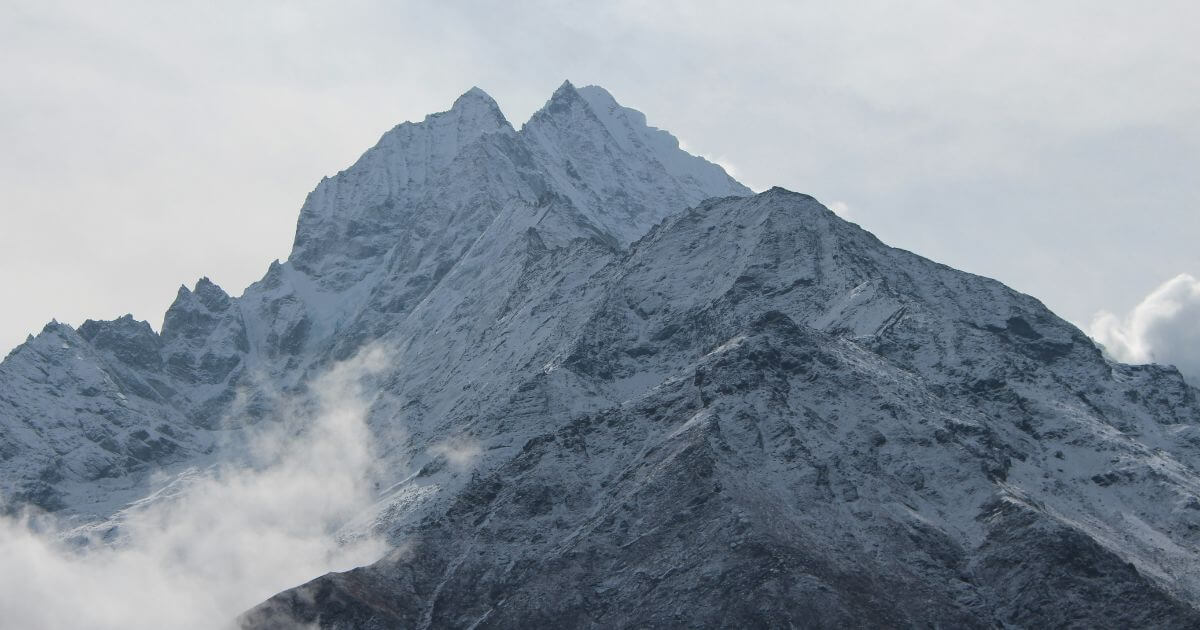

Everest Base Camp trek with Helicopter Return
 (83 reviews in Google)
Overview
The Everest Base Camp Trek with Helicopter Return is one of the most exciting and time-efficient ways to explore the Everest region. It combines a classic Everest Base Camp trek with the Everest Base Camp Helicopter Tour experience. As a result, you get both trekking adventure and aerial mountain views in one journey.
This trek takes you to the base of Mount Everest, the highest peak in the world. Along the way, you pass through the stunning landscapes of the Khumbu region. You will walk across suspension bridges over the Dudh Koshi River, glaciers, alpine forests, rivers, and traditional Sherpa villages.
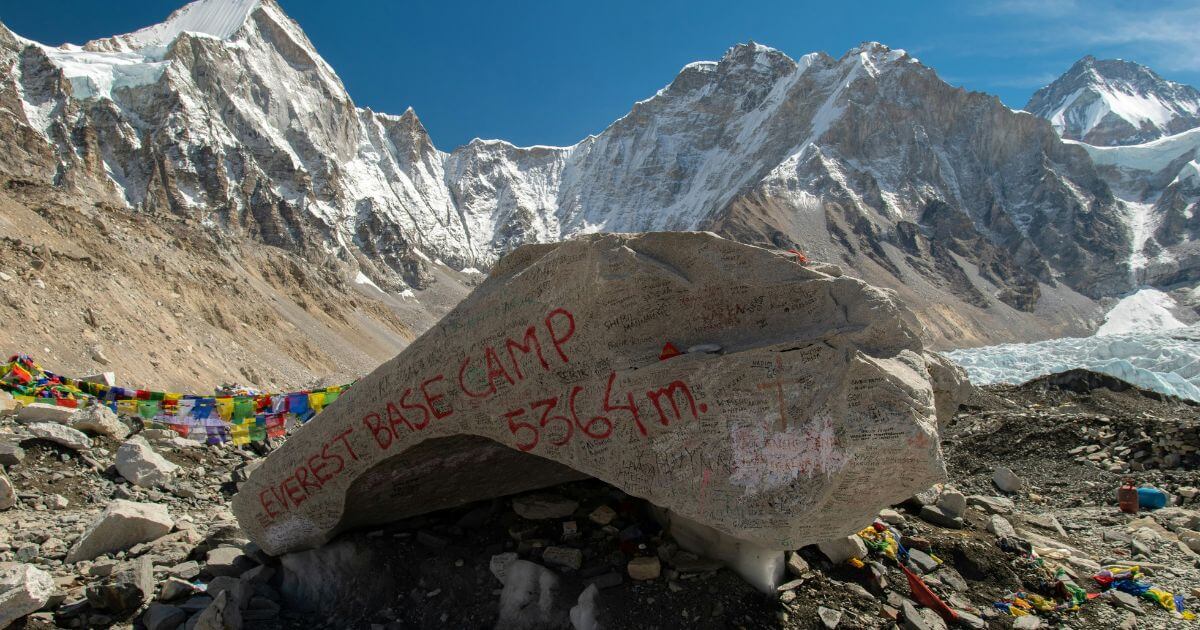
One of the main highlights is reaching Everest Base Camp. You will also hike up to Kala Patthar, one of the best viewpoints for close-up panoramas of Mount Everest and surrounding peaks.
During the journey, you will explore Sagarmatha National Park, a UNESCO World Heritage Site known for its rich biodiversity and Himalayan scenery. You may also see wildlife such as Himalayan Thar and musk deer in their natural habitat.
The route also offers a deep cultural experience. You will experience the warm hospitality and traditions of the Sherpa community in places like Namche Bazaar.
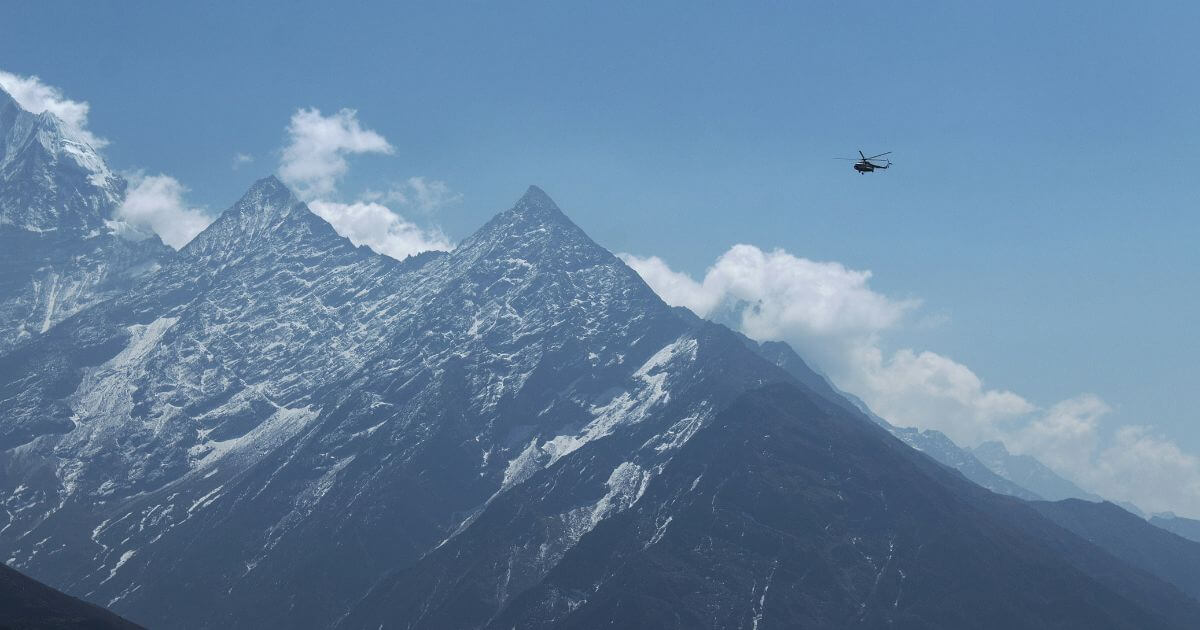
The highlight of this journey is the scenic helicopter return from the Everest region to Kathmandu. Instead of trekking back the same route, you take a helicopter flight and enjoy breathtaking aerial views of Mount Everest, Gokyo Lakes, glaciers, and surrounding peaks. This option also saves time and adds comfort.
Therefore, this journey is ideal for travelers who want the full Everest experience in a shorter duration. With proper preparation and fitness, it becomes a once-in-a-lifetime Himalayan adventure.
Prefer a full trekking experience both ways? Explore our Everest Base Camp Trek for the traditional round-trip trekking experience in the Everest region.
Everest Base Camp Trek with Helicopter Return Highlights
- Combines the classic Everest Base Camp Trek with a helicopter return experience
- Explore Sagarmatha National Park, a UNESCO World Heritage Site rich in biodiversity
- Visit Namche Bazaar, the vibrant Sherpa town of the Everest region
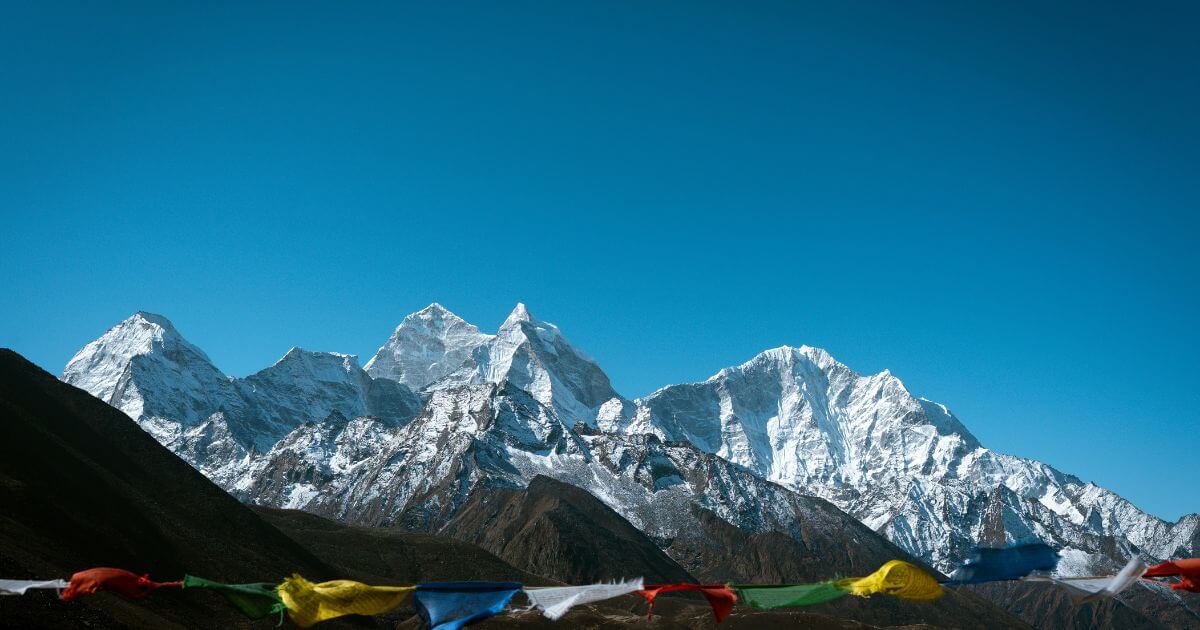
- Enjoy panoramic views of Mount Everest, Ama Dablam, Lhotse, and other Himalayan peaks
- Experience authentic Sherpa culture, traditions, and mountain lifestyle
- Take scenic flights to and from Lukla Airport
- Enjoy a helicopter return with stunning aerial views of Everest and Gokyo Lakes
- Reach Kala Patthar for close-up views of Mount Everest
Arrival Kathmandu & Transfer to Hotel
You will land at the Tribhuvan International airport in Kathmandu. Our representative will receive you. They will transfer you to your respective hotel in a taxi.
You will have time to rest and relax till the evening. In the evening, you can go for a walk around the city.
Overnight in Kathmandu.

 Accomodation: Hotel
 Duration: 30 minute drive to hotel
 Distance: Around 8 km drive
Pre-Trip Meeting & Sightseeing Around Kathmandu Valley
There are various UNESCO World Heritage sites in Kathmandu. On this day, you will be touring in and around Kathmandu for sightseeing.
You can visit the Pashupatinath Temple, Boudhanath Stupa, Kathmandu Durbar Square, Swayambhunath Temple, or many other places.
In the evening, we will call you for a pre-trip meeting. The meeting includes dinner in a Nepali restaurant, knowing your guides and fellow mates, and some trip related discussions.
After discussion and dinner, you’ll get back to your hotel and sleep. Your actual trek starts tomorrow.
 Accomodation: Hotel
Duration: 5-6 hours (Approx)
Accomodation: Hotel
Duration: 5-6 hours (Approx)
 Meal: Breakfast
Distance: Around 30 km
Meal: Breakfast
Distance: Around 30 km
Fly from Kathmandu to Lukla & Trek to Phakding
Wake up early in the morning and enjoy your breakfast. Then we will take you to Tribhuvan International Airport to board on a flight to Lukla.
The flight is short and scenic. You will enjoy the beautiful air route parallel to mountains and surrounded by Himalayan peaks.
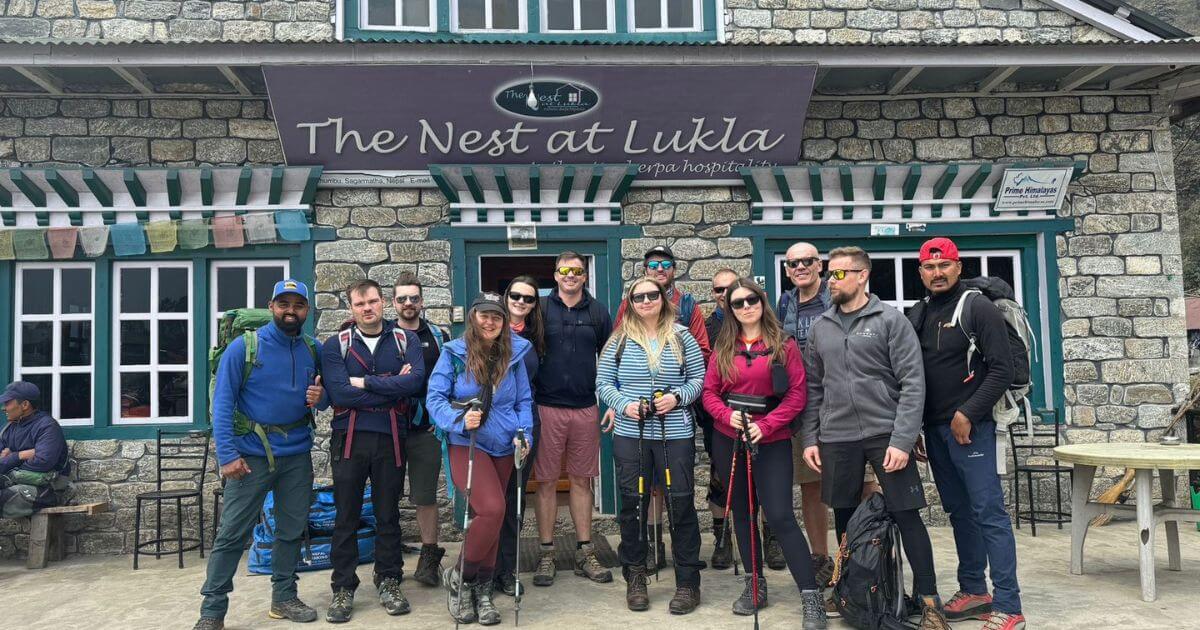
On landing at Lukla, we will meet the rest of our crew members. Now, Lukla is the point of the trek where we begin.
We will begin walking to Phakding. We walk down to the Dudh Koshi river past Chaurikharka village. On walking for 3-4 hours, you will reach Phakding.
Overnight at guest house in Phakding.
 Accomodation: Overnight at Guest House
Duration: 30 minutes Flight and 3 to 4 hours trek
Meal: Breakfast, Lunch, Dinner
Accomodation: Overnight at Guest House
Duration: 30 minutes Flight and 3 to 4 hours trek
Meal: Breakfast, Lunch, Dinner
 Ascent: +1460 m
 Descent: -200 m
Distance: Around 8 km
Descent: -200 m
Distance: Around 8 km
Trek from Phakding to Namche Bazaar
After early morning breakfast at Phakding, we start off to Namche Bazaar. We start by traversing through Dudh Koshi River. We then walk through the forest of pine and rhododendron trees to reach Namche Bazaar.
The trail to Namche is very well traveled. You will meet the locals, other tourists, porters, and the herd of Yaks.
Namche Bazaar is a busy Sherpa town in the region. From there, you will get beautiful sights of Mt. Everest and Mt. Lhotse.
Overnight in a hotel at Namche Bazaar.
 Accomodation: Overnight in a hotel at Namche Bazaar
Duration: 5-6 hours trek
Meal: Breakfast, Lunch, Dinner
Ascent: +830 m
Distance: Around 11 km
Accomodation: Overnight in a hotel at Namche Bazaar
Duration: 5-6 hours trek
Meal: Breakfast, Lunch, Dinner
Ascent: +830 m
Distance: Around 11 km
Rest at Namche Bazaar for Acclimatization
Namche Bazaar is a popular trade hub of Sherpa communities in Everest. At Namche, you can experience the culture and traditions of the Sherpa people in their unique way.
This day is an acclimatization day. You will get familiar with the mountain air and high altitude. Namche is a beautiful place to visit around. There are cafes where you can stop for a cup of coffee.
You can also buy some souvenirs reflecting traditional arts and crafts. Get some trekking accessories if you need! They are available in the markets. Namche is also popular for the yak cheese and butter.
We will walk to the Everest View Hotel for the best views of the Himalayan peaks. This is a part of our acclimatization trek. We return to Namche for the overnight stay.
 Accomodation: Return to Namche for the overnight stay
Duration: 2-3 hours trek
Meal: Breakfast, Lunch, Dinner
Ascent: +400 m
Descent: -400 m
Distance: Around 6 km
Accomodation: Return to Namche for the overnight stay
Duration: 2-3 hours trek
Meal: Breakfast, Lunch, Dinner
Ascent: +400 m
Descent: -400 m
Distance: Around 6 km
Trek from Namche Bazaar to Tengboche
From Namche, we first descend down to the Dudh Koshi River. You can enjoy the mountain sceneries while walking. You will see Mount Everest, Lhotse, Nuptse, Ama Dablam, Thamserku, Kongde and others.
The second segment of the trek is an ascent along the rhododendron forests to Tengboche.
Once at Tengboche, you will visit the famous Tengboche monastery. During the expedition season, you will find many summiters preparing for the Everest expedition.
Overnight at a guest house.
 Accomodation: Overnight at a guest house
Duration: 6 to 7 hours trek
Meal: Breakfast, Lunch, Dinner
Ascent: +520 m
Descent: -100 m
Distance: Around 10 km
Accomodation: Overnight at a guest house
Duration: 6 to 7 hours trek
Meal: Breakfast, Lunch, Dinner
Ascent: +520 m
Descent: -100 m
Distance: Around 10 km
Trek to Dingboche
From Namche, we first descend down to the Dudh Koshi River. You can enjoy the mountain sceneries while walking. You will see Mount Everest, Lhotse, Nuptse, Ama Dablam, Thamserku, Kongde and others.
The second segment of the trek is an ascent along the rhododendron forests to Tengboche.
Once at Tengboche, you will visit the famous Tengboche monastery. During the expedition season, you will find many summiters preparing for the Everest expedition.
Overnight at a guest house.
 Accomodation: Overnight at a guest house in Dingboche
Duration: 6 to 7 hours trek
Meal: Breakfast, Lunch, Dinner
Ascent: +650 m
Descent: -100 m
Distance: Around 12 km
Accomodation: Overnight at a guest house in Dingboche
Duration: 6 to 7 hours trek
Meal: Breakfast, Lunch, Dinner
Ascent: +650 m
Descent: -100 m
Distance: Around 12 km
Rest at Dingboche for Acclimatization
Dingboche is a beautiful village of Sherpas. The place is a popular acclimatization spot for trekkers and climbers.

For an acclimatization hike at Dingboche, we take day hikes to either Nagarjuna Hill or Chukhung Valley. From there, you will see the splendid views of Makalu, Lhotse, Chalotse, Tabuche and Ama Dablam. and Overnight at Dingboche.
 Accomodation: Overnight at Dingboche
Duration: 2-4 hours
Meal: Breakfast, Lunch, Dinner
Ascent: +500 m
Descent: -500 m
Distance: Around 5 km
Accomodation: Overnight at Dingboche
Duration: 2-4 hours
Meal: Breakfast, Lunch, Dinner
Ascent: +500 m
Descent: -500 m
Distance: Around 5 km
Trek to Lobuche
After the acclimatization day at Dingboche, we start with a gradual climb to Dughla. Dughla is at the edge of the terminal moraine of Khumbu Glacier.
The trek route proceeds a climb up through a steep trail to Chupki Lhara.
We walk ahead continuing towards the Khumbu Glacier moraine. We will see astounding views of Khumbutse, Lingtren, Pumori and Mahalangur Himal.
On following the valley to Lobuche, the trail eases. Finally, we reach Lobuche, our destination for the day.
Overnight at guest house in Lobuche.
 Accomodation: Overnight at guest house at Lobuche
Duration: 5 to 6 hours trek
Meal: Breakfast, Lunch, Dinner
Ascent: +530 m
Distance: Around 8 km
Accomodation: Overnight at guest house at Lobuche
Duration: 5 to 6 hours trek
Meal: Breakfast, Lunch, Dinner
Ascent: +530 m
Distance: Around 8 km
Trek from Lobuche to Gorak Shep, then trek to Everest Base Camp and Back to Gorak Shep
Today is a long day for the trek. We set off after an early breakfast at Lobuche. We then walk to the Gorak Shep Lake. There is this small village, Gorak Shep on the edge of the lake.
We check into a guest house at Gorak Shep and have lunch and some rest there.
We, then, walk across rocky dunes, moraine and streams to reach Everest Base Camp. The walk is strenuous. Air gets thinner as we ascend the altitude.
From the best camp, you will get a marvelous view of the gigantic Himalayas like Nuptse, Khumbuste and Pumori.
After spending some time at the base camp, we descend down to Gorak Shep.
Overnight in Gorak Shep.
 Accomodation: Overnight at Gorak Shep
Duration: 7-8 hours trek
Meal: Breakfast, Lunch, Dinner
Ascent: +600 m
Descent: -400 m
Distance: Around 15 km
Accomodation: Overnight at Gorak Shep
Duration: 7-8 hours trek
Meal: Breakfast, Lunch, Dinner
Ascent: +600 m
Descent: -400 m
Distance: Around 15 km
Early Morning Hike to Kalapathar and Back to Gorak Shep and Fly Back by Helicopter to Kathmandu
We start the trek early in the morning. Walking against the cold temperatures and chilly winds, we trek to Kala Patthar.
Kala Patthar is the best vantage point of Everest. At Kala Patthar, we will see the impressively large and intense views of Mt. Everest. We take a few moments taking pictures and enjoying the magnificent mountain panorama.
Spending more time at Kala Patthar increases the risk of altitude sickness. Thus, after spending some exceptional moments there, we return back to Gorak Shep.
From Gorak Shep, we take a helicopter ride to Kathmandu. Flying over the Gokyo Lakes, majestic Himalayas, and the enchanting Everest region is a remarkable experience.
We are now back at Kathmandu after our long mountain journey. We will take you to your hotel.
Overnight in Kathmandu.
 Accomodation: Overnight at hotel in Kathmandu
Duration: 4-5 hours trek and 1 hour flight
Meal: Breakfast
Ascent: +550 m to Kala Patthar
Descent: -550 m back to Gorak Shep
Distance: Around 9 km (round trip hike from Gorak Shep to Kala Patthar and back)
Accomodation: Overnight at hotel in Kathmandu
Duration: 4-5 hours trek and 1 hour flight
Meal: Breakfast
Ascent: +550 m to Kala Patthar
Descent: -550 m back to Gorak Shep
Distance: Around 9 km (round trip hike from Gorak Shep to Kala Patthar and back)
Final Departure
Our Everest adventure ends today. We will drop you to the Tribhuvan International Airport a few hours before the scheduled flight. Have a safe and sound flight to your home.
Hope you had a great time with us. We wish to see you again.
 Duration: 30 minute drive to airport
Meal: Breakfast
Distance: Around 8 km drive
Duration: 30 minute drive to airport
Meal: Breakfast
Distance: Around 8 km drive

Fixed Departure

Cost Includes
- Arrival & Departure Transport By private Car/Van/Bus.
- Three meals a day during the Trekking (B, L,D)
- Accommodation in Tea House during the Trekking.
- Three night accommodation in Kathmandu with B/B Plan.
- Trekking Guide and a proter (Sharing by two clients) with Insurance, food, accommodations and all their needs
- Flight ticket for guide Kathamandu/Lukla.
- Flight ticket for Clients Kathmandu/Lukla.
- Helicopter Flight ticket for Everest base camp to Kathmandu or Lukla. (Depending on your plan)
- Sightseeing in Kathmandu valley with Private Vehicle and tour guide
- First Aid kit.
- Trekking permit (Conservation fee).
- Tims card (Trekking information management system) as like a permit.
- Free Company’s duffel bag and T-shirt.
- City and Trekking Map.
- All needed official fee and taxes.
Cost Excludes
- International Airfare.
- Your travel insurance.
- Sightseeing entrance fees (25 USD)
- Nepal Visa fee
- Any kind of drinks.
- Items of personal expenses like hot shower, battery charge, telephone, Extra Porters etc.
- Tips for Guide and Porters.

Temperature Chart
Altitude Chart

Useful Info
Best Time for Everest Base Camp trek with Helicopter Return
The best time for the Everest Base Camp Trek with Helicopter Return is during spring (March, April, May) and autumn (September, October, November). These seasons offer stable weather, clear skies, and comfortable temperatures in the Everest region.
During spring and autumn, visibility is excellent. This allows you to enjoy clear views of the mountains throughout the trek. Weather conditions are also more predictable, which reduces the chances of flight delays or cancellations.
The trek is also possible in winter. However, temperatures drop significantly, especially at higher altitudes. Cold weather and snow can make the trek more challenging.
In addition, winter weather in the mountains can be unpredictable. This may increase the risk of flight delays, including the helicopter return.
Difficulty of Everest Base Camp Trek with Helicopter Return
The Everest Base Camp Trek with Helicopter Return is a moderate to challenging trek, but it is easier than the standard Everest Base Camp trek because the helicopter return avoids the long and physically demanding descent. During this journey, you will reach a maximum altitude of 5,545 meters at Kala Patthar, starting from Kathmandu at around 1,300 meters. This makes altitude the main challenge rather than distance, so proper acclimatization and a gradual ascent are essential for a safe trek.
In addition, this trek requires walking for 5 to 7 hours daily on uneven mountain trails. The route includes steep ascents, rocky paths, and high-altitude terrain, which can be physically demanding, especially above 4,000 meters.
However, with good physical fitness, proper preparation, and the right gear, most trekkers can complete this journey successfully. The helicopter return from Gorak Shep significantly reduces physical strain, making this trek a more comfortable and time-efficient option compared to the traditional route.

Why Helicopter Return Makes the Everest Base Camp Trek Easier
The EBC trek with helicopter return becomes easier because you do not need to trek all the way back after reaching Gorak Shep. Instead, you take a scenic helicopter flight back to Kathmandu over the Everest region.
This helps reduce physical tiredness after completing the trek, especially after reaching high altitude areas. It also avoids the long and tiring descent back to Lukla, which can be hard on the knees and legs.
The helicopter return saves several days of trekking time and offers a comfortable way to end the journey. During the flight, you can also enjoy aerial views of Mount Everest, glaciers, and surrounding Himalayan peaks.
Overall, the helicopter return adds comfort, saves time, and makes the Everest Base Camp trekking experience more enjoyable.

Best Preparation Tips
Proper preparation is essential for this trek. Good fitness helps you complete long trekking days in the Everest region with more comfort.
Regular walking or hiking before the trek improves stamina. It also helps your body adjust to walking on uneven mountain trails. Cardio exercises such as walking, jogging, cycling, or stair climbing are recommended for a few weeks before the trek. These exercises build endurance for high-altitude trekking.
Practicing with a light backpack is also useful. It prepares you for carrying a daypack during the trek. Good preparation increases safety, reduces fatigue, and improves your overall trekking experience in the Everest region.
Packing List for EBC Trek with Helicopter Return
- Clothing: Warm base layers, thermal tops and bottoms, fleece jacket, down jacket, waterproof/windproof outer shell, trekking pants, and comfortable t-shirts.
- Footwear: Strong waterproof trekking boots, warm socks (wool or thermal), and light camp shoes or sandals for teahouses.
- Accessories: Gloves (inner + outer), warm hat, sun hat, sunglasses, and neck buff or scarf.
- Gear & Equipment: Daypack, sleeping bag (cold-rated), trekking poles, headlamp with extra batteries, and water bottles or hydration system.
- Personal Essentials: Sunscreen, lip balm, toiletries, wet wipes, first aid kit, altitude sickness medicine (if recommended), and personal documents.
- Optional but useful: Power bank, camera, snacks, and light entertainment for evenings in teahouses.
Altitude Sickness During Everest Base Camp Trek
Altitude sickness can affect trekkers above 3,000 meters. Common symptoms include headache, nausea, dizziness, loss of appetite, and fatigue. Proper acclimatization, hydration, and gradual ascent are important to reduce risks.
If symptoms become severe, immediate descent and medical attention may be necessary. Our guides carefully monitor trekkers throughout the journey for safety.
WiFi, Charging, and Mobile Network
WiFi is available in most teahouses for an additional charge. Charging electronic devices may also require extra payment in higher-altitude villages. Ncell and Nepal Telecom networks work in some parts of the Everest region, though connectivity can be limited.
Everest Base Camp Trek Cost with Helicopter Return
The Everest Base Camp Trek with Helicopter Return cost depends on several factors, including group size, trekking season, accommodation standard, and helicopter sharing options. On average, the package cost ranges from USD 2,200 to USD 4,500 per person in Nepal.
Most Everest Base Camp helicopter return packages include domestic flights, trekking permits, teahouse accommodation, meals during the trek, experienced guides and porters, and a scenic helicopter flight from Gorak Shep to Kathmandu.
Private helicopter return flights are more expensive than shared group helicopter services. Luxury Everest Base Camp trek packages with premium accommodation and personalized services can also increase the overall package price.
Although the Everest Base Camp Trek with Helicopter Return is more expensive than the standard Everest Base Camp trek, it offers greater comfort, saves trekking time, reduces physical exhaustion, and provides spectacular aerial views of Mount Everest and the Himalayan mountains.
Booking your Everest Base Camp helicopter return trek with a licensed trekking company in Nepal ensures proper safety arrangements, experienced mountain guides, permit management, and reliable helicopter services throughout the journey.
Ready for Your Everest Adventure?
Plan your Everest Base Camp Trek with Helicopter Return today. Contact us or book directly from this page, or customize the itinerary to match your schedule.

FAQ
Is the helicopter return safe?
Helicopter flights in the Everest Region are generally safe and operated by experienced pilots. Flights are strictly dependent on weather conditions to ensure passenger safety.
Do I need prior trekking experience or special fitness for the Everest Base Camp Trek with Helicopter Return?
No prior trekking experience is required, but you should have a reasonable level of physical fitness. Expect to walk about 5–7 hours daily on uneven terrain at increasing altitude. Preparing with regular walking, light hiking, or cardio exercises before the trek will help build stamina and make the experience more comfortable. Being physically prepared also reduces fatigue and helps you adjust better to the altitude.
How many hours do you walk each day?
On average, you will walk about 5–7 hours daily. Some days may be shorter or longer depending on the route and altitude.
What is altitude sickness?
Altitude sickness happens when your body cannot adjust to high elevation. It can be managed by ascending slowly, drinking enough water, and taking proper rest days.
Where does the helicopter return start from?
The helicopter usually takes off from Gorak Shep. This allows you to skip the long return trek.
What accommodation options are available during the EBC trek with Helicopter Return?
During the trekking days, accommodation is in local teahouses along the route, offering basic rooms, meals, and an authentic Himalayan experience.
Is travel insurance necessary for this trek?
Yes, travel insurance is highly recommended. It should cover high-altitude trekking and emergency helicopter evacuation.
Is food available during the trek?
Yes, teahouses offer a variety of meals, including Nepali and simple Western dishes. Food options are basic but sufficient for trekkers.
How cold does it get during the trek?
It becomes extremely cold at higher elevations, especially during the night. Temperatures often fall below 0°C, particularly in the upper regions of the trek.
Can Lukla flights get delayed?
Yes, flights to Lukla are often affected by weather conditions. Delays and rescheduling are quite common.
What makes this trek different from the regular Everest Base Camp trek?
This trek combines hiking with a helicopter return, making it more comfortable and time-saving. It is a great option for those who want the experience with less physical strain.
Is the Everest Base Camp Trek with Helicopter Return suitable for beginners?
Yes, beginners can complete the Everest Base Camp Trek with Helicopter Return with proper preparation and guidance. While no prior trekking experience is required, the trek involves high altitude, so a good level of fitness and mental readiness is important. With a well-planned itinerary, acclimatization days, and support from an experienced guide, first-time trekkers can safely enjoy this journey to the base of Mount Everest.
Do I need permits for this trek?
Yes, you need the Sagarmatha National Park Permit and Khumbu Pasang Lhamu Rural Municipality Permit.
How long is the helicopter flight from Gorak Shep to Kathmandu?
The helicopter flight usually takes around 45 minutes to 1 hour, depending on weather conditions.
Is Wi-Fi or mobile network available during the trek?
Limited Wi-Fi and mobile network are available in places like Namche Bazaar, but they may be unreliable at higher altitudes.
Do teahouses provide charging facilities on the Everest Base Camp route?
Yes, you can charge your phone and camera at most teahouses during the trek, especially in places like Namche Bazaar. Charging usually costs extra and becomes more expensive at higher altitudes. Power can be limited, so carrying a power bank is recommended.


Our History in Service Excellence


