
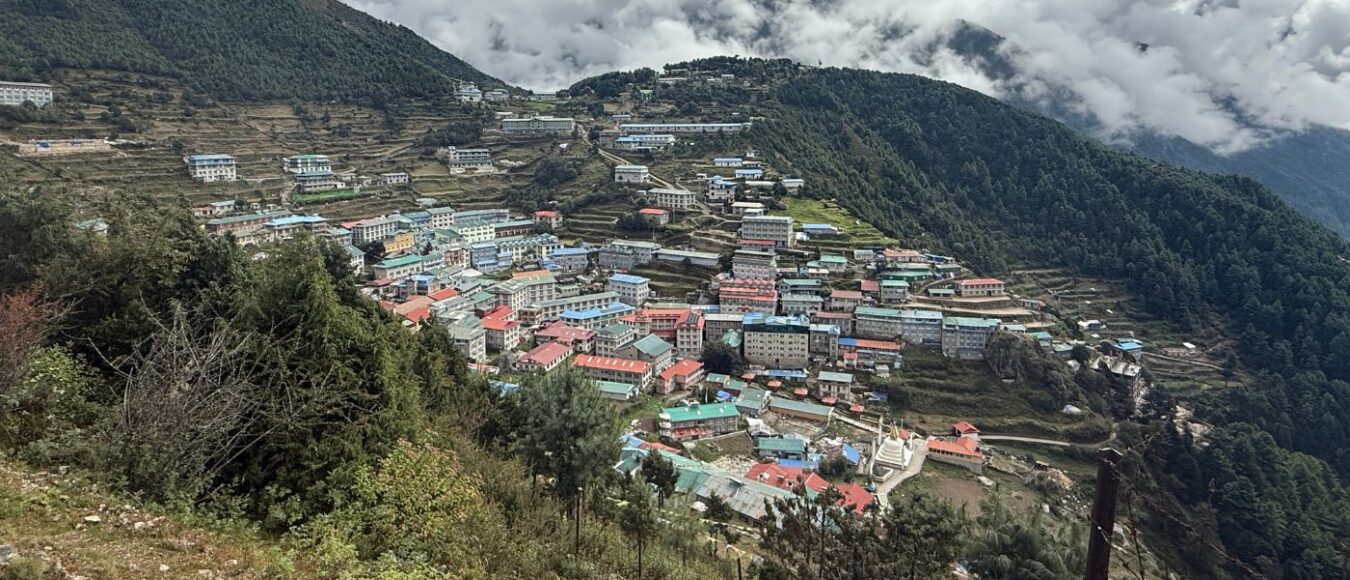
Namche Bazaar
Summary: Namche Bazaar (27.8047°N, 86.7141°E) sits at 3,440 m in Sagarmatha National Park, Solukhumbu District, roughly 140 km northeast of Kathmandu. This Sherpa trading town serves as the essential acclimatisation stop for Everest Base Camp trekkers, reached via a 6-8 hour walk from Lukla. Offering lodges, bakeries, museums and the classic hike to Everest View Hotel, it’s best visited in autumn or spring for a two-night stay to adjust to altitude.
1. Namche Bazaar: Gateway to Mount Everest
Namche Bazaar, popularly known as Namche, serves as the vibrant gateway to Everest, attracting thousands of trekkers annually. Meanwhile, visitors seek answers about accommodation in Namche, acclimatisation strategies, and whether they match this challenge. Consequently, understanding what Namche Bazaar offers becomes essential for planning successful treks in the Everest region.
This guide from Nepal Hiking Adventure covers every aspect of visiting Namche Bazaar comprehensively. First, sections examine the Lukla to Namche Bazaar trek, acclimatisation walks offering stunning views of Everest, and seasonal patterns. Additionally, itineraries suggest spending two nights at Namche or 3 nights in Namche Bazaar for adjustment on your trip to Namche Bazaar.
Whether you go to Namche Bazaar for acclimatisation or cultural exploration, preparation matters significantly. The town of Namche, often known as Namche Bazaar, rewards informed visitors with authentic Sherpa culture and spectacular Himalayan mountain scenery. Ultimately, this guide from Nepal Hiking Adventure equips trekkers heading towards Everest Base Camp with practical knowledge for safe, rewarding mountain experiences.


2. About Namche Bazaar
2.1 Location, Altitude and Quick Facts
Namche Bazaar is located at 3,440 metres within Sagarmatha National Park, approximately 140 kilometres northeast of Kathmandu. As a result, the town occupies a natural amphitheatre carved into the mountainside, creating the distinctive horseshoe shape visible from surrounding ridges. Furthermore, this strategic position provides shelter from harsh winds while offering commanding views of surrounding peaks, including Mount Everest, Lhotse, and Ama Dablam, allowing trekkers to see Mount Everest on clear days.
| Aspect | Details |
| Elevation | 3,440 metres |
| Region | Khumbu, Solukhumbu District |
| Protected Area | Sagarmatha National Park |
| Population | ~1,600 residents |
| Ethnicity | Sherpa |
| Distance from Lukla | 15 kilometres |
| Walking Time | 6-8 hours |
2.2 How Namche Developed as a Sherpa Trading Town
Namche Bazaar emerged as a trading hub centuries before mountaineering tourism transformed the Everest region. In fact, Sherpa merchants established the town as a crossroads between Tibetan plateau trade routes and lowland Nepal. Subsequently, Namche Bazaar became internationally significant after the 1953 summit of Mount Everest by Edmund Hillary and Tenzing Norgay, and the bazaar is also the last substantial settlement before trekking to Everest Base Camp.

Key historical developments:
- Sherpa migration from Tibet roughly 500 years ago
- Trans-Himalayan trade routes connecting Tibet with Indian subcontinent
- Saturday market tradition continuing today, though tourism replaced subsistence trading
- Establishment of Sagarmatha National Park in 1976, formalising conservation efforts
2.3 Why Namche is So Popular Among Trekkers
Trekkers heading to Everest Base Camp discover that Namche provides the first real comfort after leaving Lukla’s airport chaos. Moreover, the mandatory acclimatisation stop transforms Namche from a transit point into a destination, which is why the bazaar is often considered the heart of Namche trekking. As a result, Namche Bazaar offers stunning scenery combined with practical infrastructure that makes extended stays in Namche comfortable.
Popular features:
- Hot showers, diverse restaurant menus, reliable Wi-Fi
- Museums, monasteries, and cultural sites located in Namche Bazaar
- Last significant shopping opportunity before higher elevations on the Everest Base Camp trek
- Social connections forming among trekkers following similar itineraries
3. History and Cultural Background
3.1 Early Settlement and Trade Routes
Archaeological evidence suggests Sherpa settlement in the Khumbu region began roughly 500 years ago. Consequently, Namche Bazaar emerged where multiple valleys converge, linking high-altitude routes that lead toward the Khumbu Glacier and the upper Everest valleys. Furthermore, Namche Bazaar on Saturday became the social and economic focal point of the Khumbu region, and this historic Sherpa village continues to thrive as the gateway to Everest today.
3.2 Sherpa Heritage and Community Life
Sherpa culture blends Tibetan Buddhist religious practices with practical mountain adaptations developed over centuries. Additionally, the Namche Bazaar monastery and smaller gompas serve as spiritual centres where monks preserve religious traditions. Moreover, gender roles have evolved significantly, with Sherpa women managing many lodge businesses during trekking seasons.
3.3 Influence of Mountaineering and Tourism
The 1953 first ascent of Mount Everest transformed Namche Bazaar from a regional trading post into an international mountaineering hub. Subsequently, infrastructure development accelerated through the 1970s and 1980s as trekking tourism expanded beyond expedition support. However, rapid growth strains water supplies, waste management systems, and traditional social structures throughout the Khumbu region of Nepal.
4. Reaching Namche Bazaar
4.1 Flight to Lukla and the Trek to Namche
The standard approach begins with the notorious Lukla flight from Kathmandu, landing at Tenzing-Hillary Airport at 2,860 metres. Subsequently, the trek descends initially through Chaurikharka and Ghat before reaching Phakding. Finally, trekkers typically reach Namche from Lukla in one long day or split the journey over two days, and the best way to get to Namche Bazaar for most visitors remains this air route.
Key trail features:
- Suspension bridges over Dudh Kosi River
- Sagarmatha National Park checkpoint near Jorsalle
- Final steep 600-metre ascent to Namche
- Days to reach Namche: 1-2 days from Lukla
- Multiple trek routes available depending on time and preference
4.2 Road Options via Salleri or Jiri
Alternative approaches avoid the expensive Lukla flight by beginning treks from roadheads lower in Solukhumbu District. Consequently, the Salleri to Everest Base Camp trek route adds three to four days of walking through lower-elevation villages. Additionally, the classic Jiri trek provides excellent physical conditioning through repeated ridge ascents and valley descents.
4.3 Typical Travel Time and Trail Conditions
The standard Lukla to Namche Bazaar trek requires six to eight hours of walking time, covering approximately 15 kilometres. Moreover, trail conditions vary seasonally, with autumn offering dry, stable footing and spring bringing occasional mud patches. Furthermore, physical challenge intensifies during the final ascent from Jorsalle to Namche, where the 600-metre climb tests leg strength, and this day hike serves as an excellent introduction to high-altitude trekking.

5. Climate and Best Time to Visit Namche
5.1 Seasonal Weather Overview
Namche Bazaar experiences four distinct seasons, each creating different trekking conditions and mountain visibility. Consequently, understanding these patterns helps trekkers pack appropriate clothing layers during their time to visit Namche Bazaar.
| Season | Months | Daytime Temp | Conditions |
| Spring | March-May | 10-15°C | Clear mornings, afternoon clouds |
| Summer | June-August | 12-18°C | Heavy rain, poor visibility |
| Autumn | September-November | 8-15°C | Clear skies, stable weather |
| Winter | December-February | 5-10°C | Very clear, very cold, snow |
5.2 When Conditions are Most Favourable
Autumn provides the best time to visit Namche for most trekkers. Additionally, post-monsoon clarity creates exceptional mountain visibility, with crisp air allowing great views of Everest, Ama Dablam, and surrounding peaks. Furthermore, spring offers the second-best trekking window with warming temperatures and blooming rhododendron forests. In fact, Namche Bazaar is especially vibrant during spring, with colourful vegetation and clear mountain views, making it an ideal time for acclimatisation walks and cultural exploration.
Optimal trekking periods:
- Autumn: Late September through November
- Spring: Late March through May
- Peak crowds during October and April
- Advanced booking essential for lodges and flights
5.3 What to Expect During Off Seasons
Monsoon season transforms the trek experience substantially with heavy afternoon rains and muddy conditions. Conversely, winter brings extreme cold alongside exceptional clarity when the weather remains stable. Therefore, deciding whether to visit Namche Bazaar during shoulder seasons depends on balancing adventure appetite against comfort preferences.
6. Accommodation and Services in Namche
6.1 Lodges, Teahouses and Cost Guidelines
Namche Bazaar provides the widest range of accommodation in Namche found anywhere in the Everest region. Consequently, options span basic teahouses to surprisingly comfortable lodges featuring private bathrooms and heated rooms. Moreover, Namche Bazaar has something for every budget and comfort preference.
| Lodge Category | Price Range | Amenities |
| Basic | 300-500 NPR | Shared bathroom, cold water |
| Standard | 800-1,200 NPR | Shared bathroom, hot shower |
| Comfortable | 1,500-2,000 NPR | Attached bathroom, solar hot water |
| Premium | 2,500-3,500 NPR | Heated room, WiFi |
Booking tips:
- Arrive before 3 PM for better selection
- Compare several options before committing
- Peak season eliminates bargaining leverage
6.2 Cafés, Bakeries and Food Options
The culinary scene in Namche rivals small towns at sea level, offering diverse international menus alongside traditional Nepali dishes. Moreover, German bakeries serve fresh pastries, pizzerias produce wood-fired pies, and Korean restaurants provide kimchi-based meals.
Popular food options:
- Dal bhat: 600-800 NPR (unlimited refills)
- Western breakfast: 400-600 NPR
- Pizza/pasta: 800-1,200 NPR
- Coffee: 200-400 NPR
6.3 ATMs, Internet, Shops and Trekking Gear
Namche functions as the last reliable resupply point before higher elevations. Additionally, two ATMs in Namche operate with reasonable reliability, though both frequently run out of cash during peak season. Furthermore, internet connectivity has improved dramatically, with most lodges offering WiFi, payable at 300 to 500 rupees.
Essential services:
- ATMs: Frequently empty during peak season
- Internet: Adequate for messaging, slow for video calls
- Shopping: Trekking gear, clothing, snacks, toiletries
- Prices: 20-50% higher than Kathmandu
7. Things to Do in Namche Bazaar
7.1 Viewpoints and Short Acclimatisation Walks
The Everest View Hotel, perched at 3,880 metres above Namche Bazaar, provides the most famous acclimatisation walk. Moreover, this hike to Everest View Hotel requires two to three hours round trip, climbing roughly 400 metres through pine forest. Consequently, the hike to the Everest View Hotel delivers stunning views of Everest, Lhotse, and Ama Dablam, and the Everest View Hotel is one of the best views of Mount Everest accessible without technical climbing, earning its reputation as the highest hotel in the world.
Popular acclimatisation walks:
- Hotel Everest View: 2-3 hours round trip, 400m elevation gain
- Syangboche airstrip: Alternative perspectives on surrounding peaks
- Best time: Morning walks for clearest conditions and clear view of Everest
- Purpose: “Climb high, sleep low” acclimatisation principle
- View Everest from Namche Bazaar area with breathtaking views of Everest

7.2 Namche Market and Local Shopping
The Saturday market represents Namche’s most authentic cultural experience, continuing centuries-old trading traditions. Furthermore, local Sherpa families close to Namche bring vegetables, yak cheese, butter, and handicrafts for sale. Additionally, the streets of Namche reveal surprising retail diversity throughout the week.
7.3 Museums, Monasteries and Cultural Sites
The Sherpa Culture Museum, located in Namche Bazaar, provides an excellent introduction to Sherpa history and mountaineering heritage. Moreover, the Namche Bazaar monastery welcomes respectful visitors throughout the day. Additionally, the Sagarmatha National Park visitor centre explains the unique ecosystem of the Everest region, and Namche is also home to several smaller cultural sites worth exploring.
Cultural sites:
- Sherpa Culture Museum: 200 NPR entry
- Namche monastery: Free, dress modestly
- Park visitor centre: Free, ecological displays
- Museums in Namche: Open daily
7.4 Day Visits to Khumjung, Khunde and Syangboche
Khumjung village, approximately one hour’s walk from Namche, offers the most rewarding short excursion. Additionally, Edmund Hillary established a school in Khumjung during the 1960s, reflecting his commitment to Sherpa welfare. Furthermore, the routes from Namche to these villages follow well-maintained trails offering constant mountain views of Mount Everest and Ama Dablam, and these walks are just away from Namche Bazaar yet feel worlds apart in tranquillity.
8. Acclimatisation and Altitude Notes
8.1 Why Namche is a Key Acclimatisation Stop
Namche Bazaar sits at the critical elevation where altitude effects become noticeable but remain manageable. As a result, the 3,440-meter altitude corresponds to around 65% of the oxygen availability at sea level. Therefore, this sweet spot makes Namche the ideal location for the first significant acclimatisation pause on the way to Everest Base Camp, and one of the best things to do in Namche Bazaar is to take proper rest for adjustment.
Acclimatisation facts:
- Minimum stay: 1 full rest day in Namche
- Recommended: Two nights at Namche minimum
- The body’s compensatory mechanisms require 24-48 hours
- Skipping proper acclimatisation ranks among most common mistakes
- Namche Bazaar inside the Sagarmatha National Park provides ideal setting
- The bazaar inside the Sagarmatha National Park offers protected environment
8.2 Ideal Acclimatisation Routines
The classic hike from Namche Bazaar up to Everest View Hotel exemplifies perfect acclimatisation strategy. Moreover, this “climb high, sleep low” approach exposes the body to reduced oxygen levels temporarily. Additionally, proper hydration supports acclimatisation significantly, with recommendations calling for three to four litres of water daily.
Recommended routines:
- Day 1: Hike to Everest View Hotel (400m elevation gain)
- Alternative: Trail toward Thame or Khumjung/Khunde
- Hydration: 3-4 litres water daily
- Nutrition: Maintain caloric intake despite altitude-suppressed appetite
8.3 Recognising Altitude-Related Symptoms
Mild altitude symptoms affect most trekkers during their first nights in Namche Bazaar. However, distinguishing normal discomfort from concerning symptoms requires honest self-assessment. Furthermore, life-threatening altitude illnesses rarely develop at Namche’s elevation but require recognition.
| Symptom | Mild | Moderate | Severe |
| Headache | Slight, responsive | Persistent | Severe, unresponsive |
| Nausea | Reduced appetite | Occasional vomiting | Persistent vomiting |
| Fatigue | More tired | Difficulty with activity | Unable to function |
| Dizziness | Slight on standing | Frequent, affecting balance | Constant, impaired |

9. Practical Tips for Travellers
9.1 What to Pack for a Stay in Namche
Clothing layers provide versatility for Namche’s temperature extremes. Consequently, mornings often start below freezing before the midday sun warms the amphitheatre substantially.
Essential clothing:
- Quality down jacket for insulation
- Breathable base layers, fleece mid-layer
- Trekking pants, thermal underwear
- Broken-in trekking boots
- Sunglasses (high UV protection), sunscreen SPF 50+
- Headlamp, trekking poles
9.2 Money, Permits and Documentation
The Sagarmatha National Park entry permit costs 3,000 NPR for foreigners. Additionally, the TIMS card adds another 3,000 NPR. Furthermore, carrying adequate cash remains essential, as ATMs in Namche frequently malfunction during peak seasons.
Required documents:
- Sagarmatha National Park permit: 3,000 NPR
- TIMS card: 3,000 NPR
- Daily budget: 3,000-5,000 NPR beyond Namche
- Travel insurance with emergency evacuation coverage
- Khumbu Pasang Lhamu Rural Municipality Permit: 2,000 NPR
9.3 Safety, Communication and Local Etiquette
Mobile phone coverage extends throughout Namche for major Nepali carriers. Moreover, respecting local customs enhances interactions and demonstrates appropriate cultural sensitivity. Therefore, removing shoes before entering homes and religious buildings shows basic courtesy.
Safety considerations:
- Primary risks: Altitude illness, weather exposure, trail accidents
- Communication: WiFi available at most lodges
- Local etiquette: Walk clockwise around Buddhist monuments
- Crime rates: Extremely low in Khumbu region
10. Suggested Short Itineraries in and Around Namche
10.1 One-Night Stop for Trekkers Passing Through
Time-constrained trekkers sometimes push through Namche with only single-night stays. However, this approach sacrifices proper acclimatisation and cultural exploration on the Everest Base Camp trek.
| Day | Activity | Time | Notes |
| 1 | Lukla to Namche | 6-8 hrs | Arrive by 3 PM |
| 1 (Evening) | Explore the best of Namche Bazaar | 2 hrs | Buy forgotten items |
| 2 (Morning) | Depart to Tengboche | – | Early start |
10.2 Two-Night Acclimatisation Plan
The standard recommendation involves spending two nights at Namche, allowing one full rest day. Consequently, this pattern balances safety with reasonable trip duration for those trekking to Everest Base Camp.
| Day | Morning | Afternoon | Evening |
| 1 | Trek from Lukla | Settle into the lodge. | Early dinner, rest |
| 2 | Hike to Everest View Hotel | Return, lunch | Shopping, museum |
| 3 | Depart toward Tengboche | – | – |
10.3 Extra-Day Exploration Options
Trekkers with flexible schedules benefit substantially from spending 3 nights in Namche Bazaar. Moreover, this extended pause transforms Namche from waypoint into destination. Additionally, the extra day permits participation in the Saturday market if timing aligns.
11. Real Case Study: A Trekker’s Experience in Namche
11.1 A First-Time Visitor Adjusting to Altitude
Sarah, a 32-year-old teacher, arrived in Namche Bazaar after an exhausting eight-hour trek from Lukla. Despite reasonable fitness, she developed a mild headache by evening. Fortunately, her lodge owner immediately recognised classic mild altitude sickness symptoms and strongly recommended adding an extra night.
11.2 How an Extra Day Improved the Journey
The acclimatisation walk to Everest View Hotel proved revelatory for Sarah. Moreover, returning to Namche by early afternoon, she noticed her headache had lessened substantially. Consequently, the following morning, she woke symptom-free and genuinely eager to continue higher, appreciating how the extra day had transformed her state.
11.3 Lessons That Help Future Travellers
Sarah’s experience illustrates several critical lessons for first-time Himalayan trekkers. Furthermore, aggressive itineraries that minimise acclimatisation time frequently backfire when bodies cannot adapt quickly enough. Therefore, the “climb high, sleep low” principle represents a scientifically validated acclimatisation strategy that works reliably when applied properly.

12. Namche Bazaar: Where Every Trek Begins
Namche Bazaar succeeds as both a practical necessity and a rewarding destination for trekkers heading to Everest Base Camp. The amphitheatre setting creates natural drama, with prayer flags fluttering overhead and Mount Everest towering beyond. Consequently, most trekkers remember Namche fondly because mandatory rest days force deeper engagement than constantly moving, and Namche Bazaar is the perfect place for this transformation.
Furthermore, arriving with realistic expectations and flexible scheduling allows Namche to reveal its best qualities naturally. Engage with Sherpa culture respectfully, support local businesses thoughtfully, and visit museums in Namche during your stay. Moreover, monitor altitude symptoms honestly and embrace Namche as a destination worthy of appreciation in itself.
Namche Bazaar welcomes thousands of first-time Himalayan trekkers who successfully navigate the route with proper preparation. Whether you are heading towards Everest Base Camp or exploring nearby Sherpa villages, you do not need to be an elite athlete to enjoy Namche Bazaar and the wider Everest region. For personalised guidance and realistic itineraries, contact Nepal Hiking Adventure today and turn your plan to explore Namche Bazaar into a confident, well-prepared journey through the Everest region and Mount Everest Base Camp.

13. Namche Bazaar: Frequently Asked Questions
13.1 Is Namche Bazaar Suitable for Beginners?
Yes, Namche Bazaar serves as an excellent introduction to Himalayan trekking for beginners with moderate fitness. In fact, the trek from Lukla requires no technical skills, following well-maintained trails with teahouse accommodation in Namche, eliminating camping logistics.
13.2 How Many Days Do Most Trekkers Stay?
Most trekkers spend two nights at Namche, arriving day one and departing day three after one acclimatisation day. However, spending 3 nights in Namche Bazaar provides superior acclimatisation and deeper cultural exploration for first-time Everest region visitors.
13.3 What Can You Buy in Namche?
Namche Bazaar offers comprehensive shopping, including trekking gear, clothing, snacks, toiletries, electronics, and souvenirs at mountain prices. Additionally, the Saturday market adds fresh vegetables, yak products, and handicrafts to permanent shops lining the streets of Namche.
13.4 Is the Internet Reliable?
Internet connectivity in Namche functions reasonably well for basic communication like messaging and social media updates. Moreover, most lodges provide WiFi for 300 to 500 rupees daily, though speeds remain slow and video calls often fail.
13.5 Are Lodges Open Year-Round?
Most lodges in Namche Bazaar remain open throughout the year, though some close during deep winter months from December through February. Nevertheless, peak season lodges always operate during autumn and spring, ensuring abundant accommodation in Namche when demand peaks


Our History in Service Excellence


