




Everest Base Camp Trek 12 Days
 (79 reviews in Google)
Summary: The Everest Base Camp Trek 12 Days itinerary reaches 5,364m at EBC and 5,643m at Kala Patthar, following the classic route through Namche Bazaar, Tengboche Monastery, and Dingboche with two built-in acclimatisation days. Priced at $1,330, the trek requires moderate fitness, 3-4 months of cardio training, and mandatory permits for Sagarmatha National Park. Spring and autumn offer the clearest conditions, while flight delays to Lukla remain the trip’s biggest logistical risk.
Tour Overview
The Everest Base Camp Trek 12 Days is the shortest well-paced itinerary that lets most fit trekkers safely reach Everest Base Camp without missing the journey’s most important highlights. With carefully planned acclimatisation, experienced guides, and a steady ascent through the Khumbu region, this itinerary offers the complete Everest Base Camp experience in less than two weeks. It is an excellent choice for travellers with limited time who still want to stand at the foot of Mount Everest.
The success of this 12-day trek depends on your fitness, previous high-altitude experience, weather conditions, and flight schedules to Lukla. The route follows the classic Everest Base Camp trail, passing through Namche Bazaar, Sagarmatha National Park, Tengboche Monastery, Dingboche, and Lobuche before reaching Everest Base Camp and climbing Kala Patthar for the finest views of Mt Everest. Two planned acclimatisation days help reduce the risk of altitude sickness while allowing time to enjoy Sherpa culture and the dramatic landscapes of the Everest region.
This guide explains everything you need to know before booking the Everest Base Camp Trek 12 Days with Nepal Hiking Adventure. You will find the complete itinerary, daily walking distances, altitude profile, trek costs, permits, teahouse accommodation, food, packing list, best seasons, and practical trek preparation tips. By the end, you will know whether this EBC trek matches your fitness level, travel schedule, and trekking goals.
Everest Base Camp Trek 12 Days Highlights
- Scenic flight from Kathmandu to Lukla with views of the Himalayas
- Explore Namche Bazaar, the vibrant gateway and cultural hub of the Everest region
- Trek to Everest Base Camp (5,364 m), a world-famous destination
- Experience breathtaking sunrise views of Everest from Kala Patthar at 5,545 m
- Visit the historic Tengboche Monastery
- Hike across blooming rhododendron forests inside Sagarmatha National Park
- Cross suspension bridges over the Dudh Koshi River
- Spot Himalayan wildlife such as yaks and mountain birds
- Enjoy local foods such as momos, dal bhat, yak cheese, and Tibetan tea
- Experience the lifestyle and hospitality of the Sherpa community
Scenic Flight from Kathmandu (1,400 m / 4,593 ft) to Lukla (2,840 m / 9,317 ft)
The morning flight from Kathmandu to Lukla threads through valleys as Himalayan peaks come into view. Tenzing-Hillary Airport sits on a tilted mountain shelf with a rock wall at one end and a void at the other.
After landing, the Everest Base Camp trail descends through pine forests to Phakding. You cross suspension bridges over the turquoise Dudh Koshi River and pass mani walls carved with Buddhist prayers. The short walk allows your body to begin adjusting to altitude.

 Accomodation: Lodge
 Duration: 35 minute flight and 2 hours walk
 Meal: Lunch and Dinner
 Ascent: +1520 m
 Descent: - 230 m
 Distance: Aerial distance around 135 km and 7 km walk
Trek from Phakding (2,700 m / 8,858 ft) to Namche Bazaar (3,440 m / 11,286 ft)
The trail follows the Dudh Koshi River upstream, passing through lush rhododendron forests and crossing several suspension bridges along the way. At Monjo, you enter Sagarmatha National Park, where permits are checked before continuing the trek. Beyond the checkpoint, the route crosses the confluence of two rivers and then begins a steep ascent of around 600 meters toward Namche Bazaar.
On clear days, trekkers can enjoy their first glimpse of Mount Everest, visible between Lhotse and Nuptse. By afternoon, you arrive at Namche Bazaar, the main trading hub of the Khumbu region. This vibrant mountain town offers bakeries, trekking gear shops, and internet cafés, all set within a natural amphitheatre surrounded by Himalayan peaks.
 Accomodation: Lodge
Duration: 6-7 hrs walk
Meal: Breakfast, Lunch, and Dinner
Ascent: +740 m
Descent: -100 m
Distance: Around 11 km
Accomodation: Lodge
Duration: 6-7 hrs walk
Meal: Breakfast, Lunch, and Dinner
Ascent: +740 m
Descent: -100 m
Distance: Around 11 km
Acclimatisation at Namche Bazaar With Short Hikes
Acclimatisation requires activity without the stress of sleeping higher. Choose between hiking to the Everest View Hotel (3,880 m) for panoramic views of Mount Everest, Lhotse, and Ama Dablam, or visiting the traditional Sherpa villages of Khumjung and Khunde.
Both day hikes take two to three hours. Return to Namche by afternoon to rest and monitor for altitude symptoms. Explore the Saturday market if available, or visit bakeries for fresh pastries.
 Accomodation: Lodge
Duration: 2 hours Hike
Meal: Breakfast, Lunch, and Dinner
Ascent: +300 to +400 m
Descent: -300 to -400 m
Distance: Around 4 km
Accomodation: Lodge
Duration: 2 hours Hike
Meal: Breakfast, Lunch, and Dinner
Ascent: +300 to +400 m
Descent: -300 to -400 m
Distance: Around 4 km
Trek from Namche Bazaar (3,440 m / 11,286 ft) to Tengboche Monastery (3,867 m / 12,687 ft)
The Everest trek continues as the trail climbs along contour paths with views of Mt Thamserku and Ama Dablam, then descends to cross the Dudh Koshi before climbing through rhododendron forest. By midday, you reach Tengboche Monastery, the spiritual centre of the Khumbu.
Visitors can observe the evening puja ceremony around 3 PM. From the courtyard, Everest rises directly ahead, flanked by Nuptse and Lhotse, with Ama Dablam dominating the southern skyline.
 Accomodation: Lodge
Duration: 5-6 hrs walk
Meal: Breakfast, Lunch, and Dinner
Ascent: +600 m
Descent: -200 m
Distance: Around 9 km
Accomodation: Lodge
Duration: 5-6 hrs walk
Meal: Breakfast, Lunch, and Dinner
Ascent: +600 m
Descent: -200 m
Distance: Around 9 km
Trek from Tengboche Monastery (3,867 m / 12,687 ft) to Dingboche (4,350 m/14,272 ft)
The trail descends to the Imja Khola, then climbs gradually into the upper valley as vegetation thins. You pass through Pangboche, one of the highest permanent settlements, before reaching Dingboche.
The village sprawls across a wide shelf protected by ancient stone walls. Lhotse’s massive south face dominates the northern horizon, while Ama Dablam looms southwest and Island Peak rises to the east. Afternoons require rest and hydration as oxygen levels drop to roughly 60% of sea level.
 Accomodation: Lodge
Duration: 5-6 hour walk
Meal: Breakfast, Lunch and Dinner
Ascent: +550 m
Descent: -250 m
Distance: Around 11 km
Accomodation: Lodge
Duration: 5-6 hour walk
Meal: Breakfast, Lunch and Dinner
Ascent: +550 m
Descent: -250 m
Distance: Around 11 km
Acclimatisation at Dingboche and Short Hike to Nagarjun Hill (5,100 m/16,732 ft)
The acclimatization hike from Dingboche involves a gradual climb of approximately 700 metres in elevation gain to Nagarjun Hill. The ascent typically takes around 2–3 hours, depending on pace and conditions, with prayer flags marking the viewpoint at the top.
From the summit, trekkers are rewarded with a 360-degree panoramic view of the Everest region. On clear days, you can see prominent peaks including Mt. Makalu to the east, the Lhotse–Nuptse wall to the north, and Ama Dablam to the south. These views make the climb one of the highlights of the Everest Base Camp trek acclimatization days.
After spending time at the viewpoint, you will descend back to Dingboche by midday for rest and recovery. This acclimatization day follows the “climb high, sleep low” principle, which helps the body adjust to higher altitudes. It is important to stay hydrated, move at a steady pace, and inform your guide of any symptoms related to altitude to ensure a safe continuation of the trek.
 Accomodation: Lodge
Duration: 2-3 hours hike
Meal: Breakfast, Lunch, And Dinner
Ascent: +700 m (to Nagarjun Hill viewpoint)
Descent: -700 m
Distance: Around 3 km
Accomodation: Lodge
Duration: 2-3 hours hike
Meal: Breakfast, Lunch, And Dinner
Ascent: +700 m (to Nagarjun Hill viewpoint)
Descent: -700 m
Distance: Around 3 km
Trek from Dingboche (4,350 m/14,272 ft) to Lobuche (4,910 m/16,109 ft)
Today’s trek gradually ascends into a more rugged alpine landscape as you leave Dingboche and continue along the Everest Base Camp route. The trail offers stunning views of peaks such as Ama Dablam, Lhotse, and other surrounding Himalayan giants as you move higher into the Khumbu region.
The route passes through Thukla (Dughla), where a steep climb leads to a memorial area dedicated to climbers who lost their lives on Everest. From here, the trail continues along rocky terrain toward Lobuche. Due to the increasing altitude, the air becomes thinner, so it is important to maintain a steady pace and stay well hydrated.
By afternoon, you will arrive at Lobuche, a small settlement nestled beneath towering Himalayan peaks, where you will rest and prepare for the next stage of the trek toward Everest Base Camp.
 Accomodation: Lodge
Duration: 4-5 hours walk
Meal: Breakfast, Lunch, and Dinner
Ascent: +560 m
Descent: -150 m
Distance: Around 7 km
Accomodation: Lodge
Duration: 4-5 hours walk
Meal: Breakfast, Lunch, and Dinner
Ascent: +560 m
Descent: -150 m
Distance: Around 7 km
Trek from Lobuche (4,910 m/16,109 ft) to Gorak Shep (5,164 m/16,942 ft) and Everest Base Camp (5,365 m/17,598 ft)
Today is one of the most memorable highlights of the 12-day Everest Base Camp trek and the journey begins with a gradual ascent from Lobuche to Gorak Shep, the final settlement before reaching Everest Base Camp. After arriving at Gorak Shep and checking into your lodge, you will continue your hike toward the world-famous Everest Base Camp.
The trail follows a rocky path alongside the Khumbu Glacier, offering dramatic Himalayan landscapes throughout the route. Upon reaching Everest Base Camp, you can experience the iconic trekking destination, surrounded by towering peaks and expedition camps. After spending some time at base camp, you will return to Gorak Shep for an overnight stay.
 Accomodation: Lodge at Gorakshep
Duration: 7-8 hours walk
Meal: Breakfast, Lunch, and Dinner
Ascent: +500 m
Descent: -300 m
Distance: Approx. 10–12 km (round trip including Everest Base Camp)
Accomodation: Lodge at Gorakshep
Duration: 7-8 hours walk
Meal: Breakfast, Lunch, and Dinner
Ascent: +500 m
Descent: -300 m
Distance: Approx. 10–12 km (round trip including Everest Base Camp)
Sunrise View from Kala Patthar (5,643 m/18,514 ft) and Hike Down to Pheriche (4,371 m/14,340 ft)
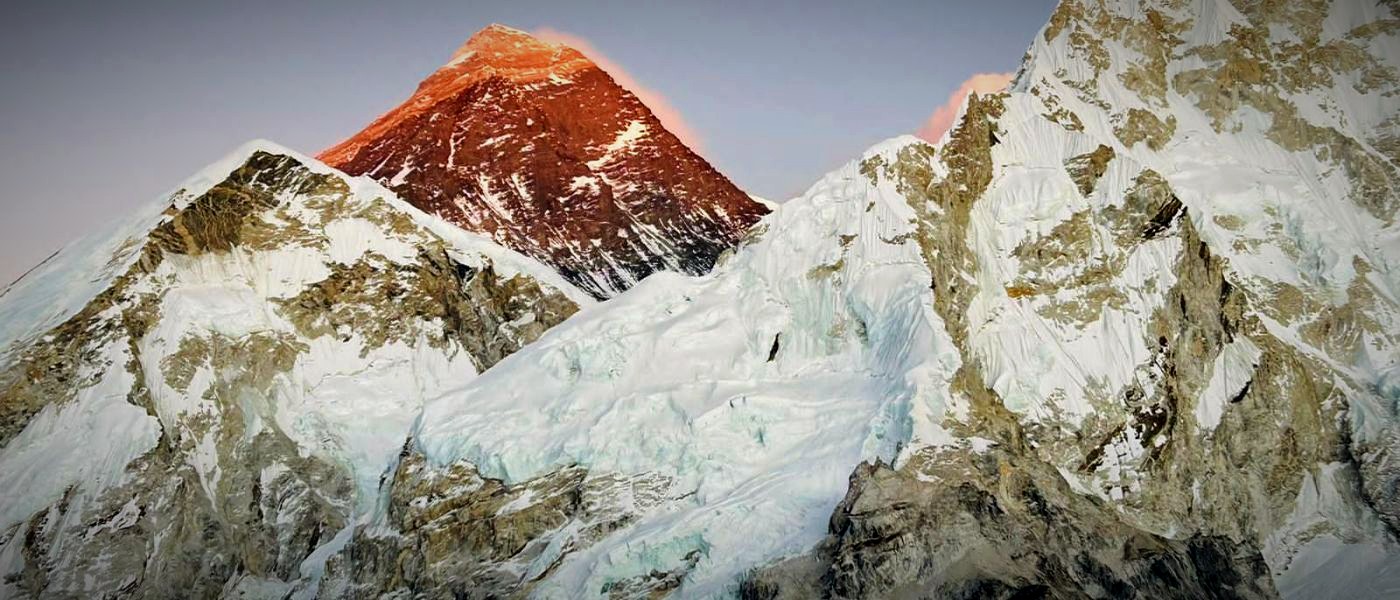
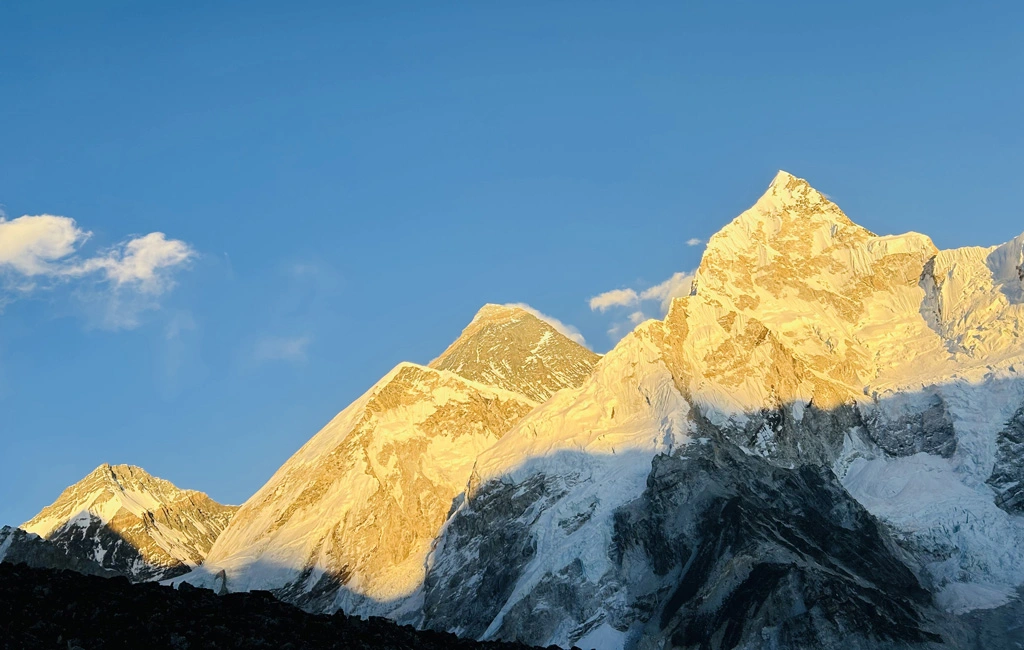
Wake at 4 AM for the pre-dawn climb to Kala Patthar. The steep ascent in thin air takes two to three hours. At the summit, dawn breaks across the Himalayan range. Everest and Mt Nuptse’s pyramid rise directly ahead, backlit by the rising sun, surrounded by Lhotse, Pumori, and Changtse.
After 20 to 30 minutes on the summit, descend to Gorak Shep for breakfast, then continue the long descent to Pheriche, dropping over 1,200 vertical metres. The thicker air brings immediate relief.
 Accomodation: Lodge
Duration: 7-8 hours walk
Meal: Breakfast, Lunch, and Dinner
Ascent: +500 m (Kala Patthar hike)
Descent: -1,200 m (to Pheriche)
Distance: Around 13 km
Accomodation: Lodge
Duration: 7-8 hours walk
Meal: Breakfast, Lunch, and Dinner
Ascent: +500 m (Kala Patthar hike)
Descent: -1,200 m (to Pheriche)
Distance: Around 13 km
Trek from Pheriche (4,371 m/14,340 ft) to Namche (3,440 m/11,286 ft)
The trek back continues as the trail descends steadily through the Imja Valley, retracing your route through Pangboche and Tengboche. Stop briefly at the monastery if time allows. The descent continues through rhododendron forest and across suspension bridges.
By mid-afternoon, you reach Namche Bazaar. Hot showers, bakery pastries, and heated rooms feel luxurious after a week at high altitude. Celebrate with your trekking guide and porter team over dinner.
 Accomodation: Lodge
Duration: 6-7 hours walk
Meal: Breakfast, Lunch, and Dinner
Ascent: +300 m
Descent: -1,200 m
Distance: Around 16 km
Accomodation: Lodge
Duration: 6-7 hours walk
Meal: Breakfast, Lunch, and Dinner
Ascent: +300 m
Descent: -1,200 m
Distance: Around 16 km
Trek from Namche (3,440 m/11,286 ft) to Lukla (2,840 m/9,317 ft)
The final day of the Everest Base Camp trek follows the Dudh Koshi River downstream through the villages you passed on the way up. The landscape feels noticeably different on the return journey, as details that were missed during the ascent become more visible along the trail.
The last section involves a gradual climb of around 300 metres from Phakding to Lukla. By late afternoon, you arrive in Lukla, where you gather with your guide and porter team for a farewell dinner. Tipping is customary, with recommended amounts ranging from $100–$150 for porters and $150–$200 for guides.
 Accomodation: Lodge
Duration: 6-7 hours walk
Meal: Breakfast, Lunch, and Dinner
Ascent: +300 m
Descent: +300 m
Distance: Around 19 km
Accomodation: Lodge
Duration: 6-7 hours walk
Meal: Breakfast, Lunch, and Dinner
Ascent: +300 m
Descent: +300 m
Distance: Around 19 km
Return Flight from Lukla (2,840 m / 9,317 ft) to Kathmandu Valley (1,400 m / 4,593 ft)
Weather permitting, catch an early morning flight back to Kathmandu. The 30-minute flight descends toward green hillsides and warmer air. Transfer from the airport to your hotel, with the rest of the day free for rest, shopping, or exploring Kathmandu.
Thamel’s restaurants offer international cuisines after two weeks of dal bhat. Hot showers, soft beds, and ground-level oxygen feel extravagant.
Duration: 30-minute scenic flight
Meal: Breakfast
Descent: -1,440 m (flight descent)
Distance: Aerial distance approx. 135 km

Fixed Departure

Cost Includes
- Domestic Airport Transfers: Private or shared vehicle for airport pick-up and drop-off (arrival and departure)
- Lukla Flights: Round-trip Kathmandu–Lukla–Kathmandu flights for clients and guide
- Trekking Accommodation: Teahouse lodges throughout the trek (twin-sharing rooms)
- Meals on Trek: Three meals per day (breakfast, lunch, and dinner) during the trek
- Trekking Permits: Required permits including Sagarmatha National Park Permit, Khumbu Pasang Lhamu Rural Municipality Permit, and TIMS Card
- Guide and Porter: Experienced English-speaking guide and porter (one porter shared between two clients)
- Staff Insurance: Full insurance coverage for guide and porter, including meals, accommodation, and wages
- Trekking Equipment: Company duffel bag, trekking map, and basic first aid kit
- Government Taxes: All applicable government taxes and service charges included
Cost Excludes
- International Flights: Airfare to and from Nepal
- Nepal Visa: USD $30 (15 days) or USD $50 (30 days), available on arrival
- Travel Insurance: Mandatory coverage for high-altitude trekking and emergency evacuation
- City Expenses: All personal expenses in Kathmandu or other cities
- Personal Expenses: Snacks, beverages (tea, coffee, bottled water, soft drinks, alcohol), Wi-Fi, battery charging, and hot showers
- Personal Gear: Trekking boots, clothing, sleeping bag, and daypack
- Tips: Discretionary gratuity for guide and porter (expected but not included)
- Emergency Evacuation: Helicopter rescue costs (covered by insurance, subject to policy terms and conditions)

Add-Ons & Options
Hotel accommodation in Kathmandu before and after the trek, guided Kathmandu sightseeing tours, and extra porter services are available upon request at an additional cost. These add-ons can be arranged based on your preferences to make your Everest Base Camp trekking experience more comfortable and flexible.

Temperature Chart
Altitude Chart
Useful Info
Best Time & Weather Conditions for Everest Base Camp Trek 12 Days
The Everest Base Camp trek 12 days can be completed throughout the year, although the experience varies depending on the season. The best time to trek to Everest Base Camp is during spring (March–May) and autumn (September–November), when the weather is stable, skies are clear, and trekking conditions are ideal.
Choosing the right season for your Everest Base Camp itinerary ensures better visibility, safer trails, and a more enjoyable Himalayan adventure.
Spring (March – May)
Spring is one of the most popular trekking seasons for the Everest Base Camp trek. The weather is mild, and the trails are filled with blooming rhododendrons and vibrant landscapes.
Morning temperatures at higher altitudes like Gorak Shep range from -10°C to -5°C, while daytime temperatures reach 5°C to 10°C. Clear mornings provide excellent views of Mount Everest and surrounding peaks.
Pros:
- Pleasant trekking weather
- Blooming flowers and scenic landscapes
- Lively atmosphere at Base Camp
Cons:
- Afternoon clouds may reduce visibility
- Busy trails during peak months (April–May)
Autumn (September – November)
Autumn is widely considered the best season for the Everest region trek. After the monsoon, the air becomes clean and crisp, offering the clearest mountain views.
Morning temperatures at higher elevations can drop to -15°C, while daytime temperatures remain around 0°C to 5°C.
Pros:
- Crystal-clear mountain views
- Stable and dry weather
- Ideal trekking conditions
Cons:
- Cold nights at higher altitudes
- Crowded trails and teahouses
- High demand for accommodation
Winter (December – February)
Winter trekking is possible but recommended mainly for experienced trekkers due to extreme cold and challenging conditions.
Temperatures at Gorak Shep can fall to -25°C or lower, and snowfall can make trails icy and difficult. Some lodges may also be closed.
Pros:
- Quiet and less crowded trails
- Clear skies and peaceful environment
Cons:
- Extremely cold temperatures
- Limited facilities
- Increased difficulty due to snow and ice
Monsoon (June – August)
The monsoon season is the least favorable time for the EBC Trek due to heavy rainfall, poor visibility, and slippery trails.
Flights to Lukla are frequently delayed or canceled due to weather conditions.
Pros:
- Fewer trekkers
- Lower accommodation costs
Cons:
- Heavy rain and cloudy skies
- Muddy and slippery trails
- Limited mountain views
- Frequent flight disruptions
Temperature Guide by Elevation
Below is a temperature guide by elevation for the Everest Base Camp trek:
| Location | Altitude | Spring/Autumn Day | Spring/Autumn Night | Winter Night |
| Lukla | 2,840 m | 10°C to 15°C | 0°C to 5°C | -5°C to -10°C |
| Namche Bazaar | 3,440 m | 8°C to 12°C | -2°C to 3°C | -10°C to -15°C |
| Tengboche | 3,867 m | 5°C to 10°C | -5°C to 0°C | -12°C to -18°C |
| Dingboche | 4,350 m | 2°C to 8°C | -8°C to -3°C | -15°C to -20°C |
| Lobuche | 4,910 m | -2°C to 5°C | -12°C to -8°C | -18°C to -25°C |
| Gorak Shep | 5,164 m | -5°C to 2°C | -15°C to -10°C | -20°C to -28°C |
| Kala Patthar | 5,643 m | -8°C to 0°C | -18°C to -12°C | -25°C or lower |
Permits, Logistics & Transportation
Required Permits
Trekkers need two official permits for the Everest Base Camp trek:
- Sagarmatha National Park Entry Permit
- Khumbu Pasang Lhamu Rural Municipality Permit
These permits are generally arranged in advance by the trekking company.
Transportation to Lukla
Access to the Everest region is typically via a short flight from Kathmandu to Lukla Airport, which serves as the main gateway to the trekking route.
These flights use small aircraft and operate only under suitable weather conditions. Schedule disruptions, including delays or cancellations, can occur, particularly during monsoon and winter periods.
During peak seasons such as spring and autumn, flights are sometimes rerouted through Ramechhap Airport to reduce congestion. In such cases, travelers must take a road journey of around 4–5 hours from Kathmandu before the flight.
Travel Considerations
- Lukla flights depend heavily on weather conditions
- Delays are possible, so including buffer days in your itinerary is recommended
- Travel insurance that covers flight disruptions is highly advisable
- Stay in regular contact with your trekking operator for updated flight information

Everest Base Camp Trek 12 Days Cost
Our Everest Base Camp trek 12 days cost for 2026 starts from around $1,330 per person. The final price may vary depending on group size, season, and level of services included in the package. In addition to the package cost, trekkers should also budget for personal expenses such as snacks, beverages, Wi-Fi, device charging, and tips for guides and porters. These additional costs can add up during the trip.
Gear & Packing List
Packing efficiently is important for the trek to EBC. While porters carry your main luggage, you will need a daypack for daily essentials. The trek involves a wide range of temperatures, from warm valleys to freezing high-altitude conditions.
Clothing
Packing layered clothing helps you stay comfortable and adapt to the changing temperatures during the EBC trek.
- Base layers (thermal tops and bottoms)
- Mid-layer such as fleece or insulated jacket
- Waterproof and windproof outer jacket
- Trekking trousers and waterproof pants
- Down jacket suitable for sub-zero temperatures
- Warm hat, sun hat, gloves, and scarf or buff
- Undergarments and multiple pairs of socks (preferably moisture-wicking)
- Lightweight camp shoes or sandals
Footwear
- Sturdy, waterproof trekking boots (well broken-in)
- Optional gaiters for snow or mud
- Microspikes or crampons for icy sections (season dependent)
Equipment
- 30–40 litre daypack
- Sleeping bag rated to -10°C to -15°C
- Sleeping bag liner
- Trekking poles
- Headlamp with spare batteries
- Sunglasses with UV protection
- Water bottles or hydration system (2–3 litres capacity)
- Power bank for charging devices
Personal Items & Essentials
- Sunscreen (SPF 50+) and lip balm
- Personal first aid kit
- Water purification tablets or filter
- Toiletries and quick-dry towel
- Wet wipes and hand sanitizer
- Earplugs and basic personal comfort items
Documents & Money
- Passport and Nepal visa
- Trekking permits
- Travel insurance documents
- Extra passport photos
- Cash in Nepali rupees and/or USD
Insurance & Medical Readiness
Travel Insurance
It is essential to have comprehensive travel insurance that covers high-altitude trekking (above 5,000 m). Your policy should include helicopter evacuation (up to 6,000 m), medical treatment, emergency hospitalization, trip cancellations or delays, loss of belongings, and medical evacuation/repatriation.
Medical Preparation
A medical check-up is recommended 4–6 weeks before the trek to assess fitness and discuss altitude sickness prevention. Consult a doctor about medication such as acetazolamide (Diamox) if needed.
Personal Medical Kit
Carry a basic first aid kit including pain relievers, altitude sickness medication, anti-diarrheal medicine, rehydration salts, blister care items, bandages, antiseptic wipes, and any personal prescription medicines. Although guides carry basic first aid, it is advisable to carry your own first aid kit as well for added safety and convenience.
Route, Map & Elevation Profile
The Everest Base Camp trek follows a classic out-and-back route through the Dudh Koshi River valley, starting and ending at Lukla (2,840 m). The trail gradually ascends through Sherpa villages, forests, and alpine landscapes before reaching Everest Base Camp (5,365 m) and Kala Patthar (5,643 m), the highest viewpoint of the trek.
Key stops along the route include Namche Bazaar, Tengboche, Dingboche, Lobuche, and Gorak Shep, with two important acclimatization days at Namche and Dingboche to help trekkers adjust to the increasing altitude.
The return journey follows the same trail in reverse, with a total trekking distance of approximately 130 km and significant elevation gain throughout the route.
Key Elevation Points
- Lukla: 2,840 m
- Namche Bazaar: 3,440 m
- Tengboche: 3,867 m
- Dingboche: 4,350 m
- Lobuche: 4,910 m
- Gorak Shep: 5,164 m
- Everest Base Camp: 5,365 m
- Kala Patthar: 5,643 m
Terrain Overview
The trail begins with forested paths, suspension bridges, and traditional villages. As altitude increases, vegetation becomes sparse, giving way to alpine terrain, rocky paths, and glacial landscapes. The final sections toward Everest Base Camp and Kala Patthar involve rugged, high-altitude terrain with limited vegetation and colder conditions.
Accommodation, Food & Water
Teahouse Accommodation
The trek is supported by family-run teahouses offering simple lodging with twin beds, basic bedding, and shared bathrooms. Facilities are better in lower regions like Lukla and Namche Bazaar, where Wi-Fi, hot showers, and sometimes attached bathrooms are available. At higher altitudes (above 4,500 m), accommodations become more basic with limited heating and colder conditions.
Food on the Trail
Teahouses serve a mix of Nepali, Tibetan, and basic Western meals such as dal bhat, noodles, rice, soups, pasta, momos, eggs, and porridge. Food variety decreases at higher elevations, while vegetarian options are widely available. Carrying snacks like energy bars, nuts, and chocolates is recommended for extra energy.
Water Safety
Avoid untreated water from natural sources. Drink boiled water from lodges, bottled water, or treated water using purification tablets or filters. Staying well hydrated (3–4 litres daily) is essential to prevent altitude-related issues.

Health, Safety & Altitude Strategy
Altitude sickness, also known as Acute Mountain Sickness (AMS), is a common concern during the Everest region trek due to reduced oxygen levels at high elevations. At higher altitudes, the body needs time to adjust to lower oxygen availability.
Common Symptoms of AMS
Mild symptoms may include:
- Headache
- Nausea or loss of appetite
- Dizziness or fatigue
- Difficulty sleeping
- Shortness of breath during exertion
Mild symptoms are common at high altitude and usually improve when you rest, stay hydrated, and follow proper acclimatization practices.
Severe Altitude Conditions
In rare cases, altitude sickness can develop into serious conditions such as High Altitude Pulmonary Edema (HAPE) or High Altitude Cerebral Edema (HACE). These conditions require immediate attention and descent to lower altitude.
Warning signs include severe shortness of breath, confusion, loss of coordination, persistent cough, or extreme weakness.
Prevention Tips
- Follow a gradual ascent and acclimatization schedule
- Stay well hydrated (3–4 litres daily)
- Avoid alcohol and unnecessary medications
- Eat regularly to maintain energy levels
- Inform your guide immediately if symptoms appear
- Consider prescribed medication such as acetazolamide (Diamox) if recommended by a doctor
What to Do If Symptoms Occur
- For mild symptoms: rest at the same altitude, hydrate, and avoid further ascent
- For worsening symptoms: descend to a lower altitude immediately
- Seek medical help if needed, then your guide will assist in making decisions and arranging support
Khumbu Region Culture & Local Lifestyle
Sherpa Culture & Traditions
The Khumbu region is home to the Sherpa people, known for their resilience at high altitudes and deep connection to the Himalayas. Their culture is strongly influenced by Tibetan Buddhism, which shapes daily life, traditions, and local values. Mountains are considered sacred, and prayer flags, mani walls, and stupas are commonly seen along the trail, reflecting spiritual beliefs that trekkers are expected to respect.
Monasteries & Village Life
Tengboche Monastery is an important spiritual site where monks perform daily rituals. Villages along the route mainly rely on tourism and agriculture, with potatoes as a primary crop, while yaks are widely used for transport and daily activities.
Local Customs & Sustainable Tourism
Trekkers should dress modestly, remove shoes before entering religious or private spaces, ask permission before taking photos, walk clockwise around religious structures, and greet locals with “Namaste” or “Tashi Delek.” Sustainable tourism is encouraged by minimizing waste, using reusable water bottles, respecting local culture, and supporting local businesses to help preserve the region.

Photography & Best Viewpoints
The Everest region offers excellent opportunities for mountain and cultural photography, with stunning landscapes, monasteries, and local life captured throughout the trek.
Essential Camera Gear
Carry a wide-angle lens for landscapes, a telephoto lens for distant peaks, spare batteries, memory cards, and protective gear like a rain cover and lens cleaning kit. Keep batteries warm in cold conditions to maintain performance.
Best Photography Locations
- Lukla Airport – Unique runway with mountain backdrop
- Namche Bazaar – Panoramic views, especially at sunrise
- Hotel Everest View – Clear views of Everest, Lhotse, and Ama Dablam
- Tengboche Monastery – Scenic monastery with Himalayan peaks
- Ama Dablam viewpoints – Iconic mountain views along the trail
- Nagarjun Hill – Wide Himalayan panoramas
- Khumbu Glacier & memorials – Scenic and historical significance
- Kala Patthar (5,643 m) – Best close-up sunrise views of Mount Everest
Photography Tips
Early mornings and late afternoons provide the best lighting. Clear skies during spring and autumn offer the sharpest and most vibrant mountain views.

Preparation & Fitness
Fitness Plan & Training
Begin training 3–4 months before your trek to Everest Base Camp to build cardiovascular endurance, leg strength, and overall stamina for high-altitude trekking.
Cardiovascular, Hill & Strength Training
Include cardiovascular exercises such as running or jogging (45–60 minutes), cycling (60–90 minutes), and swimming or stair climbing (45–60 minutes) about 4–5 times per week, focusing on consistency rather than intensity.
Add hill or endurance training 1–2 times weekly with 4–6 hour hikes on uneven terrain while carrying an 8–10 kg backpack; if hills are not available, use stairs or an incline treadmill. Strength training twice a week with exercises like squats, lunges, step-ups, and planks helps improve stability, balance, and injury prevention.
Additional Training Tips
Include 1–2 rest days per week, gradually increase training intensity, complete at least one long hike (4–6 hours), and stay consistent throughout your preparation period.
Post-Trek Rest & Kathmandu Extensions
Recovery in Kathmandu
After completing the EBC trek, it is recommended to stay in Kathmandu for 2–3 days to rest and recover. Focus on hydration, proper nutrition, and relaxation. Areas like Thamel offer a variety of restaurants, spas, and comfortable accommodations to help you recharge after high-altitude trekking.
Kathmandu Valley Sightseeing
Kathmandu is home to several UNESCO World Heritage Sites that reflect Nepal’s rich culture and history. Popular places to visit include Swayambhunath Stupa (Monkey Temple), Boudhanath Stupa, Pashupatinath Temple, Patan Durbar Square, and Bhaktapur Durbar Square. These sites provide insight into local traditions, architecture, and religious practices.
Extension Activities in Nepal
If you have extra time, you can explore other destinations such as Chitwan National Park for wildlife safaris, Pokhara for lakeside relaxation and mountain views, Nagarkot for sunrise scenery, or enjoy activities like white-water rafting. An Everest helicopter tour is also a popular option for aerial views of the Himalayas.
Shopping & Souvenirs in Kathmandu
Thamel is the main shopping hub in Kathmandu, offering trekking gear, handicrafts, and souvenirs. Common items include Thangka paintings, singing bowls, pashmina shawls, prayer flags, and local spices. Bargaining is common, and it’s advisable to check product quality before purchasing.
Practical Information for Kathmandu
- Kathmandu offers a wide range of accommodation options, from budget guesthouses to luxury hotels.
- Transportation is easily available via taxis and ride-sharing services, though traffic can be busy.
- The city has diverse dining options, including Nepali, Tibetan, Indian, and international cuisines.
- ATMs and currency exchange services are widely accessible, and tourist visa extensions can be processed at immigration offices if needed.
Everest Base Camp Trek 12 Days: Final Verdict
The Everest Base Camp Trek 12 days guides you from Lukla’s thrilling runway to the foot of Mount Everest. This journey blends physical challenge, cultural immersion, and stunning scenery. You’ll cross suspension bridges, explore the Everest region through Sherpa villages, and visit Tengboche Monastery with Everest in view. Acclimatisation days in Namche Bazaar and Dingboche ensure safety and cultural discovery. The trek peaks at EBC, beside the Khumbu Icefall, and Kala Patthar, where sunrise lights up Everest, Nuptse, and Lhotse, rewarding you with transformation and awe-inspiring landscapes.
Picture yourself at 5,643 metres on Kala Patthar, watching dawn break over Everest’s towering summit. What draws you to explore the Everest region? Is it the thrill of arriving at Everest Base Camp under your own power? The chance to trek to EBC through Sherpa villages where prayer flags dance in the wind and monks chant in ancient monasteries? Or the raw beauty of the Everest region with rhododendron forests and glacial moraines shaped by ice and stone? The way to Everest Base Camp offers personal transformation along the trek. Imagine your own trip to Everest Base Camp and share what inspires you most about this extraordinary Everest trek.
Embark on the adventure of a lifetime with Nepal Hiking Adventure Co. Our Sherpa-led teams bring generations of mountain expertise, cultural insight, and a commitment to responsible trekking, ensuring a safe and authentic journey. We handle all logistics, permits, and safety protocols, allowing you to focus on the trail and the peaks above. The trek offers unforgettable experiences towards Everest Base Camp. Contact Nepal Hiking Adventure Co. today to book your Everest Base Camp Trek package and join the countless adventurers who have tested their limits against the roof of the world.

Video

FAQ
How difficult is Everest Base Camp Trek 12 Days?
The Everest Base Camp trek 12 days is moderately challenging. It involves long trekking hours, gradual altitude gain, and varied terrain. With a reasonable level of fitness and proper preparation, most trekkers can complete the journey. The main challenges include high altitude, thin air, cold temperatures, and rugged mountain trails. As the elevation increases, the pace becomes slower, so maintaining steady walking and allowing time for acclimatization is important.
What happens if fights are cancelled?
Flights to Lukla are sometimes affected by weather conditions. In such cases, alternatives like helicopter transfers or rescheduling are arranged. It is recommended to keep buffer days in your travel plan to avoid issues with international connections. Your guide and airline will coordinate updates and assist with suitable options.
What are the best months for the Everest Base Camp trek?
The best months for the Everest Base Camp are March, April, May, September, October, and November, which are considered the most suitable periods for trekking due to favorable conditions.
What are the porter and luggage weight limits?
Porters generally carry up to 15 kg of luggage per trekker. It is important to pack light and carry only essential items in your daypack. Your main luggage will be handled by porters, while you manage personal essentials during the day. Respecting weight limits ensures ethical trekking practices and safety for porters.
How safe is the trek for solo or first-time trekkers?
The trek is considered safe for solo and first-time trekkers when accompanied by experienced, licensed guides. The route is well-established, with teahouses and local support available along the way. Proper acclimatization and guidance make the journey manageable. Many first-time trekkers successfully complete the EBC trek with adequate preparation.
How long does it take to trek to Everest Base Camp?
The Everest Base Camp trek usually takes around 12 days on a standard itinerary. Longer versions of 14 days or more allow extra acclimatization and a more relaxed pace, while shorter itineraries involve faster ascents.
What is included in the 12 Days Everest Base Camp Trek package?
The Everest Base Camp trek package for 12 days includes accommodation in teahouses, meals during the trek, required permits, domestic flights, guide services, porter support, trekking permits, and government taxes. However, it usually does not include international flights, travel insurance, personal expenses, or tips. Always review the inclusions carefully before booking your package.
What is the total cost for the 12-day Everest Base Camp Trek?
The total cost of a 12-day Everest Base Camp trek generally ranges from $1,200 to $2,500. The final price depends on factors such as the level of service, group size, season, and the type of package you choose. Private treks are usually more expensive due to personalized services, while group departures offer a more budget-friendly option.
How do i reach Everest Base Camp from Kathmandu?
The journey begins with a flight from Kathmandu to Lukla, the main gateway to the Everest region. From Lukla, the trek follows a well-marked trail through Sherpa villages, forests, and mountain landscapes. Along the way, trekkers pass through key stops such as Namche Bazaar and Dingboche before reaching Everest Base Camp. The return follows the same route.
What views can i expect on this trek?
The trek offers spectacular Himalayan scenery throughout the journey. Trekkers can enjoy views of Mount Everest along with peaks such as Lhotse, Nuptse, Ama Dablam, and Pumori. Some of the best viewpoints include Namche Bazaar, Tengboche, and Kala Patthar, where sunrise views of Everest are especially impressive.
Can I extend my trek?
Yes, the itinerary can be extended based on your preferences. Some trekkers choose to add extra acclimatization days, explore nearby areas like Gokyo Lakes, or opt for a longer itinerary such as 14 days EBC Trek. Extensions provide a more relaxed pace and flexibility in case of weather delays. Any changes will affect the overall trip cost and should be planned in advance with your trekking operator.
What makes this trek special?
The Everest Base Camp trek offers a unique combination of natural beauty, cultural experiences, and personal achievement. Trekkers pass through traditional Sherpa villages, monasteries, and diverse landscapes while being surrounded by some of the world’s highest peaks. Reaching Everest Base Camp is a memorable milestone that represents both a physical and personal accomplishment.
Is the 12-day EBC itinerary sufficient?
Yes, the 12-day EBC itinerary is generally sufficient for completing the trek comfortably with proper acclimatization. It includes essential rest days to help adjust to high altitude, and maintains a balanced pace. Some trekkers prefer longer itineraries for added comfort, but the 12-day plan is widely used and suitable for most fit travelers.
How much weight can i carry during the trek?
Trekkers usually carry a daypack of around 5 to 8 kg, including daily essentials such as water, snacks, and personal items.
Is Wi-Fi available during the trek?
Wi-Fi is available in many teahouses along the route, especially in lower areas like Lukla and Namche Bazaar. However, the connection can be slow and less reliable at higher altitudes.
Are there ATMs or charging facilities on the trek?
ATMs are available in Namche Bazaar, but not reliable beyond that point. Charging facilities are available in teahouses for an extra cost, so carrying a power bank is recommended.
Do I need a permit for the Everest Base Camp trek?
Yes, you will need permits such as the Sagarmatha National Park entry permit and the Khumbu Pasang Lhamu Rural Municipality permit. Most trekking agencies handle these permits in advance for trekkers, especially when you book a guided Everest Base Camp package, making the process smooth and hassle-free.
Is tipping required for guides and porters?
Although tipping is not mandatory in Nepal, it is commonly practiced by trekkers as a way to appreciate the support and effort of guides and porters during the trek.

Reviews


An Unforgettable Trek to Everest Base Camp
I completed the 14-day Everest Base Camp Trek with Nepal Hiking Adventure last month, and it was one of the best travel experiences I’ve ever had.
The organization was excellent from the moment we arrived in Kathmandu. Our guide was calm, experienced, and always attentive to the group’s pace and safety.
Reaching Kala Patthar at sunrise and seeing Everest standing above the clouds was something I will never forget. The Sherpa villages, monasteries, and mountain scenery made every day special.
I highly recommend this trek to anyone dreaming of the Himalayas.

Bishnu Lamsal
Julien Moreau,
France
Great time exploring Nepal
It was our first ever experience in the high mountains – our guide Raj, took good care of us, ensuring we rested enough and enjoyed the views. The tour was well-planned, and the accommodation, food and tea houses on the way were excellent. Thank you!

Raj Kumar Acharya
Daniel,
USA
What an Amazing Trip
We’ve done a bit of everything in such a short time, rafting, trekking, sightseeing, flying over the Mt Everest, amazing sunrise by the Himalayas thanks to Bishnu and his recommendations:)!
Everything was just fabulous, and we are surely coming back for another adventure most likely base camp at Mt Everest!!!Our guide in Katmandu was just perfect telling us about the city with so much passion!Thank you Bishnu and to his brother for making this trip just PERFECT!!
Read moreZoe Clarke,
Australia
pj-shetty
First about myself. I am an Indian living in Los angeles for the last 10 years.
I have been thinking of doing the base camp hike for a while now. After getting in touch with a few companies, I decided to go with Nepal Hiking Adventure Company.
Bisnu, the company owner, was very responsive with his emails. I think we ended up exchanging close to 30 emails. Bisnu always responded within a day with detailed responses to all my queries.
My flights to Kathmandu got delayed due to bad weather and Bisnu was kind enough to adjust my dates for the trip.
Ours was a group of 2 hikers. My fellow hiker was an American. Our guide was Rudra and we had one porter Dipak. Rudra is a very knowledgeable and patient man! How a company performs is generally understood by how that company handles exceptions. In my case, I got altitude sickness on day 3. Rudra took a decision to call it a day and we ended up staying for the night even though the plan was to walk further and stay at the next village. My fellow hiker proceeded with Dipak to the next village. This along with Diamox helped me get back on my feet the next day and I was able to complete the base camp along with hiking to Kala pattar. I am grateful to Rudra for not being very pushy and giving me the time to get normal.
I think the price is very fair and you end up staying in good hotels. I don’t remember any day where the food or the hotel was bad.
I would highly recommend this company and the team for any one who wants to do EBC and other hikes in the Himalayas.
Read morePJ Shetty,
Los Angeles, California
EBC TREK
From the minute we landed in Kathmandu Bishnu took care of every little detail of our trip . A taxi was waiting for us to take us to Thamel and our hotel .
The day after we had a meeting with Bishnu who explained every detail of our EBC trek and answered any questions we may have had .
The Trek was everything we hoped for and more , Kamel our guide was the coolest and most knowledgeable guy we could have wished for . We loved every single minute of our adventure and it’s without doubt the greatest trip of my life .
Bishnu and his team has certainly made all this possible , they look after you and make sure your trip is everything you want it to be .
I plan to return to Nepal and any future trekking trips I plan then I without doubt will use Nepal Hiking Adventure Company .
Thankyou Bishnu and Kamel

Tek Bahadur Dahal (Kamal)
Kavya Choudhary,
India


Our History in Service Excellence


