
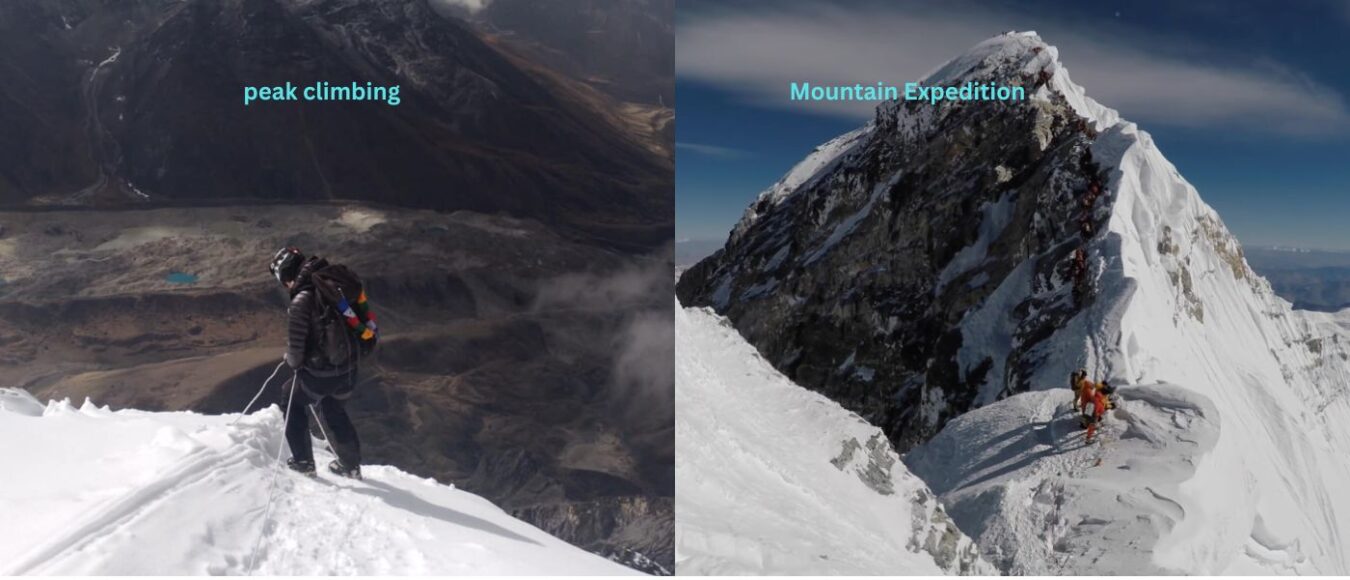
Trekking Peaks vs Expedition Peaks
Summary: Trekking Peaks vs Expedition Peaks in Nepal differ across altitude, cost, and risk. Trekking peaks like Island Peak and Mera Peak sit under 6,500m, cost $2,500-$5,000, and require basic mountaineering skills over 14-21 days. Expedition peaks exceeding 7,000m, including Mount Everest and Manaslu, demand advanced technical skills, months of training, and $15,000-$90,000, with lower success rates due to death zone exposure and complex logistics.
Understanding Trekking Peaks vs Expedition Peaks
The distinction between trekking peaks vs expedition peaks shapes every aspect of your Himalayan mountaineering journey. Specifically, trekking peaks are mountains typically under 7,000 metres that require basic mountaineering skills and can be attempted with moderate preparation. However, expedition peaks demand advanced technical ability, months of training, and significant financial investment. Understanding this difference helps you choose a climb that matches your experience, budget, and available time.
Nepal hosts some of the world’s most accessible and challenging peaks, making it a premier destination for peak climbing. Moreover, the Nepal Mountaineering Association (NMA) classifies trekking peaks in Nepal as Group A and B, whilst expedition peaks fall under government regulation through the Ministry of Tourism. This system creates a natural progression, allowing climbers to build experience on popular trekking peaks like Island Peak or Mera Peak before attempting giants such as Mount Everest or Ama Dablam. Consequently, the structure supports both beginners and seasoned mountaineers.
This guide examines trekking peaks vs expedition peaks in detail, covering permits, costs, technical requirements, and seasonal considerations. You will also find clear comparisons, practical training advice, and realistic itinerary insights for both categories. Whether you are planning your first peak climb or preparing for a full-scale mountaineering challenge, this resource by Nepal Hiking Adventure helps you make informed decisions about climbing in Nepal.


Defining the Basics
What Is a Trekking Peak in Nepal
Official Classification and Rules
Trekking peaks are mountains managed by the Nepal Mountaineering Association rather than the government. These peaks require permits obtained through registered trekking agencies, typically processed within days. In addition, the NMA divides them into Group A (more technical) and Group B (less technical), with corresponding permit fees. However, all trekking peaks share common characteristics: relatively straightforward routes, shorter climbing seasons, and accessibility to those with basic mountaineering skills.
Range and Typical Altitudes
Most trekking peaks in Nepal range between 5,500 and 6,500 metres. Popular examples include:
- Island Peak (Imja Tse): 6,189 metres
- Mera Peak: 6,476 metres (highest trekking peak in Nepal)
- Lobuche East: 6,119 metres
- Pisang Peak: 6,091 metres
- Yala Peak: 5,732 metres
Despite their classification, these peaks still present high-altitude challenges requiring proper acclimatisation and respect for altitude effects.
What Is an Expedition Peak in Nepal
Government Regulation vs NMA
Expedition peaks require permits issued directly by Nepal’s Department of Tourism. The process involves substantial paperwork, liaison officer assignment, and higher royalty fees. Additionally, these peaks demand fully supported expeditions with established base camps, multiple high camps, and extended timelines. The government oversight reflects the serious nature of these climbs, where risks increase significantly compared to trekking peaks.
Range and Typical Altitudes
Expedition peaks in Nepal typically exceed 7,000 metres, with eight of the world’s fourteen 8,000-metre peaks located here. Notable examples include:
- Mount Everest: 8,849 metres (highest mountain in the world)
- Lhotse: 8,516 metres
- Mount Makalu: 8,485 metres
- Mount Cho Oyu: 8,188 metres
- Manaslu: 8,163 metres
These mountain peaks require months of preparation, advanced technical skills, and substantial financial resources.
Key Features Compared
Altitude and Terrain
| Feature | Trekking Peak | Expedition Peak |
| Typical altitude range | 5,500–6,500 m | 7,000–8,849 m |
| Terrain complexity | Moderate snow/ice slopes | Complex icefalls, seracs, exposed ridges |
| Route finding | Generally straightforward | Requires expert navigation |
| Weather exposure | Moderate | Extreme, life-threatening |
Trekking peaks generally follows established trails to base camp, then tackles snow slopes with fixed ropes. In contrast, expedition peaks present technical challenges throughout, with dangerous sections requiring advanced ice climbing skills.
Technical Difficulty and Skills Required
Basic mountaineering suffices for most trekking peaks:
- Crampon use on moderate slopes
- Jumar ascension on fixed ropes
- Ice climbing on 40–50 degree angles
- Self-arrest techniques
- Basic rope management
On the other hand, expedition peaks demand far more:
- Advanced ice climbing (vertical sections)
- Mixed rock and ice techniques are essential for those looking to tackle the key differences between trekking and climbing expedition peaks in Nepal.
- Crevasse rescue expertise
- Extended use of supplemental oxygen (for 8,000m peaks)
- Deep understanding of high-altitude physiology
Prior mountaineering experience becomes essential rather than optional for expedition objectives.
Duration and Acclimatisation
Trekking peaks usually takes 14–21 days total, including the approach trek, acclimatisation, and summit attempts. For example, Island Peak expeditions typically follow the Everest Base Camp terk route, allowing natural altitude adjustment.
Expedition peaks, conversely, require 40–70 days depending on the specific peak. The extended timeline accommodates multiple rotations between camps, allowing gradual adaptation to extreme altitude. Therefore, this patient approach reduces risks but demands significant time commitment.
Permits, Fees, and Regulations
Nepal trekking peaks require:
- NMA permit (Group A: $250–500 spring/autumn, Group B: $70–350)
- TIMS card for the approach trek
- National park entry permits (if applicable)
- Trekking agency arrangement (mandatory)
Meanwhile, expedition peaks involve:
- Government royalty fees ($11,000–70,000 depending on the peak and season)
- Liaison officer fees and logistics
- Garbage deposit (refundable)
- Insurance requirements
- Sirdar (climbing leader) mandatory assignment
Thus, the cost difference reflects the scale and support required.
Equipment and Logistics
Trekking peak gear remains relatively standard:
- Mountaineering boots (single or light double)
- Crampons and ice axe
- Harness, carabiners, jumar
- Down suit for summit day
- Standard trekking equipment
However, expedition logistics multiply complexity:
- Expedition-grade boots (double or triple)
- Technical ice climbing tools
- Extensive rope, anchors, snow bars
- Multiple camps with tents, stoves, oxygen systems
- Satellite communication equipment
- Comprehensive medical supplies
Support staff increases proportionally. Trekking peaks might need 2–3 guides and porters, whilst expedition peaks require teams of 10–20 or more.
Cost Differences
Peak climbing in Nepal costs vary dramatically. Popular trekking peaks total approximately:
- Island Peak: $2,500–4,000
- Mera Peak: $2,800–4,500
- Lobuche East: $3,000–4,800
These figures cover permits, guides, base camp support, and meals.
In comparison, expedition peaks range substantially higher:
- Manaslu: $15,000–25,000
- Cho Oyu: $30,000–45,000
- Everest: $45,000–90,000+ (commercial operators)
The key differences stem from extended durations, specialised equipment, larger support teams, and complex logistics.

Risk and Safety Considerations
Both categories carry inherent dangers, but the scale differs. Trekking peaks presents manageable risks through:
- Acute mountain sickness prevention
- Basic crevasse awareness
- Weather monitoring
- Proper acclimatisation schedules
However, expedition peaks introduce life-threatening hazards:
- Prolonged exposure to the “death zone” (above 8,000m)
- Severe frostbite and hypothermia risks
- Avalanche danger in complex terrain
- Cerebral and pulmonary oedema at extreme altitude
- Rescue complications due to remoteness
Emergency helicopter evacuation from trekking peaks remains feasible. Above 7,000 metres, rescue becomes significantly more difficult.
Summit Success Rates
Statistics reveal clear patterns. Well-known trekking routes show success rates of:
- Island Peak: 60–70%
- Mera Peak: 85–90%
- Lobuche East: 50–65%
Failures typically result from inadequate acclimatisation or weather rather than technical inability.
In contrast, expedition peaks present harsher numbers:
- Mount Everest: 40–60% (varies by season and route)
- Ama Dablam: 30–40%
- Manaslu: 30–50%
These reflect genuine difficulty where mountaineering experience and conditions determine outcomes.
Trekking Peaks Explained
What Makes a Trekking Peak Distinct
Trekking peaks offers an accessible starting step for mountain enthusiasts transitioning from walking to technical climbing. Importantly, the difference between trekking peaks and pure hiking lies in the requirement for ropes, crampons, and snow travel techniques. Trekking is in between hiking and full mountaineering. Yet compared to expedition peaks, they remain achievable for relative beginners with proper training and guidance.
The approach trek itself provides valuable acclimatisation, often passing through stunning regions like the Khumbu Valley or Annapurna Circuit. This dual experience of cultural immersion and mountaineering appeals to travellers. Many travellers consider peak climbing after completing standard trekking activities because it offers a natural progression. Consequently, it provides both adventure and a deeper connection to the Himalayas.
Popular Trekking Peaks in Nepal
Island Peak
Island Peak stands as perhaps the most popular trekking peak in Nepal. Located in the Khumbu region, it’s typically combined with Everest Base Camp approaches. Furthermore, the peak requires a 7–8 hour summit day involving glacier travel, a steep headwall (45–50 degrees), and a final ridge traverse.
Technical demands remain moderate but genuine. You’ll use crampons throughout, ascend fixed ropes, and navigate crevassed terrain. The high camp sits at 5,600 metres, demanding good acclimatisation. Success depends on fitness, weather, and prior rope work experience.
Mera Peak
As the highest trekking peak, Mera Peak attracts those wanting serious altitude experience without extensive technical climbing. The approach takes you through the remote Hinku Valley, offering authentic wilderness trekking. Moreover, the summit push involves long snow slopes at a manageable angle, making it physically demanding rather than technically challenging.
Mera Peak suits climbers prioritising altitude adaptation and endurance. The views from the summit encompass five 8,000-metre peaks, including Everest, Lhotse, and Makalu.
Lobuche East
Lobuche East provides a more technical option within the trekking peak category. The route includes exposed ridges, mixed rock and ice sections, and steeper terrain than Island Peak. It’s often considered excellent preparation for expedition objectives like Ama Dablam.
The peak lies near Everest Base Camp, allowing combination with classic trekking routes. However, the technical demands filter out less experienced climbers, resulting in smaller teams and quieter experiences.
Pisang Peak
Located in the Annapurna region, Pisang Peak offers a shorter alternative within the Circuit trekking route. The climb takes 2–3 days from Pisang village, with a high camp at around 5,400 metres. In addition, the summit day involves straightforward snow slopes, though some sections reach 35–40 degrees.
This peak suits those completing the Annapurna Circuit who want a mountaineering element without extensive deviation from their trekking itinerary.
Yala Peak
Yala Peak represents the gentlest option among popular peaks, technically more akin to a snow trek than true climbing. At 5,732 metres, it offers genuine high-altitude exposure whilst remaining accessible to fit walkers with minimal technical training.
The peak lies near Kyanjin Gompa in Langtang Valley, requiring only 2–3 days from the main trekking route. It’s ideal for testing altitude response before committing to more demanding objectives.
Chulu Far East Peak
Chulu Far East Peak sits in the Annapurna region and is often chosen by climbers seeking a quieter, more alpine experience than the Khumbu trekking peaks. The approach follows the Annapurna Circuit trek before branching into high glacial terrain above Manang. As a result, the climb blends classic high-altitude trekking with a remote mountain setting.
The ascent involves glacier travel, basic ice climbing, and moderate snow slopes, with summit angles generally steeper than Pisang Peak but less exposed than Lobuche East. A high camp is usually established around 5,500 metres, making proper acclimatisation a key factor. Chulu Far East suits climbers with prior crampon use, fixed rope techniques, and mountaineering experience who want to progress beyond entry-level trekking peaks without committing to a full expedition peak objective.
Expedition Peaks Explained
Characteristics of Expedition Peaks
Expedition peaks represent serious mountaineering undertakings requiring comprehensive preparation. These climbed peaks demand months of training, substantial financial resources, and often previous high-altitude climbing experience. Normally expedition means climbing mountains that exceed 7,000 metres with full logistical support. The mountaineering expedition structure involves multiple camps, extended timelines, and full support teams.
The psychological demands match the physical challenges. Extended isolation, extreme conditions, and genuine danger test mental resilience. Therefore, success requires patience, discipline, and the ability to make sound decisions under stress.
Major Expedition Peaks in Nepal
Mount Everest
Mount Everest needs little introduction as the highest peak on Earth. The South Col route from Nepal has become relatively standardised through commercial operators, yet remains extremely dangerous. Climbers face the Khumbu Icefall’s objective hazards, prolonged time in the death zone, and unpredictable weather.
The mountain expedition typically requires 55–65 days, with multiple rotations to establish camps and acclimatise. Costs exceed $45,000 for commercial mountain expeditions, reaching $90,000+ for premium services. Despite infrastructure, Everest kills regularly, demanding respect and genuine preparation.
Kanchenjunga
Mount Kanchenjunga stands as the third highest mountain in the world and one of Nepal’s most remote 8,000-metre peaks. Located in far eastern Nepal, the expedition involves a long approach through isolated valleys before reaching Kanchenjunga Base Camp. As a result, logistics are complex and rescue options are limited.
The normal route features sustained technical climbing, exposed traverses, and significant avalanche risk. Harsh weather and extreme isolation contribute to low success rates compared to more commercialised peaks. A Kanchenjunga expedition typically requires 55–65 days, demanding strong self-sufficiency, proven high-altitude experience, and careful planning.
Lhotse / Makalu / Cho Oyu
These 8,000-metre giants offer alternatives to Everest’s crowds whilst presenting their own challenges. Lhotse shares Everest’s base camp and lower route, diverging at the South Col for a technical face climb. Makalu demands sustained technical climbing over its entire route.
Cho Oyu, whilst considered the “easiest” 8,000er, still requires proper expedition experience and altitude tolerance.
Each mountain expedition demands 45–60 days and costs between $25,000 and $50,000 depending on services and support level.
Manaslu / Annapurna I
Manaslu has gained popularity as an Everest preparation peak, offering serious altitude without quite the same crowds. The route involves technical sections, avalanche-prone slopes, and sustained high-altitude exposure. Success rates hover around 30–40%, reflecting genuine difficulty.
Annapurna I remain the deadliest 8,000-metre peak, with historically low success rates and high fatality percentages. Only experienced expedition teams should consider this objective, acknowledging its fearsome reputation.
Ama Dablam
Ama Dablam is widely regarded as one of the most technical and visually striking expedition peaks in Nepal. Rising above the Khumbu region, the mountain involves sustained rock climbing, ice climbing, and exposed ridge travel from Camp I upward. Despite its lower height compared to 8,000-metre peaks, the technical difficulty is significant.
Most Ama Dablam expeditions last 30–40 days, with extensive fixed rope systems required on steep faces and hanging glaciers. Costs generally range from $18,000 to $30,000, depending on support. Ama Dablam suits climbers with strong alpine climbing skills and prior expedition experience, rather than those focused purely on altitude.
Himlung Himal
Himlung Himal lies in the remote Nar Phu Valley near the Tibetan border and is considered a transitional peak between trekking peaks and major expedition peaks. The approach involves restricted-area trekking, offering a quieter and more traditional Himalayan expedition environment.
The climb itself follows long snow slopes, moderate glacier travel, and high-altitude camps above 6,000 metres. While less technical than 8,000-metre objectives, Himlung demands solid acclimatisation, endurance, and basic mountaineering skills. Expeditions typically run 35–45 days, making it a popular step-up peak for climbers preparing for larger Himalayan goals.
Technical Skills and Advanced Training
Expedition peaks require mastery across multiple disciplines:
- Ice climbing to WI4+ standard
- Mixed climbing on rock and ice
- Technical rope management (belaying, abseiling, anchor building)
- Crevasse rescue techniques
- High-altitude physiology understanding
- Weather interpretation skills
- Emergency medical knowledge
Training should span 6–12 months, including altitude exposure on preparatory peaks, technical courses, and focused fitness development. Many climbers complete several trekking peaks before attempting expedition objectives. Peak climbing requires dedication, time, and systematic skill development.
Expedition Logistics and Team Requirements
A typical expedition peak team includes:
- Expedition leader (experienced mountaineer)
- Base camp manager
- Multiple climbing Sherpas
- Cook staff
- Liaison officer (government requirement)
- Communication specialist
- Medical personnel (for larger expeditions)
Logistics encompass tent camps at multiple altitudes, rope fixing between camps, oxygen cache management, weather forecasting, and emergency protocols. Consequently, the support infrastructure enables client climbers to focus on the summit attempt whilst professionals manage complex operations. Mountain expeditions also require detailed planning months in advance.
Itineraries for Common Expedition Peaks
Expedition schedules follow similar patterns:
- Weeks 1-2: Approach trek and base camp establishment
- Weeks 3-4: Acclimatisation rotations to Camp 1 and Camp 2
- Weeks 5-6: Higher rotation pushing to Camp 3 or Camp 4
- Weeks 7-8: Summit push and descent
- Week 9: Buffer for weather delays and base camp clean-up
This structure allows gradual adaptation whilst maintaining contingency for setbacks. Patience proves essential as weather windows dictate progress.

Example Expedition Itineraries
Mount Everest Expedition (Approx. 2 Months)
Everest expeditions follow a long, structured schedule due to the extreme altitude and the need for repeated acclimatisation.
- Weeks 1–2: Approach and Base Camp Setup
Trek to Everest Base Camp via the Khumbu Valley. Establish base camp and complete icefall training. - Weeks 3–4: Lower Camp Acclimatisation Rotations
Multiple rotations through the Khumbu Icefall to Camp 1 and Camp 2, including load carries and recovery periods. - Weeks 5–6: Higher Camp Rotations
Ascents to Camp 3 on the Lhotse Face and, if conditions allow, a brief exposure at Camp 4 on the South Col. - Weeks 7–8: Summit Push and Descent
Final rest followed by the summit attempt during a suitable weather window, then descent and camp dismantling.
Buffer Period. Weather and Logistics
Additional days are reserved for weather delays, route closures, and base camp clean-up.
Ama Dablam Expedition (Approx. 3–4 Weeks)
Ama Dablam expeditions are shorter but technically demanding, with less focus on extreme altitude and more on sustained climbing.
- Week 1: Approach and Base Camp Establishment
Trek from Lukla to Ama Dablam Base Camp and conduct technical skill refreshers. - Week 2: Acclimatisation and Route Fixing
Rotations to Camp 1 and Camp 2, fixing ropes on exposed rock, ice, and ridge sections. - Week 3: Summit Push
Final ascent from Camp 2 to the summit, followed by descent to base camp. - Optional Buffer: Weather Contingency
Extra days are allocated for weather interruptions or route maintenance.
Who Should Attempt Expedition Peaks
Suitable candidates possess:
- Previous high-altitude experience (ideally above 6,000m)
- Strong technical climbing skills
- Excellent physical fitness and endurance
- Mental resilience for extended isolation
- Financial resources for proper preparation
- Realistic understanding of risks
- Flexibility for extended absence (2–3 months)
Expedition peaks in Nepal include some of the world’s most challenging objectives. Rushing progression leads to failure or worse. Building experience methodically through trekking peaks and smaller expeditions creates a foundation for success.
In-Depth Comparison
Side-by-Side Feature Table
| Feature | Trekking Peak | Expedition Peak |
| Duration | 14–21 days | 40–70 days |
| Cost | $2,500–5,000 | $15,000–90,000+ |
| Altitude | 5,500–6,500 m | 7,000–8,849 m |
| Technical difficulty | Basic mountaineering skills | Advanced technical expertise |
| Success rate | 50–90% | 30–60% |
| Permit authority | Nepal Mountaineering Association | Department of Tourism |
| Team size | 1–6+ climbers | 4–12+ climbers |
| Risk level | Moderate (manageable) | High (life-threatening) |
| Prior experience | Optional but recommended | Essential |
| Physical fitness | Good to excellent | Excellent to exceptional |
How Climbing Culture Differs
Trekking peak culture emphasises accessibility and achievement. Teams celebrate camaraderie, share base camp experiences, and focus on personal progression. The atmosphere remains encouraging, with guides accommodating varying ability levels. Many find that peak climbing is easier and shorter than they initially expected, especially with proper preparation.
In contrast, expedition culture becomes more serious and professional. Climbers understand the stakes, respect the mountain’s dangers, and maintain disciplined routines. Decision-making centres on safety over summits, and teams operate with military-like precision.
Permit Process: NMA vs MoTCA
Nepal Mountaineering Association permits process quickly:
- Choose registered trekking agency
- Submit passport copies and application
- Pay permit fees (processed within days)
- Receive permits before departure
- Pay garbage deposit
- Provide insurance documentation
Government expedition permits involve more complexity:
- Apply through registered agency months in advance
- Submit detailed expedition plan
- Pay substantial royalty fees
- Accept assigned liaison officer
- Provide insurance documentation
- Pay garbage deposit
- Submit post-expedition report
The bureaucracy reflects the seriousness and support infrastructure required.
Gear Checklist Comparison
Essential for trekking peaks:
- Mountaineering boots (B2 or B3 rated)
- Crampons (12-point)
- Ice axe
- Climbing harness
- Helmet
- Down jacket and pants
- Sleeping bag (rated to -20°C)
- Trekking poles
- Trekking shoes for approach
- Trekking pants for lower elevations
Additional for expeditions:
- Expedition boots (double/triple)
- Technical ice tools (pair)
- Multiple down suits
- Oxygen system and masks
- High-altitude sleeping bags (-40°C)
- Communication devices
- Comprehensive medical kit
- Spare gear redundancy
Typical Challenges and Pain Points
Trekking peaks presents common issues:
- Underestimating altitude effects
- Insufficient fitness preparation
- Poor weather timing
- Inadequate technical practice
- Overly ambitious schedules
Challenging expedition problems multiply:
- Extended absence from work/family
- Financial pressure affecting decisions
- Psychological strain from isolation
- Health deterioration at extreme altitude
- Team dynamics under stress
- Equipment failure in critical moments
- Weather window miscalculation
Understanding these patterns helps manage expectations and prepare properly. Notably, climbing a mountain of any size requires humility and thorough preparation.

Choosing the Right Path
How to Decide Based on Experience
Begin honestly assessing your background. Consider trekking peaks if:
- Limited or no climbing experience
- First time attempting high altitude
- Want achievable challenge within 2–3 weeks
- Budget under $5,000
- Testing interest before larger commitment
Consider expedition peaks if:
- Multiple trekking peaks completed successfully
- Comfortable above 6,000 metres
- Solid technical mountaineering skills
- Can commit 2–3 months
- The budget exceeds $50,000
- Clear understanding of serious risks
Progressing methodically builds capability whilst managing danger. Jumping categories invites failure or tragedy. Understanding that trekking is more rigorous than standard hiking but less demanding than full expeditions helps set realistic expectations.
Fitness and Preparation Considerations
Trekking peak preparation (3–6 months):
- Cardiovascular base (running, cycling)
- Hill walking with weighted pack
- Leg strength training
- Weekend mountain walks
- Basic ice climbing course
Expedition preparation (6–12 months):
- Advanced endurance training
- Technical climbing courses
- Altitude exposure trips
- Mental resilience work
- Comprehensive mountaineering education
- Practice expedition on smaller peak
Physical fitness alone doesn’t suffice. Technical skills, mental strength, and altitude adaptation determine success.
Time and Budget Planning
Trekking peak timeline:
- 3–6 months: Training and preparation
- 2–3 weeks: Expedition itself
- 1 month: Recovery
Total investment: $2,500–5,000 plus flights and insurance.
Expedition peak timeline:
- 6–12 months: Training and skill development
- 2–3 months: Expedition period
- 2–3 months: Recovery
Total investment: $15,000–90,000+ plus extended leave arrangements.
Budget planning should include contingencies for delays, equipment replacement, and emergency scenarios.
Combining Trekking Peaks With Trekking Routes
Nepal offers excellent opportunities to merge classic treks with peak climbing. Popular combinations include:
- Everest Base Camp with Island Peak
- Annapurna Circuit with Pisang Peak
- Langtang Valley with Yala Peak
- Mera Peak with Amphu Lapcha Pass crossing
These combinations maximise your time, provide natural acclimatisation, and offer diverse experiences within single trekking packages. The approach trek becomes integral to summit preparation rather than a separate activity. Trekking peaks include these popular options precisely because they integrate well with established routes.
Preparing for Your First Peak Climb
First-time peak climbers should prioritise:
- Choose appropriate objective (Group B trekking peak)
- Join reputable agency with experienced guides
- Complete technical training course beforehand
- Build fitness systematically
- Study altitude management
- Acquire proper equipment (don’t economise on boots)
- Maintain flexible schedule
- Approach with humility and patience
Remember, the mountain remains after you leave. Turning back demonstrates wisdom, not failure. Your first peak climbing adventure teaches lessons applicable to all future objectives.

Training and Preparation Guide
Fitness Training Plan
A structured training approach builds the foundation needed. Months 1-2: Base Building
- 4–5 cardio sessions weekly (45–60 minutes)
- Hill walking (gradually increasing pack weight)
- Basic strength training (legs, core, upper body)
- Flexibility work (yoga, stretching)
Months 3-4: Intensity Phase
- Longer weekend hikes (6–8 hours with 15kg pack)
- Interval training (hill sprints, stairs)
- Increased strength focus
- Continue cardio base
Months 5-6: Specificity Training
- Full-day mountain walks
- Technical skill practice
- Altitude exposure if possible (visit high mountains)
- Taper final two weeks before departure
Consistency matters more than occasional heroic efforts. Building gradually prevents injury whilst developing sustainable fitness.
Technical Skills You Need
For trekking peaks:
- Crampon walking on various angles
- Ice axe self-arrest
- Jumar ascension and rappelling
- Rope team travel
- Basic crevasse awareness
- Emergency procedures
Book a weekend mountaineering course covering these fundamentals. Practise on local hills before departing for Nepal.
For expedition peaks:
- Everything above, plus:
- Lead climbing on ice and mixed terrain
- Anchor construction
- Crevasse rescue (both directions)
- High-altitude cooking and camp management
- Oxygen system operation
- Emergency improvisation
This expertise requires courses, guided practice, and real climbing experience built over seasons.

Altitude Acclimatisation Strategy
Proper acclimatisation separates success from failure. Key principles include:
- Ascend gradually (maximum 300–500m altitude gain daily above 3,000 m)
- “Climb high, sleep low” (day trips above sleeping altitude)
- Rest days every 3–4 days of ascent
- Hydration (4–5 litres daily)
- Recognise early symptoms (headache, nausea, fatigue)
- Descend immediately if symptoms worsen
Trekking peak itineraries build this naturally through approach treks. Expedition peaks require multiple rotations between camps, spending nights at progressively higher altitudes before summit attempts.
Never rush acclimatisation. The schedule serves your body’s adaptation, not arbitrary timelines. Altitude sickness can kill, and descent remains the only certain cure.
Safety and Risk Minimisation
Risk management involves multiple layers. Pre-trip:
- Comprehensive medical check-up
- Travel insurance with high-altitude coverage (minimum $10,000 helicopter evacuation)
- Equipment checks (no compromises)
- Weather window research
- Emergency contact planning
During the expedition:
- Follow guide advice absolutely
- Monitor personal health honestly
- Maintain communication with the team
- Respect weather forecasts
- Recognise when to turn back
- Stay hydrated and fed
Emergency preparedness:
- Know evacuation procedures
- Carry basic first aid knowledge
- Understand altitude illness symptoms
- Maintain satellite communication
- Follow established descent routes
Cost Breakdown
Permits and Royalties
Trekking peaks (NMA):
- Group A (spring/autumn): $250–500 per person
- Group B (spring/autumn): $70–250 per person
- Winter/summer discounts available
- TIMS card: $30
- National park entry: $30
- Additional fees: $500 (Garbage deposit)
Expedition peaks (government):
- 7,000–7,999 m: $1,800–4,000
- 8,000–8,848 m: $11,000–15,000
- Mount Everest: $15,000
- Additional fees: Liaison officer, garbage deposit, base camp taxes
Guide, Sherpa and Support Staff Fees
Trekking peak costs:
- Guide: $35–50 per day
- Climbing Sherpa: $50-70 per day
- Porter: $25-35 per day
- Base camp cook: $30-40 per day
A typical team requires 1 guide, 1 Sherpa, 2 porters, and 1 cook.
Expedition costs multiply significantly:
- Expedition leader: $5,000–15,000 total
- Climbing Sherpas: $3,000–10,000 each (excluding summit bonus)
- Base camp staff: $2,000–4,000 each
- Liaison officer: $2,500–3,500
Tent Peak or larger expeditions employ 10–20 support staff.
Gear and Equipment Costs
Personal gear investment for trekking peaks:
- Mountaineering boots: $1000–3000
- Crampons: $150–250
- Ice axe: $100–400
- Harness and hardware: £150–300
- Clothing: $3,000–5,000
- Total: $1,200–2,350

Expedition peaks:
- Expedition boots: $3000–5000
- Technical tools: $400–800
- Oxygen system: Often provided, or $1,500
- Down suits: $500–1,000
- Communication devices: $300–800
- Total: $3,200–5,800+
Many items can be rented in Kathmandu, reducing initial investment.
Seasonal and Weather Considerations
Best Months for Trekking Peaks
Spring (April–May):
- Most popular peak climbing season
- Stable weather windows
- Warmer temperatures
- Crowded on popular trekking peaks
- Higher permit fees
Autumn (September–November):
- Excellent conditions
- Clear mountain views
- Stable weather patterns
- Busier trekking trails in Nepal
- Festival season can affect bookings
Summer (June–August):
- Monsoon affects lower elevations
- Peaks in rain shadow (Mustang, Upper Mustang trekking) remain viable
- Quieter, reduced prices
- Technical challenges from snow conditions
Winter (December–March):
- Clear, cold conditions
- Very quiet
- Extreme cold at altitude
- Reduced permit fees
- Only suitable for experienced climbers
Best Months for Expedition Peaks
Expedition peaks concentrate in narrower windows. Spring (April–May):
- Primary season for 8,000m peaks
- Best weather stability
- Everest window typically mid-May
- All services and support available
- Maximum costs
Autumn (September–October):
- Secondary season
- Shorter weather windows
- Less crowded
- Cold but manageable
- Some expedition peaks in Nepal closed
Most commercial expeditions focus on spring. Autumn suits experienced teams comfortable with tighter timelines and colder conditions.
Weather Risks on High Peaks
Understanding weather patterns saves lives. Key concerns include:
- Jet stream position (affects 8,000m peaks)
- Monsoon arrival (late May/early June)
- Winter snowfall patterns
- Temperature drops (10–15°C per 1,000m)
- Wind speeds (can exceed 100 mph above 7,000m)
Modern forecasting provides reasonable accuracy 5–7 days ahead. However, conditions change rapidly at high altitude. Successful expeditions maintain flexibility, waiting for genuine weather windows rather than forcing attempts.
Signs of deteriorating weather:
- Lenticular cloud formations
- Sudden temperature drops
- Increasing wind speeds
- Barometric pressure changes
- Cloud build-up patterns
Your guide monitors these constantly. Trust their judgement, even when it means turning back.
Trekking Peaks Vs Expedition Peaks: Final Thoughts
Trekking Peaks vs Expedition Peaks come down to scale: height, time, money, and risk all grow sharply as you move from NMA-run trekking peaks to MoCTCA-regulated giants. Both play distinct roles in trekking vs expedition planning, especially for those using climbing in Nepal as a long-term progression. Knowing this structure helps you design a realistic Himalayan pathway instead of a single, risky leap. Peaks in the west-central part of Nepal offer particularly varied options for both categories.
Trekking peaks and expedition peaks serve different types of journeys and different phases of a mountaineering life. Trekking peaks vs expedition peaks gives you a helpful lens: the former suit strong trekkers seeking basic mountaineering, and the latter reward seasoned alpinists chasing the world’s highest peak. Together, they show why Nepal is home to some of the most complete mountain expedition training grounds on earth.
Ultimately, your choice of trek, trekking peak, or expedition peak should match your skills, budget, and timeframe right now. As you grow, you can step from popular trekking peaks to iconic expedition peaks in Nepal, including Mount Everest and Ama Dablam, shaping a personal arc of mountaineering success. With careful planning, each trek and peak climb becomes another confident step toward your own Himalayan story.
Ready to start your peak climbing adventure? Contact Nepal Hiking Adventure to discuss which objective suits your experience level and begin planning your Himalayan journey properly.

Trekking Peaks Vs Expedition Peaks: FAQs
Do I Need a Guide for Trekking Peaks?
Yes, a licensed trekking guide is strongly recommended for all trekking peaks in Nepal, and many are legally guided-only. Guides manage route finding, safety, and local logistics so you can focus on the trek and peak climb.
What Permits Are Required, and How Much Do They Cost?
You need a climbing permit for the specific peak, TIMS, and regional park or conservation permits for both trekking peaks and expedition routes. Costs range from a few hundred dollars for NMA trekking peaks to several thousand in royalties for major expedition peaks in Nepal.
Is Prior Mountaineering Experience Necessary?
For many trekking peaks, good trekking experience plus basic mountaineering skills taught on the trip can be enough. However, prior mountaineering and solid mountaineering skills are crucial before attempting any high expedition peak.
How Long Does Each Type of Climb Take?
A trekking peak combined with a classic trek usually fits into 2–3 weeks, including acclimatisation and spare days. In contrast, a full expedition in Nepal on giants like Mount Everest can require 6–8 weeks away from home.
What Happens in Case of Emergency?
In emergencies, teams descend quickly to lower altitudes and arrange evacuation, often by helicopter where available. Rescue options are better on popular trekking peaks and EBC trek corridors than on remote expedition faces.


Our History in Service Excellence


