
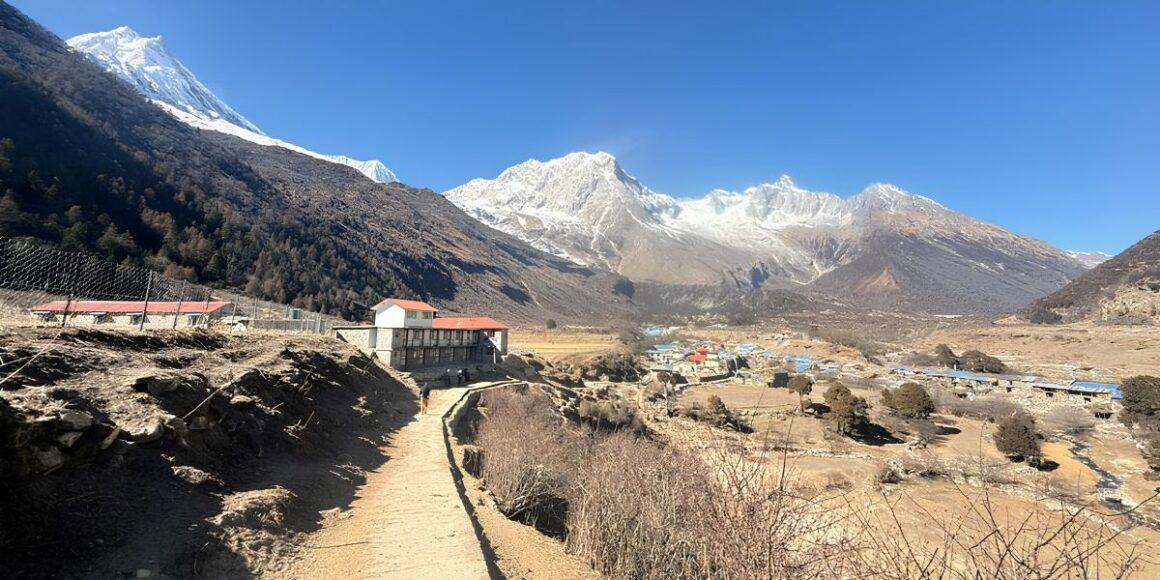
Samagaun Village
Summary: Samagaun Village, at 3,530m in the Nubri Valley, serves as the primary acclimatisation stop on the Manaslu Circuit Trek, with most trekkers spending two nights here before Larkya La Pass. Side hikes include Birendra Lake, Pungyen Gompa monastery, and the challenging Manaslu Base Camp trek at 4,800m. The Tibetan Buddhist Nubri ethnic group maintains traditional lodges, with autumn offering the clearest views of Mount Manaslu.
Understanding Samagaun Village
Samagaun village stands at 3,530 meters above sea level in the Manaslu region of Nepal. Notably, this village is part of the upper Nubri Valley and functions as the primary acclimatisation stop on the Manaslu Circuit Trek route before trekkers push toward Larkya La Pass. Furthermore, the settlement combines Tibetan Buddhist heritage with practical facilities for Manaslu Circuit Trek journeys.
Most trekkers spend two nights here to adjust properly to the higher altitude. During this rest period, consequently, you gain access to side hikes like Manaslu Base Camp, Birendra Lake, and Pungyen Gompa. Additionally, these walks strengthen your body while offering close views of Mount Manaslu and surrounding glaciers.
This guide for Nepal Hiking Adventure covers location details, cultural background, access routes, facilities, side trip options, seasonal conditions, permits, altitude safety, and practical advice. Whether you’re planning your first trek in Nepal or adding another Himalayan journey to your record, you’ll find clear information about what Samagaun Village offers and how to prepare for your stay.
Where Samagaun Village Is Located?
The village is situated in the upper Budhi Gandaki Valley, surrounded by peaks exceeding 6,000 meters. Samagaun Village occupies a broad valley floor where the river widens before narrowing again toward Samdo. Moreover, the settlement faces south, receiving direct sunlight during most daylight hours.
Samagaun lies in Gorkha District, positioned within the Manaslu Conservation Area. In fact, Samagaun is a key settlement in this protected region. The village sits approximately 45 kilometres north of Jagat, measured along the trek route in the village in the Manaslu region. To the west, Mount Manaslu and its glacier system dominate the skyline.
Geographic Details
| Location Detail | Specification |
| Elevation | 3,530 meters above sea level |
| District | Gorkha District |
| Conservation Area | Manaslu Conservation Area |
| Valley System | Upper Budhi Gandaki, Nubri Valley |
| Distance from Lho | 5-6 hours walking |
| Distance to Samdo | 3-4 hours walking |
| Distance to Dharamsala | 7-8 hours walking via Samdo |
| Distance from Jagat | 5 to 6 days walking |
| Distance from Machhakhola | 6 to 7 days walking |
The village occupies a strategic position where trekkers must pause before climbing to 4,000+ metre camps. Yak pastures stretch towards glacier moraines all around the hamlet. Furthermore, stone walls separate fields where locals grow barley and potatoes during brief summer months.
History and Cultural Background of Samagaun
The people of Samagaun belong to the Nubri ethnic group, descendants of Tibetan migrants who settled this valley centuries ago. These communities maintain strong trade connections with Tibet, despite modern border restrictions. Additionally, traditional architecture reflects high-altitude building methods, with thick stone walls and flat roofs designed for heavy snow loads.
Buddhism permeates daily life throughout the village. Three main monasteries anchor spiritual practice, with Pungyen Gompa being the largest and most visited. Every year during the Losar celebrations, prayer flags are changed between the houses. Moreover, older residents perform kora (circumambulation) around sacred sites each morning.
Farming and animal husbandry sustained the economy before trekking tourism developed in the 1990s. Families still maintain yak herds, which provide dairy products, wool, and transport services. During spring and autumn trek seasons, lodge operation generates primary income for most households.
Cultural Practices and Traditions
- Monastery visits follow specific etiquette: remove shoes, walk clockwise, ask permission before photographing
- Prayer flags represent the five elements (earth, water, fire, air, and space) and should not be stepped over or touched unnecessarily.
- The local dialect differs from standard Nepali, with Tibetan vocabulary predominating in daily conversation
- Traditional dress includes thick wool garments and distinctive boots suitable for snow and ice
- Marriages often connect families across multiple Nubri villages, strengthening regional social networks
The monastery complex near Samagaun Village preserves ancient texts and religious artifacts protected by conservation efforts. Monks provide blessings to trekkers who visit respectfully. Therefore, understanding this cultural context enriches your experience while supporting community values.

How to Reach Samagaun Village
You reach Samagaun by following the standard Manaslu Circuit Trek route from Kathmandu. The journey begins with an 8-9 hour bus ride to Soti Khola or Machha Khola, where the trek officially starts. From there, the path climbs through subtropical forest, terraced fields, and alpine meadows over 6-7 walking days.
The typical progression moves through Jagat, Deng, Namrung, and Lho before reaching Samagaun. Each segment gains elevation gradually, allowing your body to adjust. Furthermore, the final push from Lho to Samagaun Village takes 5-6 hours, crossing high pastures with expanding mountain views.
Route Breakdown
| Route Segment | Walking Time | Elevation Gain | Altitude |
| Kathmandu to Soti Khola (bus) | 8-9 hours | N/A (road transport) | 700 m |
| Soti Khola to Machha Khola | 6-7 hours | +200m | 900 m |
| Machha Khola to Jagat | 6-7 hours | +400m | 1,300 m |
| Jagat to Deng | 6-7 hours | +500m | 1,800 m |
| Deng to Namrung | 6-7 hours | +600m | 2,400 m |
| Namrung to Lho | 4-5 hours | +400m | 2,800 m |
| Lho to Samagaun | 5-6 hours | +330m | 3,130 m |
All trekkers must hire a licensed guide and obtain permits before starting the Manaslu Circuit Trek. Independent trekking remains prohibited in this restricted area. Your guide arranges transport from Kathmandu, manages permit paperwork, and leads you safely along the Manaslu Circuit route.
Accommodation and Facilities in Samagaun
Samagaun offers approximately 15-20 teahouses and lodges serving trekkers throughout the spring and autumn seasons. Indeed, the beautiful village provides more accommodation options than higher settlements like Samdo, making it comfortable for two-night stays. Additionally, room quality varies, with newer lodges offering better insulation and cleaner facilities.
Most Manaslu guesthouse establishments feature basic twin rooms with foam mattresses and thick blankets. Shared bathrooms remain standard at this elevation, with squat toilets predominating. Hot showers cost 300-500 NPR when available, though solar heating depends on weather conditions. Furthermore, the centre of the village contains the densest cluster of lodges.
Lodge Costs and Services
- Room cost: 500-1000 NPR per person per night (often waived if you eat all meals at the lodge)
- Meals: Dal bhat (rice and lentils) 800-1500 NPR, noodle soup 700-1000 NPR, fried rice 700-1100 NPR
- Hot drinks: Tea 200-500 NPR, coffee 200-500 NPR, hot lemon 200-500 NPR
- Charging: 300-400 NPR per device (electricity limited to evening hours)
- WiFi: 500-800 NPR per day (slow, unreliable, unsuitable for video calls)
Water sources include lodge-filtered supply and bottled options. Boiled water costs less than bottled and reduces plastic waste. Most lodges serve breakfast 6:30-8:00 AM, lunch 11:30 AM-1:00 PM, and dinner 6:00-7:30 PM. Additionally, menu variety decreases compared to lower elevations, with dal bhat being the most reliable and nutritious choice.
The village offers limited shops selling basic supplies like batteries, snacks, and trekking essentials. Prices increase 30-50% compared to Kathmandu. Moreover, mobile network coverage exists through Ncell and Nepal Telecom, though signals weaken during bad weather.


Landscape, Views, and Natural Surroundings
The village of Samagaun provides dramatic views of Mount Manaslu, the world’s eighth-highest peak at 8,163 meters. From lodge rooftops and the hill overlooking the village, you see the entire south face and associated glacier systems. Sunrise illuminates the summit first, creating brief moments of golden alpenglow.
To the east, Himalchuli (7,893 m) and Ngadi Chuli (7,871 m) complete the mountain panorama. The Manaslu glacier flows from base camp areas, visible as a white river descending between lateral moraines. In clear weather, Mount Manaslu and the surrounding peaks remain visible throughout the day until afternoon clouds obscure upper elevations.
Visible Peaks from Samagaun
| Visible Peak | Elevation | Direction from Village |
| Mount Manaslu | 8,163 m | West |
| Himalchuli | 7,893 m | East |
| Ngadi Chuli | 7,871 m | Southeast |
| Manaslu North Peak | 7,157 m | Northwest |
The valley floor sits wide here, allowing movement across the village without steep slopes. Stone walls divide yak pastures, which turn brown after the first autumn frosts. Alpine vegetation includes juniper, dwarf rhododendron, and hardy grasses adapted to thin air and temperature extremes.
Seasonal changes transform the landscape dramatically. Spring brings wildflowers to lower slopes, while autumn offers the clearest mountain visibility. Winter snow covers the valley floor, reducing the lively village to a handful of resident families. Meanwhile, monsoon clouds obscure peak views but rarely bring heavy rain at this elevation.
Best Side Trips and Acclimatization Hikes from Samagaun
Your rest day allows exploration of three main routes, each serving different fitness levels and interests. These trips from Samagaun strengthen altitude adaptation while showcasing the beauty of Samagaun’s surroundings. Most trekkers complete one major hike from Samagaun during their two-night stay.
Birendra Lake (Birendra Tal)
Birendra Lake sits 30-45 minutes uphill from the village, positioned at approximately 3,670 meters. The short climb follows a clear trail marked with stone cairns and prayer flags. On serene mornings, the glacier lake reflects Mount Manaslu, making for ideal photographic opportunities.
The walk serves as a gentle acclimatisation option for trekkers feeling fatigued. Total round-trip time runs 1.5-2 hours. Moreover, surrounding ridges provide views from Samagaun back toward lower valleys. Locals consider Birendra Lake sacred, requesting visitors maintain quiet behaviour near the water.
Birendra Lake Details
- Distance: 1.5km one way
- Elevation gain: +140m
- Walking time: 45 minutes up, 30 minutes down
- Difficulty: Easy
- Best time: Morning for calm water reflections

Pungyen Gompa Hike
At 4,000 metres, Pungyen Gompa is situated on a hillside and is about 90 minutes uphill from Samagaun Village. The monastery dates to the 17th century, containing religious murals and ancient texts. Monks welcome respectful visitors during morning hours.
The trail climbs steeply through juniper forest before opening to alpine meadows. Prayer flags mark the final approach to the monastery complex. From the courtyard, you gain panoramic views of Manaslu and the entire Manaslu region. Subsequently, the descent follows the same path, taking 60-75 minutes.
Pungyen Gompa Details
- Distance: 3 km one way
- Elevation gain: +470m
- Walking time: 90 minutes up, 60 minutes down
- Difficulty: Moderate
- Cultural significance: Active monastery with resident monks
Manaslu Base Camp Day Hike
The hike to Manaslu Base Camp represents the most challenging day hike available from Samagaun. The Manaslu Base Camp hike covers 12-14 kilometres round trip, reaching an elevation of 4,800 metres. Trekkers start early (6:00-7:00 AM) to complete the journey before afternoon weather changes.
The route from Samagaun follows the Manaslu glacier lateral moraine, requiring careful footing on loose rock. Trekking to Manaslu Base Camp takes 4-5 hours uphill, with 3-4 hours for the return. Additionally, the path offers close views of Mount Manaslu and associated icefall zones.
Manaslu Base Camp Specifications
| Base Camp Detail | Specification |
| Elevation | 4,800 meters |
| Distance from Samagaun | 6-7km one way |
| Total elevation gain | +1,270m |
| Round trip time | 7-9 hours |
| Difficulty | Challenging |
| Required fitness | Good acclimatization, strong legs |
Samagaun to Manaslu Base Camp involves significant altitude gain. Only attempt this base camp trek if you feel strong after your first night in Samagaun. Symptoms like headache, nausea, or extreme fatigue indicate you should choose Birendra Lake instead. Additionally, arriving at Manaslu Base Camp offers a sense of achievement, and lunch areas provide safe places to rest.
Manaslu Base Camp takes you through varied terrain, including meadows, moraine, and glacial deposits. The highest section crosses rough ground where the path becomes less defined. Your guide knows the correct route from Samagaun and identifies safe rest points. Meanwhile, return descent requires concentration as loose rocks test ankle stability.
Best Time to Visit Samagaun Village
The best time to visit Samagaun aligns with general Manaslu Circuit Trek seasons. Spring (March-May) and autumn (September-November) provide stable weather, clear mountain views, and reliable lodge operations. Your choice between these periods depends on temperature preferences and crowd tolerance.
Autumn offers the clearest skies, with Manaslu views remaining visible throughout most days. Temperatures stay moderate at valley elevation, ranging from 8 to 15°C during daylight. Night temperatures drop to -5°C to -10°C by November. Furthermore, the time to visit Samagaun Village in autumn coincides with post-monsoon clarity, making it ideal for photography and Manaslu Base Camp excursions.
Spring brings warmer temperatures and blooming rhododendrons at lower elevations. Daytime temperatures reach 10-18°C, with nights staying around 0°C to -5°C. Afternoon clouds increase compared to autumn, sometimes obscuring peak views. Despite this, spring remains popular for trekkers seeking milder conditions and fewer groups on the trail.
Seasonal Comparison
| Season | Weather | Visibility | Temperature Range | Crowd Level |
| Spring (Mar-May) | Warming, occasional afternoon clouds | Good to moderate | Day 10-18°C, Night 0 to -5°C | Moderate to high |
| Autumn (Sep-Nov) | Dry, stable, clear | Excellent | Day 8-15°C, Night -5 to -10°C | High |
| Monsoon (Jun-Aug) | Wet, unstable | Poor | Day 12-20°C, Night 5-10°C | Very low (lodges closed) |
| Winter (Dec-Feb) | Extreme cold, heavy snow | Variable | Day: -5 to 5°C, Night: -15 to -25°C | Very low (route dangerous) |
Monsoon season brings landslide risk and obscured mountain views, making the trek inadvisable. Most lodges in Samagaun close during June-August. Winter conditions involve extreme cold and deep snow accumulation, requiring specialised equipment and experience. Therefore, the Manaslu Circuit Trek operates primarily during spring and autumn windows when conditions support safe passage.

Permits and Trekking Regulations
All trekkers entering the Manaslu region must obtain specific permits before starting the trek. The Manaslu Conservation Area Permit costs 3,000 NPR (approximately USD 30) for foreign nationals. This covers environmental conservation efforts throughout the protected area.
The Manaslu Restricted Area Permit (RAP) represents the primary entry authorisation. Costs vary by season.
Permit Costs and Requirements
| Permit Type | September-November | December-August | Notes |
| Manaslu Restricted Area Permit | USD 100 per person per week (after 15 USD per day per person) | USD 75 per person per week (after 10 USD per day per person) | Additional weeks charged at same rate |
| Manaslu Conservation Area Permit (MCAP) | NPR 3,000 | NPR 3,000 | One-time fee, covers entire stay |
| TIMS Card | NPR 3,000 | NPR 3,000 | Trekkers Information Management System |
The Manaslu region requires all foreign trekkers to hire a licensed guide. Independent trekking remains prohibited under current regulations. Your guide company handles permit applications through authorised agencies in Kathmandu. Additionally, processing takes 1-2 days when documents are in order.
Guide Requirements
- Minimum group size: Two trekkers (solo travelers must join or pay for guide services alone)
- Guide qualifications: Licensed by Nepal Tourism Board, first aid certified
- Guide responsibilities: Route navigation, permit checks, altitude safety monitoring, cultural interpretation
Nepal Hiking Adventure arranges all permit paperwork for clients booking Manaslu Circuit Trek packages. The company maintains relationships with conservation area offices, ensuring smooth processing. Therefore, bring passport copies and passport-sized photos when applying for permits.
Altitude, Acclimatization, and Safety
Samagaun Village functions as the critical acclimatisation stop on the Manaslu route where your body adjusts to reduced oxygen levels. At 3,530 metres, the settlement sits at the threshold where altitude sickness risk increases significantly. Proper rest here prepares you for Samdo (3,860 m) and the eventual crossing of Larkya La Pass (5,106 m).
The standard acclimatisation protocol recommends sleeping at Samagaun for two nights. During the rest day, you climb to higher altitudes on side hikes before returning to sleep at the same elevation. This “climb high, sleep low” approach strengthens your body’s adaptation to thin air.
Altitude Sickness Recognition
- Mild symptoms: Headache, light nausea, reduced appetite, difficulty sleeping
- Moderate symptoms: Severe headache, vomiting, extreme fatigue, dizziness
- Severe symptoms: Confusion, inability to walk straight, shortness of breath at rest, chest tightness
Samagaun helps trekkers identify early warning signs before pushing to higher-altitude camps. If moderate symptoms appear during your first night, skip the Manaslu Base Camp hike and rest completely. Furthermore, if symptoms persist or worsen after 24 hours, descend immediately to Lho or lower elevations.
Prevention Strategies Include
- Maintain slow, steady pace while walking
- Drink 3-4 liters of water daily
- Avoid alcohol and sleeping pills
- Eat regular meals even without appetite
- Inform your guide immediately when symptoms appear
The village sits at an elevation where most trekkers experience mild headaches during the first night. This normally resolves after adequate rest and hydration. Your guide monitors group members for worsening conditions and makes decent decisions when necessary.
Beyond Samagaun, the trek enters more remote terrain where evacuation becomes complicated. Lodges at Samdo and Dharamsala offer basic facilities but limited medical resources. Therefore, the two-night Samagaun acclimatisation stop significantly reduces serious altitude illness risk during the final push to Larkya La.

Practical Tips for Staying in Samagaun
Packing for Samagaun requires preparation for cold nights and variable weather, with temperature swings of 20–25°C between day and night, so layering systems and essentials for trekking are necessary.
Essential Items
- Warm sleeping bag rated to -10°C minimum (lodge blankets provide additional insulation)
- Down jacket for evenings and early mornings
- Thermal base layers (top and bottom)
- Windproof outer shell
- Warm hat and gloves
- Sunglasses and high SPF sunscreen (UV intensity increases with altitude)
- Headlamp with extra batteries (power cuts occur frequently)
- Water purification tablets or filter
- Basic first aid kit, including altitude sickness medication (Diamox)
- Cash in Nepali Rupees (no ATMs exist in Manaslu high villages)
Budget Planning
Samagaun usually costs between USD 80 and USD 100 per person per day, which includes the following:
- Accommodation: USD 5-10 (often free with meal purchase)
- Three meals: USD 30-50
- Hot drinks and snacks: USD 3-5
- Charging and WiFi: USD 3-5
- Occasional tips or donations: USD 10-20
Photography opportunities peak during sunrise (6:30-7:30 AM) when light strikes Mount Manaslu directly. The hill overlooking the village provides elevated viewpoints without significant climbing. Additionally, afternoon light (4:00-5:30 PM) works well for monastery shots and village-life documentation.

Tips for Samagaun Lodging
- Arrive before 3:00 PM to secure preferred rooms
- Request rooms facing west for mountain views
- Ask about hot water availability before planning showers
- Charge devices during evening electricity hours (typically 6:00-9:00 PM)
- Order meals 30-45 minutes before eating (preparation takes longer at altitude)
The lively village atmosphere emerges during evening hours when trekkers gather in dining halls. Respect local customs by dressing modestly around the village and asking permission before photographing residents. Moreover, small purchases from village shops support the local economy directly.
Samagaun Village: Final Insights
Samagaun Village represents where geography, culture, and trekking logistics converge along the famous Manaslu Circuit Trek. Indeed, Samagaun, Manaslu, is known as the heart of the Manaslu Circuit and functions as more than a rest stop, offering trekkers genuine immersion in Nubri Buddhist traditions while preparing bodies for extreme altitude challenges ahead. Furthermore, stone houses, monasteries, and prayer flags create an environment where mountain life continues despite modern trekking traffic.
The village on the Manaslu Circuit provides essential infrastructure for safe acclimatisation. Most itineraries include two nights in Samagaun, allowing proper altitude adjustment through strategic side hikes to Birendra Lake, Pungyen Gompa, or Manaslu Base Camp. These excursions strengthen your cardiovascular system while showcasing the raw beauty of Samagaun’s surroundings, from glacial lakes to the imposing Manaslu massif and surrounding 8,000-metre peaks.
Therefore, spending an acclimatisation day in Samagaun stands as a cornerstone of the Manaslu Circuit, where preparation meets experience for any Manaslu trek or Manaslu adventure. The village in Manaslu teaches patience, respect for altitude, and appreciation for communities thriving in one of Earth’s most demanding environments. Whether you spend your rest day hiking to base camp or sitting quietly near a monastery, Samagaun invites reflection on what makes Himalayan trekking meaningful beyond summit views and personal achievement.
Contact us: For personalised guidance, detailed itineraries, or any questions about your Manaslu trek, reach out directly to Nepal Hiking Adventure.

Samagaun Village: FAQs
How many nights should trekkers stay in Samagaun Village?
Most Manaslu Circuit Trek itineraries schedule two nights in Samagaun for proper acclimatisation. This allows one full rest day for side hikes to Birendra Lake, Pungyen Gompa, or Manaslu Base Camp while your body adjusts to 3,530 meters elevation. Subsequently, you continue to Samdo and higher camps.
Is Samagaun suitable for acclimatisation during the Manaslu Circuit Trek?
Samagaun is usually considered the most critical acclimatisation stop on the Manaslu route. The elevation (3,530 m) sits at the threshold where oxygen reduction becomes significant. Therefore, the two-night stay becomes essential for preparing your body for Larkya La Pass at 5,106 meters and preventing altitude sickness during higher sections.
Are there ATMs or internet facilities in Samagaun?
No ATMs exist in Samagaun or anywhere along the Manaslu Circuit trek. Bring sufficient Nepali Rupee cash from Kathmandu for your entire trek. Limited WiFi service costs 500-800 NPR per day at lodges but remains slow and unreliable. Therefore, WiFi is suitable only for basic messaging rather than video calls or heavy browsing.
Can beginners trek to Samagaun Village safely?
Beginners with good fitness and proper acclimatisation safely reach Samagaun when guided by experienced leaders. The trek from Soti Khola takes 6-7 days, allowing gradual altitude gain. Hiring a licensed guide remains mandatory in the Manaslu region, providing essential safety support for less experienced trekkers.
What is the elevation of Samagaun Village?
The elevation of Samagaun Village is 3,530 metres (11,581 feet) above sea level. This elevation places the settlement in the critical acclimatisation zone where trekkers must rest before attempting higher-altitude camps. Additionally, Samagaon village (alternate spelling) refers to the same settlement at this strategic location.
Is it possible to visit Manaslu Base Camp from Samagaun in one day?
Yes, the trek to Manaslu Base Camp operates as a challenging day hike from Samagaun. The round trip covers 12-14 kilometres and takes 7-9 hours total, reaching 4,800 meters elevation. Start early (6:00-7:00 AM) and only attempt this hike if you feel strong after your first night in Samagaun without altitude sickness symptoms. The Samagaun and Manaslu connection makes this stop on the Manaslu Circuit ideal for ambitious trekkers.


Our History in Service Excellence


