
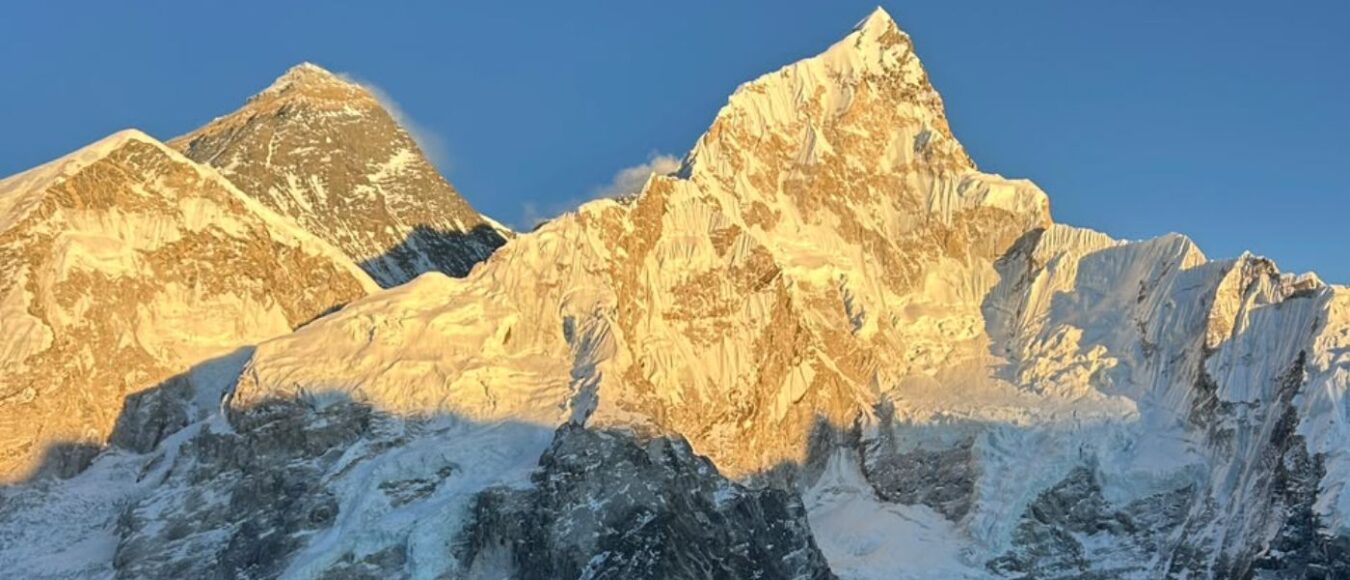
Everest Base Camp Trek vs Climbing Everest
Summary: Everest Base Camp Trek vs Climbing Everest marks the divide between hiking and mountaineering. The trek reaches 5,364m over 12-16 days with no technical skills required, costing $1,200-$2,500. Climbing to the 8,848.86m summit demands advanced mountaineering skills, months of acclimatisation through high camps, and $45,000-$85,000, with roughly a 1% death rate per attempt. Most travellers find the trek delivers a meaningful Himalayan adventure without extreme risk.
Everest Base Camp Trek vs Climbing Everest: Key Difference
Mount Everest stands as the tallest mountain on the planet, drawing thousands of travellers to Nepal each year. There are two different routes in the Khumbu region. Everest Base Camp Trek vs Climbing Everest represents the core choice between trekking to Everest Base Camp and attempting to reach the summit of Mount Everest. Both experiences unfold within the Himalayas, yet they differ dramatically in commitment, risk, altitude exposure, and technical demand.
Everest Base Camp sits at 5,364 metres on the south base side of Mount Everest, serving as the staging ground for summit expeditions. The trek to Everest Base Camp passes through Sherpa villages like Lukla, Namche Bazaar, and Dingboche, while climbers continue upward through the Khumbu Icefall, Camp 1, Camp 2, Camp 3, and Camp 4. Understanding where Base Camp finishes and the ascent begins reveals the essential distinction between hiking and mountaineering.
This guide from Nepal Hiking Adventure helps adventure travellers decide between the Everest Base Camp trek and climbing Everest by comparing altitude, cost, duration, technical requirements, and risk. Moreover, it addresses common questions from first-time Himalayan visitors and those aiming for the summit of Mount Everest. Whether you are considering a hike to Everest Base Camp or embarking on an Everest summit expedition to the top of the world, this comparison provides the clarity needed to choose wisely.
Everest Base Camp Trek and Climbing Everest: Key Definitions
What is the Everest Base Camp trek?
The Everest Base Camp trek is a non-technical trek through the Khumbu region, typically completed over 14 days round trip from Kathmandu. Trekkers follow established trekking trails and do not require mountaineering skills or climbing technical equipment such as crampons, ice axes, ropes, or harnesses. As a result, the journey focuses on cultural immersion, Nepalese villages, Buddhist monastery visits, and close-up views of the world’s highest peaks, without the extreme risks associated with high-altitude mountaineering or technical climbing.
What does climbing Mount Everest involve?
Climbing Everest means attempting to reach the summit at 8,848.86 metres, which requires traversing over crevices, walking in crampons, and navigating the deadly Khumbu Icefall. Climbers spend around two months on the mountain, moving between multiple high camps while using supplemental oxygen tanks. Moreover, this Everest summit expedition demands prior experience in peak climbing/expedition, significant financial investment, and acceptance of life-threatening risks.
Trekking versus expedition: Fundamental differences
| Aspect | Everest Base Camp Trek | Everest Expedition (Everest Summit) |
| Altitude reached | 5,364 m | 8,848.86 m |
| Technical skills | None required | Advanced mountaineering skills essential |
| Duration | 12-16 days | 60-70 days |
| Equipment | Standard hiking boots, warm layers, full high-altitude trekking gear | Ice axes, crampons, harnesses, oxygen tanks, full expedition. |
| Permit cost | ~$70 USD | ~$15,000 + 70 USD |
| Sherpa support | Optional guides | Mandatory 1:1 Sherpas and porters. |


Altitude and Acclimatisation Differences
Everest Base Camp trek altitude profile
The trek to Everest Base Camp begins at Lukla (2,860 m) and gradually ascends to Everest Base Camp at 5,364 metres above sea level. Acclimatisation days in Namche Bazaar (3,440 m) and Dingboche (4,410 m) help prevent altitude sickness. Furthermore, most trekkers experience mild symptoms of altitude sickness like headaches or fatigue, which resolve with proper rest and hydration.
Everest summit altitude zones and high camps
Beyond Everest Base Camp (5,364 m), climbers progress through a series of high-altitude camps on the Southeast Ridge while entering increasingly oxygen-depleted environments. Above 8,000 metres, known as the death zone, oxygen levels drop to roughly one-third of those at sea level, making prolonged exposure extremely dangerous.
The standard ascent passes through Camp 1 (6,065 m) in the Khumbu Icefall, Camp 2 (6,400 m) in the Western Cwm, Camp 3 (7,162 m) on the Lhotse Face, and Camp 4 (7,950 m) at the South Col. The final summit push reaches 8,848.86 metres, the highest point on Earth.
Each night spent at these elevations places intense strain on the body, requiring multiple acclimatisation rotations over several weeks, strict monitoring for altitude illness, and the use of supplemental oxygen to reduce the risk of life-threatening complications.
Acclimatisation strategies and altitude risks compared
Everest Base Camp trekkers follow a “climb high, sleep low” strategy over days of trekking, spending 12-16 days total at elevation. In contrast, climbers spend months acclimatising, making multiple rotations between camps to adapt their bodies. The altitude at Base Camp represents manageable risk for healthy individuals, while the summit of Mount Everest carries severe hypoxia risk, frostbite, and pulmonary or cerebral edema.
Duration and Time Commitment
Typical Everest Base Camp trek length
The standard Everest Base Camp trek takes 12-16 days, including flights between Kathmandu and Lukla. This timeframe allows adequate acclimatisation while keeping the journey accessible for travellers with limited vacation time. Additionally, the trek can be completed within three weeks total when including arrival and departure days.
How long does it take to climb Mt Everest?
Climbing Everest requires a minimum of 12 months of preparation followed by 60-70 days on the mountain itself. Mountaineers spend April and May at Base Camp and higher camps, waiting for weather windows and completing rotation climbs. Therefore, the full expedition demands two months away from work and family, plus extensive pre-climb training. In fact, Everest is around two months of commitment once you arrive at the south base.
Why summit expeditions require extended timelines
The human body need weeks to create new red blood cells and adjust to high-altitude environments. Climbers cannot rush the acclimatisation process without risking fatal altitude sickness. Moreover, extreme weather at 8,000+ metres means waiting for brief summit windows, often just a few days per season when winds drop below lethal speeds. Undoubtedly, this extended timeline reflects why climbing Mount Everest takes around two months on the mountain.

Physical Difficulty and Technical Requirements
Fitness demands of the Everest Base Camp trek
The trek to Everest Base Camp requires moderate cardiovascular fitness but no prior trekking experience. Daily walking ranges from 4 to 7 hours with elevation gains of 300-700 metres. Nevertheless, a good level of fitness through regular hiking, running, or cycling prepares most people adequately for the journey.
Technical skills needed to climb Everest
Summiting Mount Everest demands proficiency in:
- Ice climbing, using ice axes, technical ice tools, and front-point crampons
- Rope work, including fixed rope ascents with jumars, carabiners, belay devices, and prusik cords
- Crampon use on steep ice and mixed terrain, paired with mountaineering boots and gaiters
- Crevasse rescue, requiring climbing ropes, pulleys, snow anchors, ice screws, and slings
- Ladder crossing techniques on crevasses, using safety tethers and fixed lines
- High-altitude movement while wearing supplemental oxygen systems, regulators, and oxygen masks
- Anchor building and protection placement, using ice screws, snow pickets, and rock protection
Mountaineers must handle fixed ropes on steep ice faces using ascenders, carabiners, and belay devices; cross ladder bridges over the Khumbu Icefall while secured with safety tethers and full-body harnesses; and manage supplemental oxygen systems that include oxygen cylinders, regulators, and high-altitude masks. Climbers also rely on crampons, ice axes, ice screws, mountaineering boots, and protective helmets to move safely through exposed terrain. Furthermore, prior high-altitude mountaineering experience on peaks such as Mera Peak (6,476 m) or similar Himalayan summits is mandatory before attempting the summit of Mount Everest.
Mountaineering experience and training expectations
Commercial expeditions typically require clients to have summited at least one 6,000-7,000 m peak previously. Training includes:
- Ice climbing courses
- High-altitude mountaineering practice
- Physical conditioning for 6-8 months minimum
In comparison, Everest Base Camp trekkers need only basic trekking equipment rather than technical climbing gear. A good pair of broken-in hiking boots remains the most important item, supported by layered clothing, a daypack, trekking poles, and cold-weather accessories such as gloves and a down jacket. Physical preparation focuses on walking stamina, usually built over 8 to 12 weeks through regular hiking, stair climbing, or cardio training. While no mountaineering skills are required, trekkers must be prepared for long walking days, high-altitude conditions, and gradual acclimatisation above 3,000 metres. With proper pacing, rest days, and guidance, the trek remains accessible to fit walkers rather than experienced climbers.

Cost Comparison: Everest Base Camp Trek vs Climbing Everest
Average cost of an Everest Base Camp trek
A guided Everest Base Camp trek typically costs around $1,200-$2,500 USD, including guides and porters, teahouse accommodation, meals, and permits. Independent trekkers can reduce costs to $800-$1,000 by arranging logistics themselves. Consequently, the EBC trek remains affordable compared to other high-altitude adventures.
Full cost of an Everest climbing expedition
Climbing Everest from the south side in Nepal costs around $45,000-$85,000 USD depending on the operator and services. The climbing permit alone is $15,000, while additional expenses include Sherpa support, oxygen tanks, specialised gear, insurance, and two months of food and supplies. Thus, the summit climb represents a significant financial commitment.
What drives the price difference
| Cost Factor | Trek | Expedition |
| Government permits | $70 | $15,000+70+ |
| Duration | 12-15 days | 60-70 days |
| Sherpa support | Optional (but recommended) | Essential (multiple Sherpas)With an experienced mountain guide |
| Equipment | Basic | Technical ($8,000-$15,000) |
| Oxygen | Not needed (only use for emergency case) | $3,000-$6,000 |
| Insurance | Standard travel | High-altitude rescue ($500-$2,000) |
Permits and Regulations
Trekking permits required for Everest Base Camp
Embarking on the trek requires two permits:
- Sagarmatha National Park Entry Permit ($30)
- Khumbu Pasang Lhamu Rural Municipality Permit ($30)
These are available at entry points or in Kathmandu. Furthermore, trekkers must register with TIMS (Trekking Information Management System) for safety tracking.
Everest climbing permits and government regulations
The Nepalese government issues climbing permits only during the spring (March-May) and autumn (September-November) seasons. Each climber pays $15000 for the summit permit, with additional fees for Icefall Doctors who maintain ropes through the Khumbu Icefall. Additionally, mountaineers must provide proof of previous high-altitude mountaineering experience and comprehensive insurance.
Seasonal rules and compliance requirements
The popular trekking season runs from September to November and March to May, when the weather is most stable. Summit expeditions concentrate in April-May to take advantage of brief weather windows before the monsoon. Moreover, the Himalayan climbing industry now requires climbers to return all waste and equipment, reducing environmental impact.

Health, Safety, and Risk Factors
Typical hazards on the Everest Base Camp trek
The primary risk for Base Camp trekkers is altitude sickness, which affects 50-75% of visitors to some degree. Symptoms include:
- Headaches
- Nausea
- Fatigue
Typically, these are manageable with proper acclimatisation and descent if severe. Other hazards include slips on rocky trails, changing weather, and limited medical facilities above 4,000 metres.
High-altitude dangers above Base Camp
Beyond Base Camp, climbers face life-threatening risks, including:
- Avalanches
- Falls into crevasses
- Severe frostbite
- Cerebral or pulmonary edema
The Khumbu Icefall alone has claimed over 50 lives due to collapsing ice seracs. As a result, the success percentage for reaching the summit of Everest is over 60%, and the death rate per summit attempt is about 1%.
Role of guides, Sherpa support, and oxygen
Everest Base Camp trek participants benefit from experienced guides for navigation and safety, though many complete the route independently. Climbers, however, depend entirely on Sherpa teams for rope-fixing, route preparation, and emergency rescue. Supplemental oxygen becomes essential above 7,000 metres, yet even with oxygen, the summit of Mount Everest remains extremely dangerous.

Gear and Equipment Differences
Essential gear for the Everest Base Camp trek
Trekkers need quality layering systems, a warm sleeping bag, and sturdy hiking boots suitable for rocky terrain. A typical packing list includes:
- Thermal base layers
- Down jacket
- Waterproof shell
- Trekking poles
- Headlamp
- 40-50L backpack
Importantly, all gear remains non-technical and widely available at outdoor retailers.
Technical equipment required for Everest summit attempts
Climbing Everest demands specialised mountaineering equipment, including:
- Ice axes
- Crampons (for front-pointing on steep ice)
- Harnesses (full-body or sit harnesses for fixed rope sections)
- Ascenders (jumars for rope ascents)
- Carabiners (locking and non-locking for anchors and belays)
- 8,000-metre-rated down suits (extreme cold protection)
- Mountaineering boots (insulated double boots for high-altitude climbing)
- Climbing helmets (protection from icefall debris and rockfall)
- Belay devices (for controlled rope management)
- Snow goggles and glacier glasses (UV and glare protection)
- Gloves and mittens (layered for dexterity and insulation)
- Ice screws and snow anchors (for protection on steep ice and snow)
- Trekking poles (for approach hikes and acclimatisation climbs)
- Supplemental oxygen systems (cylinders, masks, and regulators)
- Sleeping bags rated for -30°C or lower (for high camps)
- Backpack / expedition pack (for carrying gear and personal items)
- Headlamps with spare batteries (for night climbs or early starts)
Additionally, mountaineers carry multiple pairs of insulated boots, oxygen tanks with masks and regulators, satellite phones, and high-altitude tents. Consequently, gear costs alone cost around $8,000-$15,000 before the mountain expedition begins.
Why climbing gear is far more specialised
The difference between trekking to Everest Base Camp and climbing to the summit becomes obvious in equipment requirements. Trekkers walk on trails where a good pair of hiking boots suffices, while climbers navigate vertical ice walls requiring precise crampon technique. Moreover, extreme weather above 8,000 metres demands gear rated for temperatures reaching -40°C with hurricane-force winds.

Scenery, Experience, and Cultural Exposure
Landscapes and village life on the EBC trek
The trek to Base Camp passes through traditional Sherpa villages where trekkers experience genuine Himalayan culture. The route offers stunning views of Ama Dablam, Lhotse, Nuptse, and of course Mount Everest itself from viewpoints like Kala Patthar (5,545 m). Furthermore, visitors explore Buddhist monasteries, interact with local families, and observe daily life in one of the world’s most remote regions.
What climbers experience beyond Base Camp
Climbers see landscapes few humans ever witness, including the Western Cwm, the Lhotse Face, and the summit ridge itself. However, the Everest expedition focuses primarily on survival rather than sightseeing. Each night at camp at extreme altitude brings physical deterioration, leaving little energy for appreciating the environment beyond Base Camp.
Cultural immersion, monasteries, and Sherpa heritage
The Everest Base Camp trek allows meaningful cultural exchange with Sherpas and other ethnic groups of the Khumbu region. Trekkers visit Tengboche Monastery, participate in local festivals if timing aligns, and learn about the spiritual significance Sherpa communities attach to Everest. In contrast, climbers interact primarily with their Everest expedition team, missing much of the popular trekking route’s cultural richness.

Who Should Choose Which Experience
Who should go on the Everest Base Camp trek?
The Everest Base Camp trek suits adventurers with moderate fitness who want to experience the Himalayas without technical climbing. It’s ideal for travellers seeking cultural immersion alongside mountain scenery, those with 2-3 weeks available, and individuals curious about Everest without risking their lives. Additionally, the trek serves as excellent preparation for those considering future mountaineering pursuits.
Who should consider climbing Mount Everest?
Summiting Mount Everest appeals to experienced mountaineers with prior high-altitude summit experience, substantial financial resources, and willingness to accept life-threatening risks. Candidates must dedicate months to training and acclimatising, possess advanced ice climbing skills, and cope psychologically with extended isolation. Therefore, only a small subset of Himalayan adventurers should realistically consider attempting the summit.
Choosing based on fitness, budget, time, and goals
| Decision Factor | Choose EBC Trek If… | Choose Everest Climb If… |
| Fitness | Moderate cardiovascular health | Exceptional fitness and technical skills |
| Budget | $1,000-$3,000 available | $30,000-$85,000+ available |
| Time | 2-3 weeks total | 2-3 months + training year |
| Experience | First high-altitude journey | Multiple summit expeditions completed |
| Risk tolerance | Manageable adventure | Acceptance of potential death |
Environmental and Ethical Considerations
Environmental impact of trekking in the Everest region
The increasing number of Everest Base Camp trekkers creates waste management challenges, though teahouse operators now implement better practices. Responsible trekkers minimise impact by:
- Using refillable water bottles
- Disposing of waste properly
- Supporting lodges committed to sustainability
Furthermore, the trek generates income for Sherpa communities, creating an incentive for conservation.
Ethical challenges of Everest climbing
Climbing Everest raises questions about Sherpa labour conditions, overcrowding at high camps, and deaths occurring while others continue summiting. The commercialisation of the summit climb has led to inexperienced climbers attempting the ascent with inadequate preparation. Additionally, the environmental footprint of Everest expeditions includes abandoned oxygen tanks, human waste, and equipment left on the mountain.
Responsible travel and conservation efforts
Both trekkers and climbers should choose operators committed to environmental protection and fair Sherpa wages. Organisations like the Sagarmatha Pollution Control Committee work to remove waste from the Khumbu region. Moreover, paying for higher-quality expeditions that properly compensate Sherpas and maintain safety standards represents an ethical obligation for those embarking on an Everest adventure.
Preparation Timeline and Readiness
Physical preparation for the Everest Base Camp trek
Most people require 2-3 months of training focused on cardiovascular endurance and leg strength. Regular hiking with a weighted backpack, stair climbing, and running build the necessary level of fitness. Additionally, practising at local altitude if possible helps, though many complete the trek successfully with only sea-level training.
Long-term training required for Everest climbing
Mountaineers typically train for 12-18 months before attempting the summit of Everest. Preparation includes:
- Multiple mountaineering courses
- Summiting progressively higher peaks
- Strength and endurance training
- Mental conditioning
Furthermore, climbers must develop comfort with technical systems like fixed ropes, crampons, and ascending steep ice faces before joining an Everest summit expedition.
Mental readiness and risk awareness
Trekkers benefit from researching altitude sickness symptoms and accepting that reaching Base Camp may not be possible if health issues arise. Climbers, however, must confront the reality that they may die on the mountain despite perfect preparation. Psychological readiness for extended discomfort, witnessing potential deaths, and abandoning the summit bid if conditions deteriorate represents a crucial part of the climb.
Common Myths and Misconceptions
Trekking to Base Camp versus summiting Everest
Myth: The Everest Base Camp trek is just the first stage of climbing Everest.
Reality: The differences between Everest Base Camp trekking and summiting are fundamental. Trekkers walk on trails using no technical gear, while climbers face vertical ice, crevasse fields, and oxygen-depleted altitude zones. Essentially, Everest and trekking to Everest represent entirely different experiences. The trek ends where the truly dangerous mountaineering begins. When comparing Everest Base Camp trek vs the Mount Everest summit, the distinction becomes clear.
Misunderstandings about safety, difficulty, and success rates
Myth: If you can complete the EBC trek, you can climb Everest with enough money.
Reality: Physical fitness represents only a small fraction of what’s required for summiting. Technical mountaineering skills, years of high-altitude experience, and psychological resilience matter far more than cardiovascular endurance alone. Furthermore, there is still a very low success rate for first-time high-altitude climbers trying to reach Everest.
Clarifying expectations for both experiences
| Common Misconception | Everest Base Camp Trek | Climbing Everest |
| “Anyone can do it with determination.” | Mostly true with good health | False, technical skills essential |
| “It’s extremely dangerous.” | Low risk with proper acclimatisation | True, significant mortality risk |
| “You must have athletic ability.” | Sufficient levels of moderate fitness | Expert fitness is necessary. |
| “The views from the peak are identical.” | At 5,364 m, views end. | Proceeds to the 8,849-metre peak. |
| “Cost is similar.” | $1,000-$3,000 | $30,000-$85,000+ |
Additionally, many believe reaching Base Camp guarantees summit capability later. In fact, the top 5 differences between these experiences (altitude, technical demands, duration, cost, and risk) make them entirely separate undertakings rather than progressive stages of the same journey.

Everest Base Camp Trek vs Climbing Everest: Final Thoughts
The Everest experience splits into two distinct paths. Everest Base Camp Trek vs Climbing Everest captures the core contrast between the trek to Everest Base Camp, which offers cultural immersion, stunning Himalayan scenery, and a manageable adventure, and climbing to the summit of Mount Everest, which represents extreme mountaineering with life-threatening risks. Both reveal different sides of the same mountain on the planet, yet the differences between trekking and climbing define entirely separate journeys. Understanding these distinctions helps travellers choose the experience that matches their abilities and ambitions.
The Everest Base Camp trek welcomes moderately fit travellers seeking high-altitude adventure without technical complexity or extreme risk. Summiting Mount Everest, however, demands experienced mountaineers with prior mountaineering success, substantial financial resources, and acceptance of potential death. Consequently, most people considering an Everest adventure will find the trek provides the right balance of challenge, scenery, and cultural connection, while the summit expedition remains appropriate for only a select few with extensive mountaineering backgrounds.
Mount Everest continues drawing global attention as the highest mountain and the ultimate mountaineering objective, yet the Khumbu region offers the best of both worlds through accessible trekking and extreme climbing. Whether you trek to Everest Base Camp or attempt the summit of Mount Everest, respecting local culture, environmental limits, and personal capabilities ensures a meaningful Himalayan journey. For most travellers, the Everest Base Camp trek delivers a profound mountain experience without requiring years of technical training or risking everything to stand on the top of the world. To plan your journey with local expertise and trusted guidance, contact Nepal Hiking Adventure and explore the Everest experience that suits you best.

Everest Base Camp Trek vs Climbing Everest: FAQs
Is the Everest Base Camp trek suitable for beginners?
Yes, the Everest Base Camp trek suits beginners with moderate fitness levels, and no prior trekking experience is required. The route follows established trails with guides and porters available for support, making it accessible for first-time Himalayan visitors.
How dangerous is climbing Mount Everest?
Climbing Everest carries a death rate of approximately 1% per summit attempt, with risks including avalanches, falls, and severe altitude sickness. The Khumbu Icefall and zones above 8,000 metres present life-threatening hazards even for experienced mountaineers.
Can you trek to Everest Base Camp without climbing experience?
Yes, the trek to Everest Base Camp requires no mountaineering or climbing experience whatsoever. Trekkers walk on trails without technical equipment, though good fitness and acclimatisation awareness remain important.
Which option offers better value for most travellers?
The Everest Base Camp trek provides exceptional value at $1,200-$3,000, offering Himalayan scenery, cultural immersion, and the highest mountain experience without extreme cost or risk. Climbing Everest at $45,000-$85,000+ suits only those with specific mountaineering ambitions and extensive prior experience.
How long does it take to reach Everest Base Camp?
The standard Everest Base Camp trek takes 12-16 days round trip from Lukla, including necessary acclimatisation days. Adding travel time to and from Kathmandu brings the total journey to approximately 2-3 weeks.
Do you need supplemental oxygen for the Everest Base Camp trek?
No, trekkers do not need supplemental oxygen for the trek to Base Camp at 5,364 metres. Climbers require oxygen tanks above 7,000 metres, particularly for the final summit bid from Camp 4.
Which time of year is ideal for hiking to Everest Base Camp?
The Everest Base Camp trek offers the best conditions during spring (March-May) and autumn (October-November) when weather is stable and skies are clear. These popular trekking seasons coincide with mountaineering seasons when the route is well-maintained and lodges are fully operational.


Our History in Service Excellence


