
Everest Base Camp Trek 14 days
 (75 reviews in Google)
Follow the incredible trails of Sir Edmund Hillary and Tenzing Norgay Sherpa on the adventurous lifetime journey to Everest Base Camp. Among the most popular trekking destinations in the world, Nepal comes in the top position. Thus, Everest Base Camp Trek 14 days is the ultimate goal of many trekkers from all over the world.
This Everest Base Camp Trek is an incredible journey to the world’s highest mountain, Mount Everest. The closest point you can visit Mt.Everest without climbing gear is Everest Base Camp. From this camp, you can have eye to eye contact with the mighty Everest. Along with breathtaking views of other Top Highest Mountain Peaks of Makalu (8,463m), Lhotse (8,516m), and Cho Oyu (8,188m).
Along the way to Everest Base Camp, you walk along with beautiful scenic villages, forests, national parks, monasteries, and many more. You cross numerous suspension bridges over the Dudh Kosi and Imja river, walks on the glacier’s rocky and slippery pathway; and beautiful scenery while trekking. All these features of the Everest region make this trip very exciting and memorable.
Throughout Everest Base Camp Tour, you visit amazing villages and towns of the Khumbu region such as Phakding, Namche, Tengboche, Dingboche, Gorak Shep, Lukla, and many more. These villages are renowned for their unique culture, traditions, and hospitality. And, visiting these places offers trekkers to learn many things about their culture, traditions, and lifestyle.
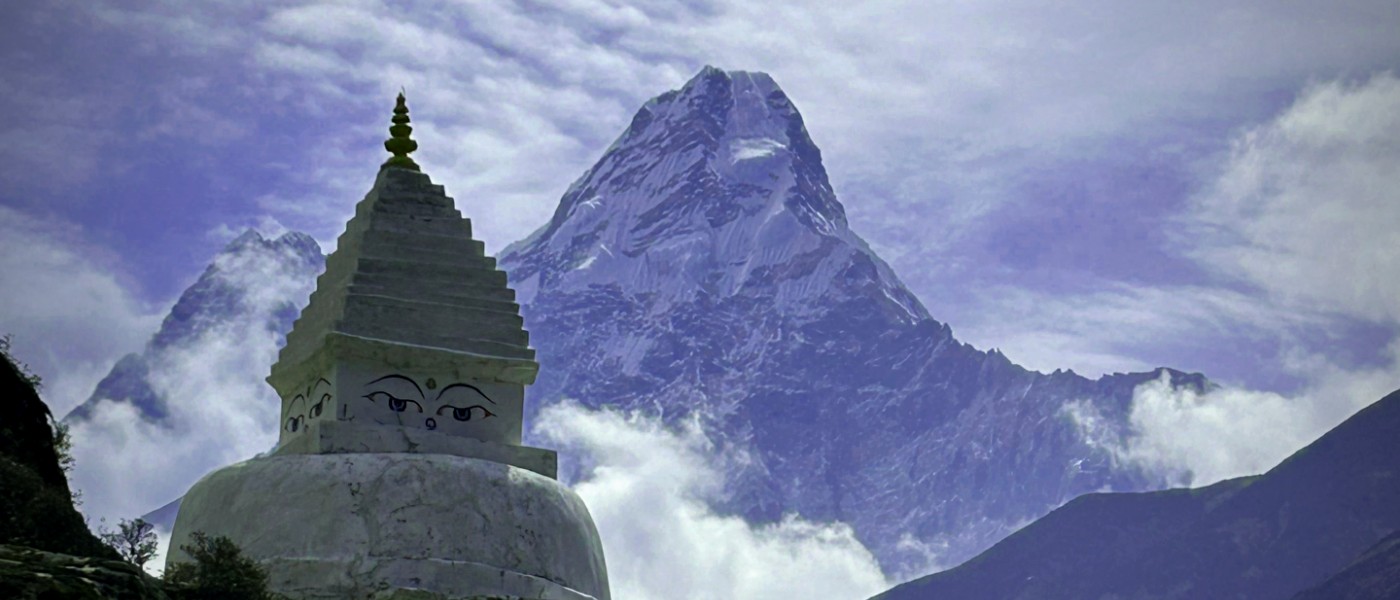
This amazing trek to Everest Base Camp takes you to various religious spots of this district among them is Tengboche. It is basically a small Sherpa village that is home to the largest monastery in the Khumbu region. As the routes move forwards from Lukla, you can see religious prayer flags embellishing the stupas, forests, and bridges; which provides inner peace and satisfaction.
Trip Highlights
- Panoramic views of Mount Everest along with Nuptse, Ama Dablam, Makalu, Lhotse, Cho Oyu and many more.
- Excellent sunrise and 360° views of Himalayan ranges from Kala Patthar viewpoint.
- Exploring around Sagarmatha National Park ( a UNESCO World Heritage Site).
- The beautiful village of Phakding, Namche Bazaar, Tengboche, Dingboche, Lobuche, Gorak Shep, and many others.
- Religious stupas and gumbas throughout the trekking routes and villages.
- Scenic mountain flight from Kathmandu to Lukla.
- Visiting the largest monastery of Khumbu, Tengboche monastery.
- Close view of Mount Everest from Everest Base Camp.
Arrival in Kathmandu (1,350 m)
Upon arrival at Tribhuvan International Airport, our representative greets you and transfers you to your hotel in Kathmandu’s Thamel district. After settling in, you’ll meet your trek leader for a comprehensive briefing about the Everest Base Camp trek 14 days. During this session, we review the 14 days EBC trek itinerary, discuss altitude considerations, and answer any questions about the journey ahead.
Meanwhile, Kathmandu offers excellent opportunities for last-minute gear purchases and temple visits if you arrive early. However, we recommend resting well tonight, as tomorrow brings the exciting flight to Lukla.
- Preparation tip: Verify your trekking permits and double-check your daypack essentials tonight.
- Activities: Airport transfer, hotel check-in, trek briefing
Accomodation: Hotel
Duration: 30 min drive to Hotel
Distance: 8 KM
Flight Kathmandu to Lukla (2,860 m), and Trek to Phakding (2,610 m)
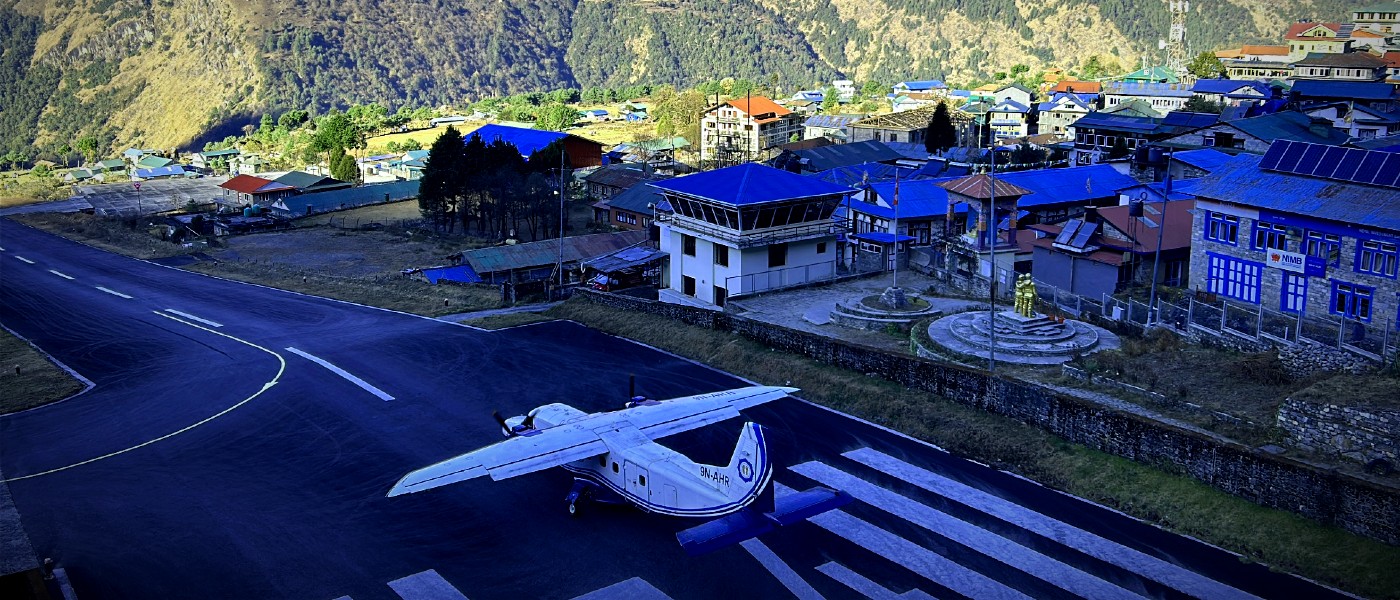
Early in the morning, you’ll fly from Kathmandu to Lukla on a small aircraft, experiencing one of the world’s most thrilling mountain flights. As the plane descends toward Tenzing-Hillary Airport, you’ll see terraced hillsides and distant snow peaks through the windows. Upon landing at this gateway to Everest, you’ll meet your porter team and begin the trek.
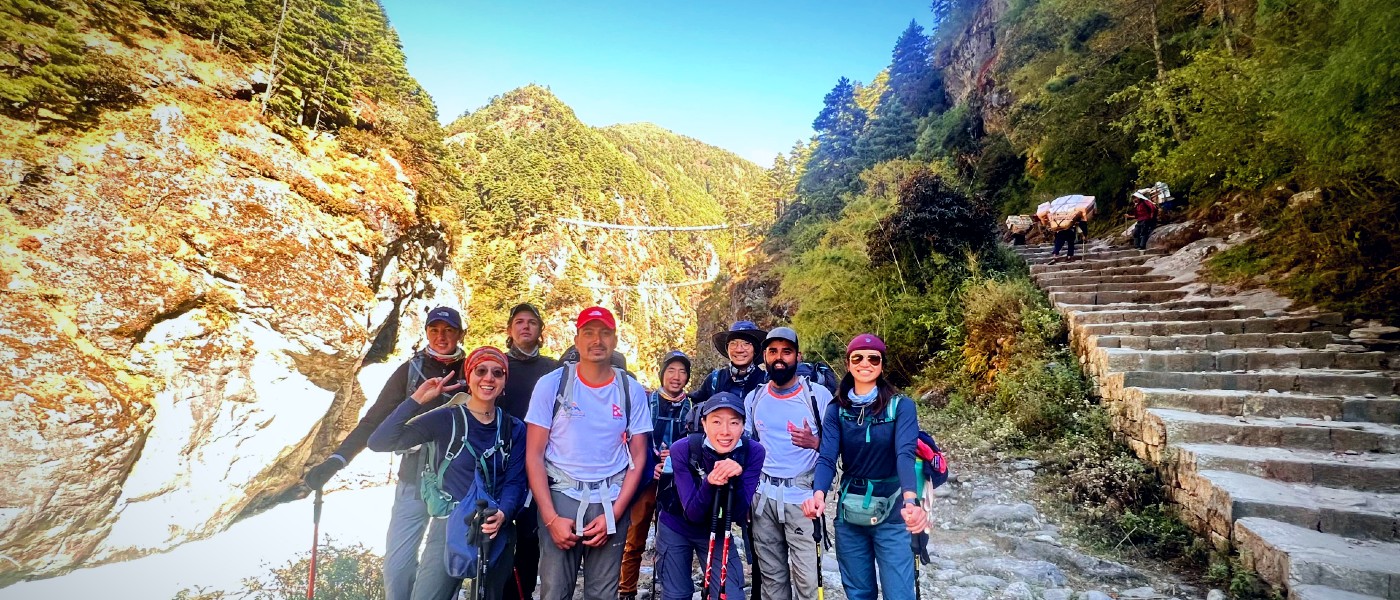
The trail descends gently from Lukla through pine forests and small settlements. Consequently, this first day serves as a gentle introduction to trekking in the Everest region. You’ll cross several suspension bridges decorated with prayer flags and pass mani walls carved with Buddhist mantras. Furthermore, the sound of the Dudh Kosi River accompanies you as you walk downstream toward Phakding.
By afternoon, you’ll arrive at Phakding village, where tea houses offer comfortable accommodation. Therefore, this lower elevation provides an ideal first night for gradual acclimatisation before ascending to Namche Bazaar tomorrow.
- Activities: Scenic mountain flight, trek to Phakding

Accomodation: Lodge
Duration: 30 min fly and 2-3 hour drive
Meal: Breakfast, Lunch, Dinner included
Ascent: +1540 M (Lukla)
Descent: -250 M (Phakding)
Distance: 8 KM Walk
Trek from Phakding to Namche Bazaar (3,440 m)
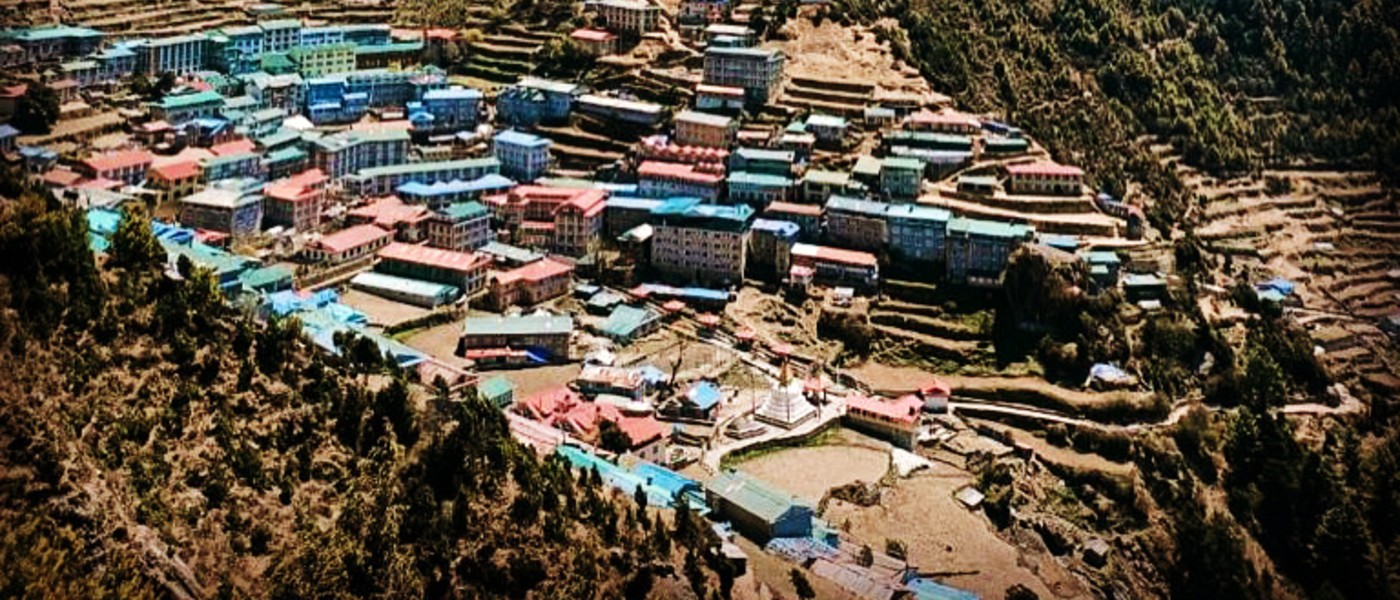
Today’s trek marks a significant milestone as you enter Sagarmatha National Park and climb to the vibrant trading hub of Namche Bazaar. Initially, the trail follows the Dudh Kosi River valley, crossing several high suspension bridges, including the famous Hillary Bridge adorned with colourful prayer flags.
After Jorsale, the path begins its steady ascent through pine and rhododendron forests. Consequently, you’ll feel your breathing deepen as the altitude increases. Approximately two hours into the climb, the trail opens dramatically, offering your first glimpse of Mount Everest peeking between Lhotse and the Nuptse-Lhotse ridge. This moment often stops trekkers in their tracks, cameras ready to capture the iconic view.
Subsequently, the final push to Namche Bazaar involves a steep zigzag climb. However, the sight of this amphitheatre-shaped settlement clinging to the mountainside makes the effort worthwhile. As you enter town, you’ll notice shops, bakeries, internet cafes, and even a Saturday market, all at 3,440 metres elevation.
- Activities: Trek through Sagarmatha National Park entrance to Namche
- Acclimatisation note: Drink plenty of water tonight and avoid alcohol, as tomorrow is your first rest day for altitude adjustment.
Accomodation: Lodge
Duration: 5-6 hour walk
Meal: Meals: Breakfast, lunch, dinner included
Ascent: +830 M(Namche)
Distance: 11 KM
Acclimatisation Day at Namche Bazaar
Acclimatisation days follow a specific pattern. You hike to a higher elevation during the day, then return to sleep at your current altitude. This approach, often called “climb high, sleep low”, encourages your body to produce more red blood cells and adapt to thinner air.
Most trekkers head to the Everest View Hotel, which sits at 3,880 metres. The trail climbs steadily through Syangboche village, and the views of Everest become more impressive as you gain elevation. At the hotel, you can sit on the terrace with tea or coffee and take in the panorama: Mount Everest, Lhotse, Ama Dablam, and Thamserku spread across the horizon.
After returning from the hike, you have time to explore Namche Bazaar itself. You can visit the Sherpa Culture Museum to learn about local traditions and mountaineering history, browse the trekking gear shops for last-minute supplies, or simply wander through the market streets and bakeries.
You return to your lodge in Namche by evening. Your body continues adjusting through the night, and this acclimatisation day improves your chances of completing the trek successfully.
- Health tip: Watch for headache, nausea, or dizziness. These are common mild altitude symptoms that typically improve with rest.
- Activities: Acclimatisation Hike to Everest View Hotel and explore Namche Bazaar.
- Maximum Altitude: 3,880 m (Hotel Everest View)
Accomodation: Lodge
Duration: 2-3 hour hike
Meal: Breakfast, lunch, dinner included
Ascent: + 440 M(Hotel Everest view Hike)
Descent: -440 M
Distance: 5.5 KM (Both Way)
Namche Bazaar → Tengboche (3,870 m)
Leaving Namche Bazaar, the trail initially descends to the Dudh Kosi River, passing through forests of pine, fir, and rhododendron. Consequently, you’ll cross the river at Phunki Tenga before beginning the steep ascent to Tengboche. Along the Everest trek, trekkers often spot Himalayan tahr grazing on steep slopes and colourful pheasants in the undergrowth.
As you climb higher, the forest opens periodically, revealing magnificent views of Everest, Nuptse, Lhotse, and the distinctive pyramid of Ama Dablam directly ahead. Furthermore, the trail becomes increasingly scenic as prayer flags flutter overhead and mani stones line the path.
Eventually, you’ll arrive at Tengboche, home to the Everest region’s largest monastery. This active Buddhist monastery hosts morning and evening prayer ceremonies that visitors can attend. Additionally, the location offers one of the most photographed mountain panoramas in Nepal, with Everest rising majestically behind the monastery’s red roof.
Tonight’s lodge sits in the shadow of these giants, and temperatures drop noticeably at this elevation. Therefore, trekkers often gather in dining halls for warm meals and conversation with fellow adventurers.
- Activities: Trek through forests to Tengboche Monastery
Accomodation: Lodge
Duration: 5-6 hour walk
Meal: Breakfast, lunch, dinner included
Ascent: +430 M
Distance: 10 KM
Tengboche to Dingboche (4,360 m)
The trail descends through birch and rhododendron forest to the Imja Khola River, then continues through Pangboche village, which houses one of the Everest region’s oldest monasteries. Along the Everest Base Camp trail, you’ll notice vegetation becoming increasingly sparse as altitude increases.
Subsequently, the landscape opens into the broad Imja Valley, where Dingboche sits protected by stone walls built to shield crops and buildings from fierce mountain winds. This traditional Sherpa village features distinctive stone-walled fields where locals grow barley and potatoes during the short summer season.
As you approach Dingboche, the massive south face of Lhotse dominates the skyline ahead, while Ama Dablam stands guard to the south. Furthermore, Island Peak (Imja Tse) becomes visible, attracting the gaze of trekkers considering climbing extensions.
Tonight’s accommodation in Dingboche marks your entry into the true alpine zone, where trees no longer grow and the air feels noticeably thinner. Therefore, moving slowly and drinking water frequently become increasingly important.
- Altitude awareness: Some trekkers experience mild headaches at this elevation, which typically improve after tomorrow’s acclimatisation day.
- Activities: Trek through alpine landscape to Dingboche
Accomodation: Lodge
Duration: 5-6 hour walk
Meal: Breakfast, lunch, dinner included
Ascent: 490 M
Distance: 11 KM
Acclimatisation Day in Dingboche
The second acclimatisation day in Dingboche offers several hiking options. Most trekkers climb Nagarjun Hill, which rises directly behind the village to 5,100 metres. This challenging ascent provides spectacular 360-degree Himalayan views, including Makalu (the world’s fifth-highest peak) to the east.
The hike follows the acclimatisation principle of climbing higher than your sleeping elevation before returning. By afternoon, you’ll descend back to Dingboche, where your body continues adapting to the altitude overnight.
These two acclimatisation days in Namche Bazaar and Dingboche significantly improve your success rate for reaching Everest Base Camp and Kala Patthar. They transform the trekking experience from merely physical endurance into an opportunity to truly appreciate the landscapes of the Everest region.
- Wellness check: Your guide and porter team monitors all trekkers for altitude sickness symptoms during rest days.
- Activities: Acclimatisation trek to Nagarjun Hill (5,100 m)
Accomodation: Lodge
Duration: 3-5 hour hike
Meal: Breakfast, lunch, dinner included
Ascent: +740 M
Descent: - 740 M
Distance: 5.5 KM
Dingboche to Lobuche (4,940 m)
The trail climbs steadily from Dingboche toward the lateral moraine of the Khumbu Glacier. Initially, you’ll pass through Dughla (also called Thukla), a small settlement where tea houses offer a rest stop before the steep climb ahead. Subsequently, the path ascends a rocky hillside to reach Chupki Lhara, a memorial site where stone cairns honour climbers and Sherpa who died on Mount Everest.
This sobering location reminds trekkers of the mountain’s power and the courage of those who attempt to climb it. Colourful prayer flags flutter in the wind, carrying prayers across the valley. Furthermore, the views from this ridge extend across the Khumbu Glacier toward Pumori and the surrounding peaks.
Beyond the memorials, the trail continues along the glacier’s lateral moraine. The landscape becomes increasingly stark and barren, with only lichens and occasional hardy plants surviving at this elevation. Eventually, you’ll reach Lobuche, a small settlement of basic lodges that serves base camp treks as a final stop before Gorakshep.
Tonight, you’ll sleep at nearly 5,000 metres, likely experiencing the coldest night of the trek. Therefore, wearing all your warm layers and using a good sleeping bag becomes essential. Additionally, you may notice increased breathing effort and possibly a mild headache, which are normal responses to altitude.
- Sleep tip: Elevate your head slightly to improve nighttime breathing at this elevation. If you feel any discomfort, inform your guide in a timely manner.
- Activities: Trek through memorial site to Lobuche
Accomodation: Lodge
Duration: 4-5 hour walk
Meal: Breakfast, lunch, dinner included
Ascent: +580 M
Distance: 8 KM
Trek to Gorakshep (5,160 m) & Continue to Everest Base Camp (5,364 m)
This represents the most challenging and rewarding day of the Everest Base Camp trek itinerary. After breakfast, the trail follows the Khumbu Glacier moraine toward Gorakshep, the last settlement before Base Camp. The path crosses rocky terrain with stunning views of Everest and Nuptse’s massive wall rising to the east.
Upon reaching Gorakshep, you’ll drop your main bags at the tea house and continue with a light daypack toward Everest Base Camp. The trail winds through the glacier moraine, crossing ice, rocks, and occasional frozen pools. Consequently, progress can be slow as you navigate boulder fields and potentially icy sections.
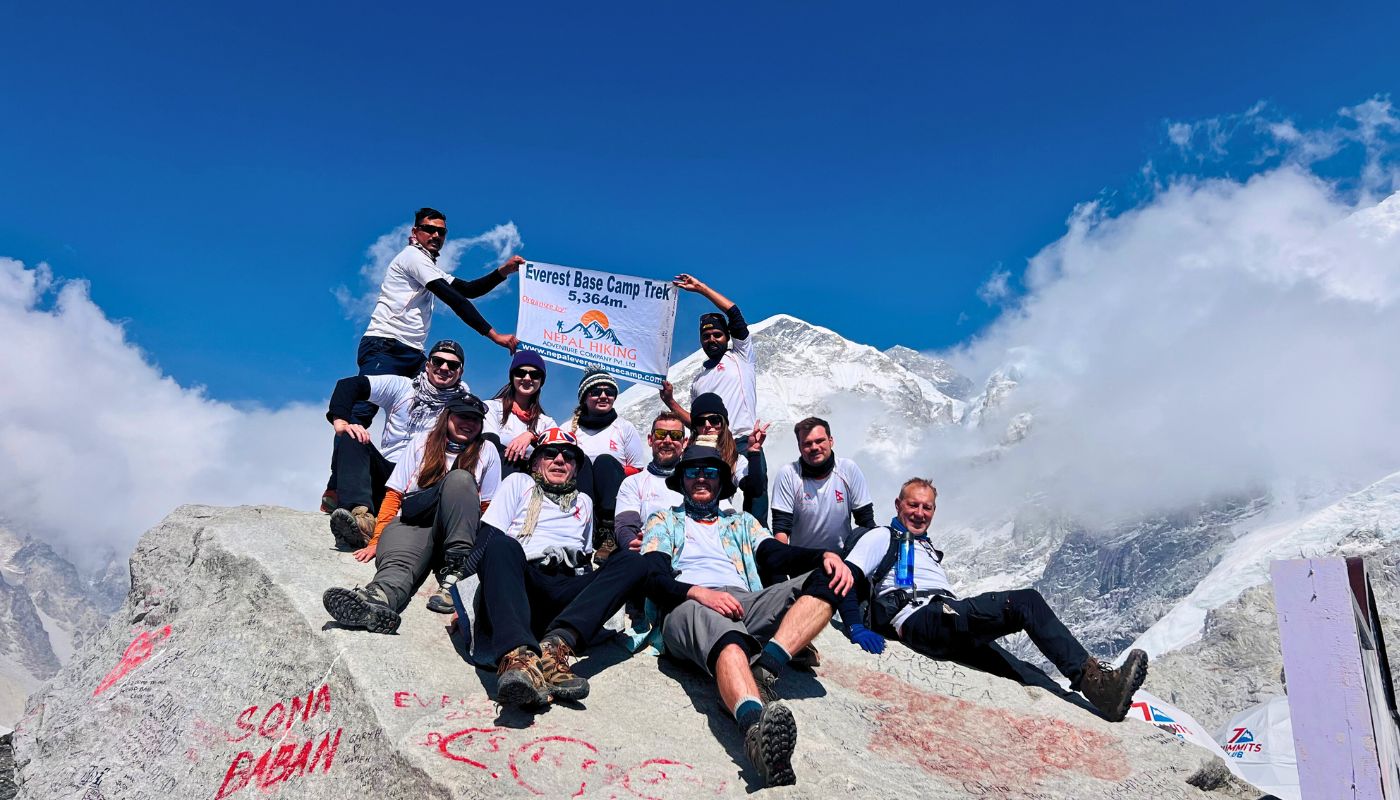
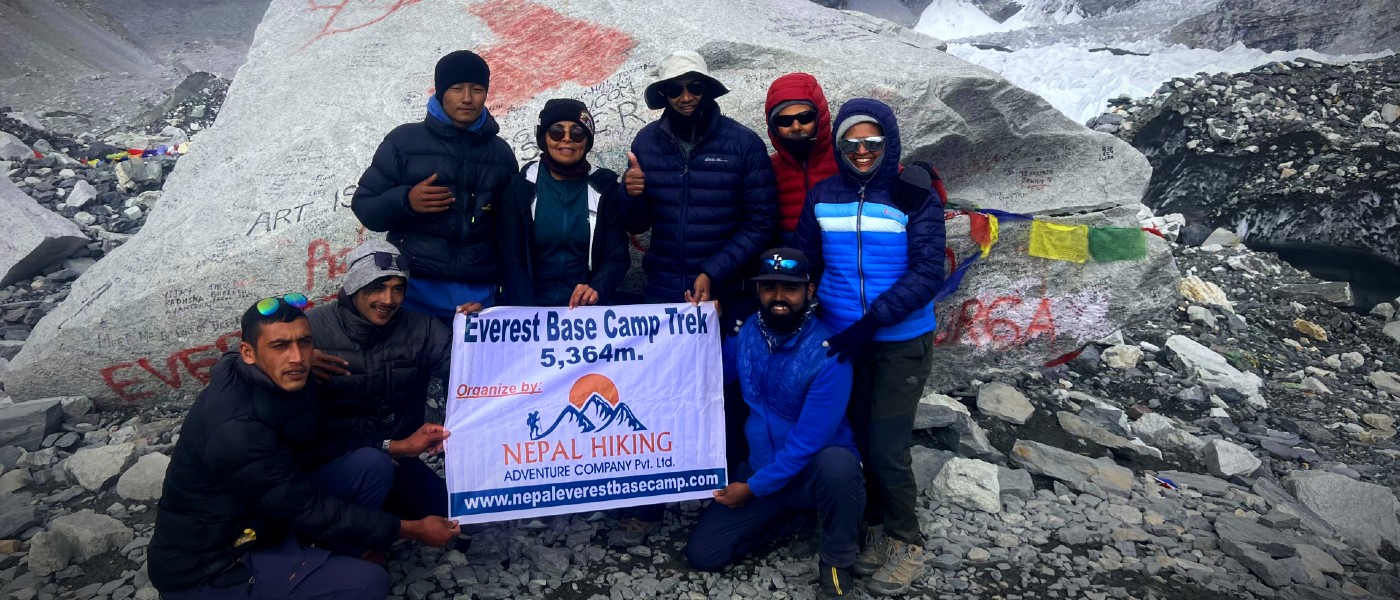
After approximately two hours, you’ll reach Base Camp at the iconic Everest Base Camp, sitting at 5,364 metres at the base of the world’s highest mountain. However, the view from Base Camp itself is limited by the surrounding glacier and moraines. Instead, the experience centers on standing where mountaineering expeditions establish their base before attempting the summit. During climbing season (April-May), you’ll see colourful tents, expedition teams, and the famous Khumbu Icefall rising above.
Trekkers typically spend 30-60 minutes at Base Camp, taking photographs and absorbing the atmosphere before returning to Gorakshep for the night. Therefore, this moment represents the culmination of your trip to Everest Base Camp, even though tomorrow brings an even more spectacular viewpoint.
Photography note: Base Camp’s elevation and location in a glacier bowl mean limited direct mountain views. Save the camera battery for tomorrow’s Kala Patthar sunrise.
- Activities: Reach Gorakshep, then continue to Everest Base Camp
Accomodation: Lodge
Duration: 7-8 hour walk
Meal: Breakfast, lunch, dinner included
Ascent: + 424 M
Descent: - 204 M
Distance: 13 KM (In total)
Morning trek to Kala Patthar (5,545 m), Continue Walk back to Pheriche (4,240 m)
This morning brings the trek’s most spectacular moment. You’ll wake around 4:00 AM (depend on sunrise time) and begin hiking to Kala Patthar by headlamp. The steep trail climbs the rocky ridge in darkness, with trekkers moving slowly in the thin air. Consequently, this challenging ascent tests your physical and mental endurance as you push toward the summit.
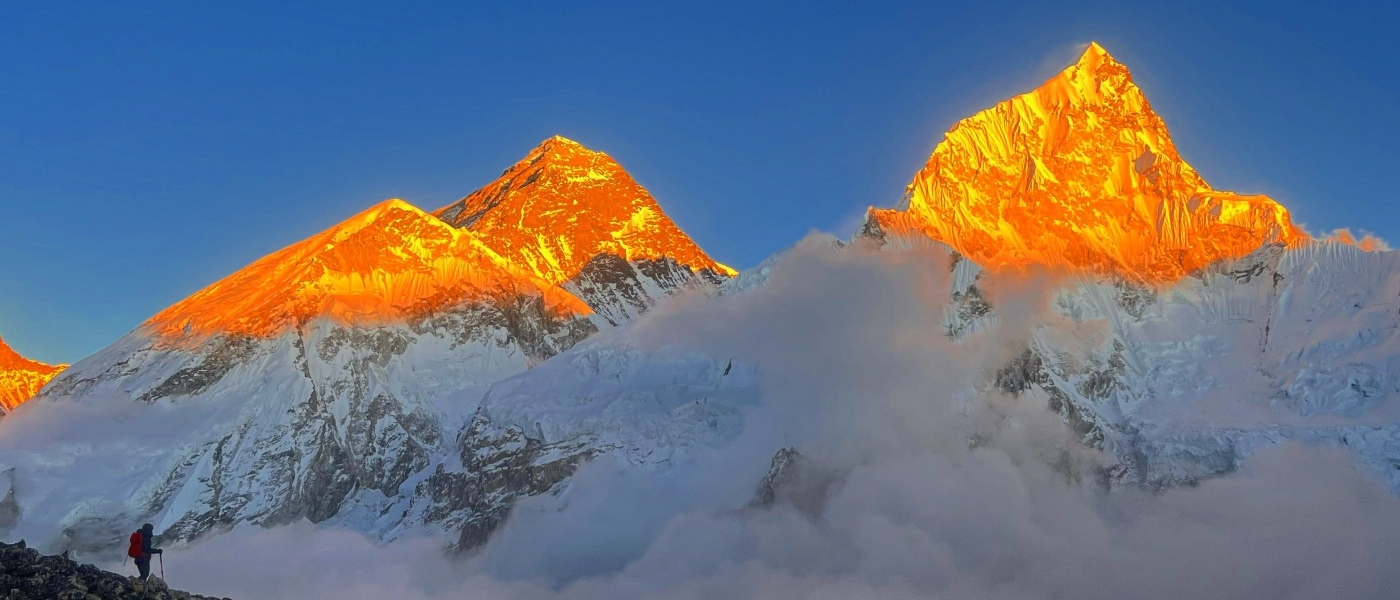
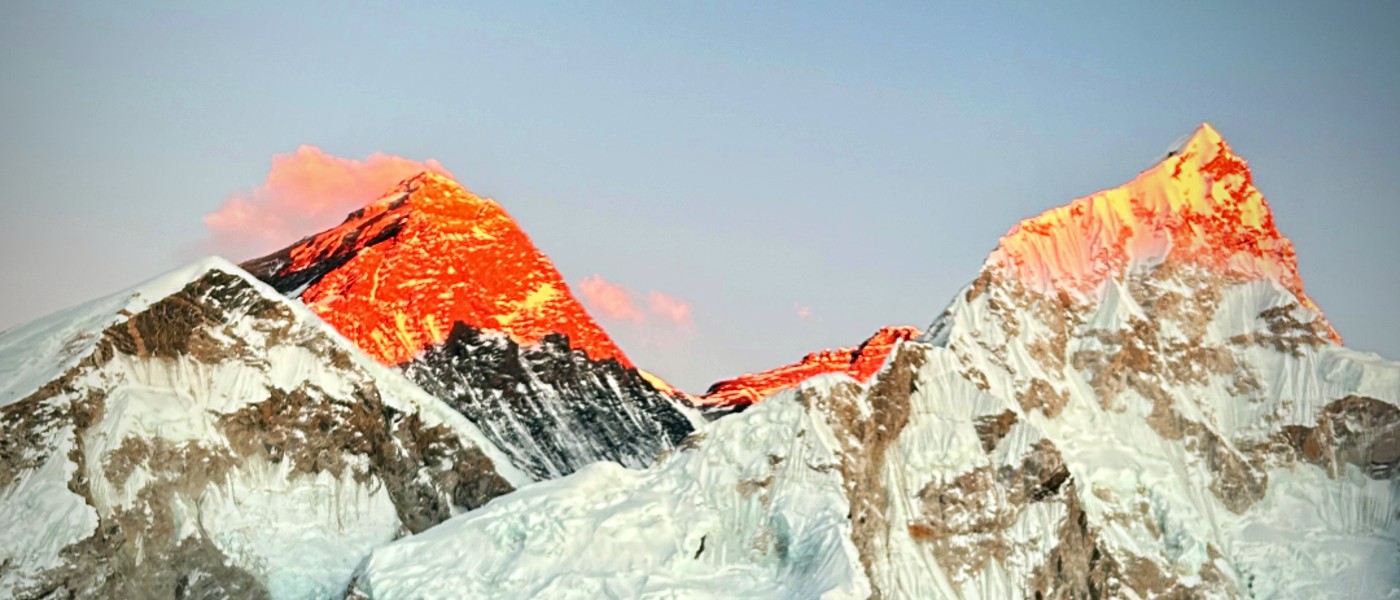
As dawn breaks, the sky gradually lightens, revealing the Himalayan giants surrounding you. Upon reaching Kala Patthar’s summit at 5,545 metres, you’ll witness Mount Everest illuminated by the first golden rays of sunrise. Furthermore, the panorama includes Nuptse, Changtse, Lhotse, Pumori, and dozens of surrounding peaks stretching to the horizon.
This viewpoint offers the best ground-level perspective of Everest available without technical climbing. Therefore, trekkers often describe this sunrise as the highlight of their entire Everest Base Camp journey. The temperature at dawn can drop to -15°C or colder, so wearing all your warm layers becomes essential.
After photographing and absorbing the view, you’ll descend back to Gorakshep for breakfast. Subsequently, the trail continues downward to Pheriche, losing over 1,300 metres of elevation in a single day. This significant descent brings relief as oxygen levels increase and breathing becomes noticeably easier, and you’ll sleep much better at this lower elevation tonight.
- Health benefit: Descending after reaching maximum altitude allows your body to recover and reduces altitude-related risks significantly.
- Activities: Sunrise trek to Kala Patthar viewpoint, descend to Pheriche
Accomodation: Lodge
Duration: 7-8 hour walk
Meal: Breakfast, lunch, dinner included
Ascent: + 385 M
Descent: -1305 M
Distance: 16 KM
Trek to Tengboche (3 hours) and Continue to Namche Bazaar (4 hours)
The return journey continues downward through increasingly lush vegetation as you descend into thicker air. Initially, you’ll retrace your steps to Tengboche, where you might stop for lunch at the monastery. The trail then drops steeply through rhododendron and pine forests to cross the Dudh Kosi River before climbing back up to Namche Bazar.
Returning to Namche feels almost surreal after spending days at Everest Base Camp in the high country. The town’s shops, bakeries, and internet connectivity seem like luxuries after the basic facilities of Lobuche and Gorakshep. Breathing feels effortless at 3,440 metres after experiencing altitudes above 5,500 metres.
Tonight, many trekkers mark their successful journey to Everest Base Camp with warm showers, bakery treats, and camaraderie with their guide and porter team. This evening often includes sharing photos and stories before the final descent tomorrow.
- Celebration tip: Consider visiting a Namche bakery for fresh apple pie or cinnamon rolls, local favourites among trekkers.
- Activities: Descend through forests to Namche Bazaar
Accomodation: Lodge
Duration: 7 Hour walk
Meal: Breakfast, lunch, dinner included
Descent: 800 M
Distance: 16 KM
Trek to Lukla (2,860 m)
The final trekking day retraces your initial route from Namche through Phakding and back to Lukla. The trail descends steadily through forest and villages, crossing familiar suspension bridges and passing mani walls you saw on day one and two.
As you approach Lukla, you’ll climb the final steep section up to the town, where the small airstrip comes into view. Consequently, completing this ascent brings a sense of accomplishment, knowing you’ve finished the 14-day Everest Base Camp trek successfully.
Tonight in Lukla typically features a celebration dinner with your trekking crew. This represents an opportunity to thank your guide and porter team for their support throughout the trek. Furthermore, tipping usually occurs this evening, following Nepal’s customary practices for mountain guides and support staff.
- Flight preparation: Confirm your Lukla to Kathmandu flight timing for tomorrow with your airline company. (The guide will handle it to reconfirm your flights).
- Activities: Final trek day back to Lukla
Accomodation: Lodge
Duration: 6-7 hour walk
Meal: Breakfast, lunch, dinner included
Descent: - 580 M
Distance: 19 KM
Fly Lukla-Kathmandu
Weather permitting, you’ll fly from Lukla back to Kathmandu this morning. The mountain flight offers one final opportunity to see the Himalayan ranges from above, providing a different perspective on the terrain you’ve just traversed on foot.
Upon arrival in Kathmandu, you’ll transfer to your hotel, where hot showers and comfortable beds await. The afternoon remains free for rest, souvenir shopping in Thamel, or exploring Kathmandu’s temples and cultural sites. Moreover, this represents your chance to visit places you may have missed on arrival day.
- Flight note: Lukla flights can be delayed or cancelled due to weather. Your itinerary includes contingency time, but travel insurance covering flight delays is strongly recommended.
- Seasonal Update: During peak trekking seasons (spring and autumn), flights between Lukla and Kathmandu may operate via Ramechhap (Manthali Airport), located about a 4–5 hour drive from Kathmandu. In such cases, an early morning road transfer will be arranged to ensure you catch your flight.
Accomodation: Hotel
Duration: Flight Lukla → Kathmandu
Meal: Breakfast included
Distance: 30-35 Min fly
Final Day in Kathmandu – Free Time & Departure
Your final day in Nepal offers time to explore before your international departure. Depending on your flight schedule, you might visit Pashupatinath Temple, Boudhanath Stupa, or Swayambhunath (Monkey Temple). Alternatively, many trekkers prefer relaxing in a Thamel cafe, organising photos, or shopping for Nepali handicrafts.
Our representative will transfer you to Tribhuvan International Airport approximately three hours before your flight, allowing sufficient time for check-in procedures. Therefore, your Everest Base Camp trek 14 days itinerary concludes with memories of mountain vistas, cultural encounters, and personal achievement.
- Departure tip: Arrive at the airport early, as Kathmandu’s terminal can be congested during peak travel seasons. (At least 4 hour before your flight time.)
- Activities: Last-minute shopping, rest, sightseeing, airport transfer as per your flights.
Duration: 30 Min drive to Airport.
Meal: Breakfast included
Distance: 8 KM Drive
Fixed Departure
Cost Includes
- Arrival & Departure Transport By private Car/Van/Bus.
- Three meals a day during the Trekking (B, L,D)
- Accommodation in Tea House during the Trekking.
- Two night accommodation in Kathmandu with B/B Plan.
- Trekking Guide and a proter (Sharing by two clients) with Insurance, food, accommodations and all their needs
- Flight ticket for guide Kathmandu-Lukla-Kathmandu.
- Flight ticket for Clients Kathmandu-Lukla-Kathmandu.
- First Aid kit.
- Trekking permit (Conservation fee).
- Tims card (Trekking information management system) as a permit.
- Free Company’s duffel bag and T-shirt.
- City and Trekking Map.
- All needed official fees and taxes.
Cost Excludes
- International Airfare.
- Your travel insurance.
- Nepal Visa fee
- Any kind of drinks.
- Items of personal expenses like hot shower, battery charge, telephone, Extra Porters etc.
- Tips for Guide and Porters.
Temperature Chart
Altitude Chart
Useful Info
Best Time for Everest Base Camp Trek 14 Days
Spring (March to early-May) and Autumn (September to November) is the best two best time to go on Everest Base Camp Trek 14 days. Trekking is possible from December to February and it’s a good time and avoid the crowds but you will need to be prepared in the colder temperatures. June to August is the rainy season and we don’t generally recommend trekking on it. If June to August is the only time you can trek send us an email and we can provide some suggestions too.
Prime Trekking Seasons
The best time to trek to Everest occurs during spring (March-May) and autumn (September-November), offering stable weather, clear mountain views, and comfortable temperatures.
Spring Season (March-May)
- Coincides with peak climbing season, allowing trekkers to witness expedition activity at Base Camp
- March temperatures: daytime 10-15°C, nighttime -15°C or colder at higher elevations
- May brings warmer conditions but challenging snow
- Rhododendron blooms transform lower forests between Namche and Tengboche
- Afternoon cloud buildup increases as monsoon season approaches
- Morning views clearer than afternoons
- Occasional spring snowstorms possible in March
Autumn Season (September-November)
- Considered the absolute best time by trekking professionals
- Monsoon rains have cleared atmospheric dust, creating exceptionally clear visibility
- Stable weather patterns reduce flight cancellations from Lukla
- October offers ideal conditions: moderate temperatures, dry trails, crystal-clear views
- October remains busiest month, with tea houses often fully booked
- November brings colder temperatures (nighttime -20°C at Gorakshep and Lobuche)
- Reduced crowds after mid-November
- Book several months in advance for peak October dates
Winter Trekking (December-February)
- Appeals to adventurous trekkers seeking solitude
- Discounted tea house rates and empty trails
- Severely cold: nighttime -25°C at Gorakshep, daytime may stay below -10°C
- Some higher-elevation tea houses close entirely
- Snow accumulation can make trails challenging or impassable
- Requires proper cold-weather gear and experienced guides
Monsoon Season (June-August)
- Least popular season due to heavy rainfall
- Daily afternoon rains create muddy, slippery trails
- Thick clouds obscure mountains for days
- Leeches prevalent in lower elevation forests
- Increased flight cancellations and landslide risks
- Khumbu region receives less precipitation than areas south of Himalayan divide
- Budget discounts available but spring or autumn recommended
Temperature Ranges by Elevation
- Lukla to Namche (2,600-3,440m): Daytime 15-20°C, nighttime 5-10°C
- Namche to Tengboche (3,440-3,870m): Daytime 10-15°C, nighttime 0-5°C
- Dingboche to Lobuche (4,360-4,940m): Daytime 5-10°C, nighttime -5 to -15°C
- Gorakshep and Base Camp (5,160-5,364m): Daytime 0-5°C, nighttime -15 to -25°C
Wind chill significantly lowers temperatures on exposed ridges and at Kala Patthar. Proper layering systems are essential for comfort and safety.
Difficulty, Altitude & Fitness Requirements
Understanding Everest Base Camp Trek Difficulty
The difficulty of the Everest Base Camp trek is rated as moderate to tough. Unlike technical climbing routes, the trek requires no mountaineering skills, rope work, or specialised climbing equipment. However, the combination of altitude, distance, and duration makes this a serious undertaking that demands proper preparation.
Several factors contribute to the challenge:
- Altitude effects: Reduced oxygen levels at high elevations stress the cardiovascular system
- Daily duration: Trek days range from 5 to 8 hours of walking
- Cumulative distance: Approximately 130 km total over multiple days
- Terrain variation: Rocky trails, suspension bridges, steep ascents and descents
- Basic facilities: Simple tea house accommodations and limited amenities
- Weather exposure: Cold temperatures and potential for sudden weather changes
Nevertheless, thousands of trekkers with average fitness levels successfully complete the Everest Base Camp trek itinerary each year. Therefore, the key lies in proper preparation, gradual acclimatisation, and realistic self-assessment.
Altitude Profile and Acclimatisation Strategy
This 14-day itinerary follows a carefully designed altitude profile that allows gradual adjustment:
| Location | Elevation | Sleep Altitude | Days at This Level |
| Kathmandu | 1,350 m | 1,350 m | 1 day |
| Lukla/Phakding | 2,610-2,860 m | 2,610 m | 1 day |
| Namche Bazaar | 3,440 m | 3,440 m | 2 days (acclimatisation) |
| Tengboche | 3,870 m | 3,870 m | 1 day |
| Dingboche | 4,360 m | 4,360 m | 2 days (acclimatisation) |
| Lobuche | 4,940 m | 4,940 m | 1 day |
| Gorakshep | 5,160 m | 5,160 m | 1 day |
| Maximum Point | 5,545 m (Kala Patthar) | Return to lower elevation |
|
The two acclimatisation days in Namche Bazaar and Dingboche represent critical elements that distinguish this 14 day Everest Base Camp trek itinerary from shorter versions. These rest days allow your body to produce additional red blood cells and adjust to oxygen-poor air, significantly reducing altitude sickness risks.
Furthermore, the itinerary follows the mountaineering principle of “climb high, sleep low” during acclimatisation days. Consequently, you’ll trek to elevations 400-700 metres higher than your sleeping altitude before descending for the night.
Acute Mountain Sickness (AMS) Awareness
Altitude-related illness remains the primary health concern on high-altitude treks. AMS occurs when your body cannot adjust quickly enough to reduce oxygen levels above 2,500 metres. Symptoms include:
- Headache (the defining symptom)
- Nausea or loss of appetite
- Dizziness or lightheadedness
- Fatigue beyond normal tiredness
- Difficulty sleeping
Most trekkers experience mild symptoms at some point during the trek. These usually improve with rest, hydration, and slower ascent. However, ignoring symptoms or continuing to gain altitude can lead to serious conditions like High Altitude Pulmonary Edema (HAPE) or High Altitude Cerebral Edema (HACE), which require immediate descent and medical treatment.
Your guide monitors all trekkers daily for AMS symptoms and can recognise warning signs. Additionally, carrying Diamox (acetazolamide) as a preventive medication can help, though you should consult a doctor before the trek about its use.
The most effective prevention strategy involves the gradual ascent profile of this 14-day itinerary, combined with staying well-hydrated (3-4 litres of water daily), avoiding alcohol, and maintaining a steady, slow walking pace.
Physical Fitness Requirements
- You don’t need to be an athlete, but good physical fitness is essential for the trek.
- Focus on regular cardio exercises such as hiking, jogging, or cycling to build endurance.
- Strengthen your legs and core through simple strength training routines.
- Practise walking with a loaded backpack and complete a few full-day hikes before the trip.
- Maintain a positive mindset, as mental preparation is just as important as physical readiness.
- Set your mindset to walk or trek 5 to 6 hours each day, often on steep and uneven terrain, to match real trekking conditions.
- If you have any existing health issues, consult your doctor before starting the trek to ensure you are fit for high-altitude travel.
Age and Health Considerations
Trekkers from ages 10 to 75+ successfully reach Base Camp each year. Age itself isn’t a limiting factor; current fitness level and health status matter far more. However, anyone with pre-existing medical conditions should consult a doctor before starting the trek.
Conditions requiring medical clearance include:
- Heart disease or high blood pressure
- Respiratory conditions (asthma, COPD)
- Previous altitude sickness experiences
- Recent surgeries or injuries
- Pregnancy
Travel insurance covering medical evacuation (including helicopter rescue) is mandatory. Helicopter evacuations from high altitudes can cost USD 5,000-10,000 or more, making comprehensive insurance is essential. Make sure your travel insurance covers high-altitude (5000 m) evacuations.
Route Map, Distance & What to Expect on Trail
The Everest Base Camp Trekking Route Overview
The 14 days Everest Base Camp trekking route follows the traditional path through the Khumbu Valley, established over decades by Sherpa traders and mountaineers. This well-maintained trail connects a series of villages and settlements, each offering tea house accommodation and increasingly spectacular mountain views.
Starting from Lukla, the route to Everest Base Camp initially descends into the Dudh Kosi River valley before climbing steadily toward Namche Bazaar. Subsequently, the trail follows the main Khumbu Valley northward, passing through Tengboche and Dingboche before turning west toward the Khumbu Glacier and Base Camp itself.
Total Distance and Daily Breakdown
The complete round-trip distance covers approximately 130 kilometres (80 miles). However, this measurement understates the physical challenge, as the route involves significant elevation gain and loss. Daily distances range from 8 to 19 kilometres, with trekking times of 3-8 hours depending on terrain and altitude.
Trek Distance by Section:
- Lukla to Namche Bazaar: 19 km (2 days ascending, 1 day descending)
- Namche to Tengboche: 10 km
- Tengboche to Dingboche: 11 km
- Dingboche to Lobuche: 8 km
- Lobuche to Gorakshep to Base Camp: 13 km round trip
- Gorakshep to Kala Patthar to Pheriche: 16 km
- Return to Lukla: 55 km (3 days)
Terrain varies considerably along the Everest Base Camp trail. Lower sections feature stone-paved paths through forests and villages. Higher sections cross rocky moraine, requiring careful foot placement. Furthermore, numerous suspension bridges span rivers and gorges, some swaying dramatically as you cross.
Tea House Accommodations
Unlike camping treks that require carrying tents and cooking equipment, this base camp trek uses the established tea house network. These family-run lodges provide simple but adequate facilities at each night’s destination.
What to Expect from Tea Houses:
- Sleeping rooms: Twin beds with mattresses, blankets (suggest bringing a sleeping bag), shared walls
- Dining halls: Central heated (wood or yak dung stove) common areas where meals are served
- Toilet facilities: Range from western-style to squat toilets, shared in many locations
- Washing facilities: Cold water standard, hot showers available for USD 3-5 (increasingly expensive at altitude), depending on location.
- Electricity: Solar panels provide limited power for lighting and charging (USD 2-5 per device).
- Internet: WiFi available in most villages (USD 5-10 per day), increasingly spotty at altitude
Tea house quality varies by location and elevation. Lower villages like Namche Bazaar offer relatively comfortable lodges with private bathrooms and hot showers. Conversely, high-altitude locations like Lobuche and Gorakshep provide only basic shelter from the elements.
During peak season (October and April), tea houses fill quickly. Therefore, guides typically arrive early each day to secure rooms for their groups. Furthermore, booking with a reputable operator ensures pre-arranged accommodation at popular stops.
Food and Dining on the Trail
Meals during the trek follow a standard tea house menu system. Each lodge offers similar options, with prices increasing gradually as you gain altitude (reflecting the difficulty of transporting supplies).
Typical Menu Items:
- Breakfast: Porridge, toast with jam, eggs (fried, scrambled, omelette), pancakes, Tibetan bread
- Lunch/Dinner: Dal bhat (rice with lentil soup), fried rice, noodle soup, momos (dumplings), pasta, pizza
- Beverages: Tea, coffee, hot chocolate, soft drinks, beer (lower elevations)
Note: Menu options may vary depending on the location, altitude, and availability of fresh ingredients along the trail.
Importantly, the traditional Nepali dish dal bhat offers the best nutritional value for trekking. This meal includes unlimited refills of rice and dal, plus side vegetables and pickles. Consequently, many experienced trekkers eat dal bhat twice daily to maintain energy levels.
At higher altitudes, your appetite typically decreases as your body diverts energy to altitude adaptation. Nevertheless, maintaining caloric intake remains essential. Therefore, eating smaller portions more frequently helps, even when you don’t feel hungry.
Dietary Advice for Altitude:
- Carbohydrate-rich foods provide quick energy
- Avoid heavy, greasy meals that are hard to digest.
- Drink 3-4 litres of water daily (hot drinks count toward this total)
- Limit caffeine, which can increase dehydration
- Avoid alcohol entirely above 3,000 metres
Water purification becomes necessary throughout the trek. While some tea houses sell bottled water, using purification tablets or filters reduces plastic waste and cost. Furthermore, hot boiled water is available at every tea house for a small fee.
Trail Etiquette and Navigation
The trek route is well-marked and easy to follow with a guide. However, understanding basic trail etiquette ensures smooth passage:
- Uphill traffic has right of way on narrow sections
- Pass yak and mule trains on the uphill side (animals stay close to cliff edges)
- Keep mani walls and stupas on your right when passing (Buddhist tradition)
- Ask permission before photographing local people or religious sites
- Step aside at viewpoints to allow other trekkers photo opportunities
Navigation trekking without a guide is possible but not recommended. The trek passes through avalanche zones and glacier moraine, where route finding can be challenging. Moreover, having a guide ensures appropriate pacing for altitude, local knowledge about weather, and immediate support if health issues arise.
Permits, Flights & Entry Logistics
Required Trekking Permits
Two permits are required for the Everest Base Camp trek:
Sagarmatha National Park Entry Permit grants access to the UNESCO World Heritage Site and supports conservation efforts, including trail maintenance, wildlife protection, and waste management programmes.
- Obtain it through the Nepal Tourism Board office in Kathmandu or at the park entry point in Monjo
- Required documents include your passport and two passport photos
TIMS card (Trekkers’ Information Management System) serves as a tracking system for trekker safety and rescue coordination.
- Records your planned route and timeline so rescue teams can locate trekkers during emergencies
- Your guide carries this card and presents it at checkpoints
- Obtain it from TAAN (Trekking Agencies Association of Nepal) or TIMS offices in Kathmandu with your passport and itinerary details.
Your trekking operator typically handles both permits before departure.
The Lukla Flight Experience
The flight from Kathmandu to Lukla on a small aircraft ranks among the world’s most dramatic mountain flights.
Tenzing-Hillary Airport sits at 2,860 metres with a short runway (527 metres) that slopes upward and ends at a mountain wall. Pilots must execute precise landings with no margin for error.
Flights take 30 to 35 minutes aboard a Twin Otter or Dornier 228 aircraft carrying 14 to 18 passengers. Multiple flights operate daily during trekking season, with a baggage allowance of 15 kg all together.
The flight path offers spectacular aerial views of terraced hillsides and distant Himalayan peaks. On clear days, passengers on the left side can see Everest during the approach.
Flight Delays and Alternatives
Weather-related flight cancellations represent the most common logistical challenge. Mountain weather changes rapidly, and safety regulations prohibit flights when visibility drops below minimum standards.
It is advisable for trekkers with tight international schedules to plan a few extra days in Kathmandu to accommodate possible flight delays or cancellations. Comprehensive travel insurance covering trip delays becomes essential.
Ramechhap Flights: Since 2019, many flights have operated from Ramechhap (also called Manthali) Airport during peak trekking seasons. This arrangement helps reduce air traffic congestion and often offers better weather windows for safe and timely flights.
The distance from Kathmandu is 132 km, requiring a 4 to 5 hour drive with early morning departures between 2:00 and 3:00 AM. Transport is provided by trekking operators.
Some trekking companies also provide helicopter charter options as a backup in case of significant flight delays, though this service requires an additional cost.
Nepal Entry Requirements
Visa on Arrival: Most nationalities receive Nepal tourist visas upon arrival at Tribhuvan International Airport in Kathmandu.
- Duration options include 15 days, 30 days, or 90 days
- Required documents include a valid passport (with 6 months or more remaining), a passport photo, and an application form
- Payment in US dollars cash is preferred, though some card payments are accepted
- Processing takes 30 to 60 minutes during peak arrival times
You can also obtain visas in advance from Nepali embassies or through the online e-visa system, though most trekkers find the arrival process convenient.
Vaccinations:
- No vaccinations are legally required for Nepal entry from most countries
- Doctors recommend being current on routine vaccinations (measles, mumps, rubella, tetanus)
- Hepatitis A and Typhoid are recommended for food and water-borne illnesses
- Hepatitis B is recommended for extended stays or medical exposure risk
- Rabies vaccination is recommended for remote area travel
- Altitude medications like Diamox are available at Kathmandu pharmacies without prescriptions
- Consult your doctor before the trek about altitude medication use
Emergency Evacuation and Insurance
Travel insurance covering high-altitude trekking and helicopter evacuation is absolutely mandatory. Standard policies often exclude activities above 3,000 to 4,000 metres. Verify your policy specifically covers trekking to Everest Base Camp up to 6,000 metres.
Insurance Must Cover:
- Medical treatment and hospitalization in Nepal
- Emergency helicopter evacuation from high altitude
- Trip cancellation and delay (for flight cancellations)
- Lost or stolen equipment
- Minimum coverage limits should reach USD 100,000 for evacuation
Important Considerations: Helicopter evacuation services require proof of insurance or a full payment guarantee before deployment. Reputable trekking insurance providers include World Nomads, Global Rescue, and other specialised adventure travel insurers. Obtaining comprehensive coverage before departure ensures essential protection and peace of mind, though availability and requirements may vary by location.
Everest base camp trek 14 days Route
At the moderate-level trek begins with the flight adventure to Lukla while seeing the jaw-dropping view for mountains, valleys, as well as hills. Then you start the hike by heading to Phakding for the night. The next day, you also head towards Namche Bazaar which is the hub of the Everest region. You will also acclimatize here, so enjoy the full memorable trips to Khumjung, Khunde, and Everest View hotel. The following day, you also head to Tengboche and later at Dingboche, where your next acclimatization is done. During your stay here, you can go on hikes to nearby peaks. After the lovely time, you now walk to Lobuche and prepare for the trek to EBC. You will be heading to Gorak Shep the next day and then hike to Everest Base Camp and return to Gorak Shep. From there, you also descend to Pheriche, then head to Namche, and lastly to Lukla. From Lukla, you fly back to Kathmandu, thus completing your 14 Days Everest Base Camp Trek.
Weather and Temperature of EBC Trek 14 Days
Even during the best of seasons, the Himalayan climate can be unpredictable. April and May to the first week of June will be the best months at the spring because the days will be longer and there will be more sunlight hours in a day. Morning and night-time temperatures can drop below freezing level in areas which are larger than 3,000 meters. The autumn season, from September to November, is another great time for treks around Everest base camp and other areas for the Himalayas. Days are generally clear with fine views, and it is a good time to scale on the top of the peak, though it is much colder at the autumn season, with extreme cold during mornings and nighttime, when daylight is also much shorter.
Everest Base Camp Trek 14 Days Difficulties
With safe and sound preparation and self confidence, the average weekend hikers can complete the trek comfortably. The first thing you need to know is the trekkers needed not to possess technical skills, it is only a long walk with numerous ups and downs. Also, there are some factors that make it sometimes hard and even difficult. Altitude is also the prime thing to consider while trekking at EBC trails. Mountain sickness is a common route, so try to acclimatize your body properly so that before making another gain in altitude. Also frequently drink water to stay hydrated at all times. You can walk at a gradual pace. The second factor that is to be considered is length. There are 65 km (one-way) long trails with several steep sections. It is also a challenge for novices. With adequate rest and steady, the distance covered might not trouble you.
Gear Checklist for Everest base camp Trek 14 days
General GEARS and Equipment
- Four-season (-10 to -15) sleeping bag (We have hiring sleeping bags available for an additional USD 30)
- Sleeping bag liner
- Warm down jacket (We have rental jackets available for an additional USD 30)
- Day Bagpack (30-40 liters recommended but depend on you)
Upper body GEARS AND EQUIPMENT
- Sun hat or cap
- Knitted hat/Beanie
- Scarf/Neck Gaiter/Buff
- Headlamp
- Sunglasses
Torso gear and equipment
- Technical fabric base layer (light for warmer months, heavy for colder months like Dec, Jan, Feb)
- Technical fabric short (2) and long sleeve (2) shirts
- Waterproof, windproof shell
- Fleece jacket or pullover
Lower body Gear and equipment
- Technical fabric base layer (light for warmer months, heavy for colder months)
- Hiking pants (2)
- Comfortable pants for inside the teahouses
- Waterproof, windproof shell
- Hiking shorts
Hands Gear and equipment
- Wool or technical fabric liner gloves
- Hard-shell outer gloves (insulated for colder months)
Feet Gear and equipment
- Wool or technical fabric warm socks
- Hiking socks
- Liner socks (optional such as silk)
Trekking/hiking boots (waterproof suggested)
- Micro Spikes footwear (For trek to Everest base for 14 days , it’s recommended to include Micro Spikes to prevent slipping on icy or wet surfaces. Specially for camp from Dec to Mar)
- Casual shoes
- Gaiters (light for dust and thick for colds. Check the weather month before you buy)
- Technical fabric/quick drying is best for underwear (opportunities to launder during the trip)
Under warmers and Dresses
- Sports bra (women)
- Nighties or sleeping clothes
- first_aid_kits_and_medications gear (Note: Guides carry medicines and first aid kits during the trip. However, personal kits and medicines are highly recommended.)
- Sunscreen
- Lip balm
- Ointment
- Cough Syrup (recommend for Khumbu Cough)
- Mosquito repellent cream (for lower land Kathmandu and Phakding or manjo)
Other Essentials Gears
- Passport
- Extra copies of passport-sized photos
- Reusable water bottle
- Toiletry kits
- Water purification tablets or UV water purifier (to treat water are highly recommended)
- Hydration bladder
- Towel
- Pillowcase
- Toilet paper (2 rolls)
- High protein snacks (protein bars or nuts for quick energy)
- Waterproof/dry bags for carrying important documents and money
Optional gear and equipment
Once you are in Kathmandu, Nepal, you have the opportunity to buying things for Trekking if you have extra time. Our guide or office staff will help you in buying the equipment. Thamel, which is Kathmandu’s tourist hub, so you can find a wide range of hiking equipment at reasonable costs.
- Power bank or extra batteries
- Cameras and mobile phone
- Cards/book
- Binoculars
- Pee bottle/ pee funnel for women
- Trekking poles
- Whistle
- Thermos for hot water
Responsible Trekking: Culture & Environment
Leave No Trace Principles
The Everest region faces increasing environmental pressures from growing trekking tourism. Therefore, practising responsible trekking behaviours helps preserve these fragile Himalayan ecosystems for future generations.
Waste Management: All trash generated during the trek must be carried out or properly disposed of. Tea houses provide waste collection, but many items end up burnt or buried rather than recycled. Consequently, minimise waste by:
- Refusing single-use plastic bottles (use water purification instead)
- Bringing reusable shopping bags for purchases
- Packing out all non-biodegradable items (wrappers, batteries, hygiene products)
- Using refillable toiletries rather than sample sizes
Furthermore, the Sagarmatha Pollution Control Committee operates waste management programmes throughout the park. Trekkers and climbing expeditions must carry all waste (including human waste above Base Camp) back to lower elevations for proper disposal.
Water Conservation: Water scarcity affects higher elevations, where tea houses must melt snow or carry water considerable distances. Therefore, being mindful of water use helps:
- Taking quick showers or skipping them entirely at high altitude
- Using wet wipes for basic hygiene instead of daily showers
- Reusing towels and limiting laundry
- Purifying stream water for drinking rather than buying bottled
Energy Conservation: Solar panels provide limited electricity at high-altitude tea houses. Consequently, charging devices, lighting, and heating all compete for scarce power:
- Charge devices during sunny daytime hours when solar generation is highest
- Limit charging to essential items (phone, camera)
- Use your headlamp instead of room lights when possible
- Gather in common heated areas rather than requesting room heating
Respecting Sherpa Culture and Buddhist Traditions
The Khumbu region remains home to Sherpa communities who have lived in these mountains for centuries. Their Buddhist faith permeates daily life, visible in monasteries, prayer flags, mani walls, and chortens. Therefore, showing respect for these cultural elements enhances your experience and maintains positive relationships between trekkers and local communities.
Monastery Etiquette:
- Remove shoes and hats before entering
- Walk clockwise around monasteries and stupas
- Don’t touch religious artifacts or statues
- Ask permission before photographing inside or during ceremonies
- Remain quiet and respectful during prayer times
- Consider small donations to support monastery maintenance
Cultural Sensitivity:
- Dress modestly (avoid revealing clothing, particularly in villages)
- Ask permission before photographing local people
- Respect privacy (don’t photograph inside homes uninvited)
- Learn basic Nepali phrases (namaste and ‘dhanyabad’ for ‘thank you’).
- Accept local customs even if they differ from your expectations
Sherpa guides and porters make the Everest Base Camp trek itinerary possible through their expertise, strength, and local knowledge. These individuals deserve respect and fair treatment:
- Tip appropriately at the trek’s end (USD 100-150 for guides and USD 70-100 for porters is customary)
- Greet your crew daily and learn their names
- Don’t rush them or demand excessive pace
- Ensure they have proper gear and accommodation (reputable operators provide this)
- Recognize that many are supporting families through trekking income
Supporting Local Economies
Tourism provides the primary income for Khumbu communities, particularly in villages like Namche Bazaar and Tengboche. Therefore, your spending decisions directly impact local livelihoods:
Ways to Support Local Communities:
- Purchase meals and supplies from tea houses rather than carrying everything
- Buy Nepali-made goods and handicrafts rather than imported trekking gear
- Hire local guides and porters through Nepal-based companies
- Tip tea house staff in addition to your guide and porter team
- Eat dal bhat frequently (supports local agriculture and is nutritionally ideal)
Conversely, purchasing counterfeit gear hurts legitimate businesses and results in inferior equipment. Kathmandu and Namche both have genuine outdoor shops selling quality products at fair prices.
Wildlife and Natural Environment Protection
Sagarmatha National Park hosts diverse wildlife, including endangered species like snow leopards, red pandas, and Himalayan tahr. Furthermore, the park’s alpine meadows, forests, and glacial ecosystems provide critical habitat in an increasingly threatened Himalayan environment.
Protecting Wildlife:
- Observe animals from a distance without approaching or feeding them
- Don’t pick plants or flowers
- Stay on established trails to minimize erosion and habitat disturbance
- Keep noise levels low, particularly near wildlife areas
Climate Considerations: High-altitude environments are particularly vulnerable to climate change. Glaciers throughout the Everest region have retreated significantly in recent decades, affecting water supplies and mountain stability. Therefore, minimising your carbon footprint helps:
- Offsetting flight emissions through reputable programs
- Choosing group treks rather than private (shares resources and transportation)
- Supporting teahouses that use solar power and efficient stoves
- Advocating for environmental protection after returning home
Why Sustainable Trekking Matters
The beauty of the Everest region attracts over 40,000 trekkers annually. Without responsible practices, this volume of visitors degrades trails, pollutes water sources, depletes firewood forests, and disrupts traditional ways of life.
Conversely, thoughtful trekking supports conservation, provides sustainable income for mountain communities, and ensures future generations can experience these magnificent landscapes. Therefore, each trekker’s individual choices collectively determine whether the Everest Base Camp trail remains a world-class destination or becomes degraded by overuse.
Your participation in responsible trekking makes a difference. Small actions like carrying out trash, respecting cultural sites, and supporting local businesses contribute to the long-term sustainability of this iconic trek in Nepal.
Next Steps & Booking Your Adventure
How to Book Your Everest Base Camp Trek 14 Days
Ready to stand at the base of Mount Everest? Booking your trek involves several key decisions and preparations. Most trekkers book 3-6 months before their intended departure date, particularly for the popular October and April seasons when spaces fill quickly.
Choosing Between Group and Private Treks:
Group Departures:
- Fixed dates with scheduled departures
- Typically 6-12 trekkers per group
- Lower cost per person (shared guide and support)
- Social experience with fellow trekkers
- Less flexibility for customization
Private Treks:
- Flexible dates based on your schedule
- Choose your group size (solo, couple, family, friends)
- Personalized pace and rest days
- Higher cost but more control
- Ideal for specific needs or preferences
Both options provide licensed guides, porter support, and arranged accommodation. Therefore, your choice depends primarily on budget, desired social dynamic, and scheduling flexibility.
Customizing Your Itinerary
While the standard 14-day itinerary works well for most trekkers, modifications can accommodate different interests or schedules: whether you select a basic Everest Base Camp trek package or upgrade to a luxury Everest Base Camp trek, customisation remains possible:
Possible Extensions:
- Gokyo Lakes addition (add 3-4 days for turquoise glacial lakes and alternative Everest views)
- Island Peak climbing (add 4-5 days for non-technical 6,189 m summit)
- Three Passes trek combination (add 5-6 days for Kongma La, Cho La, Renjo La passes)
- Extra acclimatisation days (reduces daily distances, improves comfort)
Shortened Versions:
- 12-day itinerary (removes one acclimatisation day, faster pace)
- Helicopter return from Gorakshep (saves 3 days but costs USD 500-700 extra)
Furthermore, luxury versions of the EBC trek use higher-end lodges where available, provide additional staff support, and include upgraded services. These Everest Base Camp luxury trek packages cost more but offer improved comfort.
How to Book
Follow these steps to reserve your trek:
- Click “Book Now”
- Fill in the traveller information in the booking form
- Click “Confirm Booking”
- Click “Pay Now” to proceed to payment
- Complete your payment details and confirm the transaction
- Once payment is successful, your booking will be confirmed
Our local team is available 24/7 if you need assistance during booking. Once your reservation is confirmed, our team will contact you to complete any required documentation
NOTE:
- We provide you a free duffel bag and and Company’s T-shirt during your pre-trip meeting in Kathmandu. The duffel bag will be used to pack your trekking equipment and necessary things.
- For every two trekkers, we provide one porter. The duffel bag, which should weigh around 10 kg-12kg, will be carried by the porter during the walk in mountain.
- To carry your daily necessities like cash, a water bottle or bladder, toiletries, sunscreen, a camera, a notebook, clothing, etc., you must have your own daypack with rain cover.
- You can store your extra luggage at the Kathmandu hotel (they will provide storage without any cost) or at the office in Kathmandu (if you are planning to store important things we recommend to store at our office. There is more safe then hotel)
- Total luggage allotment allowance for the Kathmandu-Lukla flight is 15 Kg in total.
- Down jacket with a hood is a must for elevations above 4,000 m to keep warm your body. You can hire a down jacket for USD 30. Please reminder that in case of loss or damage, you need to reimburse the cost of USD 200 per item.
- You can hire a 4-season sleeping bag for USD 30. Please remember that in case of loss or damage, you need to reimburse the cost of USD 200 per item.
- Some clothing, especially form-fitting, figure-hugging items made of elastic material (like yoga pants), may offend locals. Therefore, if you choose to wear these clothes for comfort, please make sure to wear something over them.

Your Journey to the Roof of the World
The Everest Base Camp trek 14 days is more than a test of endurance. It is one profound journey through the Khumbu region, where every step brings you closer to the heart of the Himalayas. Along the trail, you encounter timeless Sherpa culture, ancient monasteries, and sweeping views of some of the world’s highest peaks. It’s an experience that blends physical challenge with cultural discovery, offering a true sense of life in Nepal’s mountain world.
The well-planned 14 days Everest Base Camp trek itinerary includes two vital acclimatisation days that help your body adjust to the thin air of high altitude. This thoughtful pacing gives you the best chance to reach Base Camp safely while allowing time to appreciate every village, prayer flag, and viewpoint. Each day reveals something new, from the bustling streets of Namche Bazaar to the serene trails that wind through rhododendron forests and icy valleys beneath the watchful gaze of Ama Dablam.
Reaching Kala Patthar (5,545 metres) is more than a milestone – it is a moment of reflection and triumph. Watching the sunrise cast golden light over Mount Everest fills you with awe and gratitude. This Everest Base Camp trek overview demonstrates how the journey teaches patience, strength, and respect for the mountain communities who make this remote region so welcoming.
Whether you choose the short trek version or extend your adventure with additional routes like EBC and treks like Everest Base Camp options including Gokyo Lakes, the Everest Base Camp trek offers unforgettable experiences. The trek begins at the gateway to the Everest region, Lukla, where you’ll find yourself on a transformative trek that takes you through diverse landscapes and elevations.
This base camp trek in Nepal provides the Everest link to understanding mountain culture and natural beauty. For those seeking comfort, the Everest Base Camp luxury trek adds premium touches to the experience. The complete Everest Base Camp trek map shows the route from Lukla to Everest Base Camp and back, covering all 14 days Everest Base Camp trek adventure.
When considering the Everest Base Camp trek cost, remember that investing in quality service ensures safety and success. The typical 12 days option offers a faster pace, while the 14 day Everest Base Camp itinerary provides better acclimatisation. Plan your trip to Everest Base Camp carefully, as the trek journey from Everest Base Camp and back requires proper preparation.
The trek to the Everest region through this gateway to the Everest brings stunning views of Everest, Mount Everest, and the surrounding peaks, including Mt. Everest, Lhotse, and Ama Dablam. This Everest Base Camp trip and trek to Everest Base Camp represents a once-in-a-lifetime Everest trek that connects you with the majesty of Mount Everest base camp.
If you’re ready to take on this adventure, Nepal Hiking Adventure invites you to begin your own story on the trails to Everest. Contact us today to plan your Everest Base Camp trek and take the first step toward a lifetime memory.
Video
FAQ
How difficult is the Everest Base Camp trek 14 days?
The 14 days Everest Base Camp trek is moderately challenging, with 5-8 hours of daily walking over rocky terrain. The main difficulties are high altitude, cold weather, and steep ascents and descents.
What is the best time for the Everest Base Camp trek?
The best seasons are March to May (spring) and September to December (autumn). Spring offers clear weather and blooming rhododendrons, while autumn provides stable conditions and festival experiences like Mani Rimdu.
How long is the Everest Base Camp trek?
The 14 days Everest Base Camp trek covers approximately 130 kilometres round trip from Lukla. This includes two acclimatisation days in Namche Bazaar and other stops.
Do I need a guide for Everest Base Camp?
Yes, Nepal law requires all foreign trekkers to hire a licensed guide for the trek. Solo trekking is not permitted, and hiring a guide ensures safety and proper acclimatisation.
What permits are required for the Everest Base Camp trek?
You need two permits: the permits for Khumbu Pasang Lhamu Rural Municipality and Sagarmatha National Park. Your trekking company typically arranges these in Kathmandu.
How much does the Everest Base Camp trek 14 days cost?
The Everest Base Camp trek cost ranges from USD 1,200 to USD 2,500 per person. The price includes permits, teahouse accommodation, meals, a guide, porter services, and flights to Lukla.
What is the altitude of Everest Base Camp?
Everest Base Camp sits at 5,364 metres (17,598 feet). The trek also includes Kala Patthar at 5,545 metres, which offers the best panoramic views of Mount Everest.
Is altitude sickness common on this trek?
Altitude sickness is a significant concern due to the high elevation. Proper acclimatisation, staying hydrated, and following your guide’s advice are essential to prevent symptoms.
What accommodation is available during the trek?
The trek offers teahouse accommodation with basic twin rooms, shared bathrooms, and dining areas. Hot showers and wifi are available for extra charges, especially at higher altitudes.
Can beginners do the Everest Base Camp trek 14 days?
Yes, beginners with good fitness can complete this trek. Preparation should include cardiovascular training, stair climbing, and practice trek to elevations above 3,000 metres if possible.
Reviews
Best Trek Experience – Highly Recommend!
Just got back from the 14-day Everest Base Camp trek and I’m still buzzing! I have to share my experience because this company blew my expectations out of the water.
My guide Raaz was amazing. This guy knows the Himalayas like the back of his hand, and it showed every single day. He helped me catch the most beautiful mountain views, knew exactly when to stop for photos (because let’s be honest, I took a million), and made the whole trek feel less like a challenge and more like an adventure with a friend. His experience and laid-back vibe made all the difference.
Before I even left home, Mr. Bishnu was on top of everything. I had a ton of questions (probably annoying ones too!), and he got back to me super fast every time with all the info I needed. That kind of responsiveness really put my mind at ease.
Oh, and here’s the cherry on top – they managed to arrange a helicopter flight to Lukla as a bonus! I mean, come on, how cool is that? The views were insane.
Everything just worked. No stress, no issues, just pure mountain magic. I’m already telling all my friends and family they need to book with this company if they’re thinking about trekking in Nepal. Like, 1000% recommend – I can’t stress that enough.
Huge thanks to Raaz for being such an awesome guide, to Mr. Bishnu for making everything so easy, and to the whole team for an experience I’ll never forget. You guys are the real deal!
Read moreTibi,
Awesome Everest base camp trek
In a word- Awesome. This trip was a once in a lifetime experience. I have always wanted to see the Himalayas and Mount Everest and booking with Nepali hiking adventures provided it in a very special way.
I was lucky to have Tilak as my guide and Ssyam as my porter. Both were friendly and kind, with extreme patience as I crawled my way up the ascents at 5000+ metres. I was also fortunate to meet many incredible people along the way and with the flexibility we actually teamed up with another traveller and guide for a few days which led to much laughter and great memories. The atmosphere on the trail and in the tea houses is wonderful. Tilak made sure I had everything I needed at each stop and was good at adapting the day based on energy levels, sleep, and any AMS symptoms. He provided sensible advice and tips on how to avoid sickness and look after myself in the mountains. His local knowledge was invaluable.
It was great that Tilak was able to change the schedule for me as required and the flexibility meant there was no pressure on speed or time. The itinerary has been well designed to take account of the high altitude and felt like a good pace.
Thank you to Bishnu who I was able to speak with via WhatsApp and email before I booked in order to ask some questions and clarify details. He was very quick to reply and explained any concerns I had.
This trip was well worth the money and I’m glad the company is Nepali owned and managed. I’d recommend them to anyone looking to do this trek and was really impressed with how smooth and reliable the experience was. A brilliant 2 weeks with new friends and memories to last a lifetime. Special thanks again to Tilak- Number one guide on the mountain and legend of Dal Bhat power, 24-hour!
A few tips for the trek:
1- take extra rupees with you as the price (understandably) inflates for basics like water, electrics/charging and for luxuries like hot showers, additional snacks etc. Also be sure to have cash in reserve for emergencies like helicopter evac or oxygen at the higher altitudes.
2- Have dollars or rupees for tipping your porter/guide. Again I took some but wasn’t sure what the etiquette or amount expected was. This seems to be $10 per day for porters and I’m unsure exactly how much Is expected for guides.
3- Bring plenty of warm clothes. Sounds obvious but at most stops it’s sub-zero overnight and even with blanket, sleeping bag and fully clothed it’s cold.
4- Prepare as much as you can. I did some training but the altitude really is tough. If you can then get as much cardio in pre-trip as you can to prepare. Lots of ascents/descents and potential for injury.
5- Bring a large portable charger/solar charger. Electrics are pay per hour at the higher altitudes and can be avoided with power bank or solar charger if you have space.
6- Drink plenty. I was averaging 3+ litres per day and it’s necessary to keep AMS symptoms away. Take water purification tablets with you as these can be used in tap water at some places and save a bit of cash/the environment for the bottled water.
7- Beware Lukla and unreliable weather. Flights can be massively delayed, sometimes by days due to the Lukla weather. Leave some space either side of your trip as insurance for any international flights etc. Or be prepared to pay handsomely for a helicopter either way if you want to ensure you fly on time.
It was an incredible trip and I’d recommend Nepal Hiking Adventures to anyone for an excellent experience and with an ethical Nepali run and owned company!
Read more
Oliver L,
UK
Thank you so much for organizing Everest base camp Trekking perfectly.
Thank you so much a Bishnu and Sanjay for nice welcoming in Kathmandhu so friendly and helpfull from first moment. Our guide Ram and porter Prim just best we have lots of fun, I traveling lots but this was experience of my life so beautiful i just cant explain with words this is everybody need to try….thank you for everything we see again Namaste
Alfie,
UK
5* for Bishnu and team
My partner and I done the EBC trek in November, with much correspondence with Bishnu it was very well structured, at a very reasonable price and the service provided was nothing less than 5*.
Ram is an excellent guide, with a lot of knowledge and experience which put us immediately at ease on this trek, he was also highly entertaining, exactly what you want from your guide when spending all those days together!
What an emotional journey reaching EBC and we couldn’t have done it without Bishnu, Ram or Nepal hiking adventure company, we would highly recommend to anyone wanting to do EBC or any other adventures Nepal has on offer.
Benjamin Lee,
UK

Our History in Service Excellence