


Everest Base Camp Trek 12 Days
 (70 reviews in Google)
Overview
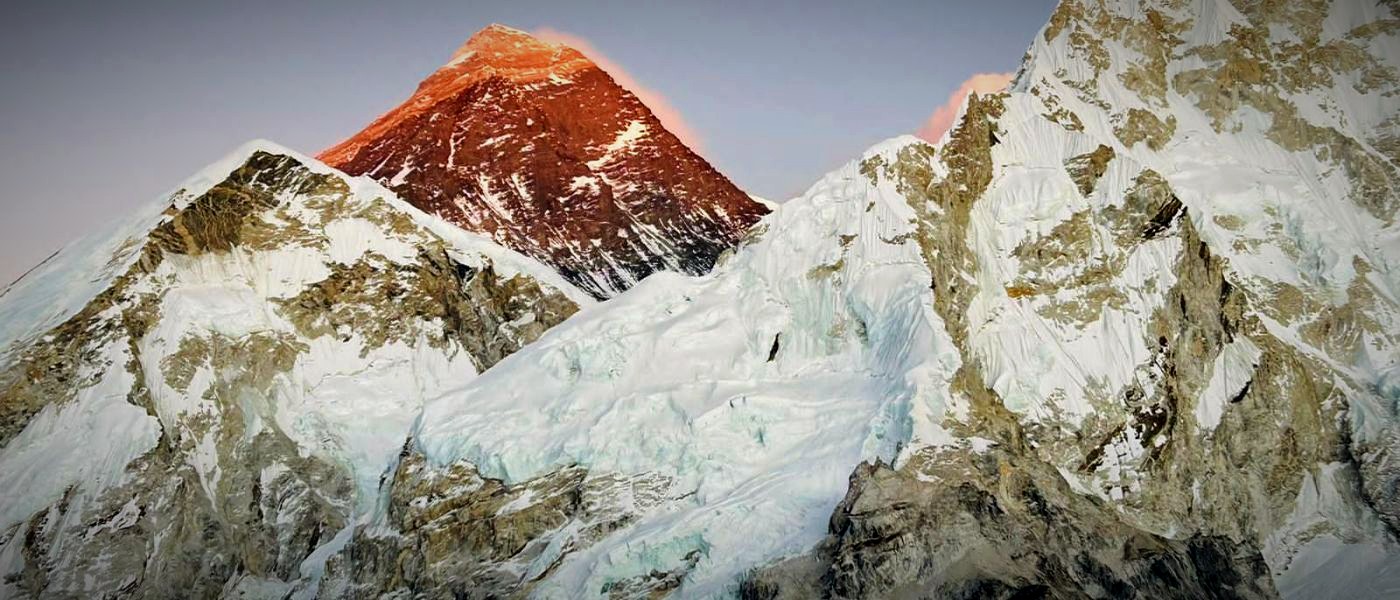
Picture yourself at 5,365 metres, encircled by the Himalaya’s rugged peaks, on the Everest Base Camp Trek. Mount Everest’s summit catches dawn’s glow, a sight that defines this iconic journey to Everest Base Camp. Why trek 12 days through thin, icy air to reach the base camp? The answer lies in the personal transformation sparked by the challenge. Each step upward on this 12-day Everest Base Camp adventure reshapes your perspective and resolve.
The Everest Base Camp Trek 12 days unfolds in Nepal’s vibrant Khumbu region, a land of soaring peaks and Sherpa heritage. From Lukla’s thrilling airstrip – the gateway to Everest – the trail crosses suspension bridges over the Dudh Koshi River. Subsequently, it enters Sagarmatha National Park, passing the lively hub of Namche Bazaar. The Everest Base Camp trail continues through Tengboche Monastery and high-altitude villages like Dingboche and Lobuche. These stops immerse you in the stark beauty of the Everest region.
This 12-day Mount Everest Base Camp trek blends challenge with cultural immersion, achievable for prepared trekkers. Two acclimatisation days in Namche and Dingboche minimise altitude sickness risks, ensuring a safe climb. You’ll marvel at Lhotse, Nuptse, and Ama Dablam while engaging with Sherpa culture. The trek peaks at Kala Patthar with unrivalled views of Mt Everest. Nepal Hiking Adventure Co. provides expert Sherpa guides and reliable logistics for an unforgettable EBC trek.
Trip Highlights
- Fly over the world’s highest peaks, including Mount Everest (8,848 m) and Lhotse (8,516 m), on your way to Lukla
- Immerse yourself in the vibrant Sherpa culture of Namche Bazaar, the Everest region’s lively trading hub, and meet friendly locals
- Achieve the iconic Everest Base Camp trek 12 days (5,364 m), a dream for mountaineers and trekkers alike
- Watch the stunning sunrise over Mount Everest from Kala Patthar (5,545 m)
- Explore the intricate carvings and peaceful atmosphere of the ancient Buddhist monastery of Tengboche
- Trek through the beautiful rhododendron forests of Sagarmatha National Park, home to diverse rare Himalayan plants and animals
- Enjoy the thrill of crossing the swaying suspension bridges over the Dudh Koshi River
- Encounter majestic yaks, playful monkeys, and colourful Himalayan birds in their natural habitat
- Savor local dishes like momos, dal bhat, yak cheese, and Tibetan tea as you enter the local villages
- Embrace the challenge and communicate with fellow adventurers on this memorable trip
Scenic Flight to Lukla (2,840 m/9,317 ft)
The morning flight from Kathmandu to Lukla threads through valleys as Himalayan peaks come into view. Tenzing-Hillary Airport sits on a tilted mountain shelf with a rock wall at one end and a void at the other.
After landing, the Everest Base Camp trail descends through pine forests to Phakding. You cross suspension bridges over the turquoise Dudh Koshi River and pass mani walls carved with Buddhist prayers. The short walk allows your body to begin adjusting to altitude.
Note: During the peak trekking seasons (spring and autumn), most flights to Lukla operate from Ramechhap Airport instead of Kathmandu due to air traffic congestion. The drive from Kathmandu to Ramechhap takes about 4 to 5 hours.
Activities: Scenic flight to Lukla, trek to Phakding
 Accomodation: Lodge
Duration: 35 minute flight and 2 hours walk
Meal: Lunch and Dinner
Ascent: +1520 M
Descent: - 230 M
Distance: Approx. 7 KM walk
Accomodation: Lodge
Duration: 35 minute flight and 2 hours walk
Meal: Lunch and Dinner
Ascent: +1520 M
Descent: - 230 M
Distance: Approx. 7 KM walk
Trek From Phakding (2,700 m) to Namche Bazaar (3,440 m/11,286 ft)
The trail follows the Dudh Koshi upstream through rhododendron forests and across suspension bridges. At Monjo, you enter Sagarmatha National Park. Beyond the checkpoint, the path crosses the confluence of two rivers, then climbs steeply for 600 vertical metres.
On clear days, Everest’s summit appears between Lhotse and Nuptse. By afternoon, you reach Namche Bazaar, the commercial hub of the Khumbu, with bakeries, gear shops, and internet cafes set in a horseshoe amphitheatre.
- Activities: Enter Sagarmatha National Park, trek to Namche Bazar
- Max Altitude: 3,440 m
Accomodation: Lodge
Duration: 6-7 hrs walk
Meal: Breakfast, Lunch, and Dinner
Ascent: + 830 m/2,723 ft
Distance: Approx. 7.4 KM
Acclimatisation at Namche Bazaar With Short Hikes
Acclimatisation requires activity without the stress of sleeping higher. Choose between hiking to the Everest View Hotel (3,880 m) for panoramic views of Mount Everest, Lhotse, and Ama Dablam, or visiting the traditional Sherpa villages of Khumjung and Khunde.
Both day hikes take three to four hours. Return to Namche by afternoon to rest and monitor for altitude symptoms. Explore the Saturday market if available, or visit bakeries for fresh pastries.
- Activities: Acclimatisation hike to Everest View Hotel or Khumjung village
- Max Altitude: 3,880 m
Accomodation: Lodge
Duration: 2 hours Hike
Meal: Breakfast, Lunch, and Dinner
Ascent: + 440 M /1444 ft
Descent: - 440 M /1444 ft
Distance: Approx. 4 KM
Namche to Tengboche Monastery (3,867 m/12,687 ft)
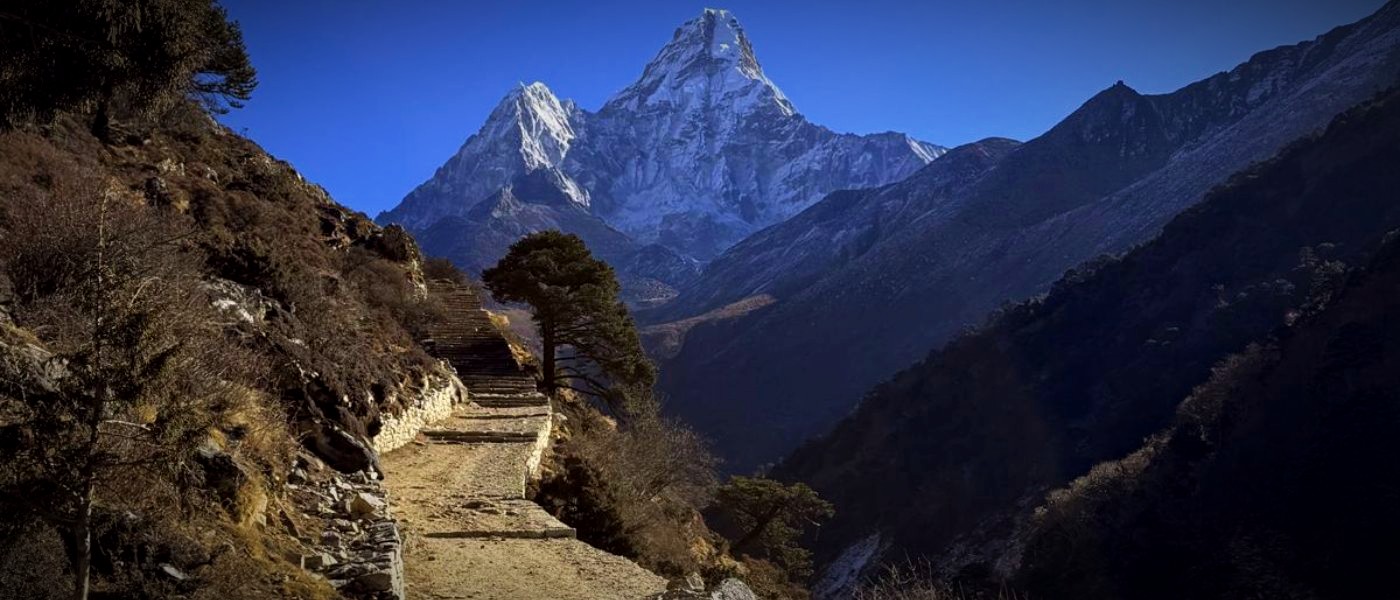
The Everest trek continues as the trail climbs along contour paths with views of Mt Thamserku and Ama Dablam, then descends to cross the Dudh Koshi before climbing through rhododendron forest. By midday, you reach Tengboche Monastery, the spiritual centre of the Khumbu.
Visitors can observe the evening puja ceremony around 3 PM. From the courtyard, Everest rises directly ahead, flanked by Nuptse and Lhotse, with Ama Dablam dominating the southern skyline.
- Activities: Trek from Namche to Tengboche, visit monastery
- Max Altitude: 3,867 m
Lodge in Diboche
Accomodation: Lodge
Duration: 5-6 hrs walk
Meal: Breakfast, Lunch, and Dinner
Ascent: +427 m/1,401 ft
Distance: Approx. 12 KM
Trek to Dingboche (4,350 m/14,272 ft)
The trail descends to the Imja Khola, then climbs gradually into the upper valley as vegetation thins. You pass through Pangboche, one of the highest permanent settlements, before reaching Dingboche.
The village sprawls across a wide shelf protected by ancient stone walls. Lhotse’s massive south face dominates the northern horizon, while Ama Dablam looms southwest and Island Peak rises to the east. Afternoons require rest and hydration as oxygen levels drop to roughly 60% of sea level.
- Activities: Trek from Tengboche to Dingboche through Imja Valley
- Max Altitude: 4,350 m
On the way to Dingboche
Accomodation: Lodge
Duration: 5-6 hour walk
Meal: Breakfast, Lunch and Dinner
Ascent: + 483 m/1,585 ft
Distance: Approx. 10.5 KM
Acclimatisation at Dingboche and Short Hike to Nagarjun Hill (5,100 m/16,732 ft)
The acclimatisation hike climbs 750 vertical metres to Nagarjun Hill above Dingboche. The ascent takes two to three hours, with prayer flags marking the summit. The 360-degree view of Mt Makalu to the east, the Lhotse-Nuptse wall to the north, and Ama Dablam to the south creates unforgettable memories.
Descend to Dingboche by midday and rest. Monitor your body carefully for altitude symptoms and report anything concerning to your local guide.
- Activities: Acclimatisation hike to Nagarjun Hill, return to Dingboche
- Max Altitude: 5,100 mHike to Nakarsang Hill from Dingboche
Accomodation: Lodge
Duration: 4-5 hours
Meal: Breakfast, Lunch, And Dinner
Ascent: + 750 m/2,461 ft
Descent: - 750 m/2,461 ft
Distance: Approx. 8-10 KM
Dingboche to Lobuche (4,910 m/16,109 ft)
Vegetation disappears as the trail crosses rocky moraines toward the Khumbu Glacier. The path climbs to Dughla, then attacks a steep terminal moraine for 200 metres. At the top sits a memorial area with dozens of stone cairns honouring climbers who died on Everest and neighbouring peaks.
Beyond the memorials, the trek continues onto a high plateau leading to Lobuche, a basic settlement of unheated stone lodges. Nights are brutal, with temperatures dropping to -15°C or lower.
- Activities: Trek from Dingboche to Lobuche via Dughla
- Max Altitude: 4,910 m
Mountain view from Thukla
Accomodation: Lodge
Duration: 4-5 hours
Meal: Breakfast, Lunch, and Dinner
Ascent: + 560 m/1,837 ft
Distance: Approx. 7 KM
Lobuche to Gorak Shep (5,164 m/16,942 ft) and Everest Base Camp (5,365 m/17,598 ft)
Start early for the longest day of the trip. The trail crosses the Khumbu Glacier’s lateral moraine to Gorak Shep, the last permanent settlement. Drop your main pack and continue to EBC, following the glacier’s edge past the Khumbu Icefall.
EBC is a wide expanse of rock and ice marked by prayer flags. Outside climbing season, it sits largely empty. Views of Mt Everest are obscured, but you stand at the base of the highest mountain, the launching point for every summit bid. Trek back to Gorak Shep by late afternoon, completing your journey to Everest Base Camp.
- Activities: Trek to Gorak Shep, visit Everest Base Camp, return to Gorak Shep
- Max Altitude: 5,365 m
Everest Base Camp, the final destination
Accomodation: Breakfast, Lunch, and Dinner
Duration: 7-8 hours
Meal: Breakfast, Lunch, and Dinner
Ascent: + 455 m/1,493 ft
Descent: - 455 m/1,493 ft
Distance: Approx. 12 KM
Sunrise View from Kala Patthar (5,643 m/18,514 ft) and Hike Down to Pheriche (4,371 m/14,340 ft)
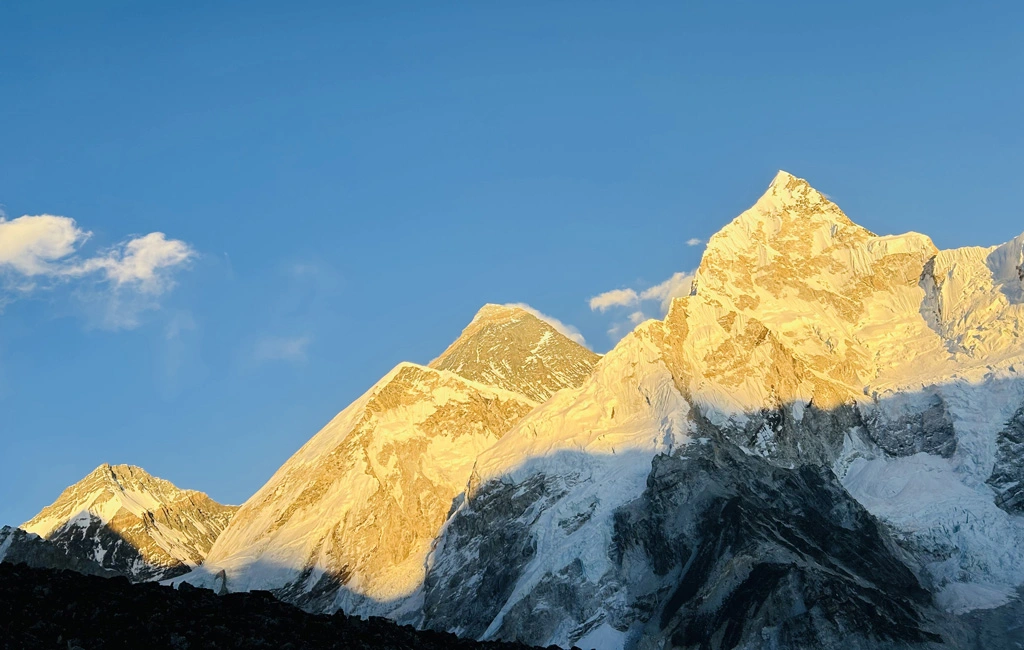
Wake at 4 AM for the pre-dawn climb to Kala Patthar. The steep ascent in thin air takes two to three hours. At the summit, dawn breaks across the Himalayan range. Everest and Mt Nuptse’s pyramid rise directly ahead, backlit by the rising sun, surrounded by Lhotse, Pumori, and Changtse.
After 20 to 30 minutes on the summit, descend to Gorak Shep for breakfast, then continue the long descent to Pheriche, dropping over 1,200 vertical metres. The thicker air brings immediate relief.
- Activities: Summit Kala Patthar at sunrise, descend to Pheriche
- Max Altitude: 5,643 m
Mountain View from Kalapatther
Accomodation: Lodge
Duration: 7-8 hours
Meal: Breakfast, Lunch, and Dinner
Ascent: + 479 m/1,572 ft,
Descent: - 1,272 m/4,173 ft
Distance: Approx. 14 KM
Pheriche to Namche (3,440 m/11,286 ft)
The trek back continues as the trail descends steadily through the Imja Valley, retracing your route through Pangboche and Tengboche. Stop briefly at the monastery if time allows. The descent continues through rhododendron forest and across suspension bridges.
By mid-afternoon, you reach Namche Bazaar. Hot showers, bakery pastries, and heated rooms feel luxurious after a week at high altitude. Celebrate with your trekking guide and porter team over dinner.
- Activities: Descend through Tengboche and Pangboche to Namche
- Max Altitude: 4,371 m
Mountain view on the way to Namche from Pheriche
Accomodation: Lodge
Duration: 6-7 Hours walk
Meal: Breakfast, Lunch, and Dinner
Descent: - 931 m/3,054 ft
Distance: Approx. 13 KM
Namche to Lukla (2,840 m/9,317 ft)
The final day trek follows the Dudh Koshi downstream through villages you passed on the way up. The landscape feels different on the return, with details becoming visible that you missed during the climb.
The last section climbs 400 metres from Phakding to Lukla. By late afternoon, you reach Lukla and gather with your guide and porter team for a farewell dinner. Tips are customary, with recommended amounts of $100-$150 for porters and $150-$200 for guides.
- Activities: Trek from Namche to Lukla, celebration dinner
- Max Altitude: 3,440 m
Night View of Namche Bazaar
Accomodation: Lodge
Duration: 6-7 hour walk
Meal: Breakfast, Lunch, and Dinner
Descent: - 600 m/1,969 ft
Distance: Approx 18 KM
Back to Kathmandu Valley (1,400 m) from Lukla.
Weather permitting, catch an early morning flight back to Kathmandu. The 30-minute flight descends toward green hillsides and warmer air. Transfer from the airport to your hotel, with the rest of the day free for rest, shopping, or exploring Kathmandu.
Thamel’s restaurants offer international cuisines after two weeks of dal bhat. Hot showers, soft beds, and ground-level oxygen feel extravagant.
- Activities: Scenic flight to Kathmandu, hotel transfer, rest day
- Max Altitude: 2,840 m
Duration: 30 min fly
Meal: Breakfast, Lunch
Descent: - 1440 M / 4724 ft
Distance: ------
Fixed Departure
Cost Includes
- Domestic Airport Transfers: Private/share vehicle for arrival and departure
- Lukla Flights: Kathmandu-Lukla-Kathmandu for clients and guide
- Trekking Accommodation: Teahouse lodges throughout the trek (twin-sharing rooms)
- Meals on Trek: Three meals daily (breakfast, lunch, dinner) during the trek
- Trekking Permits: Permits to enter Sagarmatha National Park and Khumbu Pasang Lhamu Rural Municipality, and TIMS Card
- Guide and Porter: Experienced English-speaking guide and porter (one porter per two clients)
- Staff Insurance: Full coverage for guide and porter (insurance, meals, accommodation, wages)
- Trekking Equipment: Company duffel bag, trekking map, and first aid kit
- Government Taxes: All applicable fees and permits
Cost Excludes
- International Flights: Airfare to and from Nepal
- Nepal Visa: $30 USD (15 days) or $50 USD (30 days), available on arrival
- Travel Insurance: Required coverage for high-altitude trekking and emergency evacuation
- City: All kind of city expenses.
- Personal Expenses: Snacks, any kind drinks (tea, coffee, bottled water, soft drinks, alcohol), Wi-Fi, battery charging, hot showers
- Personal Gear: Trekking boots, clothing, sleeping bag, daypack
- Tips: Discretionary gratuity for guide and porter (Expected)
- Emergency Evacuation: Helicopter rescue costs (covered by insurance if policy conditions are met)
Temperature Chart
Altitude Chart
Useful Info
Best Time & Weather Conditions
The Everest Base Camp Trek is open year-round, but choosing the season for your Everest adventure impacts the experience significantly. The best time to trek to Everest is spring (March-May) and autumn (September-November), when skies are clear, temperatures moderate, and trails safe for high-altitude travel.
Spring (March-May)
Spring brings mild days, blooming rhododendrons, and an active Base Camp scene. Morning temperatures at Gorak Shep range from -10°C to -5°C, with afternoons warming to 5°C-10°C. Clear mornings offer the best summit views.
Pros: Pleasant weather, colourful trails, lively Base Camp
Cons: Afternoon clouds, busier trails by late April
Autumn (September-November)
Autumn offers the clearest mountain views and stable conditions. Morning temperatures can drop to -15°C, while afternoons stay near 0°C-5°C.
Pros: Crystal-clear visibility, calm weather
Cons: Cold nights, crowded lodges, higher prices
Winter (December-February)
Winter trekking is possible but harsh. Nights at Gorak Shep fall to -25°C, and some lodges close.
Pros: Quiet trails, clear skies
Cons: Extreme cold, limited services, higher risk
Monsoon (June-August)
The monsoon season brings heavy rain, muddy trails, and poor visibility. Lukla flights often face delays.
Pros: Empty routes, discounted stays
Cons: Rain, leeches, flight cancellations
Temperature Guide by Elevation
| Location | Altitude | Spring/Autumn Day | Spring/Autumn Night | Winter Night |
| Lukla | 2,840 m | 10°C to 15°C | 0°C to 5°C | -5°C to -10°C |
| Namche Bazaar | 3,440 m | 8°C to 12°C | -2°C to 3°C | -10°C to -15°C |
| Tengboche | 3,867 m | 5°C to 10°C | -5°C to 0°C | -12°C to -18°C |
| Dingboche | 4,350 m | 2°C to 8°C | -8°C to -3°C | -15°C to -20°C |
| Lobuche | 4,910 m | -2°C to 5°C | -12°C to -8°C | -18°C to -25°C |
| Gorak Shep | 5,164 m | -5°C to 2°C | -15°C to -10°C | -20°C to -28°C |
| Kala Patthar | 5,643 m | -8°C to 0°C | -18°C to -12°C | -25°C or lower |
Best Time Summary
- Optimal Seasons: Spring (March-May) and Autumn (September-November)
- Peak Months: October and April offer the best balance of weather, visibility, and temperature
- Avoid: Monsoon season (June-August) due to flight cancellations, poor visibility, and trail conditions
- Winter Option: December-February suitable only for experienced cold-weather trekkers
Permits, Logistics & Transportation
Required Permits
Two permits are mandatory for the Everest Base Camp Trek in Nepal. Your trekking company typically handles arrangements, but you must provide passport copies and photographs.
Sagarmatha National Park Entry Permit
- Cost: NPR 3,000 (approximately $23 USD)
- Issued by: Nepal Tourism Board in Kathmandu or park entry gate in Monjo
- Requirements: Valid passport, two passport-sized photographs
Khumbu Pasang Lhamu Rural Municipality Permit
- Cost: NPR 2,000 (approximately $15 USD)
- Issued by: Rural Municipality office in Lukla or arranged in Kathmandu
- Requirements: Valid passport
Carry both permits throughout the trek. Checkpoints at Monjo, Namche Bazaar, and other locations require verification. Keep photocopies as backup.
Transport Options
Kathmandu to Lukla Flight
The standard route is a 30-minute flight from Tribhuvan International Airport to Tenzing-Hillary Airport in Lukla – the gateway to Everest Base Camp. Small twin-engine aircraft carry 15-18 passengers. Flights operate from early morning (6 AM) until around 10 AM when mountain winds increase.
Lukla flights are notoriously weather-dependent. Clouds, wind, or poor visibility can ground all flights for hours or days. Delays are most common during monsoon (June-August) and winter (December-February).
Peak Season Alternative: Ramechhap Airport
During peak trekking season (October-November and April-May), flights depart from Ramechhap Airport instead of Kathmandu to reduce congestion. Ramechhap is a four to five-hour drive east of Kathmandu. Your trekking company arranges transportation, typically departing around midnight for early morning flights.
Helicopter Charter
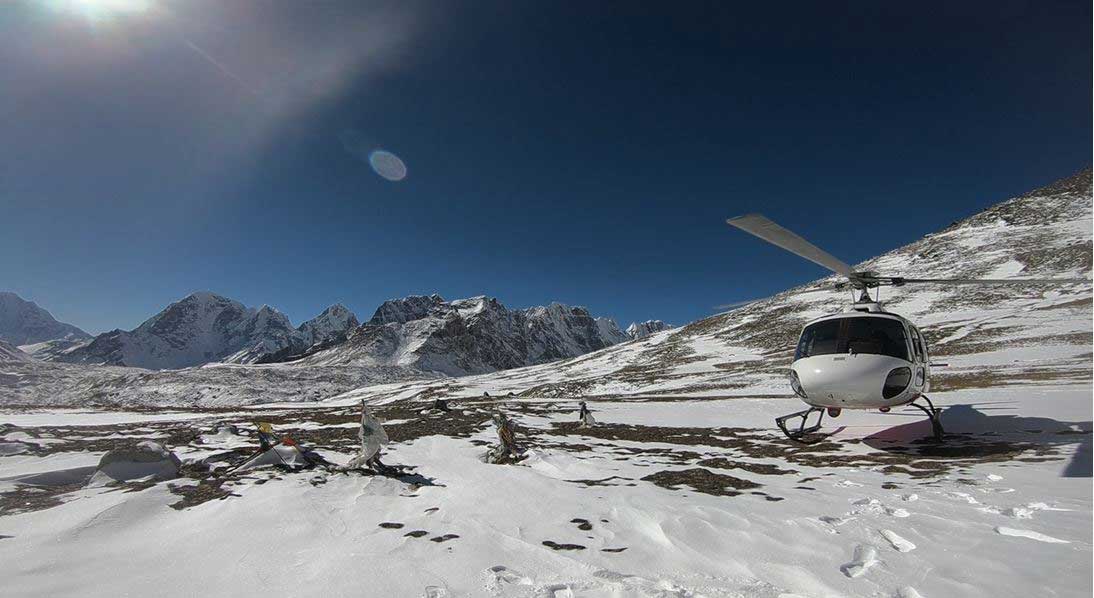
If stranded by flight delays, helicopter charters offer an alternative. Shared helicopters cost approximately $500-$700 per person. Private charters range from $3,000-$4,000. Helicopters fly in conditions that ground fixed-wing aircraft, though severe weather still prevents flights.
Contingency Planning
Flight delays between Kathmandu and Lukla are the single biggest logistical challenge. Plan accordingly:
- Include at least one buffer day before international departure
- Ensure travel insurance covers trip delays and cancellations due to weather
- Book international flights with change flexibility
- Stay in contact with your trekking company for weather updates
Alternative Overland Routes
If flights are consistently unavailable:
- Jiri/Shivalaya Start: Drive 7-8 hours from Kathmandu, then trek to Lukla over four to five days
- Phaplu/Salleri Start: Drive 8-9 hours, then trek to Namche Bazaar over three to four days
Both alternatives add significant time but eliminate flight dependency.
Preparation & Training for Everest Base Camp Trek 12 Days
Fitness Plan
Begin training three to four months before departure. The Everest Base Camp trek takes significant physical preparation. The trek demands cardiovascular endurance, leg strength, and mental resilience.
Cardiovascular Training (4-5 times per week)
- Running or jogging: 45-60 minutes at moderate pace
- Cycling: 60-90 minutes on varied terrain
- Swimming: 45-60 minutes continuous laps
- Stair climbing: 30-45 minutes
Focus on consistency over intensity. Your body needs to adapt to prolonged effort.
Hill and Mountain Training (1-2 times per week)
- Hike on steep terrain for 4-6 hours
- Carry a backpack weighing 8-10 kg
- Include both uphill and downhill sections
- Increase distance and elevation gain gradually
If mountains are unavailable, use treadmills on maximum incline or climb stadium steps with a weighted pack.
Strength Training (2 times per week)
- Squats: 3 sets of 15-20 repetitions
- Lunges: 3 sets of 15-20 repetitions per leg
- Step-ups: 3 sets of 15-20 repetitions per leg
- Planks: 3 sets of 45-60 seconds
- Leg press or deadlifts: 3 sets of 12-15 repetitions
Additional Considerations
- Include at least two full rest days per week
- Gradually increase training intensity and duration
- Complete a full-day hike (6-8 hours) one month before departure
- Consistency matters more than intensity. A solid training foundation reduces injury risk and improves your experience at altitude
Gear & Packing List
Pack efficiently. Porters carry main bags, but you need a daypack for daily essentials. Temperature ranges from warm valleys to sub-zero high camps.
Clothing
Base and Mid Layers
- Merino wool or synthetic thermal tops and bottoms (2-3 sets)
- Fleece jacket or synthetic insulated jacket
- Waterproof and windproof jacket (Gore-Tex or equivalent)
Pants and Outerwear
- Quick-dry, lightweight trekking trousers (2 pairs)
- Waterproof pants for rain or snow
- Down jacket insulated to -10°C or lower (essential for high camps)
Accessories
- Warm hat (wool or fleece beanie)
- Sun hat (wide-brimmed)
- Gloves: lightweight liner gloves and insulated winter gloves
- Buff or scarf for wind protection
- Underwear and socks: 4-5 pairs each (merino wool recommended)
- Camp shoes: lightweight sandals or trainers
Footwear
- Waterproof, ankle-support trekking boots (must be broken in before departure)
- Gaiters (optional but useful in snow or mud)
- Microspikes or crampons for icy sections (particularly winter or early spring)
Equipment
- Backpack: 30-40 litre daypack for daily essentials
- Sleeping bag: rated to -10°C to -15°C (available for rent in Kathmandu)
- Sleeping bag liner for added warmth and hygiene
- Trekking poles: adjustable, with snow baskets
- Headlamp with spare batteries (LED preferred)
- Sunglasses: Category 4 UV protection (essential at altitude)
- Water bottles or hydration bladder: 2-3 litres total capacity
- Stuff sacks or compression bags for organizing
Accessories
- Sunscreen: SPF 50+ (high-altitude sun is intense)
- Lip balm: SPF-rated
- Personal first aid kit
- Water purification: tablets or filter (Aquatabs, SteriPen, or similar)
- Toiletries: biodegradable soap, toothbrush, toothpaste, hand sanitizer, wet wipes
- Quick-dry towel: small, lightweight microfiber
- Camera and spare batteries (cold drains batteries quickly)
- Power bank: 10,000+ mAh capacity
- Trekking map as GPS backup
- Notebook and pen for journaling
- Earplugs (teahouse walls are thin)
- Toilet paper
Documents
- Passport with Nepal visa
- Travel insurance documents
- Trekking permits
- Passport photos (2-3 extras)
- Emergency contact information
- Cash (US dollars and Nepali rupees)
Insurance & Medical Readiness
Travel Insurance Requirements
Purchase comprehensive travel insurance covering:
- Helicopter rescue from altitudes up to 6,000 metres
- Medical treatment and emergency hospitalization
- Trip cancellation and interruption for weather delays or personal emergencies
- Lost or stolen gear
- Repatriation and medical evacuation to home country
Verify that your policy explicitly covers trekking above 5,000 metres. Some policies exclude high-altitude trekking or require additional premium payments. Kala Patthar (5,643 m) must fall within the policy’s altitude limit.
Recommended coverage minimum: $100,000 for helicopter evacuation and medical expenses.
Medical Preparation
Schedule a medical check-up four to six weeks before departure. Discuss altitude sickness prevention and obtain prescriptions for necessary medications.
Recommended Vaccinations
- Hepatitis A and B
- Typhoid
- Tetanus/Diphtheria booster
- Rabies (optional but recommended if interacting with animals)
Altitude Sickness Medication
Consult your doctor about acetazolamide (Diamox), which helps prevent and treat altitude sickness. The standard dosage is 125 mg twice daily, starting the day before ascending above 3,000 metres. Side effects include increased urination and tingling in fingers and toes.
Carry dexamethasone for emergency treatment of severe altitude sickness (HACE). This is a prescription steroid used only in life-threatening situations under guide supervision.
Personal Medical Kit
Assemble a compact first aid kit containing:
- Blister treatment: Compeed, moleskin, or similar
- Pain relief: ibuprofen, paracetamol
- Altitude sickness medication: Diamox, dexamethasone
- Antibiotics: ciprofloxacin or azithromycin for stomach issues (prescription required)
- Anti-diarrheal: Imodium
- Rehydration salts: oral rehydration solution (ORS) packets
- Antihistamine for allergic reactions
- Bandages and gauze (various sizes)
- Antiseptic wipes and cream
- Medical tape
- Scissors and tweezers
- Thermometer
- Personal prescription medications (bring extra supply in original containers)
Guides carry additional medical supplies, but self-sufficiency speeds treatment for minor issues.
Route, Map & Elevation Profile
Insert altitude chart and route map
Elevation Profile
The Everest Base Camp Trek follows a linear out-and-back route through the Dudh Koshi River valley. Beginning at Lukla (2,840 m), the trail ascends gradually through Sherpa villages and forests to Namche Bazaar (3,440 m), the region’s commercial hub.
From Namche, the route continues northeast through Tengboche (3,867 m) and into the upper Imja Valley. At Dingboche (4,350 m), the trail splits before rejoining at Dughla and climbing to Lobuche (4,910 m).
The final push ascends to Gorak Shep (5,164 m), the last settlement before EBC. From Gorak Shep, two side trips complete the journey of Everest Base Camp: EBC (5,365 m) and Kala Patthar (5,643 m), the trek’s maximum elevation.
The return follows the same route in reverse. Total distance covered is approximately 130 kilometres with over 6,000 metres of cumulative elevation gain.
Key Elevation Points
- Lukla: 2,840 m (starting point)
- Namche Bazaar: 3,440 m (first acclimatization stop)
- Tengboche: 3,867 m (monastery viewpoint)
- Dingboche: 4,350 m (second acclimatization stop)
- Lobuche: 4,910 m (high camp)
- Gorak Shep: 5,164 m (last settlement)
- Everest Base Camp: 5,365 m (iconic destination, base camp of Mt Everest)
- Kala Patthar: 5,643 m (highest point, best Everest views)
Acclimatization Strategy
The 12 days EBC trek itinerary includes two rest days timed to maximize altitude adjustment. The pattern follows gradual ascent:
- Days 1-3: Lukla to Namche (gain 600 m over 2 days)
- Day 4: Acclimatization in Namche (climb to 3,880 m, sleep at 3,440 m)
- Days 5-6: Namche to Dingboche (gain 910 m over 2 days)
- Day 7: Acclimatization in Dingboche (climb to 5,100 m, sleep at 4,350 m)
- Days 8-9: Dingboche to Gorak Shep (gain 814 m over 2 days)
- Day 10: Summit Kala Patthar, descend to Pheriche
This progression allows red blood cell production to keep pace with altitude gain, reducing altitude sickness risk.
Terrain Characteristics
Lower Sections (2,840 m – 3,500 m): Dense rhododendron and pine forests, suspension bridges over river gorges, stone-stepped trails, terraced farmland, and Sherpa villages with cultivated fields.
Middle Elevations (3,500 m – 4,500 m): Thinning vegetation, alpine meadows, scattered juniper scrub, wider valleys, stone-walled enclosures for livestock, and increasing rockiness.
High-Altitude Zones (4,500 m – 5,643 m): Glacial moraine, exposed rock, permanent snow patches, boulder fields, barren landscapes, and extreme weather exposure. Kala Patthar summit involves scrambling over loose scree.
Accommodation, Food & Water
Teahouse Accommodation
The trek uses teahouse lodges – family-run establishments providing basic rooms and communal dining. Rooms contain twin beds with foam mattresses, pillows, and blankets. Walls are thin plywood or stone with minimal insulation.
Bathrooms are shared, with squat or Western-style toilets. Toilet paper is not always provided. Hot showers are available at most lodges up to Dingboche but are rare or unavailable above 4,500 metres. Showers cost $2-$7 depending on elevation.
Accommodation by Elevation
Lukla and Namche Bazaar offer the most developed facilities. Namche lodges often have heated dining rooms, Wi-Fi, bakeries, and hot showers. Some rooms have attached bathrooms.
Tengboche and Dingboche provide mid-range comfort. Lodges have adequate heating (yak-dung or wood stoves in dining rooms), functional toilets, and hot showers for a fee. Rooms are unheated but sufficient with a good sleeping bag.
Lobuche and Gorak Shep offer basic facilities. Lodges are stone structures with minimal insulation. Dining rooms have stoves that struggle against the cold. Hot showers are rarely available. Rooms are freezing at night – temperatures drop below -10°C. Your sleeping bag rating becomes critical here.
Bring a sleeping bag liner for added warmth and hygiene.
Food on the Trail
Teahouse menus offer Nepali, Tibetan, Chinese, and Western dishes. Meals are calorie-dense to support the energy demands of high-altitude trekking.
Common Menu Items
- Dal bhat: rice and lentil soup with vegetable curry (unlimited refills)
- Fried noodles or rice: chow mein or fried rice
- Momos: Tibetan dumplings
- Soups: garlic, tomato, noodle
- Pasta with various sauces
- Pizza (quality declines at higher elevations)
- Porridge: oatmeal or muesli
- Eggs: scrambled, fried, boiled, or omelette
- Pancakes with honey or chocolate
- Bread and toast with jam or peanut butter
Food Quality by Elevation
Below Namche, ingredients are relatively fresh. Vegetables, eggs, and meat are available. Above Namche, fresh produce becomes scarce. Vegetables are often canned or dried. Meat is rare and not recommended. Vegetarian options are widely available and generally safer at altitude.
Portions are generous at lower elevations but shrink above 4,500 metres. Meals take longer to prepare at high altitude due to reduced boiling temperatures.
Dietary Considerations
Vegetarian and vegan options are readily available. Inform your guide of dietary restrictions before the trek. Gluten-free options are limited.
Carry trail snacks: energy bars, nuts, dried fruit, chocolate, and electrolyte powder. Appetite decreases at altitude, but maintaining calorie intake is essential.
Water Safety
Do not drink untreated water from taps, streams, or rivers.
Safe Water Options
- Bottled water: available at all lodges ($1-$5 per litre, but creates plastic waste)
- Boiled water: most lodges provide this for $0.50-$1.50 per litre (most environmentally responsible)
- Water purification: use tablets, UV purifiers, or portable filters to treat water from natural sources
Drink three to four litres of water daily. Dehydration accelerates altitude sickness. Urine should be clear or pale yellow.
Avoid alcohol at altitude. It dehydrates, impairs acclimatisation, and worsens sleep quality. Limit caffeine, though moderate tea or coffee consumption is acceptable.
Health, Safety & Altitude Strategy
Altitude Sickness
Acute Mountain Sickness (AMS) is the primary health concern. It results from rapid ascent to elevations where oxygen levels are significantly lower than at sea level. At 5,500 metres, available oxygen is roughly 50% of sea level.
Symptoms of Mild AMS
- Headache (most common)
- Nausea or loss of appetite
- Dizziness or light-headedness
- Fatigue or weakness
- Difficulty sleeping
- Shortness of breath during exertion
Mild symptoms affect most trekkers at some point. They typically appear within 6-12 hours of reaching a new altitude and resolve with rest, hydration, and time.
Symptoms of Severe AMS (HAPE and HACE)
High Altitude Pulmonary Edema (HAPE) and High Altitude Cerebral Edema (HACE) are life-threatening conditions requiring immediate descent.
HAPE Symptoms:
- Breathlessness at rest
- Persistent cough (often with frothy or bloody sputum)
- Chest tightness or congestion
- Rapid heart rate
- Blue lips or fingernails
- Extreme fatigue
HACE Symptoms:
- Severe headache unrelieved by medication
- Loss of coordination or balance
- Confusion or altered mental state
- Difficulty walking in a straight line
- Irrational behavior
- Loss of consciousness
Both conditions can progress rapidly and result in death within hours if untreated. Descent is the only effective treatment.
Prevention Strategies
- Ascend slowly using the designed itinerary (do not skip acclimatization days)
- Climb high, sleep low on rest days
- Stay hydrated (drink 3-4 litres daily)
- Eat regularly even if appetite decreases
- Avoid alcohol and sleeping pills
- Monitor yourself and inform your guide immediately if you feel unwell
- Take acetazolamide (Diamox) if prescribed: 125 mg twice daily starting before ascent above 3,000 metres
What to Do If Symptoms Appear
Mild Symptoms:
- Stop ascending and rest at your current altitude for 24-48 hours
- Hydrate continuously
- Eat light meals
- Avoid physical exertion
- Monitor symptoms closely – if they worsen or do not improve, descend
Severe Symptoms:
- Descend immediately (even 300-500 metres can produce dramatic improvement)
- Do not delay – descent is the only reliable treatment
- Administer oxygen if available
- Seek medical attention at the nearest health post (Pheriche, Namche)
- Arrange helicopter evacuation if the condition is critical
Your guide is trained to recognise altitude sickness and will make decisions about descent. Trust their judgement.
Emergency Protocols
Guides carry first aid kits, pulse oximeters, and basic medications. Oxygen cylinders are available at some lodges and health posts. In emergencies, helicopter evacuation is the fastest rescue method. Helicopters can reach most locations within hours, weather permitting.
Helicopter evacuation costs: $3,000-$10,000 depending on location and weather. These costs are covered by travel insurance if policy terms are met.
Health Posts:
- Pheriche: Himalayan Rescue Association clinic staffed during trekking season
- Namche Bazaar: larger medical facilities with comprehensive services
Inform your guide immediately if you feel unwell. Early intervention prevents serious complications.
Culture & Local Life in the Khumbu Region
Sherpa Heritage
The Khumbu region is the homeland of the Sherpa people, an ethnic group with Tibetan origins who migrated to Nepal centuries ago. Sherpas have adapted to life at extreme altitudes, developing unique cultural traditions, agricultural practices, and spiritual beliefs centred on Tibetan Buddhism.
The Himalayas are considered sacred – home to deities and spirits that must be honoured. Mountaineering expeditions begin with puja ceremonies at Base Camp, seeking blessings for safe passage.
Sherpa names often reflect the day of the week on which they were born: Pasang (Friday), Pemba (Saturday), Nima (Sunday), Dawa (Monday), Mingma (Tuesday), Lhakpa (Wednesday), and Phurba (Thursday).
Buddhist Monasteries and Traditions
Tengboche Monastery stands as the spiritual centre of the Khumbu. Built in 1916 and rebuilt after a fire in 1989, it houses monks who maintain daily prayer rituals. Visitors are welcome to observe evening puja ceremonies, typically held around 3 PM.
Throughout the trek, you’ll encounter mani walls – long stone structures carved with Buddhist prayers and mantras. Always pass these on the left, keeping them on your right side. Prayer flags flutter from ridges and bridges, carrying blessings on the wind. The five colours represent the elements: blue (sky), white (air), red (fire), green (water), and yellow (earth).
Stupas mark sacred sites and trail junctions. These dome-shaped structures contain relics and serve as focal points for meditation.
Village Life and Agriculture
Despite the harsh environment, Sherpa communities have cultivated the Khumbu for generations. Stone walls protect potato fields from yak herds. Potatoes are the primary crop, harvested in late summer and stored for winter.
Yaks and yak-cow hybrids (dzopkyo) provide transportation, milk, cheese, and wool. These animals are uniquely adapted to high altitude. Yak caravans transport goods between villages.
Most families now operate teahouses, supplementing traditional agriculture with income from tourism.
Local Customs and Etiquette
Respect local customs to build positive relationships:
- Remove shoes before entering homes, monasteries, or shrine rooms
- Ask permission before photographing people, especially monks or during ceremonies
- Dress modestly (cover shoulders and knees at monasteries)
- Do not touch religious objects or offerings without permission
- Avoid pointing feet at people or religious sites
- Use your right hand when giving or receiving items
- Greet locals with “Namaste” (hands pressed together) or “Tashi Delek” (Sherpa greeting)
- Leave donations at monasteries if you attend ceremonies
Community Projects and Tourism Impact
Tourism has transformed the Khumbu economy over the past 60 years. Wealth from trekking has funded schools, health posts, and infrastructure improvements. However, rapid growth has created environmental challenges.
Sir Edmund Hillary established the Himalayan Trust in 1960, funding schools, hospitals, and bridges throughout the region. The Sagarmatha Pollution Control Committee manages waste collection and environmental education. Many lodges now use solar panels, reducing dependence on firewood.
Trekkers can support sustainable tourism by:
- Carrying reusable water bottles and treating water
- Packing out all non-biodegradable waste
- Using lodge toilets rather than outdoor sites
- Minimizing hot shower use
- Tipping guides and porters fairly
- Purchasing handicrafts directly from artisans
- Respecting local customs and sacred sites
Photography & Best Viewpoints
Essential Camera Gear
High-altitude photography requires preparation. Cold temperatures drain batteries quickly, and dust can damage equipment.
Recommended Gear
- Camera body with weather sealing
- Wide-angle lens (16-35mm) for landscapes
- Telephoto lens (70-200mm or longer) for distant peaks
- Polarizing filter to reduce glare
- Neutral density filter for long exposures
- Spare batteries (keep warm in inside pockets)
- Memory cards with ample storage
- Lightweight tripod
- Lens cleaning kit
- Camera rain cover
Best Photography Locations
Lukla Airport (2,840 m): The tilted runway and dramatic mountain backdrop create unique compositions.
Suspension Bridges Over Dudh Koshi River: High bridges with prayer flags offer dynamic shots. Early morning light filters through the canyon.
First Everest Viewpoint (3,860 m): Midway up the climb to Namche, a clearing offers the first glimpse of Everest’s summit. Afternoon light illuminates the south face.
Namche Bazaar (3,440 m): Photograph the town from above, showing its horseshoe amphitheatre layout. Sunrise paints surrounding peaks gold.
Hotel Everest View (3,880 m): The terrace provides panoramic views of Mt Everest, Lhotse, Ama Dablam, and surrounding peaks. Visit during mid-morning for clear skies.
Tengboche Monastery (3,867 m): The courtyard frames Everest, Nuptse, and Lhotse. Evening puja ceremonies offer interior shots of monks in traditional dress.
Ama Dablam from Tengboche to Dingboche: Ama Dablam (6,812 m) dominates the southern skyline. The mountain’s fluted ridges and hanging glacier create one of the Himalaya’s most photogenic peaks. Late afternoon light emphasises texture.
Dingboche Valley (4,350 m): Wide stone walls create geometric patterns with Lhotse’s south face rising in the background. Dawn light illuminates the peak while the valley remains in shadow.
Nagarjun Hill (5,100 m): The summit provides 360-degree views: Makalu to the east, the Lhotse-Nuptse wall to the north, and Ama Dablam to the south.
Memorial Chortens Above Dughla (4,830 m): Stone cairns honour climbers who died on Everest. Photograph these with Pumori rising behind.
Khumbu Glacier (4,900-5,200 m): The glacier’s grey moraines and ice formations create abstract compositions.
Everest Base Camp (5,365 m): Base Camp offers limited views due to surrounding ridges. Photograph prayer flags, tent platforms (during climbing season), and the Khumbu Icefall.
Kala Patthar (5,643 m): The trek’s premier viewpoint. Arrive before dawn for sunrise over Everest. The south face glows gold, then white as the sun rises. Use a telephoto lens to isolate Everest’s pyramid. Wide-angle shots include prayer flags and trekkers on the summit ridge.
Photography Tips for High Altitude
Cold Weather Challenges
- Batteries lose charge quickly in freezing temperatures (keep spares warm)
- Switch batteries frequently to maintain power
- Place cold camera in sealed plastic bag before entering warm teahouses to prevent condensation
Light Conditions
- High-altitude light is intense due to thin atmosphere and UV radiation
- Use polarizing filters to reduce glare and enhance sky contrast
- Sunrise and sunset offer the best light for mountain photography
- Plan to reach the base viewpoints 30 minutes before sunrise
Composition Techniques
- Include foreground elements (prayer flags, trekkers, stone walls) to add depth
- Use the rule of thirds to position peaks off-centre.
- Capture human elements to convey the region’s living culture
- Include scale references to show mountain size
Backing Up and Storing Images
- Bring multiple memory cards
- Copy files to portable hard drive or laptop each evening
- Label cards and files systematically with date and location tags
Tips for a Successful EBC Trek
Training and Preparation
Begin training three to four months before departure. Build cardiovascular endurance with running, cycling, or swimming four to five times per week. Include hill training with a weighted pack. Complete at least one full-day practice hike (six to eight hours) one month before departure.
Gear Testing
Break in trekking boots before departure. New boots cause blisters. Test all gear before packing to ensure headlamps work, water bottles do not leak, and sleeping bags provide adequate warmth.
Pacing and Rest
Walk slowly, particularly above 4,000 metres. The guideline “pole pole” (slowly slowly) applies at altitude. Rushing increases altitude sickness risk and depletes energy.
Take regular breaks (five to ten minutes every hour). Use breaks to hydrate, snack, and adjust layers. Monitor yourself and teammates for altitude symptoms.
Hydration Strategy
Drink three to four litres of water daily. Dehydration worsens altitude sickness and reduces physical performance. Carry water bottles rather than hydration bladders, which freeze at high elevations.
Treat all water with tablets, UV purifiers, or filters. Request boiled water from lodges each morning to fill bottles.
Monitor urine colour – it should be clear or pale yellow. Dark urine indicates insufficient hydration.
Nutrition and Energy
Eat regularly even if appetite decreases. High-altitude metabolism increases calorie needs. Carbohydrate-rich foods (rice, potatoes, bread, and pasta) provide quick energy.
Supplement lodge meals with trail snacks: energy bars, nuts, dried fruit, and chocolate. Carry these in accessible pockets for quick access during trekking.
Avoid alcohol at altitude. It dehydrates, impairs acclimatisation, and worsens sleep quality.
Sleep and Recovery
Sleep quality decreases at altitude due to thin air and cold temperatures. Expect to wake frequently and feel unrested. This is normal. Use sleeping pills cautiously – they can depress breathing and worsen oxygen deprivation.
Sleep with your head elevated if possible to reduce pressure and improve breathing. Wear warm layers to bed, including a hat, to conserve body heat.
Rest during afternoons at high camps. Horizontal rest allows the body to recover more effectively than sitting upright.
Layering System
Temperature swings are dramatic. Use a layering system to adapt:
- Base layer: merino wool or synthetic thermal top and bottom
- Mid layer: fleece or synthetic insulated jacket
- Outer shell: waterproof, windproof jacket
- Insulation: down jacket for high camps and evenings
Add or remove layers frequently throughout the day. Avoid sweating during climbs – moisture reduces insulation and causes rapid cooling during breaks.
Communication
Mobile networks operate intermittently in the Khumbu. Ncell provides the most reliable coverage in Lukla, Namche, Tengboche, and Dingboche. Coverage disappears above Dingboche. Purchase a local SIM card in Kathmandu for basic communication.
Lodge Wi-Fi is available but slow and unreliable. Costs range from $3 to $10 per day. Use Wi-Fi to send brief messages rather than uploading photos or streaming content.
Inform family of your itinerary before departure. Explain that communication will be limited and sporadic. Agree on check-in points (typically Namche and upon returning to Lukla).
Environmental Responsibility
Pack out all non-biodegradable waste. Lodges have limited waste management. Carry a small trash bag for wrappers, batteries, and toiletries.
Use lodge toilets rather than outdoor sites. If you must go outdoors, dig a cathole at least 60 metres from water sources and trails. Pack out toilet paper in a sealed bag.
Minimise hot shower use. Showers consume firewood, contributing to deforestation. Wet wipes and dry shampoo reduce the need for daily showers.
Bring reusable water bottles and treat water rather than buying plastic bottles. Single-use plastic accumulates in the Khumbu, creating environmental damage.
Cultural Sensitivity
Dress modestly when visiting monasteries and villages. Cover shoulders and knees. Remove shoes before entering religious buildings.
Ask permission before photographing people, particularly monks or during ceremonies. Offer to share photos if people request them.
Learn basic Nepali or Sherpa phrases: “Namaste” (hello), “Dhanyabad” (thank you), “Mitho chha” (delicious), and “Kati ho?” (how much?). Locals appreciate the effort.
Respect sacred sites – mani walls, stupas, and prayer flags. Do not sit on or climb these structures. Pass mani walls on the left, keeping them on your right.
Team Dynamics
If trekking with a group, support teammates. Altitude affects people differently regardless of fitness. Strong trekkers may struggle, while less-fit individuals adapt well. Encourage those having difficulty and celebrate successes together.
Communicate openly with guides about how you feel. Guides are trained to recognise altitude sickness and make decisions about pacing or descent. Trust their judgement.
Be patient during delays (flight cancellations, slow meal service, crowded lodges). Frustration is natural but counterproductive. Flexibility and humour improve the experience for everyone.
Solo Trekking Considerations
Solo trekking in the Everest region is possible but requires careful planning. Hire a local guide or join a small group for safety. Guides provide route knowledge, arrange accommodation, assist during emergencies, and offer cultural insights.
Solo trekkers without guides must be self-sufficient. Carry detailed maps, speak basic Nepali, and understand altitude sickness symptoms. Inform lodge owners of your planned route and estimated arrival times at next destinations.
Join informal groups on the trail. Many solo trekkers walk together for companionship and safety. Teahouse dining rooms facilitate social interaction.
After the Trek: Rest & Extensions from Kathmandu
Recovery in Kathmandu
After completing the trek, your body needs recovery time. Muscles are fatigued, joints are stressed from long descents, and immune function is suppressed from altitude exposure. Plan at least two to three rest days in Kathmandu before international departure or additional activities.
Sleep, eat well, and rehydrate. Kathmandu’s restaurants offer diverse cuisines – a welcome change after two weeks of dal bhat. Thamel’s bakeries, steakhouses, and international restaurants provide comfort food and nutritional variety.
Book a massage or spa treatment. Tibetan and Thai massage therapists work in Thamel and surrounding districts. A one-hour full-body massage costs $15 – $25 and addresses muscle soreness effectively.
If minor injuries occurred during the trek, visit a clinic for assessment. CIWEC Clinic and Nepal International Clinic in Kathmandu cater to foreign visitors and provide English-speaking doctors.
Kathmandu Valley Sightseeing
Use buffer days to explore Kathmandu Valley’s UNESCO World Heritage Sites. These offer cultural immersion and historical context after the mountain experience.
Swayambhunath Stupa (Monkey Temple): Perched on a hilltop west of Kathmandu, Swayambhunath is one of Nepal’s oldest Buddhist sites. The all-seeing eyes of Buddha gaze from the white dome. Climb 365 steps to the top for views over Kathmandu Valley.
Boudhanath Stupa: One of the world’s largest stupas, Boudhanath is the centre of Tibetan Buddhism in Nepal. Pilgrims circle the stupa clockwise, spinning prayer wheels and chanting mantras. Surrounding streets contain Tibetan restaurants, monasteries, and handicraft shops. Visit during evening prayers when monks perform rituals and butter lamps illuminate the stupa.
Pashupatinath Temple: Nepal’s most sacred Hindu temple sits on the banks of the Bagmati River. Non-Hindus cannot enter the main temple but can observe from surrounding terraces. Cremation ceremonies occur on riverside ghats, offering insight into Hindu death rituals.
Patan Durbar Square: Patan (also called Lalitpur) contains one of three royal palace complexes in the valley. The square is densely packed with temples, courtyards, and statues displaying Newar architecture. The Patan Museum houses bronze statues, metalwork, and religious artifacts.
Bhaktapur Durbar Square: Bhaktapur preserves mediaeval architecture and traditional Newar culture better than Kathmandu or Patan. The square contains the 55-Window Palace, Nyatapola Temple (Nepal’s tallest pagoda), and numerous courtyards. Wander narrow streets lined with woodcarvers, potters, and weavers. Sample juju dhau (king curd), a sweet yoghurt unique to Bhaktapur.
Extension Treks and Activities
If you have additional time and energy, consider these extensions:
Chitwan National Park (3-4 days): Chitwan, in Nepal’s southern lowlands, protects one-horned rhinoceroses, Bengal tigers, elephants, and crocodiles. Jungle safaris by jeep or elephant explore the grasslands and sal forests. Canoe trips along the Rapti River offer birdwatching and crocodile sightings. The change from mountain cold to tropical heat is dramatic and refreshing.
Pokhara and Annapurna Region (3-5 days): Pokhara, Nepal’s second-largest city, sits beside Phewa Lake with Annapurna views. The relaxed atmosphere contrasts with Kathmandu’s chaos. Short treks to Sarangkot for sunrise views or the Peace Pagoda for lake panoramas provide gentle activity. Pokhara also offers paragliding, boating, and cafes popular with travellers.
Nagarkot Sunrise (2 days): Nagarkot, a hill station 32 kilometres east of Kathmandu, offers Himalayan sunrise views without trekking. Clear mornings reveal views of Everest and the Langtang range. Stay overnight at a hilltop resort, wake before dawn, and watch the peaks emerge from darkness. Return to Kathmandu by mid-morning.
White Water Rafting (1-3 days): Nepal’s rivers provide world-class rafting. The Trishuli River (Grade III-IV) offers one-day trips between Kathmandu and Pokhara or Chitwan. The Bhote Koshi (Grade IV-V) features steep rapids near the Tibet border. Multi-day trips on the Sun Koshi or Karnali rivers combine rapids with riverside camping.
Everest Helicopter Tour: If weather delayed your Lukla flight or you want aerial views of Mt Everest, book a helicopter tour. Flights depart Kathmandu, overfly the Khumbu, and land briefly at Kala Patthar or a nearby viewpoint. Tours last three to four hours and cost $1,000-$1,200 per person. Shared charters reduce individual costs.
Shopping and Souvenirs
Thamel’s shops sell trekking gear, handicrafts, clothing, and souvenirs. Bargaining is expected and often results in 20-40% discounts from initial asking prices.
Handicrafts and Art
- Thangkas (Buddhist scroll paintings): $20 for basic prints to thousands for hand-painted originals
- Singing bowls: produce harmonic tones when struck or circled with a mallet ($10-$100)
- Khukuri knives: traditional Nepali blades ($15-$50)
- Pashmina shawls and scarves: genuine pashmina is soft and expensive ($30-$200)
- Prayer flags, malas (prayer beads), and incense
Books and Maps
- Trekking maps and guidebooks available in Thamel bookshops
- Books about Everest expeditions, Sherpa culture, and Himalayan history
Food Items
- Himalayan coffee and tea
- Yak cheese (vacuum-sealed for travel)
- Spices and curry blends
Inspect items carefully before purchasing. Quality varies significantly, particularly for textiles and metalwork. Shop at fixed-price government emporia if you dislike bargaining.
Practical Kathmandu Information
Accommodation: Thamel offers hotels ranging from budget guesthouses ($10-$20 per night) to upscale hotels ($100+ per night). Mid-range hotels ($30-$60) provide comfortable rooms, hot showers, Wi-Fi, and breakfast. Book accommodation in advance during peak season (October-November, March-April).
Transportation: Taxis and ride-sharing apps (Pathao, Tootle) operate throughout Kathmandu. Short trips within Thamel cost $2-$5. Agree on fares before departure or insist on meter use. Traffic is chaotic – be patient and alert when crossing streets.
Dining: Thamel contains hundreds of restaurants serving Nepali, Indian, Tibetan, Thai, Italian, and continental cuisine. Meals cost $3-$10 in casual restaurants and $10-$20 in upscale establishments. Try traditional Newari dishes like choila (spiced grilled meat), chatamari (Nepali crepes), and buff momo (water buffalo dumplings).
Safety: Kathmandu is generally safe, but petty theft occurs in crowded areas. Keep valuables secure, especially in buses and markets. Avoid walking alone in quiet areas after dark. Use hotel safes to store devices, cash, and passports.
Currency Exchange: Exchange money at authorised money changers in Thamel or banks. Rates are similar across establishments. ATMs dispense Nepali rupees (maximum withdrawal typically 30,000-35,000 NPR, or about $225-$265). Inform your bank of travel dates to prevent card freezes.
Visa Extensions: If you need more time in Nepal, extend your visa at the Immigration Office in Kathmandu. Extensions cost $3 per day up to 30 days and $2 per day for longer periods. Bring passport photos and your passport. Processing takes one to two days.
The Final Step: Embrace Your Everest Adventure
The Everest Base Camp Trek 12 days guides you from Lukla’s thrilling runway to the foot of Mount Everest. This journey blends physical challenge, cultural immersion, and stunning scenery. You’ll cross suspension bridges, explore the Everest region through Sherpa villages, and visit Tengboche Monastery with Everest in view. Acclimatisation days in Namche Bazaar and Dingboche ensure safety and cultural discovery. The trek peaks at EBC, beside the Khumbu Icefall, and Kala Patthar, where sunrise lights up Everest, Nuptse, and Lhotse, rewarding you with transformation and awe-inspiring landscapes.
Picture yourself at 5,643 metres on Kala Patthar, watching dawn break over Everest’s towering summit. What draws you to explore the Everest region? Is it the thrill of arriving at Everest Base Camp under your own power? The chance to trek to EBC through Sherpa villages where prayer flags dance in the wind and monks chant in ancient monasteries? Or the raw beauty of the Everest region with rhododendron forests and glacial moraines shaped by ice and stone? The way to Everest Base Camp offers personal transformation along the trek. Imagine your own trip to Everest Base Camp and share what inspires you most about this extraordinary Everest trek.
Embark on the adventure of a lifetime with Nepal Hiking Adventure Co. Our Sherpa-led teams bring generations of mountain expertise, cultural insight, and a commitment to responsible trekking, ensuring a safe and authentic journey. We handle all logistics, permits, and safety protocols, allowing you to focus on the trail and the peaks above. The trek offers unforgettable experiences towards Everest Base Camp. Contact Nepal Hiking Adventure Co. today to book your Everest Base Camp Trek package and join the countless adventurers who have tested their limits against the roof of the world.
Video
FAQ
How Difficult Is Everest Base Camp Trek 12 Days?
Considering a 12-day trek to the base camp of the world’s highest peak, Everest? This Everest Base Camp Trek is somewhat demanding. However, with proper preparation and acclimatization, it is achievable for most people with a good level of fitness.
The primary challenges include high altitude, rugged terrain, thin air, and cold temperatures. Physical fitness is crucial as the landscape gradually changes with increasing elevation. Additionally, mental health should not be underestimated as the constant remoteness and harsh mountain environment can be mentally exhausting.
Our team of experts at Nepal Hiking Adventure has designed this Everest Base Camp Trek 12 Days package with a focus on traveler safety and proper acclimatization, allowing you to fully enjoy this lifetime trip. Hence, taking your own pace, proper preparation, choosing the best season, and using the right gear can significantly enhance your chances of success and enjoyment.
How Difficult Is the Everest Base Camp Trek 12 Days?
The Everest Base Camp trek 12 days is moderately challenging. It involves long walking hours at high altitude, but proper acclimatisation and guidance make it achievable for fit trekkers. Both mental and physical preparation are necessary for the hike. With the right training and a well-paced Everest Base Camp trek itinerary, most people in good health can complete this 12 days EBC trek successfully. The Everest Base Camp trek takes commitment, but the rewards are worth every step.
What Happens If Flights Are Cancelled?
If flights to Lukla are cancelled, alternative arrangements such as helicopter transfers or rescheduling are made. Weather disruptions are common, so a flexible travel plan is recommended. Many trekkers add an extra day or two as buffer time before international flights. Your trekking guide will coordinate with the airline and provide updates. Some trekkers choose the 12 days Everest Base Camp itinerary for added flexibility.
What Is the Best Season to Trek?
The best seasons for the Everest Base Camp Trek are spring (March-May) and autumn (September-November). During these months, weather conditions are stable and mountain views are clearest. Spring trek today offers blooming rhododendrons along the trek, while autumn provides crystal-clear visibility. The section of the trek at higher elevations requires stable weather, making seasonal timing crucial for your Everest Base Camp journey.
What Are the Porter and Luggage Weight Limits?
Porters typically carry up to 15 kg of personal baggage per trekker. Packing light and keeping essentials only helps maintain safety and comfort for both trekkers and porters. This trek package includes porter services, ensuring your main luggage is transported while you carry only a daypack with daily essentials. Respect these limits to ensure ethical treatment of porters along the trek.
Porters typically carry up to 15 kg of personal baggage per trekker. Packing light and keeping essentials only helps maintain safety and comfort for both trekkers and porters. This trek package includes porter services, ensuring your main luggage is transported while you carry only a daypack with daily essentials. Respect these limits to ensure ethical treatment of porters along the trek.
How Safe Is the Trek for Solo or First-Time Trekkers?
The trek is safe for solo and first-time trekkers when guided by licensed professionals. Established routes, reliable lodges, and local support ensure a secure experience throughout the journey. The hike to Everest Base Camp becomes manageable with proper acclimatisation and experienced guides. Many first-timers successfully complete their trip to Everest Base Camp with appropriate preparation and a reputable EBC trek package. Your local guide ensures safety at every section of the trek.
How Long Does It Take to Trek to Everest Base Camp?
The time to trek to Everest Base Camp varies by itinerary. This 12-day Mount Everest Base Camp trek is the standard duration, though some operators offer 14 days versions with additional acclimatisation time. The actual Everest Base Camp trek takes 8-9 days to ascend from Lukla to Base Camp and back to Lukla, with 2 acclimatisation days. The trek today section typically involves 5-7 hours of walking daily. When planning your Everest Base Camp and back journey, factor in weather delays.
What Is Included in the Everest Base Camp Trek Package?
The Everest Base Camp trek package typically includes accommodation in teahouses, meals during the trek, permits, guide and porter services, and domestic flights. The trek package price varies by operator and services included. Nepal Hiking Adventure Co.’s trek package covers all essential logistics. However, the Everest Base Camp trek cost doesn’t include international flights, travel insurance, personal expenses, or tips. Review what’s included in your EBC trek package carefully before booking.
What Is the Total Trek Cost?
The Everest Base Camp trek cost ranges from $1,200 to $2,500 depending on services, group size, and season. This trip cost typically includes permits, accommodation, meals along the trek, guide and porter services, and Lukla flights. Budget-conscious trekkers can find basic trek packages, while premium options offer enhanced comfort. Additional expenses include tips, snacks, hot showers, Wi-Fi, and battery charging. The trek cost for our 12 days Everest Base Camp itinerary is $1,330, offering excellent value for comprehensive services.
How Do I Reach Everest Base Camp from Kathmandu?
To reach Everest Base Camp, first fly from Kathmandu to Lukla – the gateway to Everest. From Lukla, the trek to Everest Base Camp follows established trails through Sherpa villages and national park territory. The journey towards Everest Base Camp takes 4-5 days from Lukla, with acclimatisation stops in Namche Bazaar and Dingboche. Most trekkers reach the Everest Base Camp on Day 8 of the itinerary. After arriving at Everest Base Camp, you’ll trek back to Gorak Shep for the night before attempting Kala Patthar the next morning.
What Views Can I Expect on This Trek?
The trek offers spectacular mountain panoramas throughout. You’ll enjoy views of Mount Everest from multiple vantage points, including Namche Bazaar, Tengboche, and the summit of Kala Patthar. The view of Mt Lhotse, Nuptse, Ama Dablam, and Pumori creates an unforgettable Himalayan spectacle. Views of Mt Everest are clearest from Kala Patthar at sunrise. The Base Camp and Kala Patthar combination ensures you experience both the iconic Base Camp of Mt Everest and the best photographic viewpoint in the region.
Can I Extend My Trek?
Yes, many trekkers add an extra day for contingency or exploration. You might spend additional time in Namche Bazaar, add a side trip to Gokyo Lakes, or extend to 14 days for a more leisurely pace. Additional days affect the overall trip cost but provide flexibility if weather delays occur or you wish to explore the Everest region more thoroughly. Discuss extensions with your operator when booking your Everest Base Camp package to adjust the Everest Base Camp trek itinerary accordingly.
What Makes This Trek Special?
The journey of Everest Base Camp combines physical achievement with cultural immersion and natural beauty. You’ll explore the Everest region through traditional Sherpa villages, ancient monasteries, and dramatic mountain landscapes. The beauty of the Everest region lies not only in towering peaks but also in the resilient communities that call these mountains home. Standing at the base of the highest mountain in the world represents a profound personal achievement. The Everest Base Camp tour offers transformation that extends far beyond the physical journey.
Is the 12-Day Itinerary Sufficient?
The 12 days Everest Base Camp itinerary provides adequate time for acclimatization and reaching your goal. This Days Everest Base Camp itinerary balances efficiency with safety, including two crucial acclimatization days. Some trekkers prefer the 14 days Everest Base Camp version for a more relaxed pace, while others complete the Days EBC trek in fewer days with prior altitude experience. The standard 12-day Mount Everest Base Camp itinerary has proven successful for thousands of trekkers annually. The Everest Base Camp trek itinerary we provide optimizes both safety and schedule.
Reviews
Best Trek Experience – Highly Recommend!
Just got back from the 14-day Everest Base Camp trek and I’m still buzzing! I have to share my experience because this company blew my expectations out of the water.
My guide Raaz was amazing. This guy knows the Himalayas like the back of his hand, and it showed every single day. He helped me catch the most beautiful mountain views, knew exactly when to stop for photos (because let’s be honest, I took a million), and made the whole trek feel less like a challenge and more like an adventure with a friend. His experience and laid-back vibe made all the difference.
Before I even left home, Mr. Bishnu was on top of everything. I had a ton of questions (probably annoying ones too!), and he got back to me super fast every time with all the info I needed. That kind of responsiveness really put my mind at ease.
Oh, and here’s the cherry on top – they managed to arrange a helicopter flight to Lukla as a bonus! I mean, come on, how cool is that? The views were insane.
Everything just worked. No stress, no issues, just pure mountain magic. I’m already telling all my friends and family they need to book with this company if they’re thinking about trekking in Nepal. Like, 1000% recommend – I can’t stress that enough.
Huge thanks to Raaz for being such an awesome guide, to Mr. Bishnu for making everything so easy, and to the whole team for an experience I’ll never forget. You guys are the real deal!
Read moreTibi,
Great time exploring Nepal
It was our first ever experience in the high mountains – our guide Raj, took good care of us, ensuring we rested enough and enjoyed the views. The tour was well-planned, and the accommodation, food and tea houses on the way were excellent. Thank you!
Daniel,
USA
What an Amazing Trip
We’ve done a bit of everything in such a short time, rafting, trekking, sightseeing, flying over the Mt Everest, amazing sunrise by the Himalayas thanks to Bishnu and his recommendations:)!
Everything was just fabulous, and we are surely coming back for another adventure most likely base camp at Mt Everest!!!Our guide in Katmandu was just perfect telling us about the city with so much passion!Thank you Bishnu and to his brother for making this trip just PERFECT!!
Read moreZoe Clarke,
Australia
pj-shetty
First about myself. I am an Indian living in Los angeles for the last 10 years.
I have been thinking of doing the base camp hike for a while now. After getting in touch with a few companies, I decided to go with Nepal Hiking Adventure Company.
Bisnu, the company owner, was very responsive with his emails. I think we ended up exchanging close to 30 emails. Bisnu always responded within a day with detailed responses to all my queries.
My flights to Kathmandu got delayed due to bad weather and Bisnu was kind enough to adjust my dates for the trip.
Ours was a group of 2 hikers. My fellow hiker was an American. Our guide was Rudra and we had one porter Dipak. Rudra is a very knowledgeable and patient man! How a company performs is generally understood by how that company handles exceptions. In my case, I got altitude sickness on day 3. Rudra took a decision to call it a day and we ended up staying for the night even though the plan was to walk further and stay at the next village. My fellow hiker proceeded with Dipak to the next village. This along with Diamox helped me get back on my feet the next day and I was able to complete the base camp along with hiking to Kala pattar. I am grateful to Rudra for not being very pushy and giving me the time to get normal.
I think the price is very fair and you end up staying in good hotels. I don’t remember any day where the food or the hotel was bad.
I would highly recommend this company and the team for any one who wants to do EBC and other hikes in the Himalayas.
Read morePJ Shetty,
Los Angeles, California
EBC TREK
From the minute we landed in Kathmandu Bishnu took care of every little detail of our trip . A taxi was waiting for us to take us to Thamel and our hotel .
The day after we had a meeting with Bishnu who explained every detail of our EBC trek and answered any questions we may have had .
The Trek was everything we hoped for and more , Kamel our guide was the coolest and most knowledgeable guy we could have wished for . We loved every single minute of our adventure and it’s without doubt the greatest trip of my life .
Bishnu and his team has certainly made all this possible , they look after you and make sure your trip is everything you want it to be .
I plan to return to Nepal and any future trekking trips I plan then I without doubt will use Nepal Hiking Adventure Company .
Thankyou Bishnu and Kamel
Kavya Choudhary,
India

Our History in Service Excellence