
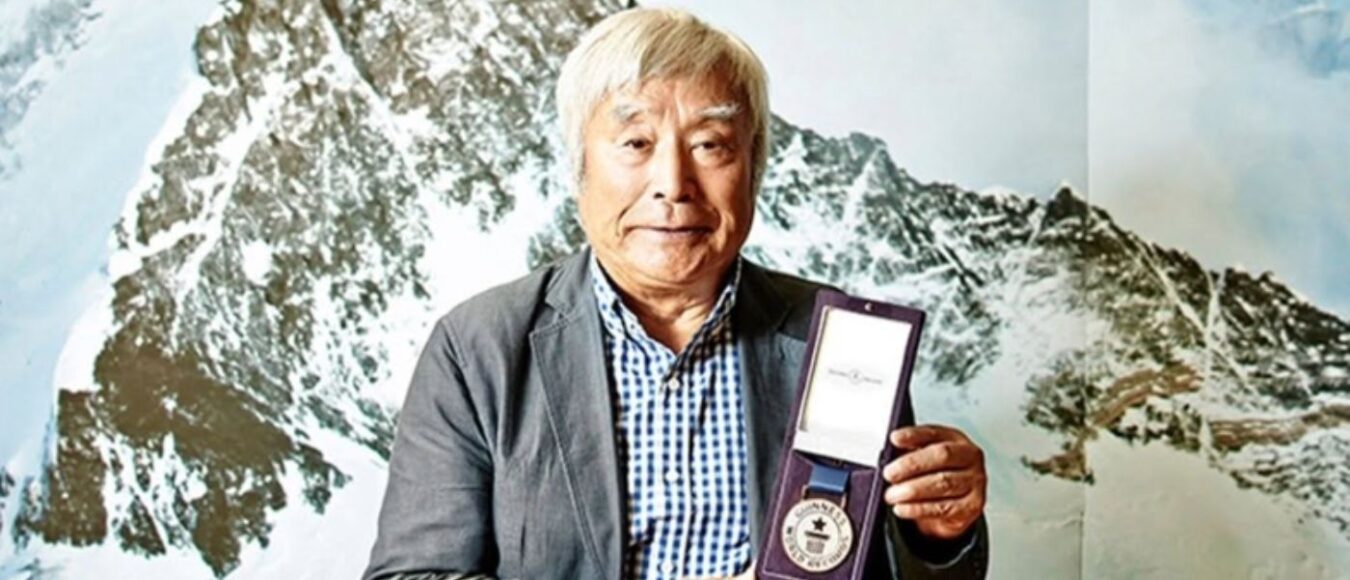
Oldest Person to Climb Mount Everest
Summary: Yuichiro Miura, a Japanese mountaineer, holds the record as the oldest person to climb Mount Everest, reaching the summit on 23 May 2013 at 80 years and 223 days old via the South Col route. He previously set records at 70 and 75, surpassing Nepal’s Min Bahadur Sherchan, who summited at 76 in 2008. Tamae Watanabe holds the women’s record at 73, and Nepal imposes no maximum age limit on permits.
Everest’s Oldest Summit Record
The oldest person to climb Mount Everest is Yuichiro Miura, a Japanese mountaineer who reached the summit on 23 May 2013 at 80 years and 223 days old. He beat the previous age record held by Nepal’s Min Bahadur Sherchan, who summited at 76 in 2008, and Miura’s mark has stood as the official Guinness World Record ever since.
This guide is written for readers who want confirmed facts, not approximations. Whether you are a journalist, a student, or a serious follower of mountaineering, you will find verified names, dates, and ages here. Furthermore, every claim in this article is tied to a documented ascent and, where applicable, to Guinness World Records criteria.
The sections below move from the current record holder through previous champions, the women’s record, the physical and logistical realities of climbing Mount Everest at an advanced age, and the rules for a valid summit. Each section adds new information, so you can read straight through or jump to what’s most relevant. For climbers, Nepal Hiking Adventure offers guidance on Everest treks, high-altitude expeditions, mountaineering logistics, summit strategies, and sherpa support to navigate the challenges of extreme altitude safely.
Who Is the Oldest Person to Climb Mount Everest
Official Record Holder Explained
The title of world’s oldest person to climb Mount Everest belongs to Japanese mountaineer Yuichiro Miura. He reached the top of Mount Everest on 23 May 2013 and held the Guinness record as the oldest person to conquer it. Notably, no one has broken his record since. His achievement stands as the benchmark for every older climber who follows.
Age at Summit and Date of Ascent
| Detail | Information |
| Name | Yuichiro Miura |
| Age at Summit | 80 years old |
| Date of Ascent | 23 May 2013 |
| Route | South Col, Nepal side |
| Record Body | Guinness World Records |
| Nationality | Japanese |
Miura successfully reached the summit via the South Col route, the standard path used by most commercial Everest expedition teams. He was born on 12 October 1932, making him 80 years old at the time of his final push to the top. In fact, the date and age are confirmed by official records held in Nepal and by Guinness.
How the Record Was Verified
Guinness World Records requires documentary proof of both the summit and the climber’s date of birth. For Miura, this included expedition logs, summit photographs, and passport verification. Similarly, the same process applies to any person who climbs Mount Everest and seeks an age-based record. Nepal’s Department of Tourism also issues official permits that list age and nationality, thereby adding a second layer of confirmation.

Yuichiro Miura: The Oldest Everest Summiteer
Japanese mountaineer Yuichiro Miura was born in Aomori, Japan, in 1932. He built his reputation as a mountain climber and extreme skier long before Mount Everest entered his plans. In 1970, he became internationally known for skiing down the slopes of Mount Everest from the South Col, a feat filmed for a documentary that won an Academy Award. Undoubtedly, that early connection to the mountain shaped everything he did for the following four decades.
Early Life and Mountaineering Background
Japanese mountaineer Yuichiro Miura was born in Aomori, Japan, in 1932. He built his reputation as a mountain climber and extreme skier long before Mount Everest entered his plans. In 1970, he became internationally known for skiing down the slopes of Mount Everest from the South Col, a feat filmed for a documentary that won an Academy Award. Undoubtedly, that early connection to the mountain shaped everything he did for the following four decades.
Previous Everest Attempts Before the Record
Miura did not arrive at his record attempt without preparation. He first climbed Mt Everest in 2003 when he was 70, successfully reached the summit, and at the time became the oldest person to do so. Subsequently, he returned again in 2008 at age 75, breaking his own record and proving his fitness had not declined in the years between attempts. Both of those earlier climbs served as foundation work for his 2013 push at the age of 80.
Between each ascent, Miura trained with a discipline matched by few athletes half his age. Additionally, he recovered from serious injuries, including a pelvis fracture suffered in a skiing accident in 2009, which made his 2013 summit all the more significant.
The 2013 Summit at Age 80
On 23 May 2013, Miura became the first person to reach the summit of Mount Everest at the age of 80. His son Gota accompanied him during the ascent, along with a team of Sherpa guides. The climb took several weeks from Everest Base Camp through the standard acclimatisation rotations before the summit push.
The final push to the top of Mount Everest was slow and deliberate. Miura used supplemental oxygen above the higher camps, as most commercial climbers do, and relied heavily on his Sherpa team for logistical support. He reached the summit at approximately 9:00 a.m. local time, with clear weather aiding the final hours.
Why Does His Climb Still Stand as the Oldest?
Since 2013, no one has climbed Everest at a greater age. Min Bahadur Sherchan, who held the record between 2008 and 2013, attempted to climb again in 2017 at age 85, specifically to reclaim the title. However, Sherchan died at Everest Base Camp on 6 May 2017 before reaching the summit, leaving Miura’s record as the oldest intact. Had Sherchan succeeded, he would have become 81 years old or possibly older at the time of his Everest summit attempt.
Nepal does not impose a maximum age limit on permits for climbing Mount Everest, so the record remains open to challenge. Nevertheless, no oldest climber in the years since has come close to Miura’s age at the time of his ascent.

Previous Oldest Record Holders on Everest
Min Bahadur Sherchan and the 76-Year Record
Before Miura’s 2013 climb, Min Bahadur Sherchan of Nepal held the record as the oldest person to scale Mount Everest. He reached the summit of Everest on 25 May 2008 at age 76, beating Miura’s own 2008 record by just a few days in the same climbing season. Sherchan was a former Gurkha soldier and Nepali national, and his climb brought significant pride to the mountaineering community in Nepal.
Sherchan’s record stood until Miura came back in 2013. As noted above, Min Bahadur Sherchan died at Base Camp in 2017 during his attempt to reclaim the title. He remains the oldest man from Nepal to have summited Everest.
Katsusuke Yanagisawa and Earlier Milestones
Japanese climber Katsusuke Yanagisawa set the record before Sherchan, summiting in May 2007 at age 71. He was a retired schoolteacher, and his Everest climb drew attention because it came later in life than any documented ascent at the time. Yanagisawa used the standard South Col route and worked with a Sherpa support team. His record stood for less than a year before Sherchan surpassed it in 2008.
How Age Records Have Progressed Over Time
| Climber | Nationality | Age at Summit | Date |
| Katsusuke Yanagisawa | Japanese | 71 | May 2007 |
| Min Bahadur Sherchan | Nepali | 76 | 25 May 2008 |
| Yuichiro Miura | Japanese | 75 | 26 May 2008 |
| Yuichiro Miura | Japanese | 80 (current record) | 23 May 2013 |
The table above shows how the record for oldest to climb Everest moved from one generation to the next over a period of roughly six years. Indeed, each new person to reach the summit at a greater age pushed the boundary further. For now, Miura’s 2013 mark remains the high point, though attempts by climbers approaching 81 years old continue to capture global attention.


Oldest Woman to Climb Mount Everest
Tamae Watanabe’s Record Summits
The oldest woman to climb Mount Everest is Tamae Watanabe of Japan. She first climbed Mount Everest in 2002 at age 63, setting the women’s age record at the time. She returned a decade later and summited again on 19 May 2012 at age 73, breaking her own record and becoming the oldest woman to reach the top of the mountain.
Watanabe’s second ascent came via the North Col route on the Tibetan side. Her achievement is officially recognised and stands as the women’s Everest record. Notably, no other woman to reach the summit has done so at a greater age.
Age Comparison Between Male and Female Records
| Category | Name | Age at Summit | Year |
| Oldest Male | Yuichiro Miura | 80 | 2013 |
| Oldest Female | Tamae Watanabe | 73 | 2012 |
Why Women’s Age Records Are Counted Separately
Guinness World Records maintains separate categories for male and female age records on Mount Everest. This reflects standard practice across most competitive and record-keeping sports. Consequently, the separation allows recognition of achievement within each group without one record overshadowing the other. Both Miura and Watanabe hold their respective titles, and both are equally verified against the same standards.
How Age Affects Everest Climbing
Physical Challenges for Older Climbers
The physical demands on people to climb Mount Everest are severe for anyone, but the stakes increase significantly when a person is elderly. Key physical challenges for older climbers include:
- Reduced cardiac output: The heart pumps less efficiently with age, limiting oxygen delivery to muscles during exertion at altitude.
- Decreased muscle mass: Older climbers lose lean muscle faster under the caloric deficit common during a long expedition.
- Slower recovery: The body takes longer to repair micro-tears from the extreme effort of climbing mountains at high altitude.
- Bone density: Fracture risk rises with age, making falls on ice or rock more dangerous for a mountain climber above 7,000 metres.
For all that, experience often compensates for reduced physical capacity. Older climbers who have spent decades at altitude tend to read conditions better, pace themselves more accurately, and make fewer technical errors than younger counterparts.
Altitude Risks and Recovery Time
Altitude sickness does not discriminate by age, but recovery from it takes longer when a person is determined to push through at the outer limits of physical capability. Above 8,000 metres, the so-called death zone, the body begins to deteriorate. Older climbers entering this zone face:
- Higher susceptibility to pulmonary and cerebral oedema at altitude.
- Greater fluid retention issues that complicate breathing.
- Longer acclimatisation windows required to prepare to reach the top of Mount Everest safely.
- Extended descent times, which increase exposure to cold and exhaustion.
Still, acclimatisation protocols designed specifically for older bodies, combined with close medical oversight, have allowed people who try to ascend Everest in their seventies and beyond to do so with managed risk.
Mental Resilience and Experience at High Age
One characteristic shared by virtually every oldest person to reach the upper camps of Mount Everest is mental toughness built over decades. The ability to make rational decisions under oxygen deprivation, extreme cold, and physical exhaustion is not simply a product of youth. In many cases, it is a product of experience. Old people who climb Everest tend to be deliberate planners, not impulsive athletes, and that approach matters enormously above 8,000 metres.
Miura, for example, maintained detailed training logs and worked with sports scientists and cardiologists throughout his preparation. His mental approach to risk management set him apart from the idea that climbing a mountain at such an old age is simply about courage. It is, far more, about discipline and preparation.

Training and Preparation at an Advanced Age
Long-Term Fitness and Conditioning
Preparing to climb a mountain as demanding as Everest requires years of sustained conditioning, not months. For senior climbers, this preparation looks different from a standard expedition training programme. Key elements include:
- Cardiovascular base training: Sustained aerobic work over multiple years to maintain heart and lung efficiency.
- Resistance training: To preserve muscle mass and joint stability, both of which decline naturally with age.
- High-altitude pre-training: Expeditions to peaks such as K2 or other Himalayan summits to gauge how the body performs under oxygen stress.
- Medical monitoring: Regular cardiology assessments, blood work, and lung function tests carried out throughout the preparation period.
Miura, for instance, worked with a team of Japanese doctors and coaches for years before each of his three Everest summits. His programme combined alpine skiing, weight training, and cardiac rehabilitation following his 2009 pelvis fracture.
Acclimatisation Strategy for Senior Climbers
Acclimatisation is the process of allowing the body to adjust to lower oxygen levels as altitude increases. For older people to climb Mount Everest, the standard acclimatisation schedule is typically extended. A senior climber aiming to reach the summit might spend two to three weeks rotating between base camp and the higher camps before committing to a summit attempt.
This slower approach helps the body produce more red blood cells, reduces the risk of acute mountain sickness, and gives the cardiovascular system time to adapt. It also adds days to the total duration of the Everest expedition and demands sustained physical and mental endurance across a much longer stay on the mountain.
Role of Sherpa Support and Medical Teams
No senior mountaineer attempting to scale Everest does so alone. Sherpa guides provide logistical expertise, carry equipment, fix ropes on technical sections, and offer physical support on the descent, which is statistically the most dangerous phase of any attempt to climb Mount Everest.
Medical teams stationed at Everest Base Camp and at higher camps monitor oxygen saturation, blood pressure, and neurological function throughout the climb. For older climbers, embedded medical oversight is not optional. It is a practical necessity that has allowed multiple senior athletes to reach the top safely and return to lower altitudes.
Record Rules, Disputes, and Clarifications
What Counts as a Valid Everest Summit
For a climb to the summit to count as a valid record, Guinness World Records and Nepal’s Department of Tourism require the following:
- The climber must physically stand at the true summit at 8,848.86 metres.
- Photographic and GPS evidence is standard for modern record applications.
- A valid permit issued by Nepal or Tibet must be in place before the ascent.
- The date of birth must be documented and verifiable through official identity records.
Records as the oldest are assessed against these standards without exception. Any one of the climbers who fails to provide supporting documentation risks having a claim rejected regardless of physical achievement.
Helicopter Use and Record Eligibility
Helicopter rescues and deposits above base camp are not permitted for a summit to count under most record-keeping bodies. If a climber is flown to a high camp and then walks to the summit, the ascent is considered assisted to a degree that disqualifies it from age-record consideration. This rule is applied consistently and is designed to ensure that every person to climb Mt Everest in a record context has made the full journey from low altitude.
Helicopter support at base camp level, for example, evacuation of an injured teammate, does not affect a record bid as long as the climber in question continued from ground level.
Disputed or Rejected Age Claims
Several age claims over the years have been questioned or rejected outright. The most notable example in recent memory is Sherchan’s 2017 attempt, which ended in tragedy before any summit was reached, so no dispute arose. But earlier in the record’s history, some climbers from regions with unreliable civil registration systems faced scrutiny over date-of-birth documentation.
For example, some claims from parts of Nepal and other mountaineering nations have been questioned where birth certificates did not exist and age was estimated from school or military records instead. In these cases, Guinness typically withholds confirmation until alternative documentation meets its verification threshold.

Other Age-Related Mount Everest Records
Oldest Without Supplemental Oxygen
Climbing without supplemental oxygen above the death zone is considerably harder than a standard commercial ascent. The combination of extreme altitude and age creates a compounded physiological challenge. No climber has yet broken the oldest-without-oxygen record while also being older than Miura’s general age record. The two achievements remain in separate categories.
Most senior record holders, including Miura and Watanabe, used supplemental oxygen during their climbs. This is standard practice and does not diminish the validity of their age records under any recognised certification system.
Oldest Multiple-Time Summiters
Miura is, by some margin, the most distinguished in this category among older climbers. His three summits at Mount Everest at ages 70, 75, and 80 have no parallel. So he became the oldest man to climb the mountain on multiple occasions, a distinction that belongs solely to him among all people to climb Everest more than twice past the age of 65.
Apa Sherpa and Phurba Tashi Sherpa hold the records for total number of Everest summits overall, with 21 each as of the most recent confirmed counts. But neither set an age record in the oldest-per-ascent sense. Age-based and frequency-based records remain distinct.
Age Records Compared With Other 8,000-Metre Peaks
For context, age records on other major peaks help illustrate how mountaineering in late life compares across the highest peak ranges:
| Peak | Oldest Documented Summiteer | Age | Year |
| Mount Everest (8,848 m) | Yuichiro Miura | 80 | 2013 |
| Mount K2 (8,611 m) | Various (records less formally tracked) | 60s | Various |
| Mount McKinley (6,190 m) | Senior summits documented in 70s | 70s+ | Various |
As the comparison shows, the world’s highest mountain has produced the most documented senior records, in part because of the commercial expedition infrastructure that surrounds it. Peaks such as K2 are technically harder and see far fewer senior attempts. Mount McKinley has a lower ceiling, making it more accessible to older climbers but less prominent in record discussions.

Oldest Person to Climb Mount Everest: Key Takeaways
The oldest person to climb Mount Everest, confirmed and verified, is Yuichiro Miura, who reached the summit on 23 May 2013 at the age of 80. That record, standing for over a decade, is backed by Guinness documentation, Nepal permit records, and expedition logs. It is not an approximation or a disputed figure.
The senior record holders covered in this article shared several traits: long preparation periods, disciplined medical oversight, experienced Sherpa support, and a methodical approach to risk. From Yanagisawa at 71 to Sherchan at 76 to Miura at 80, the progression shows that each new record was earned through structured preparation, not chance. Watanabe’s back-to-back women’s records a decade apart reinforce the same point.
Nepal issues no maximum age restriction on permits for men or women to climb Mount Everest, so the record remains open. Future climbers attempting high-altitude expeditions will face the same physiological and logistical challenges but with better medical knowledge, improved equipment, and a clearer understanding of mountaineering demands. Companies like Nepal Hiking Adventure provide guidance on Everest treks, summit strategies, and sherpa support – for more information or to plan your climb, contact us.

Oldest Person to Climb Mount Everest: FAQs
Who is the oldest person to ever climb Mount Everest?
The oldest person to climb Mount Everest is Japanese mountaineer Yuichiro Miura, who reached the summit of Mount Everest on 23 May 2013 at 80 years old. This record is confirmed by Guinness World Records and supported by Nepal’s Department of Tourism permit records.
Can someone older than 80 still break this record?
Yes, someone older than 80 can still break the record for the oldest person to climb Everest, but it would require extraordinary physical conditioning, careful acclimatisation, and proven endurance. Legally, there is no maximum age limit on climbing permits in Nepal, so age itself is not a barrier – only the extreme physical demands of the summit make it exceptionally challenging. Verified documentation of age is also essential to officially claim the record.
How does Guinness World Records verify Everest age records?
Guinness requires documentary proof of the climber’s date of birth alongside summit evidence such as photographs, GPS data, and expedition logs. For any person to climb Mt Everest in a record context, a valid Nepal or Tibet permit listing the climber’s age is also required as supporting documentation.
Is there an age limit for climbing Everest?
Nepal introduced a minimum age of 16 for Everest permits in 2014 but sets no maximum age. Oldest man to climb Mount Everest records therefore remain theoretically open to any climber who meets the physical demands and secures a valid permit.
Are older climbers at higher risk on Everest?
Yes, the risks increase with age due to reduced cardiac output, slower recovery from altitude sickness, and greater vulnerability in the death zone above 8,000 metres. Still, oldest person to reach the summit in documented record attempts have managed this risk through extended acclimatisation, comprehensive medical support, and experienced Sherpa teams throughout the ascent.


Our History in Service Excellence


