Nepal Restricted Areas Now Open for Solo Trekkers
Summary: Nepal Restricted Areas Now Open for Solo Trekkers as the Department of Immigration removed the two-person minimum for restricted area permits on 22 March 2026, allowing solo travel into zones like Upper Mustang, Manaslu, and Upper Dolpo. Trekkers must still book through a registered trekking agency and travel with a licensed guide, with permits capped at 7 trekkers each. Fees range from $20 to $500 depending on region, with Manaslu and Tsum Valley drawing the most solo interest.
Nepal Restricted Areas Now Open for Solo Trekkers – What You Need to Know
For years, solo travellers planning a trek in Nepal’s restricted areas had one stubborn problem: you could not go alone. The rules required a minimum of two foreign trekkers on any restricted area permit, which meant searching forums for strangers, delaying trips by months, or simply giving up on places like Upper Mustang or the Manaslu region. Many passionate trekkers lost entire seasons to that single rule. However, as of 22 March 2026, that barrier is gone.
The Department of Immigration officially revised its trekking permit policy for restricted zones, allowing individual trekkers to obtain permits that were previously issued to groups only. The decision followed sustained pressure from the Trekking Agencies’ Association of Nepal (TAAN), which argued that the two-person minimum was hurting tourism, reducing income for remote communities, and creating workarounds that were hard to monitor. So the government acted, and the new system is now live.
This guide from Nepal Hiking Adventure explains what has changed in Nepal’s trekking rules, the requirements for solo travel in restricted areas, which regions are now open, and how to obtain permits correctly. If you are planning a solo trek in 2026, this resource gives up-to-date, accurate information, permit procedures, and practical tips for navigating checkpoints and regulations before you book.
Quick Comparison: Old vs New Rules (2026 Update)
2026 Nepal trekking rules have shifted in two important ways. The table below shows what changed and what stayed the same.
| Group Size Factor | Previous Rules | New 2026 Rules |
| Minimum Trekkers | 2 required | 1 permitted (solo allowed) |
| Maximum Trekkers | No limit | 7 per permit |
| Guide Requirement | 1 guide for any size group | 1 guide per group (better ratio) |
| Rationale | Partner requirement | Safety and supervision |
- The permit rules for agency involvement remain unchanged. All applications still go through a registered agency.
- A licensed trekking guide is still compulsory for every restricted area trek.
- The maximum of seven trekkers per guide is a new addition, introduced to improve safety monitoring.
- Allowing solo travel does not mean independent travel. Oversight stays firmly in place.
What Are Restricted Areas in Nepal?
Restricted areas in Nepal are specific zones, largely along the northern and western borders with Tibet and India, that require a special permit beyond standard national park or conservation area passes. The government designates these zones for reasons of border security, cultural preservation, and ecological sensitivity. Not every remote region qualifies. Only the zones formally listed by the Department of Immigration fall under this system.
- These are not areas where trekking is discouraged. They are areas where access is controlled and monitored.
- Foreign tourists must pass through official checkpoints, carry valid permits, and remain on approved routes.
- The permit system exists to protect both the trekkers and the communities living in these areas benefit from solo trekkers to visit restricted areas.
- Fees vary by region and season. Some zones, like Upper Dolpo, carry high per-day costs because of their ecological and cultural sensitivity.
What the New Rule Actually Means
Nepal eases its rules, but it does not remove them. That distinction matters. Allowing solo foreign trekkers to enter restricted areas is a real and meaningful change. However, the conditions attached to that permission are just as real.
- Solo trekkers in restricted areas must still book through a registered trekking agency. There is no direct application route to the immigration department.
- A trekking guide must accompany every solo traveller throughout the trek. This is not optional.
- The agency that books the trek takes on full legal responsibility for emergency rescue and logistics.
- Solo trekkers must comply with all route restrictions, checkpoint requirements, and duration limits that were in place before.
The change, in practical terms, is that you no longer need to find a second foreign national to travel with. Beyond that, the structure of restricted area trekking is the same as it was.
Restricted Areas Now Open for Solo Trekkers
The new rules apply to restricted trekking regions spread across restricted areas in 13 districts of Nepal. Solo trekkers visiting restricted zones can now do so without needing a second foreign national. Below is the full official list of designated restricted areas, with locations and permit fees sourced directly from the Department of Immigration.
| S.N. | Region | Areas Covered | Permit Fee |
| 1 | Upper Mustang | Lomanthang RM (wards 1–5), Lo-Ghekar Damodarkunda RM (wards 1–5), Baragung Muktichetra RM (ward 3 and Satang Village, ward 5) | USD 500 for the first 10 days. USD 50/day beyond |
| 2 | Upper Dolpo | Dolpo Buddha RM (wards 4–6), Shey Phoksundo RM (wards 1–7), Charka Tangsong RM (wards 1–6) | USD 500 for the first 10 days. USD 50/day beyond |
| 3 | Gorkha Manaslu | Chumnubri RM (wards 1–4) | Sep–Nov: USD 100/week, USD 15/day beyond. Dec–Aug: USD 75/week, USD 10/day beyond |
| 4 | Humla | Simikot RM (wards 1, 6, 7), Namkha RM (wards 1–6), Changkheli RM (wards 3–5) | USD 50/week. USD 10/day beyond |
| 5 | Taplejung | Phantanglung RM (wards 6–7), Mikwakhola RM (ward 5), Sirijunga RM (ward 8) | USD 20/week (first 4 weeks). USD 25/week beyond |
| 6 | Lower Dolpo | Thulibheri, Tripurasundari, Dolpo Buddha RM (wards 1–3), Shey Phoksundo RM (wards 8–9), Jagdulla, Mudkechula, Kaike RMs | USD 20/week. USD 5/day beyond |
| 7 | Dolakha | Gaurishankar RM (ward 9), Bighu RM (ward 1) | USD 20/week |
| 8 | Gorkha Tsum Valley | Chumnubri RM (wards 3, 6, 7) – Sirdibas, Lokpa, Chumling, Chekampar, Nile, Chule | Sep–Nov: USD 40/week, USD 7/day beyond. Dec–Aug: USD 30/week, USD 7/day beyond |
| 9 | Sankhuwasabha | Bhotkhola RM (wards 1–5), Makalu RM (ward 4) | USD 20/week (first 4 weeks). USD 25/week beyond |
| 10 | Solukhumbu | Khumbu Pasang Lhamu RM (ward 5) | USD 20/week (first 4 weeks). USD 25/week beyond |
| 11 | Rasuwa | Gosaikunda RM (ward 1 and part of ward 2) | USD 20/week |
| 12 | Manang | Narpa RM (wards 1–5), Nasho RM (wards 6–7) | Sep–Nov: USD 100/week, USD 15/day beyond. Dec–Aug: USD 75/week, USD 15/day beyond |
| 13 | Bajhang | Saipal RM (wards 1–5) | USD 90 first week. USD 15/day beyond |
| 14 | Mugu | Mugumakarmarong RM (wards 1–9) | USD 100/week. USD 15/day beyond |
| 15 | Darchula | Vyas RM (ward 1) | USD 90/week. USD 15/day beyond |
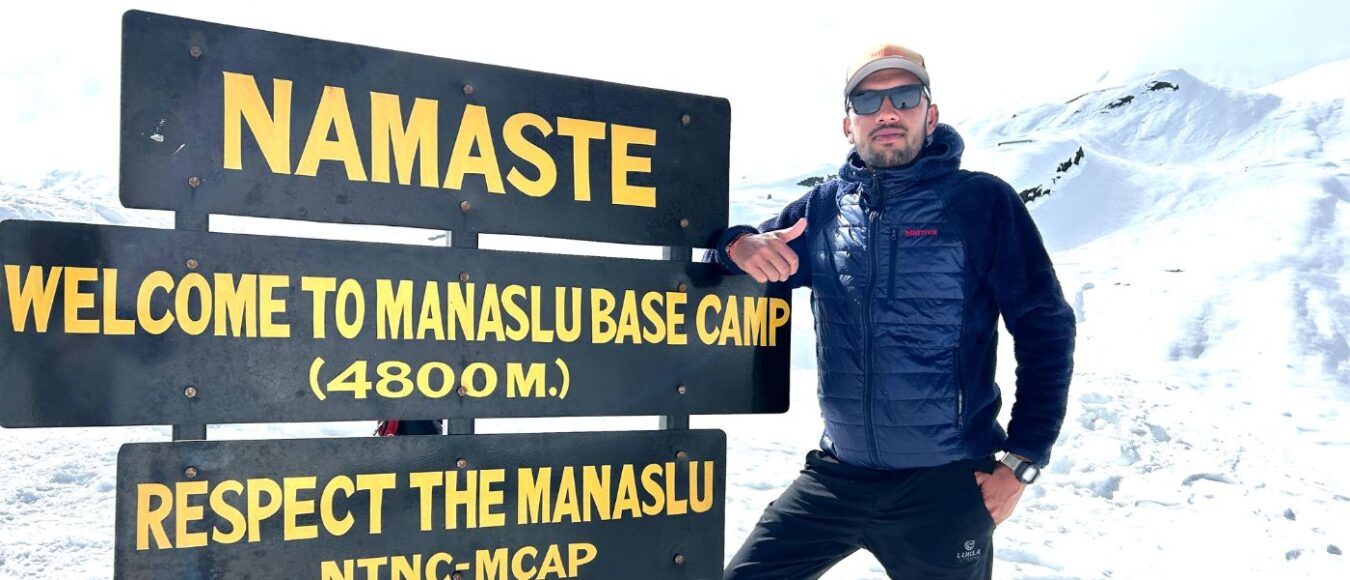
Among the popular restricted area treks, Gorkha Manaslu and Tsum Valley trek are the most targeted by solo foreign trekkers in restricted zones. Many trekkers also look at Manang (Nar-Phu), Taplejung (Kanchenjunga), and Humla for less-crowded alternatives. Trekkers need to confirm current fees with their agency, as rates are subject to seasonal variation and official revision.
Permit Rules for Solo Trekkers
Permit rules for restricted areas like Manaslu, Dolpo, and Tsum Valley follow a consistent structure. However, a few specific points apply to solo trekkers under the 2026 system.
Restricted Area Permit (RAP) explained:
- The restricted area permit is the core document. It is issued by the Department of Immigration in Kathmandu.
- All applications must be arranged through a registered trekking agency. Foreign nationals can now apply using their valid Nepal visa number or from abroad using a visa application submission ID.
- For solo foreign trekkers to obtain a permit, they must submit a passport copy, photos, an itinerary, and proof of travel insurance covering helicopter rescue.
- Processing typically takes one to three business days through the new online system.
Other required fees:
- Conservation area or national park permits are required in addition to the RAP in most regions.
- Some rural municipalities charge local entry fees on top of the national permit.
- The department has also set up a dedicated helpline at +977-9761423636 for applicants experiencing technical difficulties with the online system.
Do you still need an agency?
- Yes. A registered trekking agency like Nepal Hiking Adventure handles permit submission, guide assignment, and emergency coordination on your behalf.
- Applying through a registered trekking agency is not a suggestion. It is a legal requirement. For foreign trekkers to obtain permits through any other route is not currently possible.
- TAAN, the Trekking Agencies’ Association of Nepal, was the body that lobbied for the solo rule change and works alongside the government to maintain standards across trekking agencies.


How to Get a Restricted Area Permit
Foreign tourists to obtain permits for designated restricted areas must follow a clear process. Here is how it works, step by step.
Documents required:
- Passport copy with full validity
- Two passport-size photographs
- Nepal visa number (or submission ID for pre-arrival applications)
- Detailed trekking itinerary with entry and exit dates
- Travel insurance documents covering high-altitude helicopter rescue
- Emergency contact details
Application process:
- Contact a Nepali registered trekking agency and confirm your chosen region and dates.
- Submit all documents to the agency, which then files the application through the DoI online portal.
- The agency submits the permit request with your visa details attached. This links the permit to your legal entry status.
- Foreign nationals can now apply from their home country before arriving, using a visa submission ID. This removes the old requirement to be physically present in Nepal first.
Processing time:
- Standard processing takes one to three working days through the online system.
- Physical permits are collected in Kathmandu or, in some cases, at the starting point of the trek.
- The DoI has revised its trekking permit policy to allow pre-arrival processing, which makes advance planning significantly more practical for trekking in Nepal.
Key Rules You Still Need to Follow
Rules for solo foreign trekkers in restricted areas of Nepal have not been relaxed beyond the minimum group size. Everything else stays as it was.
Checkpoints and route limits:
- Trekkers to enter restricted zones must pass through official checkpoints and present their RAP at each one.
- Routes are fixed in most regions. You cannot deviate from the approved itinerary without permission.
- Strict rules on border proximity apply throughout. In areas like Nar-Phu and Upper Mustang, specific villages and zones have separate access conditions.
Restricted zones and borders:
- Certain sections within 13 restricted districts have additional internal restrictions, particularly those closest to the Tibetan border.
- Restricted areas across 13 districts are not uniformly managed. Each has its own permit conditions, checkpoints, and duration limits. Confirm the specific rules for your destination with your agency.
Duration restrictions:
- Each permit is issued for a fixed period. Overstaying is not permitted.
- Extensions, where available, must be arranged through the agency before expiry.
- Solo trekkers can now get their permits processed faster through the online system, but duration limits remain fixed by zone.
Quick Reality Check: Is Solo Trekking Truly Independent?
Solo trekkers in restricted areas in Nepal are not independent trekkers in the traditional sense. Understanding that gap helps set accurate expectations. The table below maps what many trekkers expect against what the rules actually allow.
| Factor | Expectation | Reality in Restricted Areas |
| Full Independence | Trek completely alone | Limited. Rules and checkpoints apply |
| Permit Access | Apply yourself | Must go through agencies |
| Route Freedom | Flexible itinerary | Fixed routes in most regions |
| Safety Support | Self-managed | Minimal infrastructure in remote regions |
- The number of trekkers per group is now capped at a maximum of 7 trekkers per a guide, improving the safety ratio compared to the old system, where group sizes were unlimited.
- Seven trekkers per guide is the upper limit. However, many solo and small-group travellers will have a guide entirely to themselves or shared with just one or two others.
- Being accompanied by a licensed trekking guide throughout the trek is a legal condition, not a recommendation.
- Trekkers per permit has a hard ceiling of a maximum of 7 trekkers. Groups larger than seven must, therefore, obtain multiple permits.
- Allowing individual foreign tourists to obtain a single permit is the specific language used in the DoI notice. That is what changed. The rest of the framework, however, remains controlled.
- In remote regions like Upper Dolpo or Humla, infrastructure is minimal. A guide is not just a regulatory requirement. It is a practical necessity.
- Being arranged through a registered trekking agency means your agency is legally responsible for your safety. That accountability structure is, in fact, part of why the government was willing to allow solo trekkers, who are now allowed in restricted areas under the eased rules for solo trekking decisions of 22 March 2026.
Final Insights: Nepal Restricted Areas Now Open for Solo Trekkers
Nepal’s restricted areas are now accessible to solo travellers who were previously blocked by the two-person minimum rule. That change is genuine, and it opens up some of the most culturally and geographically extraordinary destinations in the Himalayas to a much wider range of trekkers. But it is worth being clear-eyed about what the change involves. Restricted area trekking in Nepal remains a managed, agency-dependent experience, and the conditions attached to solo access reflect that.
For trekking Nepal as a solo traveller in restricted areas with new permit rules, the practical path is straightforward. Choose your region, contact a reputable Nepali trekking agency, submit your documents through the online system, and confirm your guide and itinerary before you arrive. The permit policy for restricted areas has not been simplified out of existence. It has been adjusted to remove one unnecessary barrier while keeping everything else in place.
Rules for solo travel in Nepal’s controlled zones now make more sense than they did a year ago. The minimum group size requirement was always an awkward workaround, and removing it benefits tourism, local employment, and trekkers themselves. Whether you are heading to the Manaslu Circuit, Tsum Valley, or the high desert of Upper Mustang, the permit process is manageable, and the solo trekking experience is genuinely worthwhile for those who prepare properly. For detailed guidance and assistance with restricted area permits or planning your trek, contact us at Nepal Hiking Adventure today.

Published by Nepal Hiking Adventure. Based on the official DoI notice dated 22 March 2026 and TAAN correspondence to the Department of Immigration, Kathmandu.
Nepal Restricted Areas Now Open for Solo Trekkers: FAQs
Can foreigners trek solo in restricted areas in Nepal?
Yes. As of 22 March 2026, solo foreign trekkers can obtain a restricted area permit without needing a second foreign trekker. However, the trip must still be arranged through a registered agency, and a licensed guide remains compulsory throughout.
Do I still need a guide for Manaslu or Upper Mustang?
Yes. A licensed trekking guide is mandatory for all restricted trekking areas regardless of group size. This applies to solo travellers, pairs, and groups up to the maximum of 7 trekkers per permit.
How much does a restricted area permit cost?
Costs vary by region. Upper Mustang costs USD 500 for the first ten days. Manaslu runs USD 100 per week during the peak season (September to November). Upper Dolpo also costs USD 500 for the first ten days. Confirm current fees with your agency before booking.
Is solo trekking safe in remote regions of Nepal?
Remote regions like Upper Dolpo and Humla have minimal infrastructure. A guide is both a legal requirement and a practical safeguard. Your trekking agencies also carry full responsibility for emergency rescue, which adds a layer of organised support that truly independent trekking would not provide.
Can I get a permit without a trekking agency?
No. Foreign trekkers in restricted areas must obtain permits for trekking through a government-registered agency. There is no direct individual application route to the immigration department for restricted area permits. Solo trekkers must go through an agency at every stage.


Our History in Service Excellence


