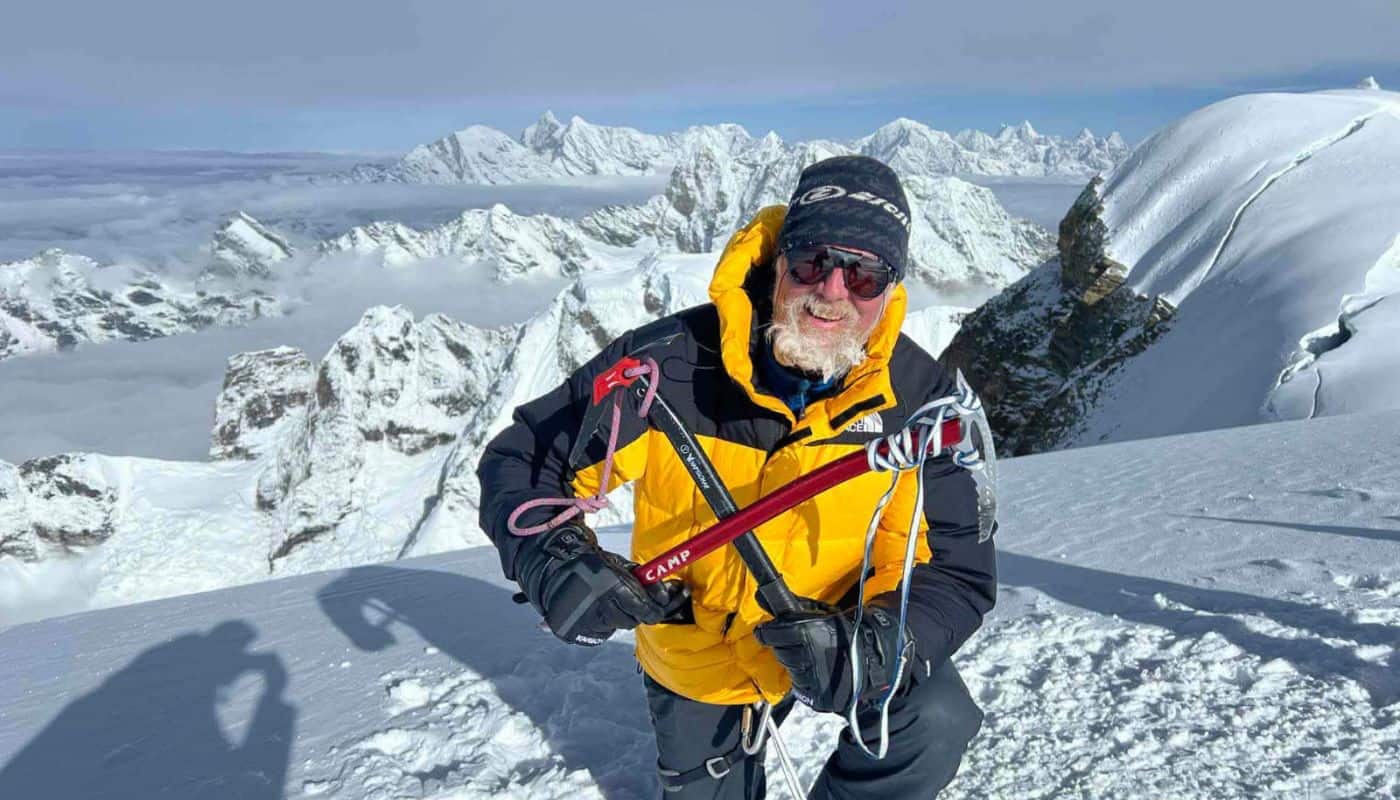

Mera Peak Climbing
 (598 reviews in Google)
Overview
Mera Peak Climbing, at 6,654 meters, is the highest trekking peak in Nepal. It is located east of the main Khumbu trekking trails. Mera Peak is popular among adventurers seeking both high-altitude trekking and moderate mountaineering. While the climb is technically straightforward, glaciers, crevasses, and snow conditions make the summit exciting and challenging. Therefore, proper preparation and basic mountaineering skills are recommended.
The 14-day Mera Peak climbing trek offers unforgettable panoramic views of four of the world’s highest mountains. These include Mount Everest, Kanchenjunga, Makalu, and Cho Oyu. In addition, the trek passes through the remote Hinku Valley, which provides a serene and less crowded experience. Trekkers also get to enjoy traditional Sherpa villages along the way.
Mera Peak can be climbed via North, West, and South routes. However, the North route is the most popular. It includes high-altitude glacier walking and crossing passes such as Amphu Laptsa (5,780 m) and Mingbo La (5,871 m).During the summit of Mera Peak Climb, you will be able to see panoramic views of Everest, Lhotse, Ama Dablam, Cho Oyu, Kanchenjunga, and Makalu.
Mera Peak Climbing journery starts from day 2 where you will be taking a scenic flight from Kathmandu to Lukla. Then, trekkers walk through Sherpa villages for proper acclimatization. Next, the trail gradually leads to Mera Base Camp and High Camp. From the high camp, climbers attempt the Mera Peak summit. After reaching the top, they descend safely to Base Camp and return via the trekking trail. This completes a 14-day high-altitude expedition.
This trek is ideal for adventurous trekkers, first-time climbers, and photography enthusiasts. In addition, it allows travelers to experience high-altitude trekking, Everest region panoramas, and Himalayan adventure in a manageable expedition. Moreover, many climbers combine Mera Peak Climbing with Island Peak or Everest Base Camp Trek for a complete Everest region adventure.
Highlights of Mera Peak Climbing
- Highest trekking peak in Nepal at 6,654 meters
- 14-day high-altitude trekking and climbing expedition
- Panoramic views of Everest, Kanchenjunga, Makalu, Ama Dablam, Cho Oyu, and Lhotse
- Scenic Kathmandu to Lukla flight to start the trek
- North, West, and South climbing routes; North route includes glacier walking
- Crossing Amphu Laptsa (5,780 m) and Mingbo La (5,871 m) for mountaineering adventure
- Base Camp at Mera La (5,300 m) and High Camp at Mera Glacier (5,800 m) for acclimatization and summit preparation
Arrival in Kathmandu (1,400 m/4,593 ft): Transfer to Hotel and Trek Preparation
Upon your arrival at Tribhuvan International Airport, our agency representative will meet you and escort you to the hotel at Thamel.
There you rest for a while and later we will have a small meeting on Mera Peak Climbing Trek. After that, you can return to your hotel or can have sightseeing around Thamel.
Accomodation: Hotel
Duration: 30 min drive to hotel
Distance: Around 6 km
Fly from Kathmandu (1,400 m) to Lukla (2,860 m) and trek to Chutanga (2,950 m)
On Day 2, we rise early in Kathmandu for a scenic 30-minute flight to Lukla Airport, widely regarded as one of the most thrilling flights in the world. From the plane, trekkers are treated to breathtaking panoramic views of the Himalayas, including iconic peaks such as Everest, Lhotse, and Nuptse.
The trail from Lukla heads east toward Chutanga (2,950 m), weaving through quaint Sherpa villages, terraced farmland, and dense forests at the base of the Kalo Himal Ridge. The route has several side trails, so guidance from your experienced trekking team ensures you stay on the right path. Along the way, you will encounter sparkling glacial streams, serene lakes, and traditional Himalayan landscapes, all surrounded by majestic mountain peaks, making every step scenic and memorable.
By afternoon, you reach Chutanga, where a cozy lodge awaits. Here, you can rest, acclimatize, and enjoy the peaceful mountain environment and also you can prepare your body and mind for the challenges ahead on the 14-day Mera Peak Climbing expedition.
Overnight at Chutanga.
Accomodation: Lodge
Duration: 35-40 minutes flight & 4-5 hours trek
Meal: Breakfast, Lunch, Dinner
Ascent: +350 m
Distance: Around 9 km
Trek from Chutanga (2,950 m) to Thuli Kharka (4,300 m) via Zatrawa La Pass (4,610 m)
The day starts early at Chutanga, as this is one of the most demanding yet rewarding days of the trek. After breakfast, the trail climbs steadily through alpine forest filled with rhododendron and juniper trees. The air becomes thinner with every step, and the surrounding landscape slowly opens up as you leave the tree line behind.
The ascent toward Zatrawa La Pass is gradual but long, requiring patience and a steady pace. As you gain height, panoramic views begin to appear, with distant snow-capped peaks and rolling high-altitude terrain stretching in every direction. Prayer flags mark the approach to the pass, creating a colorful contrast against the rugged mountain backdrop.
Reaching Zatrawa La Pass at around 4,610 meters is a proud moment. From the top, you are rewarded with sweeping views of the surrounding Himalayan ranges and valleys below. After a short rest and time for photos, the trail begins to descend toward Thuli Kharka.
The descent is gentler, passing through open pastures and rocky trails used by local herders. The wide landscape feels remote and peaceful, offering a true sense of Himalayan wilderness. By late afternoon, you arrive at Thuli Kharka, a high-altitude grazing area surrounded by hills and wide skies.
You settle into a mountain lodge at Thuli Kharka, where a warm meal and rest help you recover from the long day.
Accomodation: Lodge
Duration: 6-7 hours trek
Meal: Breakfast, Lunch, Dinner
Ascent: +1,700 m
Descent: -350 m
Distance: Around 8 km
Trek from Thuli Kharka (4,300 m) to Kothe (3,600 m)
After an early breakfast at Thuli Kharka, the day begins with a gentle walk through quiet alpine terrain. The morning air feels crisp, and the surrounding hills slowly come to life as the sun rises over the ridgelines. Leaving the open highland behind, the trail gradually descends toward the Hinku Valley that offers changing scenery at every turn.
As you move lower, the landscape transforms from rocky slopes into lush forest paths. The trail passes through rhododendron and pine forests, where prayer flags flutter softly and birdsong replaces the silence of higher altitude. Small streams cross the path, and wooden bridges add a rustic charm to the journey. The walk is mostly downhill, making it comfortable and enjoyable, with plenty of chances to pause and enjoy the peaceful surroundings.
Along the way, you may catch brief views of surrounding peaks through breaks in the forest, which will remind you that you are deep in the Himalayan wilderness.
By afternoon, the trail leads to Kothe, a small settlement nestled beside the Hinku River. The sound of flowing water and the sight of green hills create a calm and welcoming atmosphere. After you arrive at Kothe, you check into a cozy mountain lodge, where a warm meal awaits. The rest of the day is spent relaxing, exploring the riverside, or chatting with fellow trekkers by the fire.
Overnight at Kothe.
Accomodation: Lodge
Duration: 4-5 hours trek
Meal: Breakfast, Lunch, Dinner
Ascent: 200 m
Descent: 700 m
Distance: Around 7 km
Trek from Kothe (3,580 m) to Thaknak (4,350 m)
The day begins calmly at Kothe, with the sound of the Hinku River flowing beside the trail. After breakfast, the trek continues northward through the beautiful and remote Hinku Valley. The path is relatively gentle at first that will allow your body to adjust as you gain altitude gradually.
As you walk along the riverbank, the scenery becomes more dramatic. Towering rocky walls, glacier-fed streams, and wide alpine landscapes dominate the surroundings. The trail passes through summer grazing areas known as kharkas, where you may see yaks and herder shelters used during warmer months.
The steady ascent toward Thaknak is not overly steep, making the walk enjoyable and scenic. Along the way, you get closer views of hanging glaciers and ice-covered peaks, giving a real sense of entering the high Himalayan environment. The air feels cooler and crisper as you approach the settlement.
By early afternoon, you reach Thaknak, a small high-altitude village located just below the Dig Glacier. After checking into the lodge, you have time to relax, explore the surrounding area, or enjoy the peaceful mountain setting.
A warm dinner and a restful night at Thaknak prepare you for the more challenging days ahead, as the trek now moves deeper into glaciated terrain and higher elevations.
Overnight at Thaknak.
Accomodation: Lodge
Duration: 4-5 hours trek
Meal: Breakfast, Lunch, Dinner
Ascent: 800 m
Descent: -50 m
Distance: Around 6 km
Trek from Thaknak (4,350 m) to Khar (5,045 m)
After breakfast at Thaknak, the trail gradually climbs higher into the alpine zone. The landscape quickly changes as vegetation thins and rocky terrain becomes more dominant. Walking beside the Dig Glacier, you can hear the distant cracking of ice and flowing meltwater that adds to the wild Himalayan atmosphere.
The route is short but steadily uphill. As you gain elevation, wide views of glaciated peaks and rugged mountain walls open up around you. The thin air makes the walk feel more demanding, so a slow and steady pace is maintained throughout the day.
Passing moraines and icy streams, the trail leads toward Khar, a small seasonal settlement used mainly by climbers and herders. By midday, you arrive at Khar, situated at the base of the glacier route that leads toward higher camps.
Overnight at Khar.
Accomodation: Lodge
Duration: 3-4 hours trek
Meal: Breakfast, Lunch, Dinner
Ascent: +750 m
Descent: -50 m
Distance: Around 5 km
Rest Day at Khare (5,045 m): Acclimatization and Pre-Climb Training
Day 7 of Mera Peak Climbing is a crucial rest and acclimatization day at Khare. Although there is no long trekking involved, this day plays an important role in helping your body adjust to the high altitude before moving higher. After a relaxed breakfast, the guide conducts a short health check and explains the plan for the day.
Later in the morning, you take a gentle acclimatization walk above Khare. The trail climbs slowly onto nearby ridges and moraines, offering clear views of surrounding glaciers and snow-covered peaks. Walking higher and then returning to Khare helps your body adapt naturally to the altitude.
In the afternoon, pre-climb training is held on nearby snow or ice slopes. During this session, you learn and practice the use of essential climbing equipment such as crampons, ice axes, harnesses, ropes, and safety techniques. The guide also explains basic glacier travel, rope teamwork, and safety measures needed for the summit push.
The training is simple and practical, designed for beginners as well as those with limited mountaineering experience. It builds confidence and ensures everyone understands the climbing process.
The rest of the day is spent relaxing, hydrating, and enjoying warm meals at the lodge. An early night is recommended, as proper rest is important before heading toward higher camps and the summit days ahead.
Overnight at Khare.
Accomodation: Lodge
Duration: 2-3 hours (light activities)
Meal: Breakfast, Lunch, Dinner
Ascent: 200 m
Descent: 200 m
Distance: Around 2 km
Trek from Khare (5,045 m) to Mera High Camp (5,800 m)
Day 8 is one of the most important and exciting days of the journey as you move closer to the summit. After an early breakfast at Khare, the trail gradually leaves the rocky terrain and enters the vast Mera Glacier. The air feels thinner here, and the landscape changes into a world of ice, snow, and wide-open mountain views.
The walk begins slowly to maintain a steady pace and proper acclimatization. Wearing crampons, you carefully cross the glacier, following your guide along safe and marked routes. Along the way, towering peaks and long ice fields surround you, creating a true high-altitude mountain atmosphere.
As you gain elevation, the path becomes more demanding, but the views become even more rewarding. You can see stunning Himalayan giants stretching across the horizon and it will surely make every step worthwhile. The final section to High Camp involves a gradual climb over snowy slopes and it requires focus and controlled movement.
By early afternoon, you reach Mera High Camp at around 5,800 meters. This camp is set on a rocky outcrop above the glacier and offers one of the finest viewpoints in the region. From here, you can enjoy sweeping views of Everest, Makalu, Lhotse, Cho Oyu, and Kanchenjunga under clear skies.
After arrival, you rest, hydrate well, and enjoy a warm meal prepared by the support team. The guide briefs you about the summit plan, weather conditions, and safety procedures. Since the summit push begins very early the next morning, you head to bed early, filled with excitement and anticipation for the climb ahead.
Overnight at Mera High Camp on a tented camp.
Accomodation: Tented Camp
Duration: 4-5 hours trek
Meal: Breakfast, Lunch, Dinner
Ascent: +755 m
Distance: Around 5 km
Summit Mera Peak (6,654 m) and trek back to Khare (5,045 m)
Day 9 is the most challenging and rewarding day of the entire journey. The day starts very early, usually around midnight, as you wake up in the cold silence of the high mountains. After a light breakfast and final gear check, you begin the summit push under the stars, using headlamps to guide the way across the glacier.
The climb follows a steady, gradual slope, that will allow you to move slowly and conserve energy. The cold air makes breathing harder, but the calm rhythm of steps and the encouragement of your guide keep you focused. As dawn approaches, the sky begins to glow with soft colors, revealing endless snowfields and surrounding Himalayan peaks.
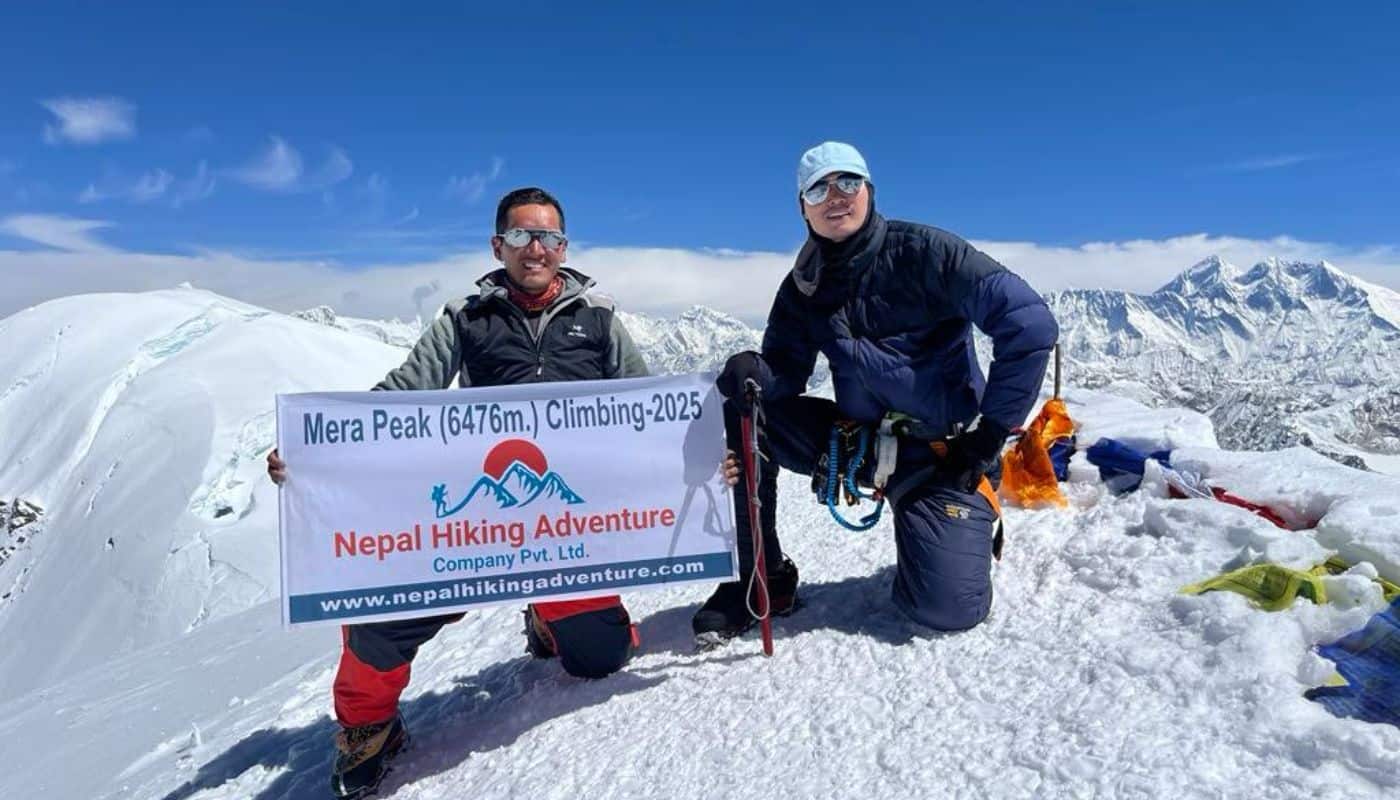
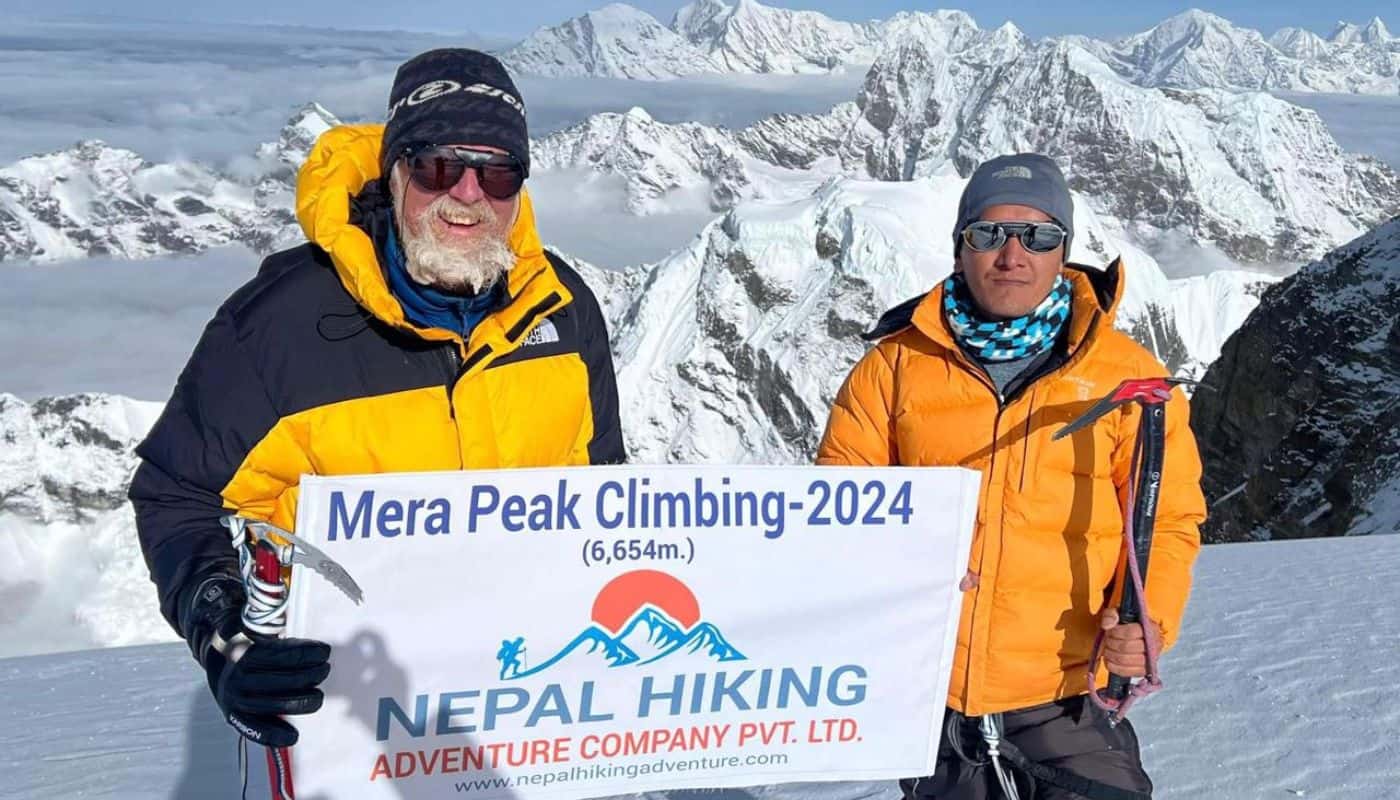
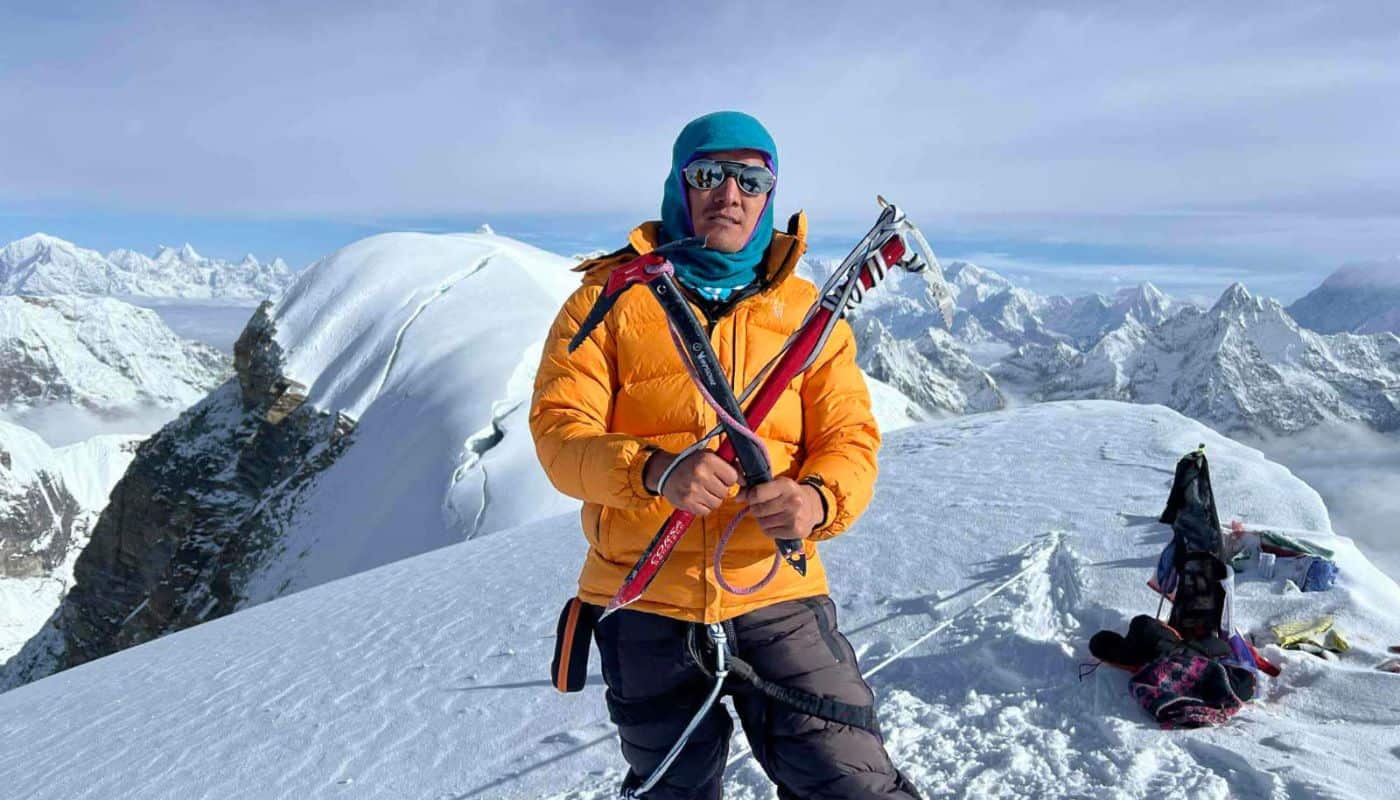
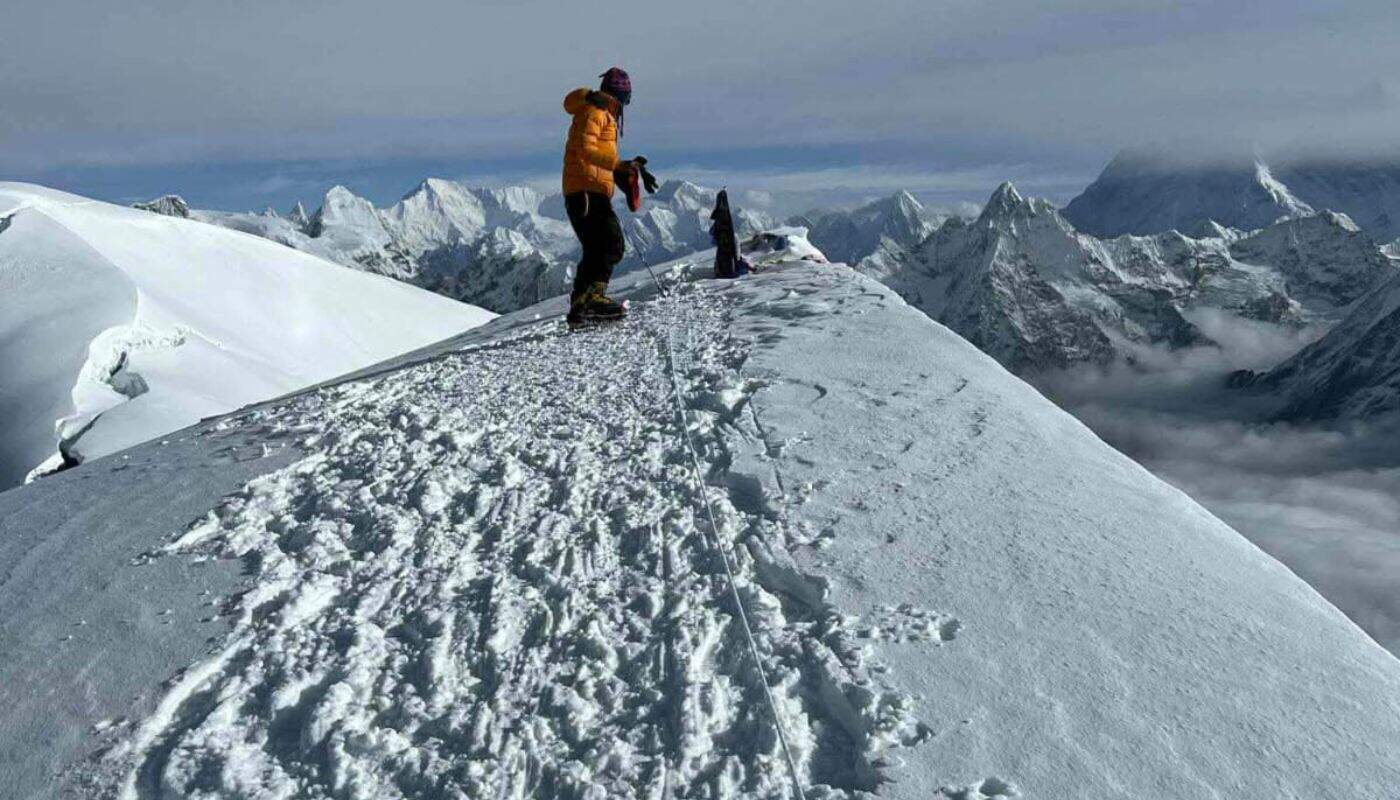
The final section to the summit involves a steeper climb, often using fixed ropes for safety. On day 9 of Mera Peak Climbing, with patience and determination, you reach the summit of Mera Peak at 6,654 meters. Standing at the highest trekking peak in Nepal is a truly unforgettable moment. From the top, you are rewarded with breathtaking panoramic views of Mount Everest, Makalu, Lhotse, Cho Oyu, Kanchenjunga, and many other snow-covered giants stretching across the horizon.
After spending some time at the summit for photos and celebration, you carefully begin the descent. The return journey retraces the same route back to High Camp, where you take a short rest and rehydrate. From there, you continue descending to Khare, feeling both tired and proud of your achievement.
By late afternoon or early evening, you arrive back in Khare. A warm meal and comfortable rest await you after this long and demanding day. The sense of accomplishment, combined with memories of the summit views will definitely make this day one of the most memorable experiences of the entire adventure.
Overnight at Khare.
Accomodation: Lodge
Duration: 9-12 hours
Meal: Breakfast, Lunch, Dinner
Ascent: +854 m
Descent: 1,609 m
Distance: Around 9 km
Back Up Day for Mera Peak Summit
This day is kept as a backup to ensure flexibility and safety during the journey. If the summit attempt on Day 9 is postponed due to unfavorable weather conditions or health concerns within the group, this reserved day allows another opportunity to reach the summit without rushing.
In addition, this extra day acts as a safety cushion for unexpected situations such as flight delays, trail disruptions, or any unforeseen events that may affect the original itinerary. Having this buffer helps the entire trip run smoothly, even if adjustments are needed along the way.
If everything goes according to plan and no delays occur, the day can be used to slow down the pace of the trek. This gives you more time to rest, recover, and enjoy the mountain environment. Alternatively, the spare day can be spent exploring Kathmandu. It will allow you to visit cultural landmarks, local markets, or simply relax before your departure.
This contingency day adds comfort, flexibility, and peace of mind and this will make the overall experience safer and more enjoyable.
Accomodation: Camp
Meal: Breakfast, Lunch, Dinner
Trek from Khare (4,900 m) to Kothe (3,600 m) and onward to Thuli Kharka (4,300 m)
After breakfast at Khare, you begin the descent, leaving the high alpine landscape behind. The trail first leads downhill toward Kothe, following the familiar route along the Hinku Valley. As you walk, the scenery gradually changes from rocky, glaciated terrain to greener surroundings with juniper bushes, alpine shrubs, and flowing streams. The descent feels easier on the lungs, and the warmer air is a welcome change after days spent at higher altitude.
Reaching Kothe around lunchtime, you can take a short break to rest and refuel. From here, the trail climbs again toward Thuli Kharka. The path winds through forested sections and open hillsides, offering peaceful views of the valley below. Although there is some uphill walking, the day feels manageable after successful acclimatization and the summit phase of the journey.
By late afternoon, you arrive at Thuli Kharka, a quiet settlement set on an open ridge. From here, you can enjoy wide mountain views and a calm atmosphere which will be perfect for reflecting on the adventure so far. You will spend the night at a local lodge.
Overnight at Thuli Kharka.
Accomodation: Lodge
Duration: 6-7 hours trek
Meal: Breakfast, Lunch, Dinner
Ascent: +700 m
Descent: -2,000 m
Distance: Around 14 km
Trek from Thuli Kharka (4,300 m) to Lukla (2,860 m) via Zatrawa La Pass (4,330 m)
On Day 12, the trek begins early from Thuli Kharka and gradually you will make your way toward the iconic Zatrawa La Pass. The trail first climbs slightly to reach the pass at 4,330 meters, which will offer stunning panoramic views of surrounding peaks and the Hinku and Mera valleys. This is the last high point of the trek and it will give trekkers a final chance to appreciate the grandeur of the Himalayas.
After crossing Zatrawa La, the journey shifts to a long descent toward Lukla. The trail winds down through forests, small villages, and terraced farmland, gradually moving from alpine terrain to lower, greener landscapes. Along the way, you can observe local Sherpa communities and their traditional lifestyle, enjoying the rich cultural flavor of the region.
After you arrive in Lukla, you will check into a comfortable lodge for the night, rest, and celebrate the completion of your Mera Peak Climbing.
Overnight at Lukla.
Accomodation: Lodge
Duration: 7-8 hours trek
Meal: Breakfast, Lunch, Dinner
Ascent: +30 m
Descent: -1,470 m
Distance: Around 18 km
Fly from Lukla (2,860 m) to Kathmandu (1,400 m)
On the final day of the 14 Days Mera Peak Climbing, you will take an early morning flight from Lukla back to Kathmandu. This scenic flight, lasting about 30-40 minutes, offers breathtaking aerial views of the Himalayas, including Everest, Lhotse, Nuptse, and other prominent peaks. The dramatic landscapes and snow-capped mountains make the journey truly memorable.
After you arrive in Kathmandu, you will be transferred to your hotel or lodge in Thamel. Here, you can relax and refresh after your adventurous trek. You will have some free time for sightseeing, shopping, or exploring Kathmandu’s vibrant streets and cultural landmarks. Enjoy a leisurely breakfast and reflect on the incredible experience of trekking through the high Himalayas, summiting Mera Peak, and experiencing the unique culture and natural beauty of Nepal.
Overnight at Kathmandu Hotel.
Accomodation: Hotel
Duration: 30-40 minutes flight
Meal: Breakfast
Final Departure.
You can do office visit to get the achievement certificate of Mera Peak Climbing.
Nepal Hiking Adventure representative will drop you off at Tribhuwan International Airport. It will take around 30 minutes to reach the airport from the hotel. Have a safe flight and we look forward to do next trip with you. We guarantee you will be taking a lot of good memories from this trip to Nepal.
Duration: 30 min drive to airport.
Meal: Breakfast
Distance: Around 6 km
Cost Includes
- Airport Pick up and transfer upon arrival
- 2 nights hotel accommodation in Kathmandu with bed & breakfast
- Sightseeing in Kathmandu
- Domestic flight Kathmandu -Lukla – Kathmandu
- Flight tickets with 20Kg. cargo per member
- Lodge during the trek.
- Sagarmatha national park permit
- Mera Peak Climbing permit
- TIMS (Trekkers Information Management System) Card
- Food for trekking & climbing period
- Porters / Yak Lukla to Base Camp & back to Lukla
- 1 tent for 1 person for the Base Camp
- Dining tent, toilet tent, Mattresses for the climb
- Climbing guide’s flight tickets, insurance, daily wages, accommodation
- Other crew member’s insurance, daily wages, food, accommodation
- Safe drinking water purified by Iodine tablet or sterilized by steripen
- Medical kit bag
- All transfers airport-hotel-airport
- All necessary taxes
- Farewell dinner
Cost Excludes
- Lunch and dinner in Kathmandu
- High altitude climbing food, fuel, Gas above base camp
- Personal climbing gears
- Personal accident insurance and emergency evacuation by helicopter
- International airport departure tax
- Nepal custom duty for import of climbing gears arriving into Nepal
- Cargo custom clearance
- Bar bills & beverage
- Personal Satellite phone with e-mail & internet permit
- Waki talkies permit
- Extra expenses of personal nature
- Medical/ emergency oxygen with regulator and mask
- Garbage Deposit (Sharing of the total person) and Deposit fee will be refunded after the climb
Temperature Chart
Altitude Chart
Useful Info
Best Time for Mera Peak Climbing
Climbing to Mera Summit is seasonable and possible during the autumn and spring seasons. September-November and March-May is the best time for Mera Peak Climbing. Trekking and Climbing during these seasons are safer and very fruitful. As the weather is very clear and warmer, as a result, the views and scenery become magical and unrealistic. Some adventure lovers choose the winter season (December-February) to avoid the crowds of peak seasons. Finally, trekking and climbing in Mera during monsoon season (June-August) is dangerous and irritating.
Mera Peak Climbing Difficulty
Mear Summit/Peak is the tallest peak in Nepal for trekking. Trails to the summit is full of challenges and difficulty, climbers have to walk on high altitude glacier, and crevasse. That makes the climbing process more difficult and time-consuming. The weather is extremely cold with strong blowing winds. Hence, require some climbing experiences as well as technical knowledge on mountaineering gears. Therefore, we recommend you to take some physical and mental training before you visit Nepal for climbing Mera Peak.
Accommodation on Mera Peak Climbing
During the Mera Peak Climbing expedition, accommodation is arranged in a mix of tea houses, lodges, and high-altitude tents. At the lower trekking sections, such as villages between Lukla and Khare, trekkers stay in cozy lodges or tea houses that offer basic but comfortable facilities, including warm beds, shared bathrooms, and simple meals. These lodges are usually family-run, providing a chance to experience Sherpa hospitality and local culture.
As you ascend toward the Mera High Camp, the accommodation shifts to high-altitude tents or temporary camps, that will offer essential shelter, sleeping bags, and minimal facilities. Even though the high camps are simpler, they provide stunning views of surrounding peaks and a safe resting place to acclimatize before the summit push.
Mera Peak
One of the most remarkable aspects of Mera Peak Climbing is the breathtaking panoramic views from the summit and high camps. From the top, trekkers can see Mount Everest, Lhotse, Makalu, Ama Dablam, and many surrounding Himalayan giants and creates a spectacular 360-degree vista that is truly unforgettable.
The climb offers a rare opportunity to experience close-up views of the world’s tallest mountains, which are often only glimpsed from lower-altitude treks. At the Mera High Camp (5,800 m) and summit (6,654 m), the sun rises and sets over these iconic peaks, bathing the snow-capped ridges in golden light, an experience cherished by mountaineers and photographers alike.
Along the trek, the route passes through untouched Hinku and Hongu valleys, offering stunning glimpses of rugged landscapes, glacial streams, and pristine snowfields that contrast beautifully with the vibrant Sherpa villages. Even before reaching the summit, trekkers enjoy layered views of Makalu’s sharp ridges, the rounded peaks of Cholatse, and the majestic shape of Nuptse will make every stage of the trek visually rewarding.
Cost of Mera Peak Climbing
The cost of Mera Peak Climbing can vary depending on the services included, season, and group size. Generally, a complete trekking and climbing package ranges from USD 3,000 to 4,500 per person, which covers essential expenses such as climbing permits, Sagarmatha National Park entry fees, TIMS card, experienced guides, and support staff. Accommodation during the trek that includes lodges in villages and high-altitude tents at High Camp, is also included. Meals throughout the trek, typically breakfast, lunch, and dinner, are part of the package. Additional costs may include personal gear, tips, and emergency services such as helicopter evacuation if needed.
Tips for successful Mera Peak Summit
Successfully summiting Mera Peak (6,654 m) requires careful planning, physical preparation, and mental readiness. First, physical training is essential; trekkers should focus on building cardiovascular endurance, leg strength, and core stability at least 1 tp 2 months before the climb. Activities such as hiking with a weighted backpack, stair climbing, and interval cardio workouts help prepare the body for long days of trekking at high altitude. Equally important is acclimatization. So, taking it slow, drinking plenty of water, and following rest days at intermediate camps, like Khare will allow the body to adjust to lower oxygen levels and reduces the risk of altitude sickness.
Pace management is another key factor: start early in the morning, maintain a steady, moderate pace, and avoid overexertion during the summit push. Trekkers should monitor weather conditions closely, as snowstorms, strong winds, or sudden temperature drops can make the climb risky. Packing essential gear, including crampons, an ice axe, warm clothing, headlamps, and proper climbing boots will ensure your safety and comfort during challenging sections like glaciers and crevasses.
Mental preparation is equally critical. Climbers must remain focused, patient, and confident, even when the terrain becomes tough or conditions are harsh. Visualization techniques, staying motivated with team support, and setting small milestones along the way can boost confidence. Listening to the guide’s instructions and respecting your body’s limits is crucial for a safe ascent.
Finally, proper nutrition and hydration throughout the trek help maintain energy levels for both trekking and climbing. Eating high-energy meals, carrying snacks, and drinking enough fluids prevent fatigue during long summit days.
FAQ
Why is Mera Peak called a trekking peak?
In Nepal, trekking peaks are mountains that are climbable with minimal technical skills. Mera Peak is categorized as such because climbers can summit using basic equipment like crampons, ice axes, and ropes that makes it accessible to adventurous trekkers.
When is the most suitable time of year for attempting Mera Peak Climbing?
The best time to attempt Mera Peak Climbing is during the post-monsoon months of September to November or in the spring season from March to May, when the weather is clear and mountain views are spectacular. During these periods, the weather is clear, the trails are stable, and visibility of surrounding Himalayan peaks is excellent. Monsoon and winter seasons are not recommended due to heavy snow, rain, and extreme cold, which can make climbing dangerous.
Do I need prior climbing experience?
No advanced climbing experience is required. Trekkers with basic knowledge of crampons, ice axes, and ropes can safely attempt Mera Peak. Guides provide practical training before the summit, ensuring all climbers are confident with the necessary techniques.
How long is the trek to Mera Peak Climbing?
The trek for Mera Peak Climbing usually takes 14 to 16 days, including acclimatization days, high camp stays, summit attempt, and return.
What is Mera Peak?
Mera Peak, standing at 6,654 meters, is the highest trekking peak in Nepal. Located in the eastern Everest region, it combines high-altitude trekking with moderate mountaineering. Unlike technical Himalayan peaks, Mera Peak is accessible to physically fit trekkers who have basic climbing knowledge. The summit offers breathtaking panoramic views of Everest, Lhotse, Makalu, Ama Dablam, and Cho Oyu, making it a rewarding experience for adventure seekers.
How physically challenging is Mera Peak?
The trek is moderately challenging and requires good fitness. Trekkers need stamina to walk 4 to 7 hours per day at high altitude, carry light backpacks, and climb steep snow slopes on summit day. Regular training, including cardio and hiking practice, helps prepare for the climb.
What is the altitude of Mera High Camp?
High Camp is located at approximately 5,800 meters. It serves as the final stop before the summit, providing stunning views of surrounding peaks and an opportunity for final acclimatization. Climbers typically spend one night here before attempting the early-morning summit.
What is the typical price for a Mera Peak Climbing trek package?
Mera Peak Climbing package costs range between USD 3,000 and 4,500, depending on services, season, and group size.
How do I reach the starting point for Mera Peak Climbing?
The Mera Peak Climbing trek starts with a flight from Kathmandu to Lukla, the gateway to the Everest region. From Lukla, the trek follows the Hinku Valley and local trails through Sherpa villages, leading to Base Camp. The scenic flight to Lukla is around 30–35 minutes, offering breathtaking views of snow-capped peaks. After landing, trekkers begin their journey on well-marked trails, making it accessible and memorable.
What is the total elevation gain during Mera Peak Climbing?
During Mera Peak Climbing, trekkers ascend from Lukla at 2,860 meters to the summit at 6,654 meters. Along the trek, there are gradual ascents through Chutanga, Thuli Kharka, Khare, and High Camp, with daily elevation gains ranging from 300 to 700 meters. Proper acclimatization ensures a safer and enjoyable climb to the summit.

Our History in Service Excellence