
Manaslu Circuit Trek
 (598 reviews in Google)
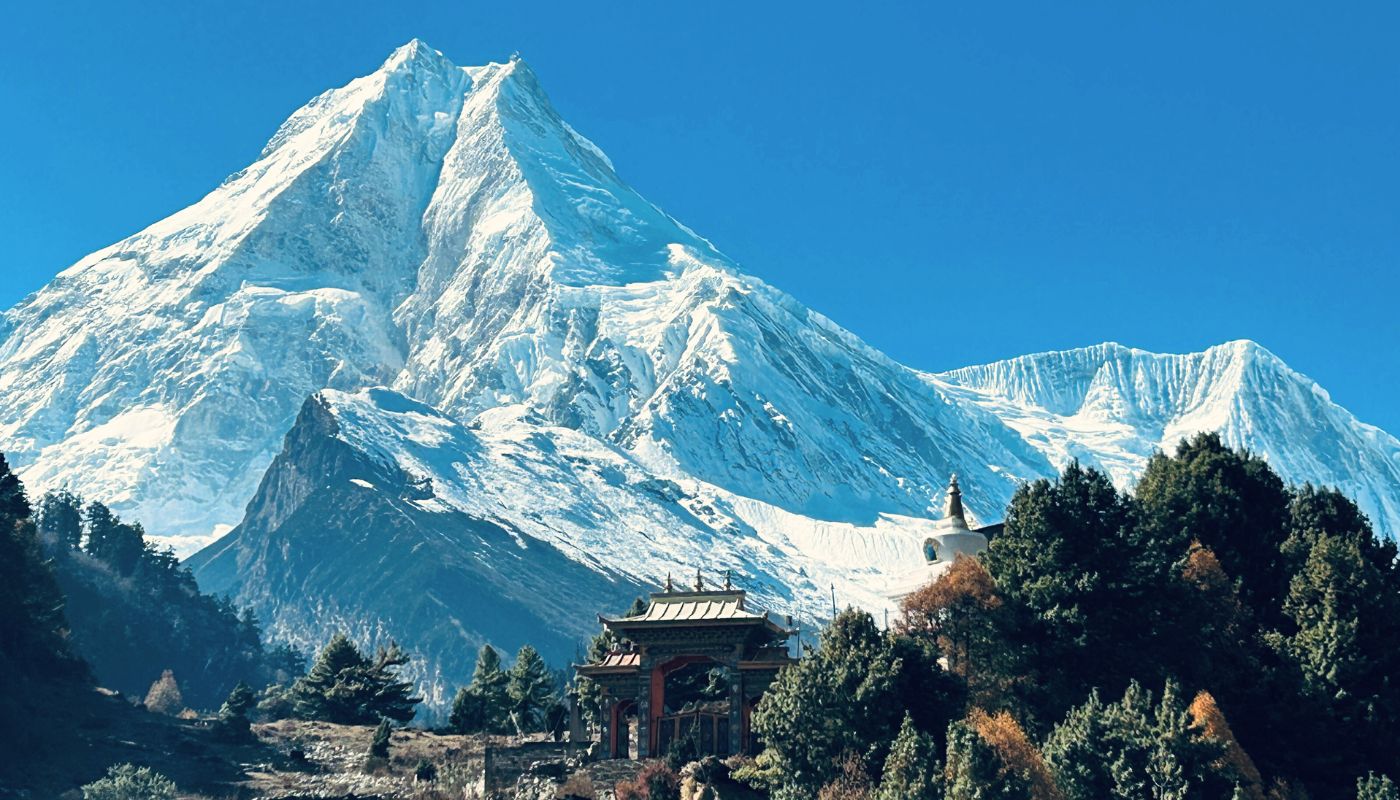
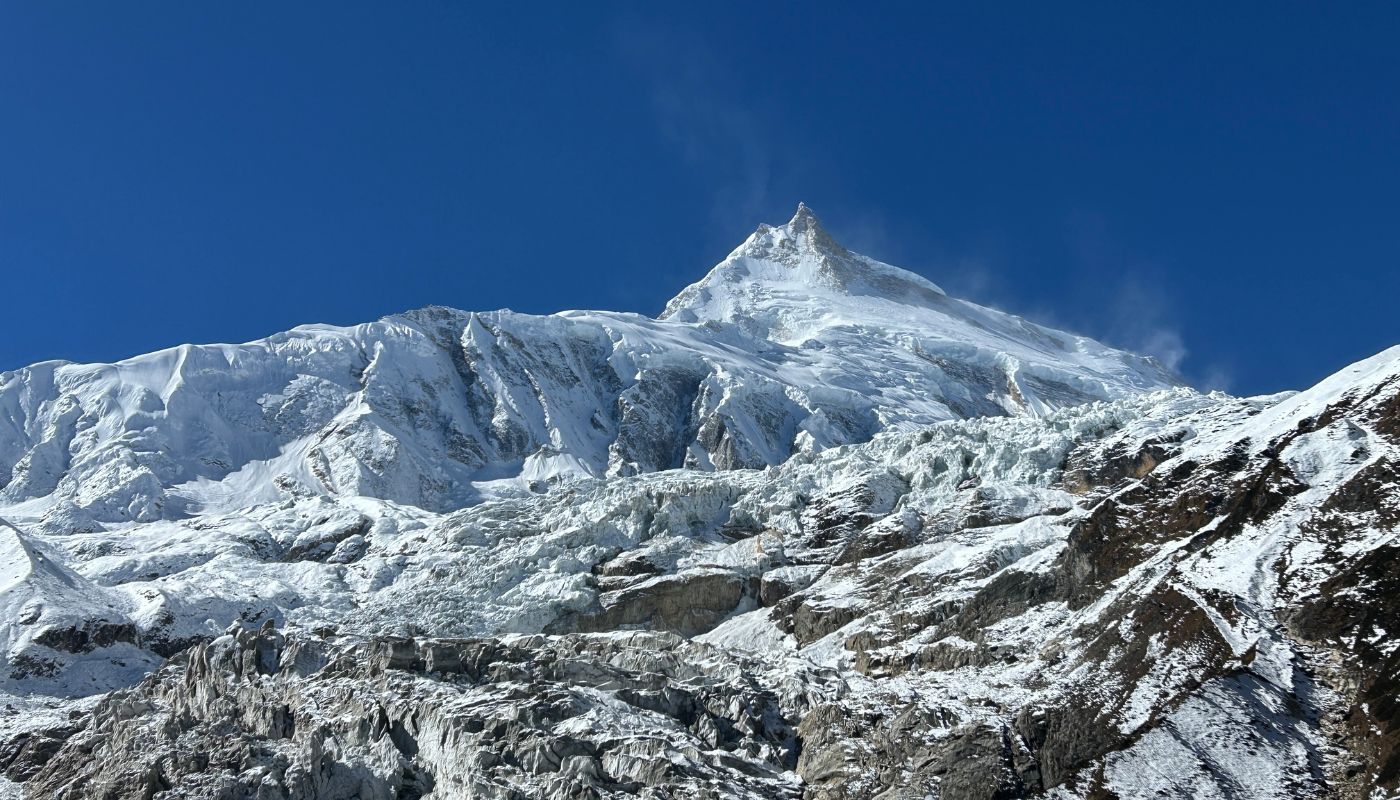
Mt. Manaslu (8,156 m) is the world’s 8th-highest peak and beautifully surrounded by the Manaslu Conservation Area. Manaslu Circuit Trek is one of the most popular treks among the avid trekkers. The trail lies to the north-west of the Kathmandu Valley. This adventurous trek takes you to the remote Himalayas of Nepal and rewards with the incredible mountain vistas. It is not as popular as Annapurna Base Camp Trek but you can experience the pure and unexplored region of Nepal.
Manaslu Circuit Trek starts from Arughat-Soti Khola and ends at Dharapani Besisahar. The trail follows a Budhi Gandaki river and passes through Machha Khola, Jagat, Philim and enter into the highlands mainly inhabited by people from Tibetan origin. You will see many small chortens, high mani walls, glaciers, and ancient Buddhist monasteries.
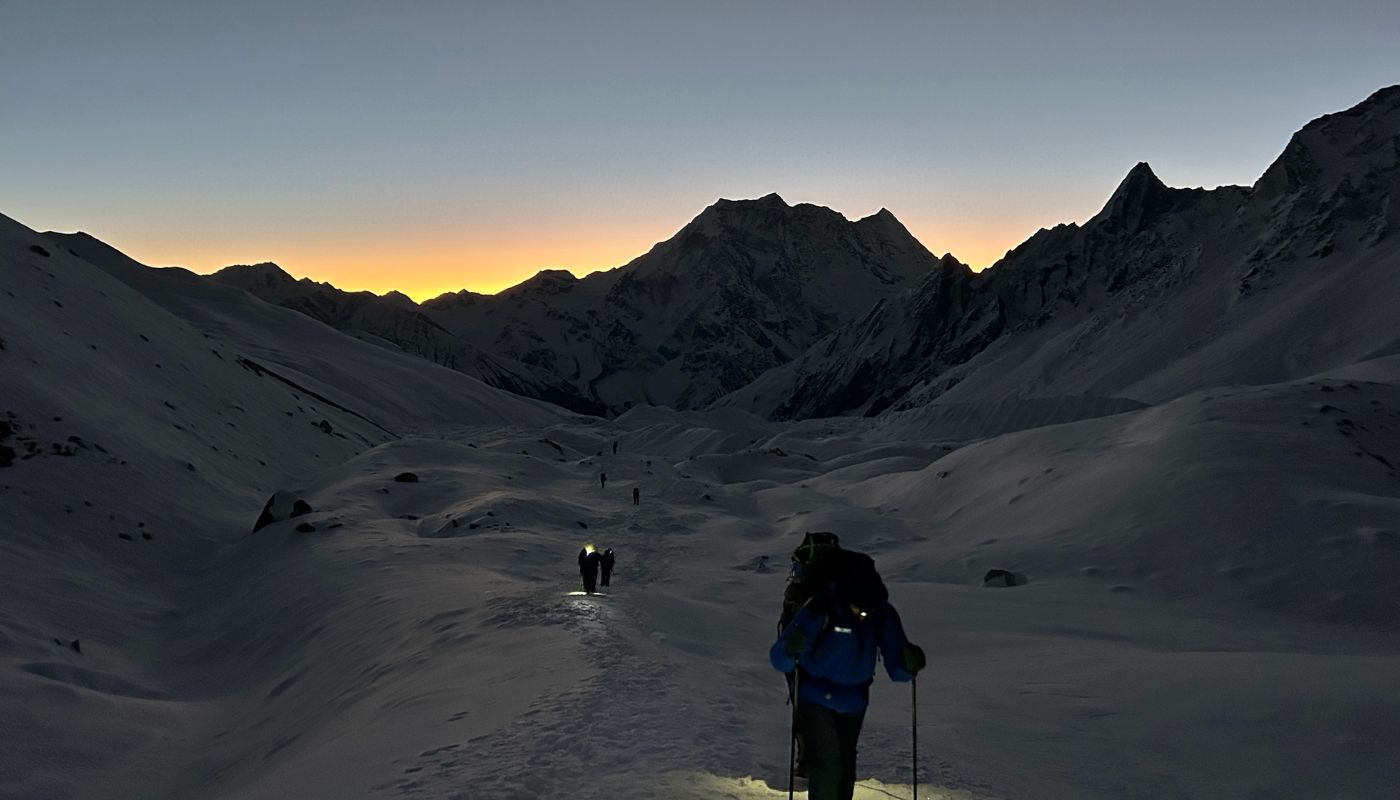
After Philim, the trek continues to the villages of Deng, Namrung, Lho, Sama Gaun, and finally reaches Samdo. Sama Gaon is the biggest settlement among all these villages. From Sama Gaun, you can take a side trip to Manaslu Base Camp or Punggyen Gompa. Larkya La Pass is the highest part of the trek at an altitude of 5,135 meters. From Larkya La Pass, you will get dramatic views of Annapurna II, Annapurna IV, Kang Guru, Himlung Himal, and Cheo Himal.
Moreover, around Manaslu Trek offers you a great chance to explore the unique culture and lifestyle of Tibetan Buddhist people. This wonderful trek to the high Himalayas lets you witness the hidden treasure of Nepal.
Nowadays, the Manaslu region is gaining more and more popularity. You can experience tea house trekking in the Manaslu region so it is not mandatory for camping while trekking. During the trek, you can experience the best hospitality and warm greetings which will make your trek more alluring and worthy.
The 17-day Manaslu Circuit Trek itinerary provides a well-paced and comfortable journey through this remote region, allowing trekkers to acclimatize properly while enjoying each village, scenic trail, and high mountain vista along the way.
Highlights of Manaslu Circuit Trek
- A scenic drive from Kathmandu to Soti Khola along the Prithvi Highway
- Breathtaking mountain views of Mt. Manaslu (8,163 m), Ganesh Himal (7,420 m), and other surrounding peaks along the Tibetan border
- Cross Larkya La Pass (5,135 m) – one of the dramatic passes of the Himalayas
- Walk through the Budi Gandaki Valley and cross several suspension bridges
- Experience a rich Buddhist culture
- A side trip to Manaslu Base Camp, Pungyen Gompa, and Birendra Lake
- Less crowded trail compares to other trekking regions of Nepal
Pick Up and Transfer to the Hotel
Welcome to the land of the Himalayas, Nepal! Upon your arrival at International Airport, our office representative will warmly greet you and drop you at the respective hotel. You can take rest and stroll around the hotel area on your own.
Overnight stay at Kathmandu.
Accomodation: Hotel
Duration: 30 min drive to hotel
Distance: Around 6 km
Drive from Kathmandu (1,400 m) to Arughat (600 m) to Soti Khola (710 m)
Today you will have 7-8 hours drive to Soti Khola at an altitude of 710 meters above sea level. Driving along with the Prithvi Highway you will reach Dhanding Bensi a district headquarter of Dhading. Continuing the drive you will reach Aarughat and then again take a bus drive to Soti Khola, an ideal place for a freshwater bath. You will spend a night at Soti Khola in a small village beside the river.
Accomodation: Lodge
Duration: 7-8 hours drive
Meal: Breakfast, Lunch, Dinner
Distance: 140 km by road
Trek from Soti Khola (710 m) to Machha Khola (900 m)
Today after breakfast at Soti Khola you will start your Manaslu Circuit Trek along with the great view of Buri Gandaki Valley. Passing through the suspension bridges, terraced fields, waterfalls, and finally after 6-7 hours of walk you will reach Machha Khola. You will spend a night at Machha Khola (900 m).
Accomodation: Lodge
Duration: 6-7 hours trek
Meal: Breakfast, Lunch, Dinner
Ascent: +190 m
Descent: -39 m
Distance: Around 8 km
Trek from Machha Khola (900 m) to Jagat (1,340 m)
Today, you will trek from Machha Khola to Jagat which will takes 5 to 6 hours. Passing through the several settlements of Gurung villages of Khorlabesi, Tatopani, Dovan, you will reach Jagat village. Overnight stay at Jagat.
Accomodation: Lodge
Duration: 5-6 hours trek
Meal: Breakfast, Lunch, Dinner
Ascent: +440 m
Descent: -50 m
Distance: Around 11 km
Trek from Jagat (1,340 m) to Deng (1,860 m)
After breakfast in Jagat, you will start your 17 Days Manaslu Circuit Trek with a climb along a rocky ridge. You will see the magnificent view of Sringi Himal. The trail leads through Ghatta Khola and reaches Phillim, a large Gurung village. From here, you will turn north and crosses millet fields to Ekle Bhatti. Now the trail enters a steep, uninhabited gorge and descends to the grassy slopes and here you will cross the Budhi Gandaki river.
First, you will walk along the west bank and then cross to the east bank and return to the west side. And the trail widens through the valley and passing through bamboo forests you will reach Deng Khola river. After crossing the river you’ll reach the small settlement of Deng. You’ll spend a night in Deng village.
Accomodation: Lodge
Duration: 4-5 hours trek
Meal: Breakfast, Lunch, Dinner
Ascent: 520 m
Descent: -60 m
Distance: Around 11 km
Trek from Deng (1,860 m) to Namrung (2,630 m)
Today you will head towards Namrung after having breakfast in Deng. You will trek towards one of the most important and culturally significant places of the trek. You will first cross the Budi Gandaki river and climb up to the bridge and join the trail from Bhi.
Continuing your walk towards west, the trail passes through green lush forests, alpine vegetation, and charming villages of the Manaslu region. Along with the amazing view of Siringi Himal, you will cross the Budi Gandaki river several times. Passing through several Gompas, the trail follows the river upstream through a forest trail and leads to the narrow gorge. Finally, after 4-5 hours of walk, you will reach the village of Namrung.
Accomodation: Lodge
Duration: 4-5 hours trek
Meal: Breakfast, Lunch, Dinner
Ascent: +770 m
Distance: Around 10 km
Trek from Namrung (2,630 m) to Lho (3,180 m)
Today you will head towards the villages of Lho enters into the higher altitude of 3,180 meters above the sea level. Walking through easy terrain, the trail climbs uphill until the village of Shyo.
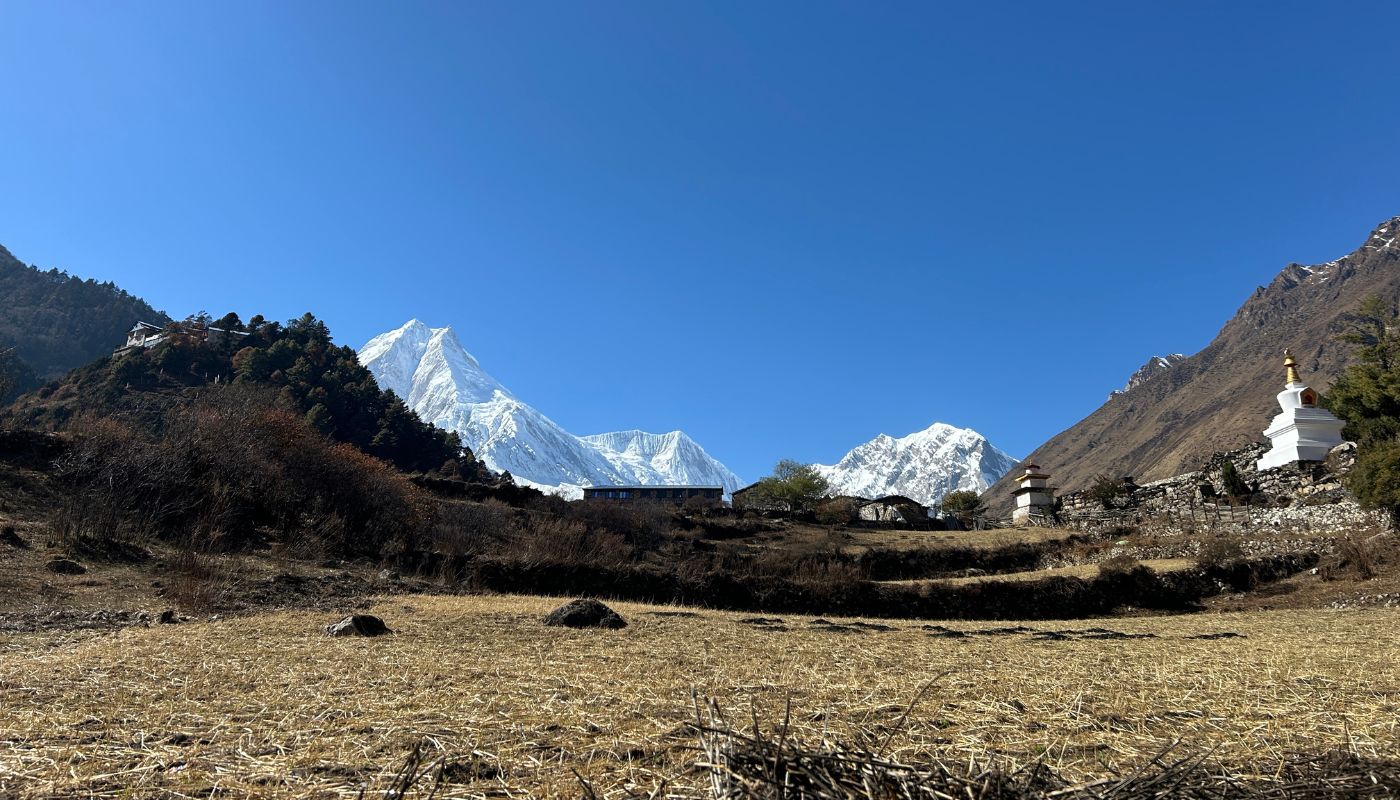
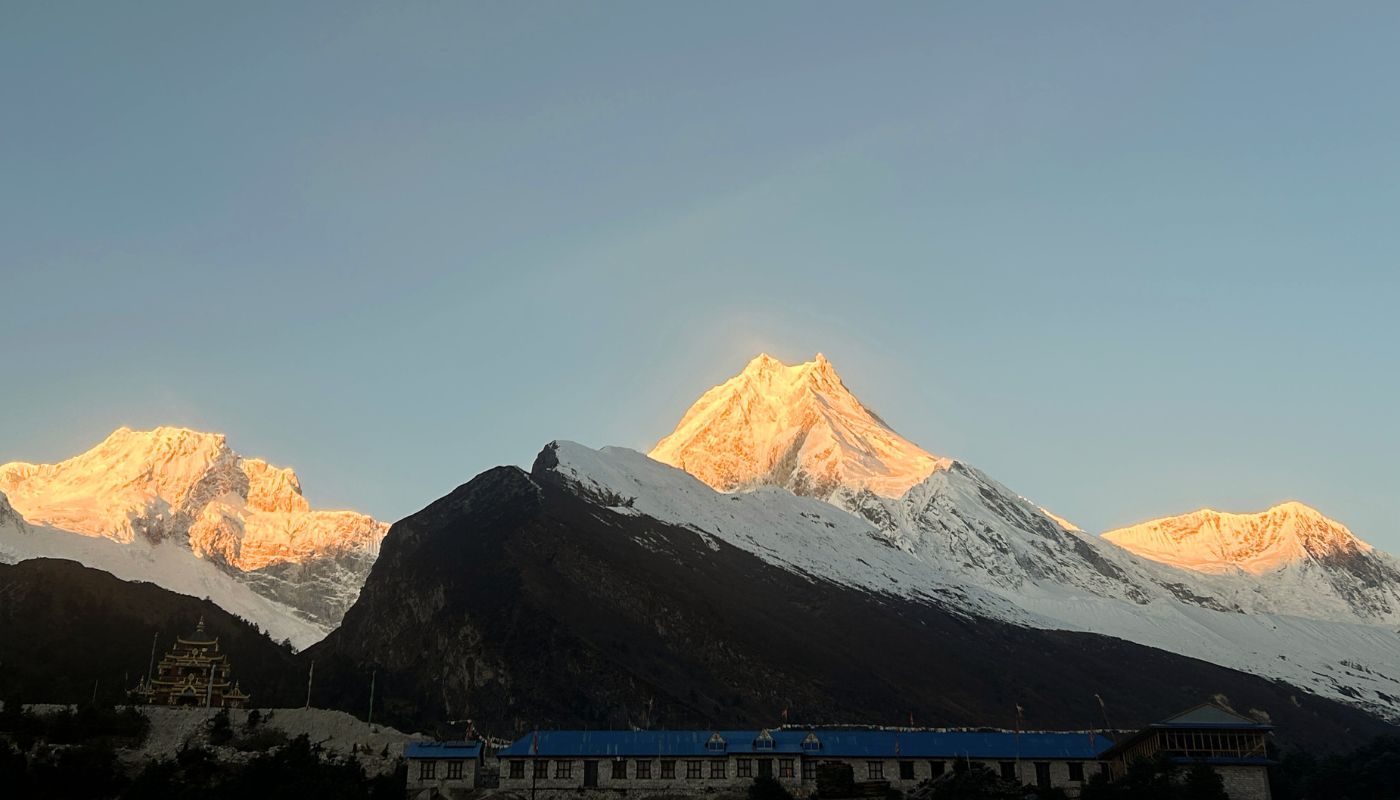
Soon you reach Lho, the village will reward you with the mouthwatering view of Mt. Manaslu (8,163 meters), 8th highest mountain in the world. Finally, after 4 hours of walk, you will spend a night at Lho village.
Accomodation: Lodge
Duration: 3-4 hours trek
Meal: Breakfast, Lunch, Dinner
Ascent: +550 m
Distance: Around 8 km
Trek from Lho (3,180 m) to Sama Gaun (3,530 m)
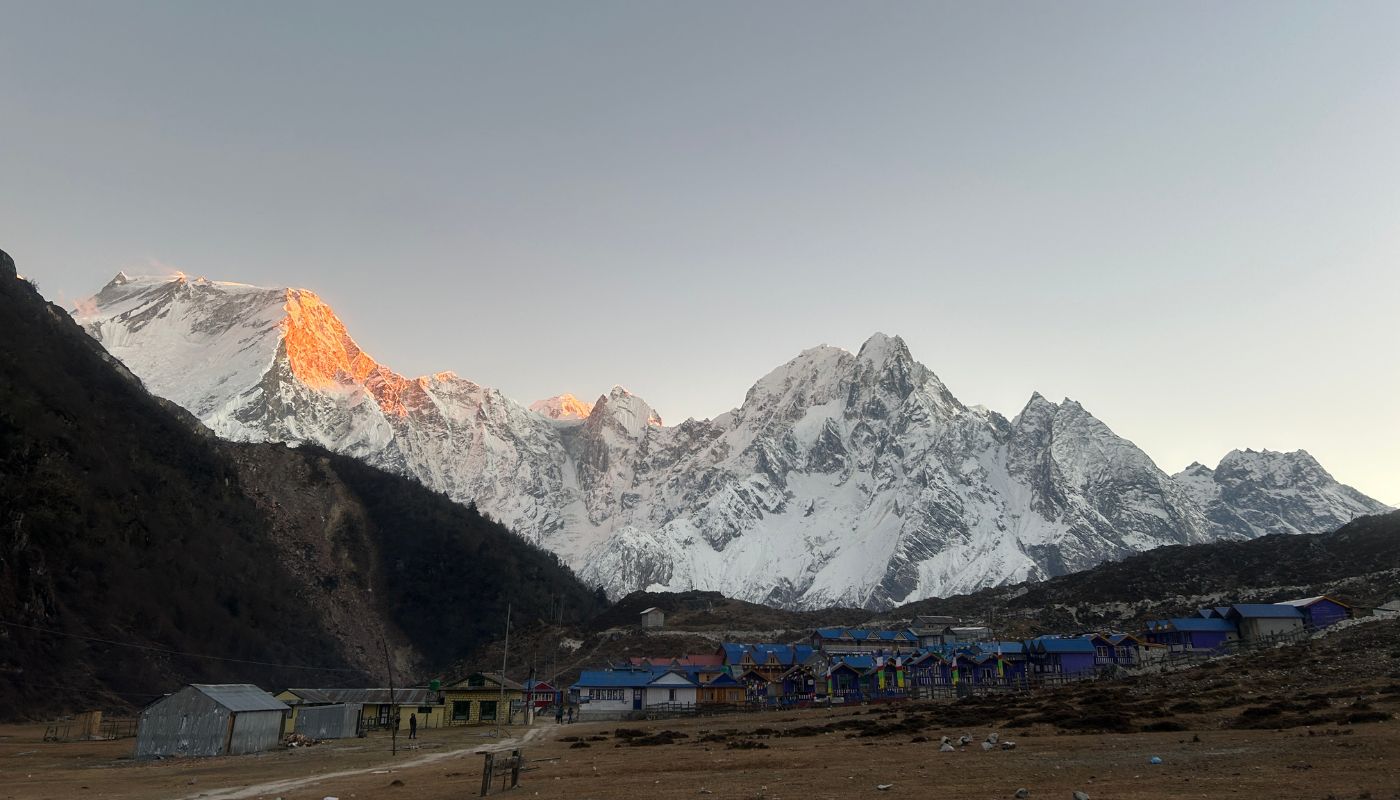
Today passing through several Tibetan settlement and ancient gompas you will enter the Nupri region. This place is mainly inhabited by the people descendants from Tibet. First, you arrive at Shyala (3,500 m) one of the best places to witness the majestic snow-clad peaks of Manaslu region. Mt. Manaslu, Naike Peak, Himchuli, and Ngadi Chuli are some of the main peaks you can see from the viewpoint.
Further, the trail crosses a ridge, enters and then quickly exits a side canyon. After descending onto a rocky moraine and crossing the boulder you will arrive Sama Gaon (3,514 m). Today is a short only 2-3 hours of a trek so once you reach Sama you can explore the village.
Overnight stay at Sama Gaon.
Accomodation: Lodge
Duration: 2-3 hours trek
Meal: Breakfast, Lunch, Dinner
Ascent: +350 m
Distance: Around 5 km
Rest day at Sama Gaun, visit Pung Gyen gompa or Birendra lake or both
Today is totally dedicated to acclimatization. Instead of taking rest you have options to trek to Manaslu Base Camp or Pung Gyen Gompa or Birendra Lake. So, after breakfast, you will descend to the Budhi Gandaki river and follow the trail until you reach a bridge. From here you will turn left and head towards Manaslu Base Camp.
Likewise, you can also opt for 3-4 hours of hike to Pung Gyen Gompa and 1-hour hike to Birendra Tal. otherwise, you can combine this both short hike. Along the way, you can enjoy the sight of thousands of mani walls. Also, an ancient gompa offers a great view of the glacier and the snow-clad mountains. After exploring some rich Sherpa culture during this day hike you will return to the tea house of the Sama Gaon for an overnight stay.
 Accomodation: Lodge
Meal: Breakfast, Lunch, Dinner
Accomodation: Lodge
Meal: Breakfast, Lunch, Dinner
Trek from Sama Gaun (3,530 m) to Samdo (3,875 m)
Today after early morning breakfast, you will descend to the Budhi Gandaki river and follow it till the bridge over a side stream. Passing through several mani walls and enjoying the superb mountain views you will get closer to the Tibetan border.
This day is an easy trek you will walk for 3-4 hours specially on the forest trail. Passing through forests of Juniper and Birch you will descend and cross the Budhi Gandaki on a wooden bridge. After a steep climb, you will continue your walk until you reach the village of Samdo (3,875 m). Overnight stay at Samdo.
Accomodation: Lodge
Duration: 3-4 hours trek
Meal: Breakfast, Lunch, Dinner
Ascent: +345 m
Distance: Around 6 km
Trek from Samdo (3,875 m) to Dharamsala (4,460 m)
Today you will begin your Manaslu Circuit Trekking descending on a wide trail. You will cross a wooden bridge over the Budhi Gandaki river. On the way, you will notice mani walls and prayer flags. After crossing the Athara Saya Khola and you will continue your walk along the Larke Khola. You will get the awe-inspiring view of Larkya Glacier. Finally, after 3-4 hours of a continuous climb, you will reach Dharamsala. It lies in the mountain slope at an altitude of 4,460 meters above the sea level.
Overnight stay at Dharamsala.
Accomodation: Lodge
Duration: 3-4 hours trek
Meal: Breakfast, Lunch, Dinner
Ascent: +585 m
Distance: Around 6 km
Trek from Dharamsala (4,460 m) to Bimtang (3,720 m) via Larke Pass (5,160 m)
Today you will head towards the Larke La Pass (5,160 m), the highest point of the trek and descend towards Bimthang (3,720 m). En route, you will enjoy the amazing snow clad mountain views, lake, and beautiful glacier.
Further, following the rocky steep trails, you will come across moraines of glacier. Finally, after 5 hours of climb, you will reach the top of the pass and gaze the superb views fo Himling Himal, Cheo Himal, Kang Guru, and Mt. Annapurna II. After having a wonderful time now you will descend through slippery trails towards Bimtang. Before reaching Bimtang, on the west side of the trail, you can witness beautiful Pongkar Lake.
Now, after walking for 3 hours from the pass you will reach Bimtang village for an overnight stay. It is a small beautfiul village located between Bimtang Glacier and the slopes of Larke Himal.
Accomodation: Lodge
Duration: 7-8 hours trek
Meal: Breakfast, Lunch, Dinner
Ascent: 700 m (Dharamsala to Larke Pass 5,160 m)
Descent: -1,440 m (Larke Pass to Bimtang 3,720 m)
Distance: Around 19 km
Trek from Bimtang (3,720 m) to Tilje (1,700 m)
Today you will have breakfast at Bimtang and continue your trek towards Tilje along the Dudh Koshi river. Enjoying the mesmerizing view of the glacier, mountain views, and colorful vegetation you will reach diverge of Dudh Koshi. Here you will cross the river on a wooden bridge and enter into the forest of firs and rhododendron. Continuing your walk along the bank of the river you will reach the village of Gho and continue towards Tilje. It is a Gurung village which is famous for brandy.
Overnight stay at Tilje.
Accomodation: Lodge
Duration: 4-5 hours trek
Meal: Breakfast, Lunch, Dinner
Ascent: +120 m
Descent: -2,020 m
Distance: Around 13 km
Trek from Tilje (1,700 m) to Jagat (1,340 m)
Today leaving behind the stone village of Tilije you will join the famous Annapurna Circuit trail at Dharapani. The walk is mostly downhill and takes around approximately 5-6 hours to reach Jagat (1,340 m). Overnight stay at Jagat.
Accomodation: Lodge
Duration: 5-6 hours trek
Meal: Breakfast, Lunch, Dinner
Ascent: +200 m
Descent: -560 m
Distance: Around 16 km
Trek from Jagat (1,340 m) to Bhulbhule (840 m)
Today is the last day of your trek so enjoying every bit of moment you will trek to Bahundanda. On the way, you will cross the bridge over the Marshyangdi river. From here you will continue your walk down to BhulBhule (840 m) for an overnight stay.
Accomodation: Lodge
Duration: 5-6 hours trek
Meal: Breakfast, Lunch, Dinner
Ascent: +100 m
Descent: -600 m
Distance: Around 15 km
Drive from Bhulbhule (840 m) to Kathmandu (1,400 m) and overnight at Kathmandu hotel
Today you will drive from Bulbhule to Kathmandu via Besisahar. Throughout the scenic drive, you will witness the beautiful flowing Marsyangdi and Trishuli river along the Prithvi highway. Once you reach Kathmandu, your guide will drop you at the respective hotels. You can spend the rest of time on your own. Overnight stay at Kathmandu.
Accomodation: Hotel
Duration: 7-8 hours drive
Meal: Breakfast
Distance: Around 140 km
Final departure to an International Airport
Today is the final day in your Nepal. You can do some last-minute shopping and buy some souvenirs taking back home to your loved ones. You will be given a certificate of achievement for completing the Manaslu Circuit Trek. According to your flight schedule, our office representative will drop you at the International Airport for your final flight back to your home country.
Duration: 30 minutes drive from hotel to airport
Meal: Breakfast
Distance: Around 6 km
Fixed Departure
Cost Includes
- Airport pick up and drop upon international arrival and departure.
- Restricted area permits,(ACAP, MCAP) Permit, and TIMS card fees.
- 3 Night accommodation in Kathmandu with Breakfast. during the trek in Kathmandu On BB.
- English speaking trekking guide with their necessary insurance, and accommodation meals allowance and salary.
- Trekking porter with their necessary insurance, and accommodation meals allowance and salary.
- 3 meals per day and overnight accommodation in tea house lodge along the trail.
- Overland transport by BUS/JEEP/CAR/VAN as per mention in the itinerary.
- Free company’s duffel bag, and T-shirt.
- First aid kid box for emergency use.
- all kinds of taxes and government fees.
- Company’s service charge.
Cost Excludes
- International flight ticket and airport tax, Nepal Entry Visa Fees.
- Lunch and dinner at Kathmandu and way of driving.
- Travel / medical insurance and emergency evacuation cost(this is compulsory for emergency use)
- All kinds of drinks, bar bills and Personal expenses such as laundry, telephone calls, alcoholic beverages, bottled drinks (including cold drinks and mineral/hot)
- Tips for guide/potter/staff.
- Additional costs- extra days stay, in case of flight cancellation due to the natural calamities, bad weather forecast, and other unforeseen circumstances
- Additional tour not included in the itinerary.
Temperature Chart
Altitude Chart
Useful Info
Trekking Permits for Manaslu Circuit Trek
The Manaslu Circuit Trek lies within a restricted trekking region of Nepal so you need a trekking permit to access this trek. Solo treks are not allowed, so you need at least two people in a group. You need a Restricted Area Permit (RAP), Manaslu Conservation Area Permits (MCAP), and Annapurna Conservation Area Permit (ACAP).
Best Time for Manaslu Circuit Trek
The best time for Manaslu Circuit Trek is September-November of Autumn season and March-May of Spring season. This both seasons has the perfect weather. There is no rain and the temperature are not too hot or not too cold. During spring, the temperature starts to rising and the lovely colorful rhododendron flowers at their full blooming state to please you throughout the trail.
Likewise, the autumn season is another best time for Manaslu Circuit Trek. During this time of the year, you will see no rainfall with clear sky with awe-striking mountain views. Also, if the cold weather doesn’t bother you then the winter is also a perfect time for unexpected views of Himalayan beauty.
Difficulty Level of Manaslu Circuit Trek
Manaslu Circuit Trek is a moderately strenuous trek and a bit challenging for fit and experienced trekkers as well. Previous trekking experience can add advantage to participate in the Manalsu Circuit Trek. You need to prepare yourself to walk at a higher altitude with a light daypack. Our designed itinerary allows the best possible acclimatization but make sure you are physically as well as mentally prepared for the trek.
Packing for Different Seasons
Packing for the Manaslu Circuit Trek depends heavily on the season you plan to trek, as temperatures and weather conditions vary greatly.
During spring (March-May), the weather gradually warms up, and the rhododendron forests bloom with vibrant colors. Light trekking clothes, breathable layers, and a good sunhat are essential for daytime walks, while a warm jacket and thermal layers are needed for cold mornings and evenings, especially at higher altitudes. Trekking boots, gaiters, and good-quality socks are a must for uneven trails.
During autumn (September-November), the weather is generally dry and stable, with clear skies and excellent mountain views. Layering is key in this season as days can be warm but nights are chilly. A down jacket, gloves, and woolen hat are recommended for higher passes like Larkya La.
In winter (December-February), temperatures can drop significantly, especially above 3,500 meters. Heavy insulation layers, thermal innerwear, and windproof jackets are necessary to stay warm. Snow can make trails slippery, so trekking poles, crampons, and warm gloves are strongly recommended.
Regardless of the season, essentials like a good daypack, water bottles, sunscreen, sunglasses, headlamp, and a basic first-aid kit should always be included. Careful seasonal packing ensures comfort, safety, and enjoyment throughout the trek.
Why Choose Manaslu Circuit Trek over Other Treks
The Manaslu Circuit Trek offers a unique and less crowded trekking experience compared to the more popular Annapurna Circuit and Everest Base Camp treks. While Annapurna Circuit and EBC are well-established with heavy tourist traffic, the Manaslu region remains relatively unexplored, allowing trekkers to enjoy pristine landscapes, authentic Himalayan culture, and peaceful trails. This trek combines moderate to challenging trekking with rewarding high-altitude vistas, including the dramatic Larkya La Pass at 5,135 meters, which provides panoramic views of peaks like Annapurna II, Himlung Himal, and Cheo Himal.
Unlike the Annapurna Circuit, which is slightly more commercialized, or Everest Base Camp, which can feel crowded, Manaslu Circuit offers a balance of adventure, cultural immersion, and solitude. The route passes through remote Tibetan Buddhist villages, monasteries, chortens, and mani walls, giving trekkers a deep insight into local life and traditions.
Additionally, the 17-day itinerary allows proper acclimatization and a well-paced journey, making it suitable for both experienced trekkers and those looking for a high-altitude adventure in an untouched region. For trekkers seeking breathtaking scenery, cultural richness, and a genuine off-the-beaten-path Himalayan experience, the Manaslu Circuit Trek stands out as a top choice.
FAQ
What is the Manaslu Circuit Trek?
The Manaslu Circuit Trek is a high-altitude trekking route in the Nepal Himalayas that circles Mt. Manaslu (8,156 m), the world’s 8th-highest peak. The trek passes through remote villages, dense forests, glaciers, and high mountain passes such as Larkya La Pass (5,135 m). Unlike more popular treks like Annapurna Circuit or Everest Base Camp, it is less crowded, offering an authentic Himalayan experience with Tibetan Buddhist culture, traditional settlements, and spectacular mountain views.
How long is the Manaslu Circuit Trek?
The full trek typically takes 17 days, starting from Arughat/Soti Khola and ending at Dharapani Besisahar. This itinerary includes proper acclimatization, scenic stops in villages such as Jagat, Philim, Sama Gaun, Samdo, and the challenging Larkya La Pass. It allows trekkers to complete the circuit comfortably while minimizing the risk of altitude sickness.
What is the perfect time to do the Manaslu Circuit Trek?
The perfect time to trek Manaslu is during Spring (March-May) and Autumn (September-November). In spring, rhododendrons bloom in vibrant colors, and daytime temperatures are moderate. Autumn offers clear skies, stable weather, and spectacular mountain views. Winter can also be suitable for experienced trekkers seeking fewer crowds, but temperatures drop significantly above 3,500 meters. Monsoon season (June-August) is generally avoided due to heavy rainfall and slippery trails.
Which trekking permits are required for the Manaslu Circuit Trek?
Since the Manaslu region is a restricted area, trekkers need:
- Restricted Area Permit (RAP): mandatory for foreign trekkers.
- Manaslu Conservation Area Permit (MCAP): allows entry into the protected area.
- Annapurna Conservation Area Permit (ACAP): required for the lower section near Dharapani/Besisahar.
Is it hard to trek to Manaslu Circuit?
The trek is considered moderately strenuous to challenging, suitable for physically fit and experienced trekkers. Daily walks range from 4-8 hours, often at high altitudes with steep ascents and descents. Previous trekking experience is helpful but not mandatory if you are well-prepared physically and mentally. Proper acclimatization along the itinerary helps reduce the risk of altitude sickness.
How high is Larkya La Pass?
Larkya La Pass is the highest point of the Manaslu Circuit Trek, at 5,135 meters (16,837 ft). Crossing this pass is the most challenging part of the trek, offering panoramic views of peaks like Annapurna II, Himlung Himal, Cheo Himal, and Kang Guru. Trekkers must be well-acclimatized and physically prepared for this day.
How much does the Manaslu Circuit Trek cost?
The cost varies depending on guides, porters, permits, and tour operators, but typically ranges from $1,200 to $1,800 per person for a 17-day trek with guided services. Costs include permits (RAP, MCAP, ACAP), accommodation, food, transportation to and from the trailhead, and a guide and porter. Independent trekking may reduce costs but requires arranging all logistics personally.

Our History in Service Excellence