

Island Peak Climbing with Everest Base Camp Trek
 (598 reviews in Google)
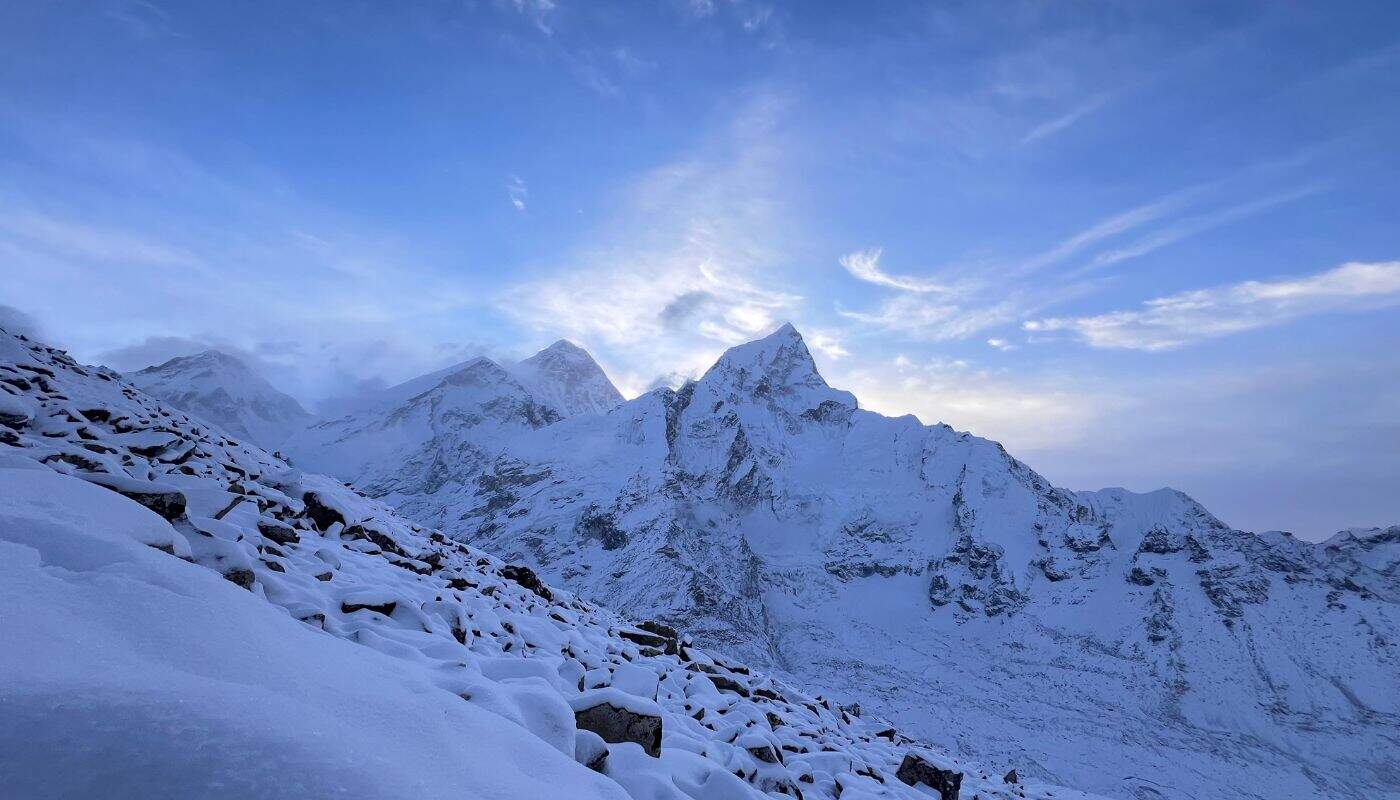
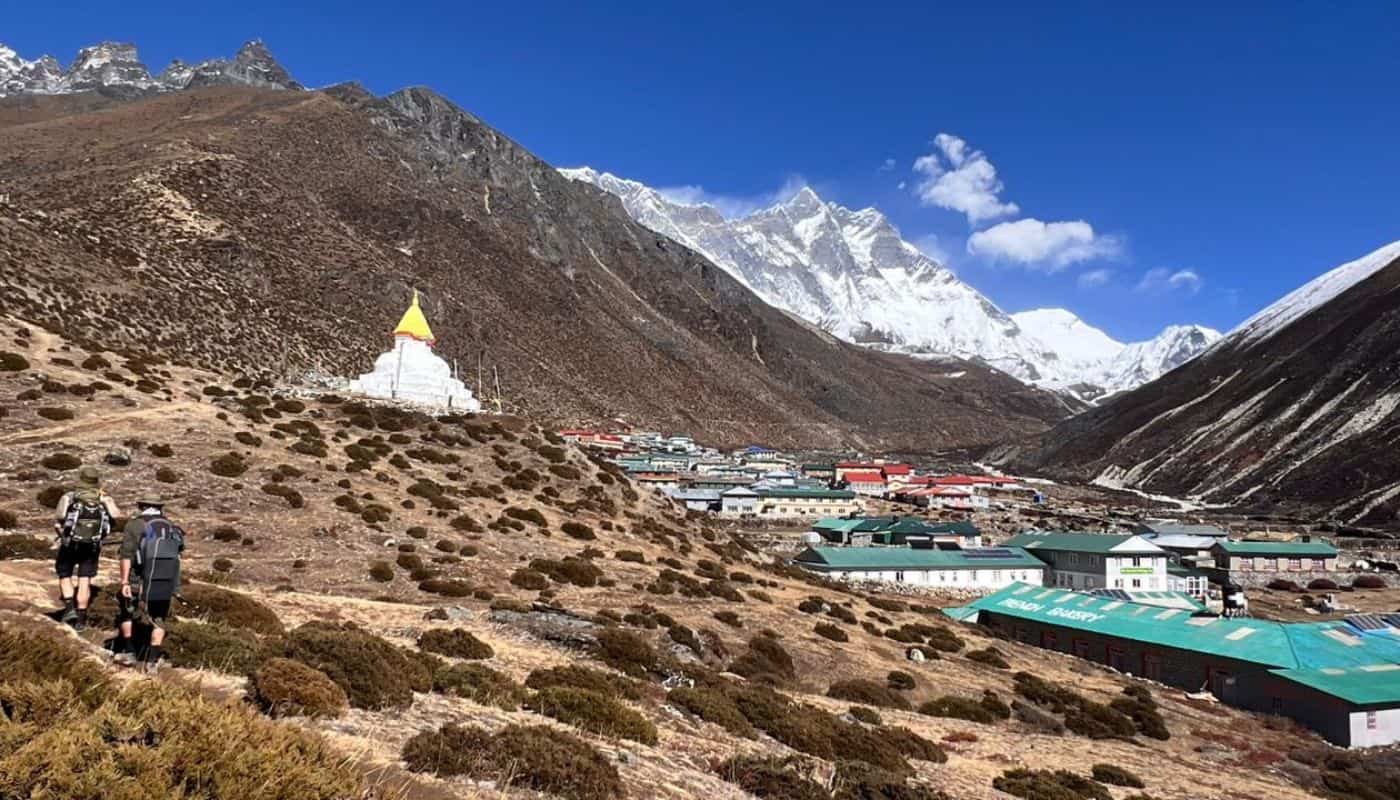
Island Peak is the most popular trekking peak in Nepal also known locally by Imja Tse Peak. From Dingboche, it looks like an island in a sea of ice. The summit is spectacular and attractive with a highly glaciated west face rising from the Lhotse Glacier. The ridge rising to the south from this point leads to the summit of Island Peak. Besides that, Island Peak Climbing with Everest Base Camp Trek is a popular training peak for Mount Everest Climbers.
The extension of this ridge descending south-west is the part of the normal route leads to the South Summit. From the summit of this interesting Peak, all the giant mountains of Everest region; which includes Nuptse (7,879m), Lhotse (8,501m), Lhotse Middle Peak and Lhotse Shar can be vividly seen.
Journey to Island Peak Climbing with Everest Base Camp Trek starts from Lukla; you then follow the trail through Namche Bazaar, Tengboche, Dingboche, Gorak Shep, Kalapathar, Everest Base Camp; and finally Island Peak Base Camp. Routes to Imja Tse Climbing with Everest Base Camp Trek passes through amazing viewpoints such as Kalapathar and EBC; from where you can close panoramic views of Mount Everest along with Makalu, Ama Dablam, Nuptse, Lhotse, Cho Oyu, etc.
Enjoy the rich vegetation, wildlife, rhododendron, and oaks forest of Sagarmatha National Park (a World Heritage Site). Feel the touch of cool fresh air coming from the glacier lakes and forests. Religious prayer flags along the suspension bridges, stone-carved chants, religious prayer wheels, stupas, etc make this trip divine and spiritual.
Climbing Imja Tse (Island Peak) has two options; start climbing from Base Camp (5,087m) called Pareshya gyab around 2 A.M. Next is ascend from High Camp (5,600m) to reduce extra efforts.
Besides Imja Tse Climbing, you can also have Mera Peak Climbing.
Highlights of Island Peak Climbing with Everest Base Camp Trek
- Visit sacred monasteries, including Tengboche Monastery, the spiritual heart of the Khumbu region.
- See Lhotse (8,516 m), Nuptse (7,861 m), Ama Dablam (6,812 m), Makalu (8,485 m) and Cho Oyu (8,188 m).
- Witness breathtaking viewpoints from Kala Patthar and Everest Base Camp, offering close-up panoramic views of Mount Everest and surrounding Himalayan peaks.
- Enjoy the landscape of the Lhotse Glacier and Imja Glacier
- Climb Island Peak (6,189 m) in the Everest region.
- Combine Everest Base Camp Trek with peak climbing.
- Enjoy close views of Mount Everest (8,848.86 m).
- Trek through Namche Bazaar and Dingboche.
- Walk inside Sagarmatha National Park (UNESCO World Heritage Site).
- Experience glacier and snow climbing.
Arrival Kathmandu & transfer to hotel
Our Nepal Hiking Adventure representative will meet you at Tribhuwan International Airport and drop you to your hotel at Thamel. In the evening, we will have a small meeting on Island Peak Climbing; later you can explore the streets of Thamel.
Accomodation: Hotel
Duration: 30 min drive from airport to hotel
Distance: Around 6 km
Scenic flight from Kathmandu (1,400 m) to Lukla (2,860 m) and then trek to Phakding (2,610 m)
Your Island Peak Climbing with Everest Base Camp Trek journey starts from an early morning scenic flight from Kathmandu Airport to Lukla Airport (Tenzing Norgay Airport), which takes about 35 minutes. On the way to Lukla, you can have a wonderful glimpse of the hilly region of Nepal. From the air, you can see a beautiful green forest, water streams, and rivers flowing, ethnic settlements, clouds flowing across the hills.
Landing on Lukla, you can have your first glimpse of Everest along with other peaks. From Lukla, you start trek to Phakding. You walk along the Dudh Kosi river, crossing sacred stone carved chants, religious wheels, and stupas. After 3-4 hours of walking, you reach Phakding for overnight stay.
 Accomodation: Lodge
Duration: 35 minutes flight & 3-4 hours trek
Meal: Breakfast, Lunch, Dinner
Ascent: +120 m
Descent: -60 m
Distance: Around 8 km
Accomodation: Lodge
Duration: 35 minutes flight & 3-4 hours trek
Meal: Breakfast, Lunch, Dinner
Ascent: +120 m
Descent: -60 m
Distance: Around 8 km
Trek from Phakding (2,610 m) to Namche Bazaar (3,440 m)
From Phakding after having breakfast, our day starts off walking along the ridge of Dudh Kosi river. Trails to Namche Bazaar is full of nature; you pass across alluring oaks, pines, junipers and rhododendron forest. You cross multiple suspension bridges over the Dudh Kosi and Imja river and reach the entrance of Sagarmatha National Park.
Entering Sagarmatha National Park requires permits, entering here showcase the unique wildlife ecosystem of this region. This UNESCO World Heritage site is home to numerous flora and fauna of the Everest region. After crossing the highest suspension bridge of Hillary, you make a steep climb to the street of Namche Bazaar. Namche Bazaar is the capital of the Khumbu District. Overnight at Namche Bazaar lodge.
Accomodation: Lodge
Duration: 5-6 hours trek
Meal: Breakfast, Lunch, Dinner
Ascent: +840 m
Descent: -10 m
Distance: Around 9 km
Acclimatization at Namche Bazaar (3,440 m)
It is a day for resting as well as acclimatization. Namche Bazaar is the largest Sherpa settlement in Nepal. At Namche, you can explore the local markets, mountain view cafes, and restaurants, museums, etc. From Namche, you can wonderful views of Everest, Nuptse, Ama Dablam, etc.
Today, you will hike to Everest View Hotel (3,880 m) at Syanboche where you can enjoy breakfast and lunch of your lifetime. Enjoy your food with beautiful snow-capped Himalayan Ranges. You can even visit Khumjung Village where you can explore this remote village’s culture and lifestyle. Overnight at Namche Lodge.
Accomodation: Lodge
Duration: Half-day activities, rest, and short hikes
Meal: Breakfast, Lunch, Dinner
Ascent: +300 m
Descent: -300 m
Distance: Around 4 km
Trek from Namche Bazaar (3,440 m) to Tengboche (3,860 m)
After having breakfast at Namche, we head towards the land of the largest monastery of Khumbu district. The trails start with a decent walk through the woods and off beaten roads to Phunki. From here, the path rises up to the village of Tengboche. You will reach to Tengboche after 4 to 5 hours of walking. Upon reaching Tengboche, you can observe more snow-capped peaks even closer than Namche. You can visit the Tengboche Monastery and pray for the success of this trip. Overnight at Tengboche Lodge.
Accomodation: Lodge
Duration: 4-5 hours trek
Meal: Breakfast, Lunch, Dinner
Ascent: +420 m
Distance: Around 8 km
Trek from Tengboche (3,860 m) to Pheriche (4,270 m)
Today, you will trek from Tengboche (3,860 m) to Pheriche (4,270 m), a route that gradually ascends through some of the most picturesque landscapes in the Everest region. The trail takes you through dense rhododendron and pine forests, dotted with small Sherpa villages where you can observe local life and traditional stone houses. Along the way, you will pass mani walls, prayer flags, and small Buddhist stupas, which give the trek a spiritual and cultural feel. The path also includes a few suspension bridges over glacial streams, adding a touch of adventure and excitement.
As you climb higher, the views of Ama Dablam (6,812 m), Thamserku (6,623 m), Kangtega (6,782 m), and other Himalayan giants become more dramatic, providing excellent photo opportunities. Pheriche itself is a small yet significant village, often used as an acclimatization stop to help trekkers adjust to the altitude. The village has basic tea houses, lodges, and a Himalayan Rescue Association clinic, ensuring safety and comfort at this high altitude. Spending the night here helps your body prepare for higher altitudes toward Lobuche, Everest Base Camp, and Island Peak Base Camp, reducing the risk of altitude sickness.
Overnight stay is in a lodge in Pheriche, where you can relax, enjoy warm meals, and soak in the serene Himalayan environment.
Accomodation: Lodge
Duration: 5-6 hours trek
Meal: Breakfast, Lunch, Dinner
Ascent: +410 m
Distance: Around 10 km
Acclimatization at Pheriche (4,270 m)
Today is an acclimatization day at Pheriche that helps your body adjust to the high altitude before ascending to higher camps. You will do a short hike to nearby ridges or hills surrounding Pheriche, gaining additional views of Ama Dablam, Nuptse, and Lobuche peaks. This gentle climb and descent help your body adapt to thinner air while keeping your muscles active.
During this day, you can also explore the village, interact with locals, and learn about Sherpa culture. The Himalayan Rescue Association clinic in Pheriche is available for any health concerns, ensuring safety at this altitude. Spending a night here prepares you physically and mentally for the trek to Lobuche, Gorak Shep, and ultimately Island Peak Base Camp. Overnight stay at a lodge in Pheriche.
Accomodation: Lodge
Duration: Half-day hike and rest
Meal: Breakfast, Lunch, Dinner
Ascent: +300 m
Descent: -300 m
Distance: Around 4 km
Trek from Pheriche (4,270 m) to Lobuche (4,910 m)
Today, you will trek from Pheriche (4,270 m) to Lobuche (4,910 m), entering the higher reaches of the Everest region where the air becomes thinner and the landscapes more rugged. The trail passes through a mix of rocky paths, glacial moraine, and scattered alpine vegetation, offering stunning views of some of the world’s tallest peaks, including Ama Dablam (6,812 m), Pumori (7,161 m), Nuptse (7,879 m), and Khumbu Icefall in the distance. Along the way, you will notice numerous stone memorials and prayer flags, which are dedicated to climbers who lost their lives on Mount Everest and nearby peaks, adding a sense of reverence and reflection to the trek.
The trek gradually ascends, with a few steeper sections that require careful pacing, making it important to take short breaks, drink plenty of water, and adjust to the higher altitude. Wildlife such as Himalayan snowcock and musk deer may occasionally be spotted along the trail, adding to the natural beauty. Lobuche itself is a small settlement of simple tea houses and lodges, serving mainly trekkers heading to Everest Base Camp or Island Peak Base Camp. Despite the basic facilities, it offers warm meals, resting areas, and spectacular views of the surrounding Khumbu Himalayas, providing an excellent acclimatization stop.
Overnight at a lodge in Lobuche allows you to rest and prepare your body for the next day’s trek to Gorak Shep and Everest Base Camp.
Accomodation: Lodge
Duration: 5-6 hours trek
Meal: Breakfast, Lunch, Dinner
Ascent: 640 m
Distance: Around 9 km
Trek from Lobuche (4,910 m) to Gorak Shep (5,170 m), Hike up to Kalapatthar (5,545 m), and return to Gorak Shep (5,170 m)
Today is one of the most memorable days of the Everest Base Camp and Island Peak trek. You will trek from Lobuche (4,910 m) to Gorak Shep (5,170 m), the last stop before Everest Base Camp. The trail passes through rocky and glacial terrain, offering closer views of Pumori (7,161 m), Nuptse (7,879 m), and the Khumbu Glacier. After you reach to Gorak Shep, you will leave your main gear at the lodge and begin a steep hike to Kalapatthar (5,545 m), which is renowned for providing the best panoramic views of Mount Everest (8,848 m), Lhotse (8,501 m), Nuptse, and Ama Dablam.
The hike to Kalapatthar is physically demanding due to the altitude, but the 360-degree Himalayan panorama at sunrise or morning makes the effort worthwhile. After capturing unforgettable photos and soaking in the views, you will descend back to Gorak Shep (5,170 m) for an overnight stay at a lodge. This day also serves as an excellent acclimatization and preparation for the Island Peak climb, as your body gets used to high-altitude trekking above 5,000 meters. The experience combines thrilling adventure, breathtaking scenery, and a sense of accomplishment that makes it a highlight of the Island Peak with EBC trek.
Accomodation: Lodge
Duration: 6-7 hours trek
Meal: Breakfast, Lunch, Dinner
Ascent: +635 m to Kalapatthar
Descent: -635 m back to Gorak Shep
Distance: Around 12 km
Trek from Gorak Shep (5,170 m) to Everest Base Camp (5,364 m) and return to Lobuche (4,910 m)
After having breakfast, we start our journey to Everest Base Camp. Everest Base Camp is a popular destination for Everest Base Camp trek / EBC Trek. Everest Base Camp is the closest point where you can have face to face encounter with Mt. Everest without climbing. On reaching Everest camp, you can see the smiles and happiness on trekkers face, some taking photographs and videos; while some are just enjoying the eternal beauty of Everest. Then, you return back to Lobuche and overnight there.
Accomodation: Lodge
Duration: 7-8 hours trek
Meal: Breakfast, Lunch, Dinner
Ascent: +194 m
Descent: -454 m
Distance: Around 12 km
Trek from Lobuche (4,910 m) to Chukkung (4,730 m)
Our day to Chukkung starts walking along the edges of the Khumbu glacier until we reach Kongma La Pass Camp. From here, we take a difficult steep walk over the Kongma La Pass. Kongma La Pass is the most difficult one among the Three High Passes of Everest region. This pass lies on a famous trail of Everest Three Passes Trek/ Everest High Passes Trek. From the Kongma La Pass, we descend gradually and take a final steep climb to the village of Chukkung.
This small village lies in the Chukkung valley on the slope of Lhotse and Nuptse peak. As Imja Tse or Island Peak Climbing is getting more popular these days, Chukkung acts as a perfect place for acclimatization. Just above the village, there is Chhukung Ri (4,730 m), famous for wonderful views of Himalayas. Overnight at Chukkung lodge.
Accomodation: Lodge
Duration: 5-6 hours trek
Meal: Breakfast, Lunch, Dinner
Ascent: +200 m
Descent: -380 m
Distance: Around 10 km
Trek from Chukkung (4,730 m) to Island Peak Base Camp (5,087 m)
Today, you will trek from Chukkung to Island Peak Base Camp (5,087 m), entering the high-altitude climbing zone. The trail passes through glacial moraines, rocky paths, and scattered boulders, offering panoramic views of the surrounding peaks including Island Peak (6,189 m), Ama Dablam (6,812 m), Lhotse (8,501 m), and Nuptse (7,879 m).
Along the route, you will notice mountaineering camps, prayer flags, and mani walls, reflecting the region’s cultural and spiritual significance.
Island Peak Base Camp is a vital staging point for climbers, where you will meet your guides, receive briefings, and prepare for the final ascent to Island Peak. The trek is moderately challenging due to the high altitude, so pacing, hydration, and acclimatization are important.
Once at the base camp, you can explore the surrounding area, take stunning photographs, and enjoy the breathtaking Himalayan scenery. Overnight stay is in a lodge at Island Peak Base Camp.
Accomodation: Camping
Duration: 4-5 hours trek
Meal: Breakfast, Lunch, Dinner
Ascent: +357 m
Distance: Around 8 km
Summit Island Peak (6,189 m) and return to Chukkung (4,730 m)
The ultimate day of Island Peak Climbing has arrived, today, is the Island Peak (6,189 m) summit day, the most thrilling and memorable part of your adventure. You will start very early, around 2 A.M., in the dark, to ensure you reach the summit before noon, as afternoon strong winds and changing weather conditions can make climbing more difficult. After a light breakfast, you begin walking along the rocky ravine with a gradual elevation gain, enjoying the serene and quiet morning of the high Himalayas.
As you approach the foot of the glacier, your experienced guides will set up ropes and secure climbers to ensure safety. You will then ascend the steep glacier slopes, using crampons and ice axes, moving carefully toward the ridge of Island Peak. The climb is challenging but rewarding, with breathtaking views of the surrounding peaks such as Makalu (8,463 m), Lhotse (8,501 m), Ama Dablam (6,812 m), Nuptse (7,879 m), and Baruntse (7,129 m).
After reaching the summit of Island Peak, you will be greeted with a 360-degree panorama of the Everest region, creating memories that last a lifetime. Take plenty of photos and videos, breathe in the crisp mountain air, and enjoy the incredible sense of achievement. After savoring the summit views, you begin the descent carefully, returning first to the glacier foot and then back to Island Peak Base Camp, before continuing down to Chukkung (4,730 m) for an overnight stay. The descent is long and requires careful footing on rocky and snowy terrain, but the feeling of accomplishment and the stunning Himalayan scenery make it one of the most unforgettable days of the trek. Overnight stay at a lodge in Chukkung provides rest and recovery after this challenging yet exhilarating summit day.
Accomodation: Lodge
Duration: 10-11 hours
Meal: Breakfast, Lunch, Dinner
Ascent: 1,102 m
Descent: 1,459 m
Distance: Around 14 km
Trek from Chukkung (4,730 m) to Tengboche (3,860 m)
After the thrilling Island Peak summit, today you begin your descent from Chukkung to Tengboche, retracing part of the Everest region trail. We will follow the same routes with a downhill walk towards the Khumbu river, passing through Orsho and Shomare sherpa villages until we reach Pangboche which is home to the oldest monastery in the Khumbu region. Crossing the suspension bridge over the Imja river and forest of pines, oaks, and rhododendrons we reach the Tengboche.
You can visit the Tengboche Monastery to explore this religious holy site. Overnight at Tengboche Lodge.
Accomodation: Lodge
Duration: 6-7 hours trek
Meal: Breakfast, Lunch, Dinner
Ascent: +50 m
Descent: -920 m
Distance: Around 14 km
Trek from Tengboche (3,860 m) to Namche Bazaar (3,440 m) via Khumjung (3,780 m)
On day 15 of Island Peak Climbing with Everest Base Camp Trek, we will descent towards the rhododendron forest crossing the suspension bridges over the Dudh Kosi river until you reach the Khumjung village. This village is famous for Yeti Scalp preserved in Khumjung Monastery.
From here, we pass through the deep forest where you can encounter rare animals of this region; That includes snow Leopards, Blue sheep, Himalayan goats, red pandas, etc. Finally, we reach the street of Namche Bazaar. Overnight at Namche Bazaar Lodge.
Accomodation: Lodge
Duration: 6-7 hours trek
Meal: Breakfast, Lunch, Dinner
Ascent: +100 m
Descent: -520 m
Distance: Around 13 km
Trek from Namche Bazaar (3,440 m) to Lukla (2,860 m)
Today marks the final trek of your Everest Base Camp and Island Peak adventure, as you descend from Namche Bazaar to Lukla. The trail gradually winds down through pine forests, rhododendron groves, and traditional Sherpa villages, offering stunning views of Ama Dablam (6,812 m), Thamserku (6,623 m), and other Himalayan peaks one last time.
Along the way, you will cross several suspension bridges and glacial streams, and have opportunities to interact with local villagers or stop at small tea houses for refreshments. The trek is mostly downhill, which allows your legs to recover from the high-altitude exertion, though careful footing is still needed over rocky and uneven paths.
After you arrie in Lukla (2,860 m), you will check into a lodge for your final overnight stay in the Everest region. This day is a perfect moment to reflect on the incredible journey, enjoy the surrounding mountains, and prepare for your morning flight back to Kathmandu, concluding an unforgettable adventure in the Khumbu region. Overnight stay at a lodge in Lukla.
Accomodation: Lodge
Duration: 6-7 hours trek
Meal: Breakfast, Lunch, Dinner
Ascent: 50 m
Descent: -630 m
Distance: Around 20 km
Fly from Lukla (2,860 m) to Kathmandu (1,400 m)
Today concludes your Island Peak Climbing with Everest Base Camp Trek, as you take a scenic 35 minutes morning flight from Lukla back to Kathmandu. The flight offers a bird’s-eye view of the majestic Himalayas, including Mount Everest (8,848 m), Lhotse (8,501 m), Nuptse (7,879 m), Ama Dablam (6,812 m), and other iconic peaks, giving you a final chance to capture the breathtaking landscapes of the Khumbu region.
After you arre in Kathmandu (1,400 m), you will be transferred to your hotel for check-in and rest. The day is ideal for relaxation after the long and adventurous trek, and you can spend your time exploring the Thamel area, shopping for souvenirs, or enjoying local cuisine. This day allows trekkers to reflect on their incredible journey, relive the memories of summiting Island Peak, trekking to Everest Base Camp, and experiencing the culture, natural beauty, and spirituality of Nepal.
Overnight stay at a hotel in Kathmandu.
Accomodation: Hotel
Duration: 35-40 minutes flight
Meal: Breakfast
Descent: -1,460 m
Final Departure.
Our team representative will drop you to Tribhuwan International Airport and wishing you a safe flight back home. Additionally, you will receive your Island Peak Climbing certificate, which can be collected from our office in Kathmandu.
Accomodation: Breakfast
Duration: 30 minutes drive to airport
Distance: Around 6 km
Cost Includes
- Airport Pick up and transfer upon arrival
- 2 nights hotel accommodation in Kathmandu with bed & breakfast
- Domestic flight Kathmandu -Lukla – Kathmandu
- Flight tickets with 20 Kg. cargo per member
- Trekking from Lukla to Island Base camp & back to Lukla on lodge accommodation Sagarmatha national park permit
- Island Peak Climbing permit
- TIMS (Trekkers Information Management System) Card
- Food for trekking & climbing period
- Porter / Yak Lukla to Base Camp & back to Lukla
- 1 tent for 1 person for the Base Camp
- Dining tent, toilet tent, Mattresses for the climb
- Climbing guide’s flight tickets, insurance, daily wages, accommodation
- Other crew member’s insurance, daily wages, food, accommodation
- Safe drinking water purified by Iodine tablet or sterilized by steripen
- Medical kit bag
- All transfers airport-hotel-airport
- All necessary taxes
Cost Excludes
- Lunch and dinner in Kathmandu
- High altitude climbing food, fuel, Gas above base camp
- Personal climbing gears
- Personal accident insurance and emergency evacuation by helicopter
- International airport departure tax
- Nepal custom duty for import of climbing gears arriving into Nepal
- Cargo custom clearance
- Bar bills & beverage
- Personal Satellite phone with email & internet permit
- Waki talkies permit
- Extra expenses of personal nature
- Medical/ emergency oxygen with regulator and mask
- Garbage Deposit (Sharing of the total person) and Deposit fee will be refunded after the climb
Temperature Chart
Altitude Chart
Useful Info
Best Time for Island Peak Climbing with Everest Base Camp Trek
Except for Monsoon season, Island Peak Climbing with Everest Base Camp Trek is possible throughout the year. Well, Spring and Autumn season is considered the best season for Imja Tse Climbing; as Everest Expedition also coincides with it.
Autumn season is the best among all season for Island Peak Climbing together with Everest Base Camp Trekking, Nepal tours, and other trekking too. March-April falls under the autumn season; and during these months, the weather is the clearest as the monsoon rain clears out the sky. As a result, the views and scenery are magnificent. During days the temperature ranges from 0°C-15°C whereas -5°C to -10°C at night.
Similarly, the spring season is only the best and peak season for climbing Island Peak. The weather is clear and moderate and offers wonderful views of mountains peaks. The trails are full of new grown plants and flowers of rhododendrons.
Climbing to Imja Tse is very difficult as the weather is freezing cold there. There are high chances of frostbite if proper care is not given. Even Though, experienced peak climbers choose this season for extra challenges and to avoid crowds of spring and autumn season.
How Difficult is Island Peak Climbing
As compared to other high mountain climbing in Nepal, Island Peak Climbing is moderate. Climbing at higher altitudes requires physical and mental strength equally. You have to walk across trails that are above 5,000 m. During this journey, you have to walk for 5-6 hours a day carrying your backpacks.
The main issue while climbing Imja Tse is the altitude. Island Peak (Imja Tse) is one of the highest trekking peaks which is enough to kill if taken wrong step/decision. Thus, requires proper rest and acclimatization to saves energy for the next day.
The headwall to the summit is the most challenging and difficult task as it is a steep ascent.
Hence, recommended taking physical training such as rock climbing, hiking, ice walking along with mental training. Trekkers do not need to have advanced technical knowledge or training about Peak climbing; basic knowledge on Peak climbing accompanied by physical and mental fitness is enough for a successful climb.
Essential Tips for Island Peak Climbing
- Avoid climbing during winter snowfalls and monsoon rainfalls.
- Prepare yourself physically and mentally before the actual journey starts.
- Backpack essential equipment and tools.
- Well dressed clothing.
- Slow and Steady walk.
- Have knowledge of Climbing gears.
- Follow guides rules and regulations.
- Take care of your health.
Climbing Experience: From Island Peak Base Camp to Summit
The journey from Island Peak Base Camp (5,087 m) to the summit (6,189 m) is one of the most thrilling and rewarding mountaineering experiences you can have in Nepal. After acclimatizing in Gorak Shep and trekking to Everest Base Camp, climbers ascend to Island Peak Base Camp, nestled at the foot of the peak. This is where the real adventure begins. From Base Camp, climbers are faced with a combination of glacier travel, rock scrambling, and snow climbing as they approach the summit ridge.
The first part of the climb involves navigating the moraine and glacier, where climbers will put their skills to use with ice axes and crampons. As you ascend, the air thins and the views of the surrounding peaks become even more breathtaking. You’ll pass through high-altitude terrain, with dramatic views of Ama Dablam (6,812 m), Lhotse (8,516 m), and Nuptse (7,861 m) towering in the distance, making the effort truly worthwhile.
Upon reaching High Camp (5,600 m), climbers typically rest and prepare for the summit push, which begins early in the morning. The final ascent to the summit is steep and challenging, with sections of fixed ropes and technical climbing required. The climb is demanding, but with each step, climbers are rewarded with panoramic views of the Everest region, including Mount Everest (8,848.86 m), Lhotse, and Makalu (8,485 m).
The summit of Island Peak offers a truly spectacular 360-degree view, with sweeping vistas of the Himalayan range, including peaks like Cho Oyu (8,188 m) and Ama Dablam. Standing at 6,189 m, climbers feel a sense of accomplishment that is hard to match. The views from the top are nothing short of majestic, with snow-capped peaks and rugged glaciers stretching as far as the eye can see. After taking in the views and capturing photos, the descent begins, which is often quicker but still requires focus and care.
Safety and Support During the Trek
When you’re trekking and climbing in the Everest region, safety is always a top priority. Thankfully, you’ll have plenty of support along the way from experienced guides and Sherpas who are there to make sure you stay safe and comfortable.
Sherpas
Sherpas are the heart of many trekking and climbing expeditions in Nepal. They are highly trained in mountaineering and have years of experience navigating the challenging terrain of the Himalayas. They’ll help carry some of your gear, set up camps, and guide you along the safest route. Their knowledge of the mountain and its conditions is invaluable, and they’re a key part of your journey to Island Peak.
Guides and Climbing Experts
In addition to the Sherpas, you’ll have professional guides who are skilled in climbing and trekking at high altitudes. They’ll not only lead you along the trekking path but also help with any technical climbing during your ascent of Island Peak. Your guide will ensure you use proper equipment like crampons, ice axes, and ropes, and will show you the safest ways to tackle tricky sections like steep inclines and glaciers.
Safety Measures
The trek to Island Peak involves crossing glaciers and high-altitude climbing, which can be challenging. That’s why safety measures are crucial. On your trek, there will be regular check-ins to make sure you’re adjusting well to the altitude. If needed, the team will help you with acclimatization days, giving your body time to adjust before pushing forward. Additionally, communication equipment like radios and satellite phones will be used to stay in touch with base camps or emergency services if needed.
Altitude Sickness Prevention
Altitude sickness is a common concern for trekkers in high-altitude regions, but your guide and Sherpa team will keep a close watch on your condition. They’ll make sure you have plenty of time to acclimatize by following a slow and steady pace. Drinking enough water, taking rest days, and listening to your body are key factors in preventing altitude sickness.
Everest Base Camp Trek and Island Peak Climbing
The Everest Base Camp Trek and Island Peak Climbing are both incredible adventures in Nepal, but they offer different experiences for trekkers and climbers. The Everest Base Camp Trek is a long and scenic trek that takes you to the foot of Mount Everest, the highest mountain in the world. It is a non-technical trek, meaning you don’t need any special climbing skills, but it’s still physically demanding due to the high altitudes. The trek offers stunning views of Everest, Lhotse, Ama Dablam, and other Himalayan peaks, along with a rich cultural experience in Sherpa villages. You’ll visit Buddhist monasteries, see prayer flags fluttering in the wind, and get a close-up view of the world’s tallest mountain. The trek is perfect for trekkers who are fit and want to challenge themselves without needing climbing experience. The trek usually takes around 12 to 14 days, including rest days for acclimatization.
On the other hand, Island Peak Climbing is a more technical adventure. Although it starts along the same route as the Everest Base Camp Trek, the goal is to summit Island Peak (Imja Tse), which stands at 6,189 meters. This climb requires basic mountaineering skills, including using ice axes, crampons, and ropes. The climb itself is physically and mentally demanding, with steep sections and glacier crossings. But the reward is truly worth it: once you reach the summit, you’ll be treated to stunning views of Mount Everest, Lhotse, Makalu, and Ama Dablam, among other majestic peaks. Island Peak Climbing is ideal for those who want to take their trekking experience to the next level and try mountaineering in the Himalayas. The entire journey, including the trek to Island Peak Base Camp and the summit attempt, usually takes around 16 to 18 days.
The key difference between the two is the level of difficulty. The EBC Trek is a long trek that doesn’t require technical climbing, whereas Island Peak Climbing combines trekking with technical mountaineering. The EBC Trek is suitable for those who want to experience the beauty of the Everest region without the added challenge of climbing a peak, while Island Peak Climbing is for those looking to challenge themselves and gain mountaineering experience in the Himalayas.
You will be enjoying both Everest Base Camp Trek and Island Peak Climbing on Island Peak Climbing with Everest Base Camp Trek.
How high is Island Peak?
Island Peak, also known locally as Imja Tse, is a famous trekking peak in the Everest region of Nepal that stands at 6,189 meters (20,305 feet) above sea level. Despite being classified as a trekking peak, Island Peak offers a challenging climb that combines trekking with basic mountaineering skills, making it a favorite among adventure enthusiasts and climbers preparing for higher Himalayan peaks like Mount Everest.
From the summit of Island Peak, climbers are rewarded with breathtaking panoramic views of some of the world’s tallest mountains, including Mount Everest (8,848 m), Lhotse (8,501 m), Makalu (8,463 m), and Ama Dablam (6,812 m). The peak rises sharply from the surrounding glaciers, giving it the appearance of an island in a sea of ice, which is how it got its name.
Climbing Island Peak is also a great way to experience the unique landscapes of the Everest region, including glacial valleys, high-altitude lakes, and rhododendron forests, while also getting a taste of Sherpa culture in nearby villages. The summit provides a sense of achievement for trekkers and climbers alike, as it combines the thrill of mountaineering with stunning natural beauty.
Essential Gear for Island Peak Climbing with EBC Trek
1. Trekking Gear
- Durable trekking backpack (40 to 50 L)
- Daypack (20 to 30 L) for daily essentials
- Trekking poles for stability on steep trails
- Waterproof backpack cover
2. Clothing
- Base layers (thermal top and bottom)
- Insulating layers (fleece jacket or down jacket)
- Outer shell jacket and pants (waterproof and windproof)
- Trekking pants and shirts
- Gloves (lightweight trekking gloves + insulated mountaineering gloves)
- Hat and balaclava for cold winds
- Socks (wool or synthetic, multiple pairs)
- Gaiters to prevent snow from entering boots
3. Footwear
- Mountaineering boots (rigid sole, compatible with crampons)
- Trekking shoes or sneakers for lower-altitude trekking
- Camp shoes or sandals for lodge use
4. Climbing Equipment
- Crampons for icy sections
- Ice axe for technical climbing
- Climbing harness
- Helmet for safety
- Carabiners and slings
- Ropes
5. Accessories & Essentials
- Sunglasses with UV protection
- Headlamp with extra batteries
- Water bottles or hydration system (2 to 3 L capacity)
- Trekking map or GPS device
- Personal first aid kit
- Sunscreen and lip balm with SPF
- Sleeping bag suitable for -15°C to -20°C temperatures
- Personal toiletries (biodegradable soap, tissue, hand sanitizer)
- Trekking snacks (energy bars, nuts, chocolates)
- Lightweight thermos or insulated mug
FAQ
What makes Island Peak Climbing different from other trekking peaks in Nepal?
Island Peak is considered a training peak for Everest climbers which offers both trekking and technical climbing. Its summit gives panoramic views of Everest, Lhotse, Makalu, and Ama Dablam, which is rare among trekking peaks.
How does trekking to Everest Base Camp prepare me for Island Peak?
Trekking to EBC helps your body acclimatize to high altitude, improves stamina, and familiarizes you with Everest region terrain and that makes the climb to Island Peak safer and more manageable.
Can beginners attempt Island Peak Climbing?
Yes, beginners can try Island Peak with proper training and a guide. The climb is challenging but achievable for those in good fitness, even with no prior mountaineering experience.
Which is more scenic: the trek or the climb?
Both are incredibly scenic. Trekking to EBC offers views of Sherpa villages, monasteries, and glaciers, while Island Peak summit provides a 360-degree panoramic view of major Himalayan peaks.
How physically demanding is the climb compared to trekking?
Trekking to EBC is moderately challenging with long walking days. Island Peak climb adds technical difficulty, using ropes and crampons, requiring more energy and focus.
What are the main camps for Island Peak Climbing?
Island Peak Climbing involves Base Camp (5,087 m) and High Camp (5,600 m). Most climbers rest at High Camp before attempting the summit early morning.
How early do climbers start the summit push?
Climbers usually start around 2:00 AM to 4:00 AM to reach the summit safely and descend before snow softens in the morning sun.
How dangerous is Island Peak Climbing?
The climb is relatively safe with a certified guide and proper equipment. Risks include slips on ice, crevasses, and altitude sickness, which can be managed with precautions.
What gear is essential for the Island Peak summit?
Essential gear includes climbing boots, crampons, harness, ice axe, helmet, gloves, and rope. Trekking gear like warm clothes and a sleeping bag is also necessary.
Can I hire a porter or guide for carrying gear?
Yes, hiring a porter or guide is common. They can carry climbing gear and supplies, making the trek and climb easier and safer.
What is the best footwear for Island Peak Climbing?
Mountaineering boots are essential, compatible with crampons. Comfortable trekking shoes are fine for lower altitudes before the climb.
Can I do the trek and climb in one short trip?
Yes, but it’s recommended to spend 16-18 days for safe acclimatization and a successful summit. Shorter trips increase the risk of altitude sickness.
How do I deal with altitude sickness on Island Peak?
Drink plenty of water, avoid alcohol, move slowly, and follow the guide’s acclimatization schedule. Medication like Diamox may help but must be prescribed.
What is the view like from Island Peak summit?
From the top (6,189 m), you’ll see Mount Everest (8,848 m), Lhotse (8,501 m), Makalu (8,463 m), Ama Dablam (6,812 m) and the surrounding peaks in 360-degree panoramic glory.
Is there internet or phone signal along the trek?
Signal is available in major villages like Namche Bazaar. At higher camps and Base Camp, connectivity is limited or unavailable.
Do I need a special permit for Island Peak?
Yes, you need a Sagarmatha National Park Permit for the trek and an Island Peak Climbing Permit, arranged through trekking agencies.
Can I combine Island Peak Climbing with other peaks?
Yes, climbers often combine it with Mera Peak or a Heli Trek, depending on time and fitness level.
How long does it take to descend from Island Peak summit?
Descent usually takes 3-4 hours to reach High Camp, then additional time to Base Camp. It’s less strenuous but requires careful footing.
How do I book a trek and climb package?
You can book through Nepal trekking agencies that provide guides, permits, meals, accommodation, and climbing equipment.
Is camping required for Island Peak Climbing?
Camping is recommended at High Camp for summit success. Tea houses can be used lower down, but tents at High Camp are essential.
How do I manage cold nights at High Camp?
High-quality sleeping bags, thermal clothing, and hot water bottles help. It’s also important to stay active before sleeping to retain body warmth.
What makes Island Peak Climbing with Everest Base Camp Trek special?
This trek-climb combination gives you the ultimate Himalayan experience. such as trekking through cultural villages, scenic landscapes, and glacial valleys, followed by the adventure of climbing a 6,189 m peak with views of Mount Everest and surrounding giants.
How many climbers are there in a group for Island Peak Climbing?
Typically, groups for Island Peak Climbing range from 2 to 10 people, depending on the trekking agency and the preferences of the climbers. Smaller groups are ideal for those who want more personalized guidance and support, as the guide can focus on each climber’s pace, technique, and safety during both the trek to Everest Base Camp and the technical climb of Island Peak.
In small groups, climbers often develop a closer bond, share experiences more intimately, and receive faster assistance in case of altitude sickness or other challenges.
On the other hand, larger groups of up to 10 people are more cost-effective, as expenses such as guides, porters, and accommodation can be shared among more participants.
Ultimately, whether you choose a small or large group depends on your priorities: personalized support, cost, or social experience, and both options are well-organized by experienced trekking agencies in Nepal to ensure a safe and memorable climb.

Our History in Service Excellence