
Everest Base Camp Short Trek 10 days
 (78 reviews in Google)
Standing at the base of Mount Everest, the world’s highest peak, is a dream for thousands of adventurers worldwide. But what if you could make this dream a reality in just 10 days? The Everest Base Camp short trek is specifically designed for time-conscious travelers who refuse to compromise on experiencing one of the planet’s most iconic journeys.
This comprehensive guide covers everything you need to know about the 10-day Everest Base Camp trek, from detailed daily itineraries and altitude management strategies to costs, packing essentials, and insider tips from experienced Sherpa guides. Whether you’re a first-time Himalayan trekker or a seasoned adventurer with limited vacation time, this fast-track route to EBC delivers the complete Everest experience without the extended timeline of traditional 12-14 day treks.
Based on our operational data from 2022-2025, approximately 95% of trekkers on properly planned 10-day itineraries successfully reach both Everest Base Camp and Kala Patthar when following appropriate acclimatization protocols and fitness preparation guidelines.
Everest Base Camp Short Trek at a Glance
| Trek Details | Information |
| Typical Success Rate | 95%+ (with proper preparation) |
| Daily Walking | 4-8 hours depending on the day |
| Total Distance | Approximately 130 km round trip |
Key Highlights
- Face-to-face encounter with Mount Everest (8,848.86m) and iconic peaks including Lhotse, Nuptse, and Ama Dablam
- 360° panoramic sunrise views from Kala Patthar (5,545m) – superior to Base Camp for photography
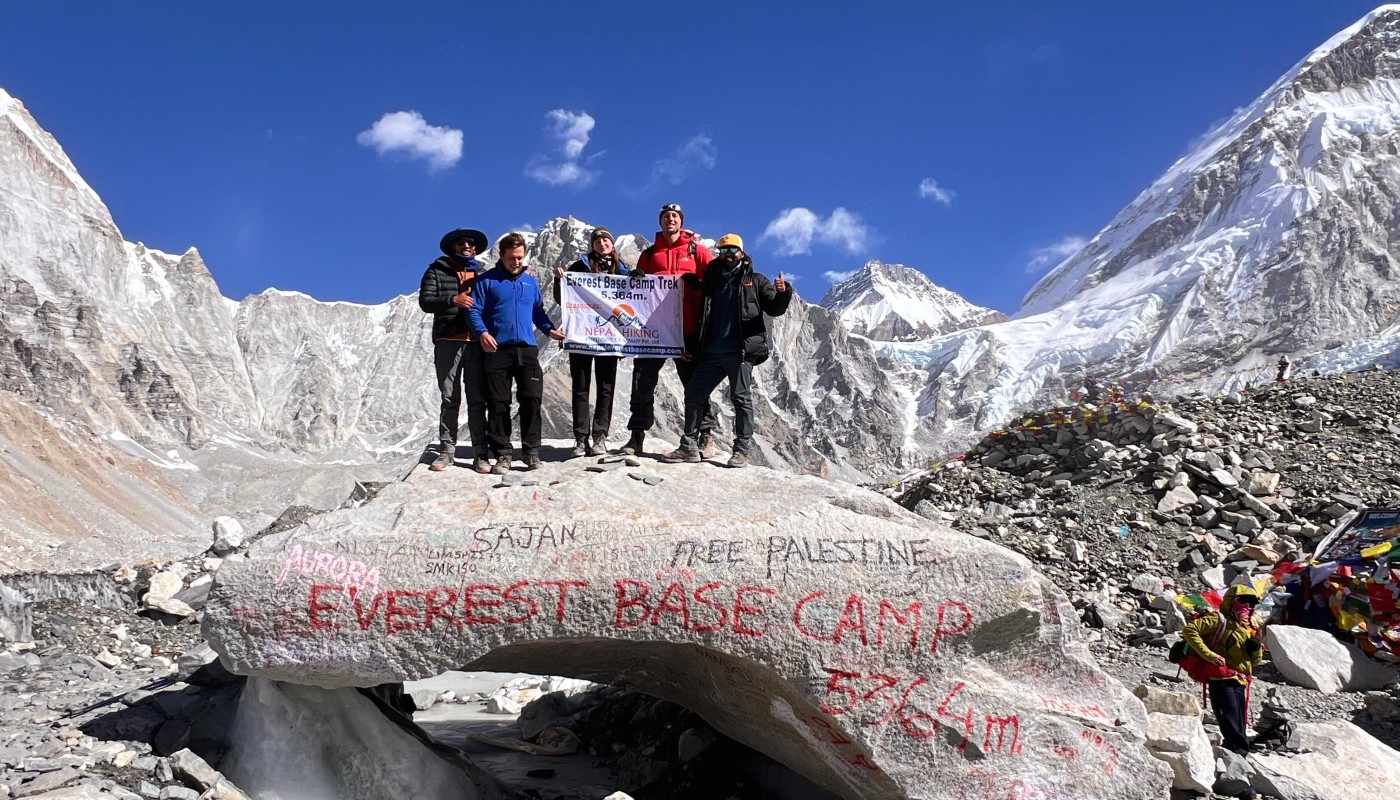
- Stand at Everest Base Camp (5,365 m), where expeditions begin their summit attempts
- Explore Sagarmatha National Park, a UNESCO World Heritage Site
- Immerse in authentic Sherpa culture through villages like Namche Bazaar and Tengboche
- Visit Tengboche Monastery, the spiritual heart of the Khumbu region
- Scenic mountain flight to Lukla, one of the world’s most thrilling airports
- Cross the Dudh Koshi River via the well-known Hillary Suspension Bridge.
Who Should Choose This Trek?
This 10-day route is ideal if you:
- Have limited vacation time (10-14 days total including travel)
- Are reasonably fit and can train for 6-8 weeks beforehand
- Want an authentic Himalayan adventure without technical climbing
- Prefer efficient itineraries that optimize time without compromising safety
- Are a first-time high-altitude trekker with good physical fitness
- Value experienced local Sherpa guidance throughout the journey
What’s New for 2026
Updated Information for Current Trekkers:
- Permit Fees: Sagarmatha National Park entry; Khumbu Municipality entry – no changes from 2024
- Lukla Flights: During peak season (Oct-Nov, Mar-Apr), flights may operate from Manthali (4-5 hour drive from Kathmandu) due to Lukla airport congestion
- Helicopter Return Option: Now widely available from Gorak Shep/Pheriche for $500-700 USD per person (shared flight) – useful if Lukla flights are delayed
- Teahouse WiFi: More lodges now offer WiFi up to Dingboche (though it is still slow and expensive at higher elevations)
- Post-Monsoon Conditions: Trail repairs completed in October 2024 after 2023 monsoon damage; all routes fully accessible
Important: Always confirm current permit and flight arrangements before departure, as Nepal aviation regulations may change.
Fly from Kathmandu to Lukla and hike to Phakding (2,700m)
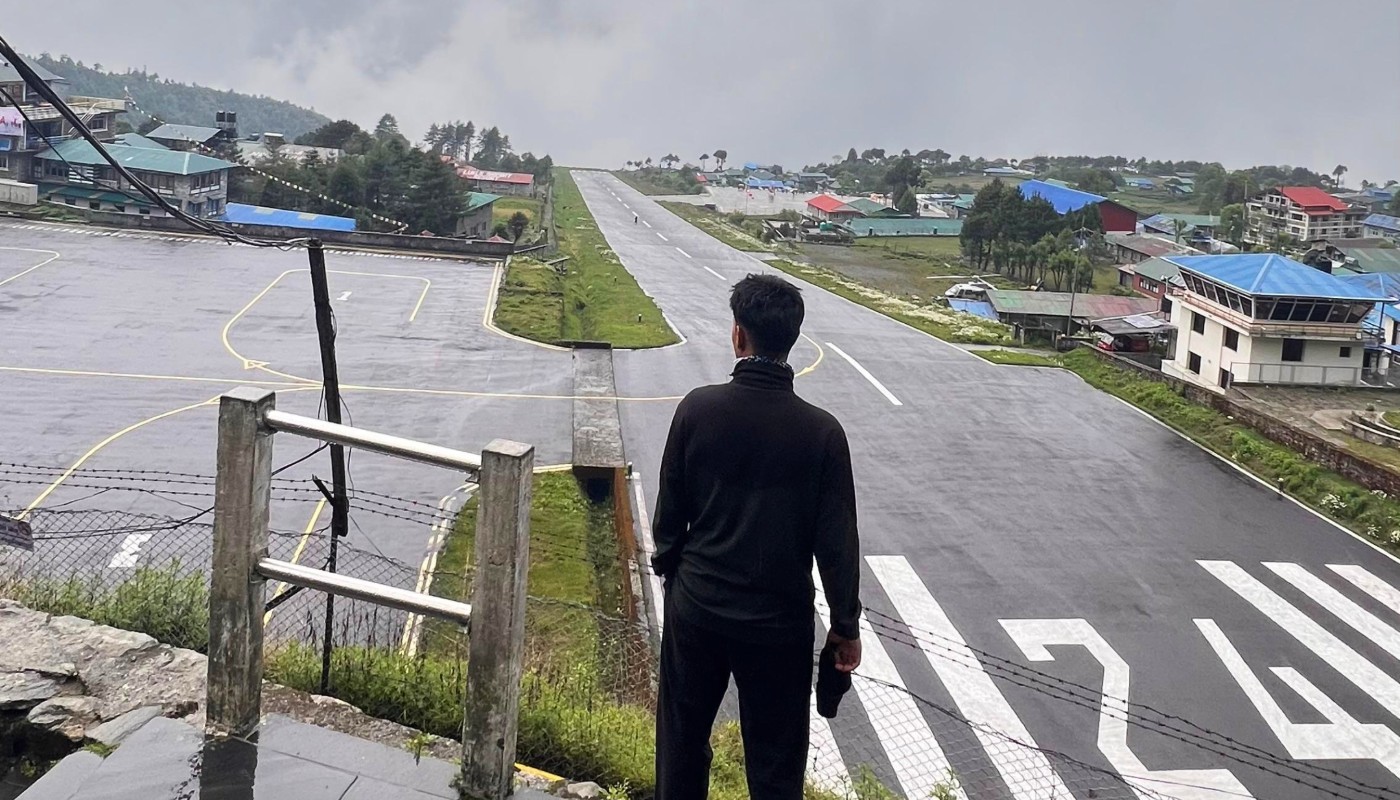
Your Everest adventure begins with an early morning flight to Lukla. This thrilling 30-minute mountain flight offers aerial views of terraced hillsides and Himalayan peaks. Landing at Tenzing-Hillary Airport with its mountainside runway ending at a cliff edge sets the adventurous tone.
After meeting your trekking crew and organizing gear, you begin a gentle downhill trek following the Dudh Koshi River valley. The trail passes Buddhist stupas, prayer wheels, and colorful prayer flags before reaching Phakding village. This easy day helps you adjust to the environment while beginning gradual acclimatization.
 Accomodation: Lodge
Duration: 30 min flight + 2-3 hours walk
Meal: Breakfast, Lunch, Dinner
Descent: 140m
Distance: Around 8 km
Accomodation: Lodge
Duration: 30 min flight + 2-3 hours walk
Meal: Breakfast, Lunch, Dinner
Descent: 140m
Distance: Around 8 km
Phakding to Namche Bazaar (3,440m)
Today is one of the most scenic and crucial acclimatization days. The trail follows the Dudh Koshi River through pine forests, crossing multiple suspension bridges. The major landmark is the Hillary Suspension Bridge at 2,830m marking entry into Sagarmatha National Park, where you’ll register permits.
After the bridge, the trail climbs steeply for 2 hours, gaining 600m elevation. Through tree gaps, you’ll catch first glimpses of Mount Everest, along with views of Thamserku and Lhotse. Arriving in Namche Bazaar, the bustling Sherpa capital carved into the mountainside, reveals surprisingly cosmopolitan amenities, including bakeries, coffee shops, gear stores, and WiFi.
Accomodation: Lodge
Duration: 5-6 hours walk
Meal: Breakfast, Lunch, Dinner
Ascent: 740m
Distance: Around 11 km
Namche Bazaar to Tengboche (3,860m)
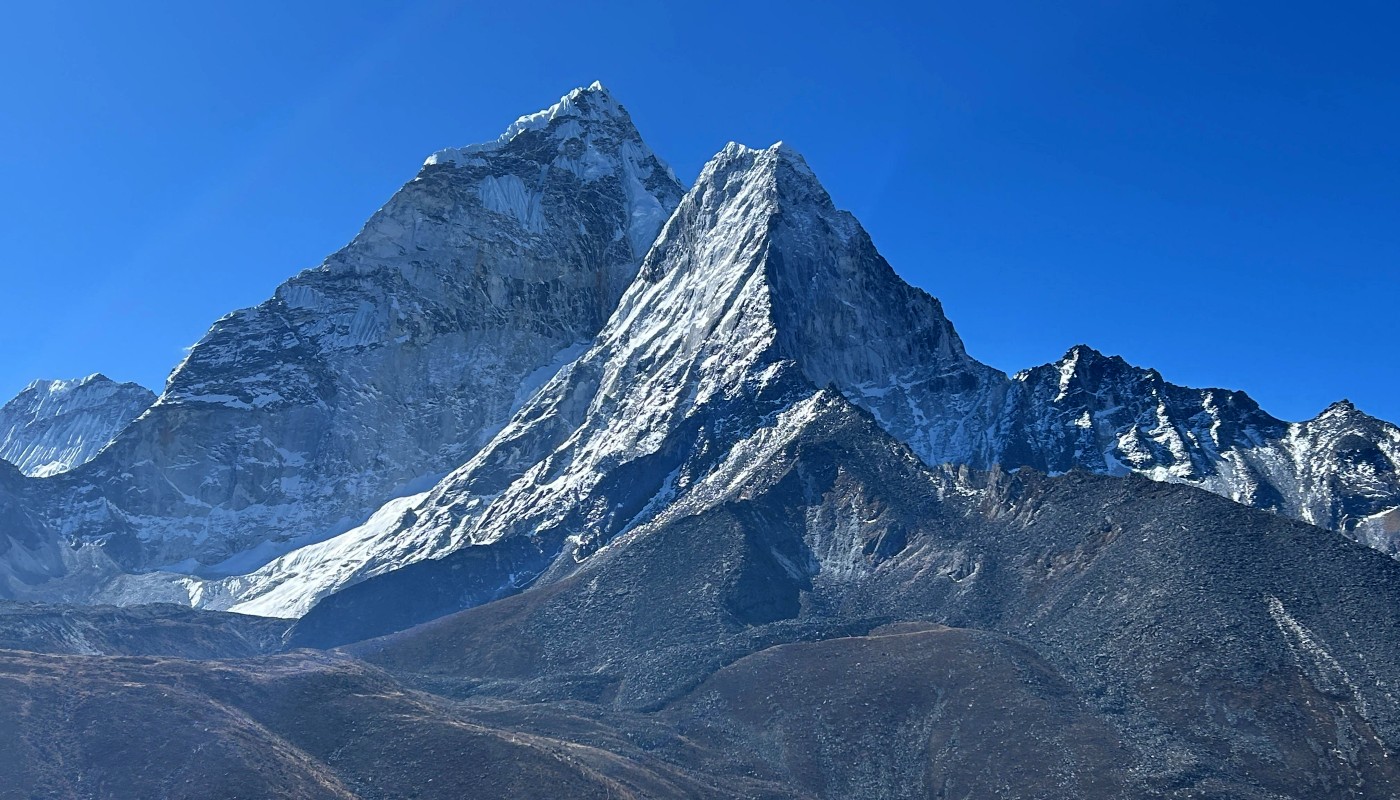
The trail initially descends through rhododendron forests before climbing steadily through pine, fir, and juniper trees. As you gain elevation, views become increasingly dramatic Ama Dablam (6,812m), often called the “Matterhorn of the Himalayas,” dominates the landscape.
Tengboche Monastery (3,867m) sits on a ridge with arguably the trek’s best mountain panorama, with Ama Dablam rising majestically with Everest towering behind. If you arrive during prayer times (typically 3:00 PM), you can observe monks performing traditional ceremonies with chanting, drums, and horns.
Accomodation: Lodge
Duration: 5 hours walk
Meal: Breakfast, Lunch, Dinner
Ascent: 420
Distance: around 10 km
Tengboche to Dingboche (4,350m)
Leaving forests behind, you descend to cross the Imja River before climbing through increasingly alpine terrain. The landscape transitions from lush vegetation to sparse shrubs and grasslands, clear signs of entering the high-altitude zone.
You’ll pass through Pangboche village (3,930m), home to the Khumbu region’s oldest monastery. Dingboche is a picturesque settlement with stone-walled fields offering stunning views of Island Peak (6,189m), Lhotse (8,516m), and Ama Dablam. At 4,350m, you’re at an altitude where everyone feels thinner air, and mild breathlessness and reduced energy are normal. Drinking 3-4 liters of water and taking short evening walks helps acclimatization.
Accomodation: Lodge
Duration: 5-6 hours walk
Meal: Breakfast, Lunch, Dinner
Ascent: 490
Distance: Around 12 km
Dingboche to Lobuche (4,910m)
You enter true high-altitude wilderness today. The trail climbs through rocky, barren terrain dominated by glacial moraines and boulders. Thukla Pass is marked by memorial cairns and prayer-flag stupas honoring climbers who died on Everest, sobering reminders of the mountain’s power.
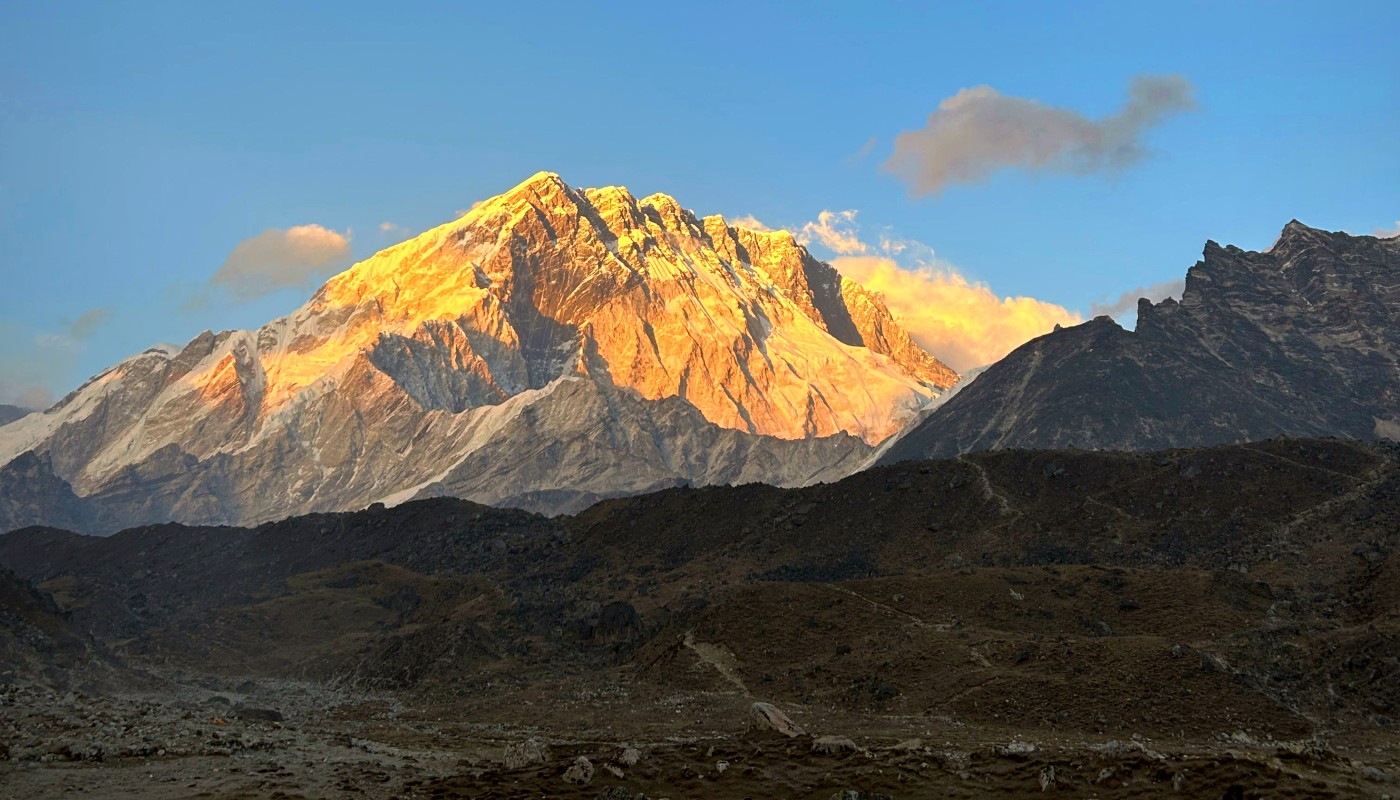
From Thukla, you climb steeply up the Khumbu Glacier’s terminal moraine, a challenging 45-minute ascent testing stamina at this altitude. The trail then undulates across lateral moraines with dramatic views of Pumori (7,161m) and Nuptse. Lobuche is a sparse settlement where temperatures drop significantly. At nearly 5,000m, your body works with about 50% of sea-level oxygen; feeling tired and breathing heavily during exertion is normal.
Accomodation: Lodge
Duration: 5 hours walk
Meal: Breakfast, Lunch, Dinner
Ascent: 560
Distance: Around 8 km
Lobuche to Everest Base Camp (5,365m) via Gorak Shep (5,180m)
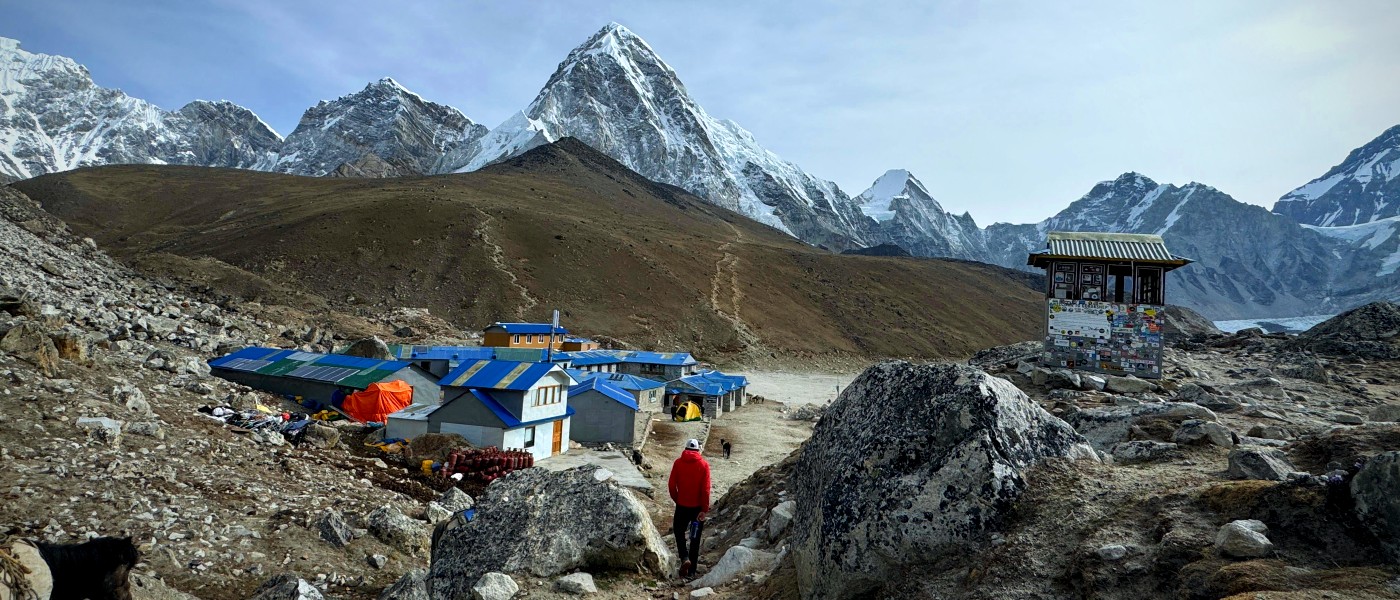
This is the day you’ve been training for: reaching Everest Base Camp. After breakfast, you trek to Gorak Shep (5,180m), the last settlement. The trail follows the Khumbu Glacier’s lateral moraine through rocky terrain with spectacular ice formations.
After checking in and having lunch, you continue to Everest Base Camp. The 3-hour round trip follows a rocky path across glacial debris, passing massive ice seracs and deep crevasses. Arriving at Everest Base Camp (5,365m) is an emotional moment; you’re at the launching point for all Everest expeditions.
During climbing season (March-May, September-October), the camp buzzes with colorful expedition tents. Off-season, you’ll see the location marked by prayer flags and the massive Khumbu Icefall, the first major obstacle for summit attempts. Note: Everest’s summit isn’t visible from Base Camp itself (it’s hidden behind Nuptse and the West Ridge).
Accomodation: Lodge
Duration: 8 hours walk
Meal: Breakfast, Lunch, Dinner
Ascent: 455
Distance: Around 15 km
Sunrise at Kala Patthar (5,545m) & Trek to Pheriche (4,120m)
Wake-up comes early (around 4:30 AM) for the pre-dawn climb to Kala Patthar (5,545m). This 2-hour steep ascent in darkness delivers the trek’s ultimate reward: watching sunrise illuminate Mount Everest’s summit pyramid in brilliant gold and orange hues.
Kala Patthar offers vastly superior views compared to Base Camp. From 5,545m, you get an unobstructed, face-to-face view of Everest’s summit pyramid, along with a 360° panorama including Nuptse, Changtse, Pumori, and countless other peaks. Many trekkers agree this sunrise represents the trek’s absolute highlight.
After descending to Gorak Shep for breakfast, you continue the long descent to Pheriche (4,120m). The significant elevation drop provides immediate relief; air feels noticeably thicker, breathing becomes easier, and energy levels improve dramatically.
Accomodation: Lodge
Duration: 7 hours walk
Meal: Breakfast, Lunch, Dinner
Ascent: 365m (to Kala Patthar)
Descent: 1,425m (descent to Pheriche)
Distance: Around 13 km
Pheriche to Namche Bazaar (3,440m)
The descent continues through familiar terrain, retracing your route through Pangboche and Tengboche. You might stop at Tengboche Monastery for tea, experiencing views from a different perspective now that you’ve achieved your goals.
The increase in oxygen makes walking feel almost effortless. Arriving back in Namche Bazaar feels like returning to civilization; hot showers (for a fee), WiFi, bakery pastries, and diverse restaurants await. Many trekkers celebrate with pizza or burgers.
Accomodation: Lodge
Duration: 4-5 hours walk
Meal: Breakfast, Lunch, Dinner
Descent: 680
Distance: 15 km
Namche Bazaar to Lukla (2,840m)
Your final trekking day involves a long but pleasant descent back to Lukla. The trail passes through Phakding, crosses the Hillary Suspension Bridge one last time, and follows the Dudh Koshi River valley.
This is typically an emotional day, a mixture of accomplishment and nostalgia as the mountains you struggled to reach recede behind you. Arriving in Lukla marks the official trek end. Evening traditionally involves celebration with your guide and porter crew sharing photos, stories, and perhaps local Tongba or Sherpa beer.
Accomodation: Lodge
Duration: 7 hours.
Meal: Breakfast, Lunch, Dinner
Descent: 600
Distance: 19 km
Lukla to Kathmandu Flight
After breakfast, you board the morning flight back to Kathmandu (weather permitting). The return flight offers one last opportunity to photograph the Himalayas from above. Upon landing, transfer to your hotel or directly to the international airport for onward flights.
Important Contingency Planning: Lukla flights are highly weather-dependent, and delays of 1-3 days are not uncommon during monsoon or winter. According to Nepal Civil Aviation Authority data, flight cancellation rates range from 5-10% in peak season (October-November) to 40-60% during monsoon (June-August). Always build 1-2 buffer days before international departures.
Helicopter Alternative: If delays extend beyond 24 hours, shared helicopter flights from Lukla to Kathmandu cost approximately $500-700 USD per person (2025 rates). We can arrange this if needed.
Duration: 30 min flight + drive back to hotel
Meal: Breakfast
Fixed Departure
Cost Includes
Permits & Documentation
- All necessary paperwork and trekking permits
- Sagarmatha National Park Entry Permit
- Khumbu Pasang Lhamu Rural Municipality fees
- TIMS Card (Trekkers Information Management System)
- Government taxes and official expenses
Flights & Transportation
- Kathmandu – Lukla – Kathmandu flights (or Ramechhap – Lukla – Ramechhap during peak season)
- All domestic airport taxes and fuel surcharges
- Airport pickup and drop-off in Kathmandu
- Vehicle transfer to/from domestic airport (or Ramechhap when applicable)
Accommodation & Meals
- 9 nights in teahouse lodges during the trek (twin-sharing basis)
- Full board(3 meals a day): Breakfast, lunch, and dinner for 9 days
- Breakfast on Day 10 (departure day)
- Fresh fruit served every evening after dinner
Professional Guide & Porter Service
- Highly experienced, Government-licensed, English-speaking Sherpa guide
- Guide’s salary, food, drinks, accommodation, transport, and insurance
- Strong, helpful Sherpa porter (one porter for two trekkers)
- Porter carries up to 20-30kg total (10-15kg per trekker)
- Porter’s salary, food, accommodation, and insurance
- Assistant guide provided for groups of 8 or more people
Safety & Emergency Support
- Comprehensive medical supplies and first aid kit
- Pulse oximeter to check oxygen saturation, heart rate, and AMS symptoms twice daily
- Arrangement of emergency helicopter rescue service (paid by your travel insurance company)
Equipment Provided
- NHA Duffel bag for porter-carried luggage
- Walking poles (if needed, returnable after trek)
- NHA Trekking T-shirt and Map
Additional Inclusions
- Trip achievement certificate after successful completion
- Company service charges and operational costs
Cost Excludes
International Travel & Visa
- International flights to/from Kathmandu
- Nepal entry visa (available on arrival): $30 USD (15 days) | $50 USD (30 days) | $125 USD (90 days)
Travel Insurance (MANDATORY)
- Personal travel and medical insurance: $100-400 USD
- Must cover high-altitude trekking and helicopter evacuation
- Contact us for recommended providers
Kathmandu Expenses
- Hotel accommodation in Kathmandu (before/after trek)
- Lunch and dinner in Kathmandu
Personal Gear
- Trekking gear and clothing: $200-400 USD (purchase) or ~$20-25 (You can rent with us)
On-Trail Extras
- Hot showers: $2-7 each
- Battery charging: $2-10 per charge
- WiFi: payable
- Bottled water, soft drinks, alcohol, beer
- Hot beverages (tea, coffee)
- Desserts and sweets (chocolate, cake, snacks)
- Personal snacks and treats
Tips for Crew (Customary)
- Guide: minimum expectation of $10-15 USD per day ($100-150 total)
- Porter: minimum expectation of $8-10 USD per day ($80-100 total)
- Tipping is customary and represents important supplementary income for mountain staff
Contingency (personal) Expenses
- Personal expenses and shopping
- Flight delays or itinerary changes: $150-300 USD
- Excess baggage over 10kg for Lukla flights: ~$1-2 USD per kg
Important: Early Return Policy
Money paid for unused services (flights, accommodation, meals) is non-refundable if you return early due to sickness, injury, or personal reasons. Additional expenses in Kathmandu will be borne by you. This is why comprehensive travel insurance is mandatory.
Temperature Chart
Altitude Chart
Useful Info
Cost & Budget Planning
Quick Budget Overview
| Budget Type | Total Cost (USD) | Best For |
| Budget | $2,550-3,000 | Solo trekkers, shoulder season, basic services |
| Mid-Range | $3,200-3,800 | Most trekkers, group bookings, peak season |
| Comfort | $4,000-4,500 | Private treks, premium lodges where available, helicopter return option |
Price Note: All costs updated January 2025/26. Prices are subject to seasonal variation and group size. Confirm current rates before booking.
Total Realistic Budget
| Category | Low Range | High Range |
| Trek Package | $1,240 | $1,500 |
| International Flight | $600 | $1,400 |
| Nepal Visa | $30 | $50 |
| Insurance | $100 | $200 |
| Gear | $200 | $400 |
| Kathmandu | $30 | $90 |
| On-Trail Extras | $160 | $305 |
| Tips | $180 | $250 |
| Contingency | $150 | $300 |
| TOTAL | $2,690 | $4,495 |
Average Total for Most Trekkers: approx. $3,200-3,800 USD
Money-Saving Tips
- Trek during shoulder seasons (September, November, March, May) for 10-15% lower lodge prices
- Book as a group (4+ people) for per-person discounts
- Use water purification tablets instead of buying bottled water (saves $60-80)
- Limit hot showers and device charging
- Rent gear in Kathmandu instead of buying new
- Bring your own snacks from Kathmandu supermarkets
Never Compromise On: Travel insurance, experienced licensed guides, proper trekking gear, acclimatization schedule, ethical porter treatment
Everest Base Camp Short Trek Difficulty & Fitness Requirements
Physical Demands
The Everest Base Camp short trek is classified as moderate difficulty, accessible to reasonably fit individuals without technical climbing skills.
Challenging Aspects:
- High altitude (up to 5,545m with 50% of sea-level oxygen)
- Long trekking days (5-8 hours of walking)
- Steep ascents (some sections gain 600 m+ in 2-3 hours)
- Basic accommodation affecting sleep quality
- Cumulative fatigue from consecutive high-altitude days
Manageable Aspects:
- No technical climbing skills required
- Established walking paths throughout
- Teahouse support with meals and beds
- Porters carry main luggage
- Gradual ascent following acclimatization principles
- Professional Sherpa guides managing pace and health
Training Program (1-3 Weeks) – If Possible
Proper preparation dramatically increases success rates. Begin training 6-8 weeks before departure:
Cardiovascular Endurance (Priority #1)
Progressive Weekly Schedule:
- Weeks 1-2: 2-3 hour hikes on moderate terrain, 2-3 times/week
Alternative Cardio (if hiking is unavailable):
- Running, cycling, or swimming: 45-60 min, 4-5 times/week
- Stair climbing with weighted backpack (5-8kg): 30-45 min, 2-3 times/week
Strength Training (2-3 times/week)
- Legs: Squats, lunges, step-ups (15-20 reps, 3 sets)
- Core: Planks, mountain climbers (30-60 seconds, 3 sets)
- Back/Shoulders: Rows, shoulder presses for backpack carrying
Final Week: Reduce training intensity (taper period) to allow body recovery while maintaining light cardio and stretching.
Age Considerations
- Minimum Age: 10 years (with parental supervision and guide approval)
- Average Age: Most trekkers are 25-55 years old
- Seniors (60+): Fit individuals in their 60s-70s successfully complete this trek regularly. Recommendations: medical clearance (especially cardiovascular), consider 12-14 day itinerary for extra acclimatization, train rigorously for 5-8 weeks
Previous Experience Required?
No prior high-altitude trekking experience is mandatory. What matters most:
- Good cardiovascular fitness and leg strength
- Mental preparation and positive attitude
- Realistic expectations about basic mountain conditions
- No serious pre-existing medical conditions
Your guide provides comprehensive instruction on altitude management, pacing, and mountain safety throughout the journey.
Altitude & Acclimatization Strategy
Elevation Profile
The 10-day itinerary carefully manages altitude gain following the “climb high, sleep low” principle:
| Night | Location | Elevation | Gain from Previous |
| 1 | Phakding | 2,700m | Baseline |
| 2 | Namche | 3,440m | +740m |
| 3 | Tengboche | 3,860m | +420m |
| 4 | Dingboche | 4,350m | +490m |
| 5 | Lobuche | 4,910m | +560m |
| 6 | Gorak Shep | 5,180m | +270m |
| 7 | Pheriche | 4,120m | -1,060 m (descent) |
Key Features:
- Gradual altitude gain (270-740m per night)
- No overnight gain exceeds 800m (follows WHO recommendations)
- Day 7: Climb to 5,545m but sleep at 5,180m, then descend to 4,120m
- Significant descent after reaching maximum altitude aids recovery
Altitude Sickness Prevention
Acute Mountain Sickness (AMS) occurs when ascending too quickly for your body to adapt to decreased oxygen levels.
Essential Prevention Strategies:
- Hydration: Drink 3-4 liters daily; urine should be clear to pale yellow
- Slow Pace: Walk “pole pole” (Swahili for “slowly slowly”) – commonly used phrase in the Himalayas.
- Carbohydrate-Rich Diet: Eat frequent meals; dal bhat is ideal, as carbs require less oxygen to metabolize
- Proper Sleep: Sleep with head elevated; avoid sleeping pills (they suppress breathing)
- Listen to Your Body: Never hide symptoms from your guide
- Diamox (Acetazolamide): Optional altitude medication – consult your doctor before the trek (typical dose: 125mg twice daily starting 1-2 days before ascent)
According to Centres for Disease Control and prevention, these are the tips for avoiding Altitude sickness.
Recognizing Symptoms
Mild AMS (Common, Manageable):
- Headache, nausea, dizziness, fatigue, difficulty sleeping, shortness of breath during exertion
- Treatment: Rest at current altitude 24 hours, hydrate, take pain relievers (ibuprofen, not aspirin)
Severe AMS (Medical Emergency):
- Severe headache unrelieved by medication, vomiting, confusion, loss of coordination
- HAPE (High Altitude Pulmonary Edema): Fluid in lungs, coughing, chest tightness, breathlessness at rest, pink/frothy sputum
- HACE (High Altitude Cerebral Edema): Fluid in the brain, severe confusion, inability to walk straight line, loss of consciousness
Critical Rule: If severe symptoms appear, immediate descent is the only effective treatment. Even 300-500m descent can save lives. Never continue ascending with worsening symptoms.
Daily Health Monitoring
Your guide monitors health using:
- Pulse Oximeter: Measures blood oxygen saturation (SpO2)
- Normal at altitude: 85-95%
- Concerning: Below 80%
- Action required: Below 75%
- Lake Louise AMS Score: Symptom questionnaire tracking improvement/worsening
- Physical Observation: Walking coordination, mental clarity, breathing rate, appetite
According to our operational records (2022-2025), this monitoring system contributes to the 95%+ success rate among properly prepared trekkers.
Best Time to Trek Everest
Autumn (September-November) – PEAK SEASON
Weather: Crystal-clear skies, stable conditions, minimal precipitation
Temperatures: Daytime 12-20°C (lower elevations), 5-10°C (high altitude); Nighttime -5°C to -15°C
Advantages:
- Unobstructed mountain views with exceptional clarity
- Less than 5% chance of precipitation
- Comfortable daytime temperatures
- Post-monsoon air clarity
- Cultural festivals (Dasain in September-October, Tihar in October-November)
- All teahouses and services fully operational
Challenges:
- Highest crowds (expect 200-300 trekkers daily from Lukla in October)
- Accommodation prices increase 20-30%
- Lukla flights may operate from Manthali due to congestion
- Lodge availability limited without advance booking
Best For: First-time trekkers, photographers, those wanting guaranteed views
Booking Window: Reserve 2-3 months in advance for October; 1-2 months for September/November
Spring (March-May) – SECOND BEST
Weather: Clear mornings, afternoon clouds (especially May), warming temperatures
Temperatures: Daytime 12-20°C (lower), 5-12°C (high altitude); Nighttime -5°C to -10°C
Advantages:
- Rhododendron forests in spectacular bloom (March-April)
- Coincides with Everest climbing season (see expedition camps at Base Camp)
- Warmer than autumn
- Best morning mountain views (before noon)
- Longer daylight hours
- 20-30% fewer trekkers than October
Challenges:
- Afternoon clouds reduce visibility after 1-2 PM
- Brief showers possible at lower elevations (especially May)
- Dusty trails from dry conditions
- Pollen may trigger allergies
Best For: Nature photographers, those wanting to see climbing expeditions, warmer weather preference
Booking Window: Reserve 1-2 months in advance for April; 3-4 weeks for March/May
Winter (December-February) – OFF-SEASON
Weather: Extremely cold, crystal-clear skies (best visibility of the year)
Temperatures: Daytime 8-15°C (lower), 0-5°C (high); Nighttime -10°C to -25°C (Gorak Shep can reach -30°C)
Advantages:
- Ultimate solitude (may encounter only 10-20 trekkers daily)
- Lowest prices (15-20% discounts)
- Guaranteed lodge availability
- Pristine snow-covered landscapes
- Unmatched air clarity
Challenges:
- Extreme cold with frostbite risk
- Snowstorms can block trails above Namche
- Many lodges closed above 4,000m
- Shorter daylight (5-6 hours less than summer)
- Lukla flight cancellations due to snow
Best For: Experienced cold-weather trekkers, solitude seekers
Essential Gear: -20°C sleeping bag, expedition-grade down jacket, insulated boots
Important: Requires 3-4 extra buffer days for weather contingencies
Monsoon (June-August) – NOT RECOMMENDED
Weather: Heavy afternoon rainfall, cloudy/humid conditions
Temperatures: Warm (20-25°C daytime), 5-15°C nighttime
Advantages:
- Rock-bottom prices (15-20% discounts)
- Empty trails
- Lush green landscapes
Challenges:
- Mountains obscured by clouds 70-80% of time
- Expect 3-5 hours of rain almost daily
- Leeches active below 3,000m
- Lukla flights are cancellations 40-60% of the time
- Landslide risk on trails
- Limited lodge services
Reality Check: According to Nepal Tourism Board data, trekkers during monsoon season have a 70-80% probability of not seeing Everest clearly due to persistent cloud cover.
Recommendation: October for guaranteed success, April for nature lovers, and November for a balance of good weather and fewer crowds.

Essential Recommended Packing List
Footwear
- Waterproof trekking boots with ankle support (broken in 20-30 hours before trek) – MOST IMPORTANT ITEM
- Lightweight camp shoes (Crocs, sandals, or sneakers)
- 4-5 pairs moisture-wicking trekking socks (wool or synthetic)
Clothing Layers
Base Layer (moisture-wicking):
- 2-3 synthetic or merino wool long-sleeve shirts
- 2 sets thermal underwear (top and bottom)
Mid Layer (insulation):
- 1-2 fleece jackets or pullovers
- 1 insulated synthetic jacket
Outer Layer (weather protection):
- 1 waterproof, breathable rain jacket (quality matters)
- 1 waterproof rain pants
- 1 warm down jacket (-15°C rated minimum) can be rent in Kathmandu
Lower Body:
- 2-3 pairs trekking pants
- 1 pair thermal leggings
Accessories:
- Warm beanie hat
- Sun hat or baseball cap
- Buff or neck gaiter
- Warm gloves (wool or synthetic)
- Down mittens for high altitude can be rented.
Gear & Equipment
- Daypack (25-35L) with rain cover
- Duffel bag for porter (max 10kg per person) can be rented.
- Sleeping bag (-10°C to -15°C) can be rented.
- Trekking poles (adjustable) can be rented.
- Headlamp with extra batteries
- Sunglasses (UV400, Category 3-4 lenses)
- Two 1-liter water bottles (wide-mouth Nalgene ideal)
Toiletries & Health
- Sunscreen SPF 50+ and lip balm with SPF
- Biodegradable soap and hand sanitizer
- Toilet paper and wet wipes
- Personal prescription medications
- Ibuprofen for headaches
- Diamox (if prescribed by doctor)
- Anti-diarrheal medication
Blister treatment (Compeed/moleskin)
- Electrolyte powder
Electronics & Documents
- Phone/camera + chargers
- Power bank (20,000+ mAh recommended)
- Universal adapter (Nepal: Type C, D, M plugs)
- Passport + 4 photocopies
- Travel insurance policy details
- 4 passport photos (for permits)
- Cash (USD and Nepali Rupees)
Optional List
- Book or Kindle for evenings
- Journal and pen
- Playing cards
- Snacks from home (energy bars, nuts)
- Portable solar charger
- Sleeping bag liner
- Gaiters (winter only)
- Earplugs for snoring roommates
- Small quick-dry towel
Gear Rental in Kathmandu
Available with us (~$20-25 total for entire trek):
- Down jacket (-20°C rated)
- Sleeping bag (-15°C rated)
- Trekking poles
- Duffel bag – provided by us for free of cost
- Down mittens
Rental Process: Pay the cost and have a hassel free trek.
Never Rent: Boots (fit is critical and breaking-in required), base layers, underwear/socks
Accommodation & Meals
Teahouse Lodges by Elevation
Lower Elevations (2,700-3,440m)
- Twin-sharing rooms with foam mattresses and pillows
- Hot showers available ($3-5 per shower)
- Charging stations ($2-3 per device)
- WiFi available, especially in Namche (payable)
- Western and squat toilet options
Mid Elevations (3,860-4,350m)
- Basic twin-sharing rooms, shared bathrooms only
- Hot showers still available ($4-5)
- Limited electricity (2-4 hours/evening)
- Unreliable WiFi (payable when working)
- Bathrooms very cold at night
High Elevations (4,910-5,180m)
- Very basic accommodation
- Extremely cold rooms (-10°C to -20°C at night)
- NO hot showers (buckets of hot water for washing: $2-3)
- Minimal electricity (1-2 hours/evening), expensive charging ($5-10)
- No reliable WiFi
- Sleep fully clothed in sleeping bag with hat and gloves
Food Options
Breakfast: Tibetan bread, porridge, eggs, pancakes, hash browns, toast, muesli
Lunch/Dinner: Dal bhat (unlimited refills – HIGHLY RECOMMENDED), noodle soups, fried rice/noodles, pasta, pizza, momos, garlic soup (helps with altitude), Sherpa stew
Beverages: Tea/coffee (included with meals), soft drinks ($2-8 depending on altitude)
The Dal Bhat Strategy
Traditional Nepali meal consisting of steamed rice, lentil soup, vegetable curry, and pickle.
Why It’s Best:
- Unlimited refills (“Dal bhat power, 24 hour!”)
- Best value: $5-8 at high altitude vs. $12-15 for other meals
- Nutritionally complete with balanced carbs, protein, vitamins
- Always freshly made daily
- Easy to digest at altitude
Menu Prices by Altitude (approx.)
| Location | Elevation | Dal Bhat | Other | Boiled Water (1 L) |
| Phakding | 2,700m | $5-6 | $5-7 | $1 |
| Namche | 3,440m | $6-7 | $7-9 | $1-2 |
| Dingboche | 4,350m | $8-9 | $9-11 | $3-4 |
| Gorak Shep | 5,180m | $12-15 | $15-18 | $5-6 |
Why Prices Increase: No roads exist above Lukla; all supplies are porter/yak-carried. Higher altitude = longer carrying distance = higher costs.
Water Strategy
Bottled Water: Expensive ($5-6/liter at Gorak Shep) and creates environmental waste
Boiled Water: Available at lodges ($1-5/liter), safe and eco-friendly
Water Purification (BEST OPTION): Tablets ($10-15), SteriPEN ($50-80), or filter bottles minimal environmental impact
Hydration Goal: 3-4 liters daily. Monitor urine color (should be clear to pale yellow).
Safety & Support
Professional Guide Credentials
Your Sherpa/trekking guide provides:
- Government licensing (Tourism Board of Nepal certification)
- Wilderness first aid and altitude sickness management training
- Daily health monitoring with pulse oximeters
- Emergency protocols and rescue coordination
- Route navigation and lodge arrangements
- Cultural insights and language translation
Example of our Guide Profile:
*** Sherpa – Lead Mountain Guide
- License #: TAAN-2456
- Experience: 15 years guiding in Khumbu region
- Summits: Everest (3x), Ama Dablam, Island Peak
- Languages: Nepali, English, Tibetan
- Certifications: Wilderness First Responder, High Altitude Rescue
Porter Welfare Standards
Reputable operators ensure:
- Fair wages (wage plus food and accommodation)
- Comprehensive insurance, including rescue and medical coverage
- Adequate gear provided (warm clothing, boots, sunglasses, jackets)
- Load limits strictly enforced (maximum 20kg per porter per IPPG guidelines)
- Equal treatment and no child labor (18+ years minimum age)
International Porter Protection Group (IPPG) guidelines are followed by responsible operators like NHA(Nepal Hiking Adventure).
Emergency Protocols
Daily Health Monitoring:
- Pulse oximeter readings twice daily above 3,500m
- Lake Louise AMS Score assessment
- Physical coordination tests
- Appetite and hydration status checks
If Altitude Sickness Develops:
- Mild: Rest 24 hours, hydrate, pain relievers
- Moderate: Stop ascending immediately, consider Diamox, descend 300-500m if no improvement in 12-24 hours
- Severe: Immediate descent (only effective treatment), administer oxygen, helicopter evacuation coordination
Helicopter Evacuation
When Necessary: Severe altitude sickness not improving with descent, serious injury, medical emergencies
Process:
- Guide contacts Nepal Hiking adventure company/trekking operator.
- The company then sends a helicopter to your rescue.
- Weather-permitting flights to Kathmandu’s International hospitals
- Then the insurance processes are done with your convenience.
Cost: Depends on altitude and location covered by mandatory travel insurance
Critical: Without insurance, payment is required out-of-pocket after helicopter dispatch (you would be asked if you are willing to pay or not). Credit card or cash payment, both are accepted.
Communication on Trail
- Mobile Coverage: Intermittent Ncell coverage from Lukla to Namche; limited at Tengboche; spotty to none above 4,000m
- WiFi: Available at most lodges but quality decreases with altitude (best in Namche; barely functional at Gorak Shep)
- Emergency Communication: Guides carry satellite phones or emergency devices and can always reach rescue services if needed
Realistic Expectations: Plan for limited communication above 4,000m. Inform family you’ll be offline for days at a time.
Everest Base Camp 10-Day vs 12-14 Day Trek: Quick Comparison
| Factor | 10-Day Trek | 12-14 Day Trek |
| Best For | Time-limited, fit trekkers | First-timers, extra rest preferred |
| Trekking Days | 8 days | 10-12 days |
| Rest Days | None scheduled | 1-2 acclimatization days |
| Daily Hours | 4-8 hours | 3-6 hours |
| Pace | Steady, efficient | Relaxed, leisurely |
| Success Rate | 95%+ with preparation | 96-97% |
| Cost | $1,100-1,400 | $1,300-1,600 |
| Flexibility | Minimal buffer | More room for delays |
Choose 10 Days If: You have exactly 10-12 days total, you’re reasonably fit and can train 1-3 weeks, you prefer efficient itineraries,
Choose 12-14 Days If: You’re a first-time high-altitude trekker, you want maximum acclimatization safety margin, you prefer extra rest days for exploration, so EBC 12 days or EBC 14 days trek would be best.
Booking Information
When to Book
- Peak Season (October, April): 2-3 months in advance
- Shoulder Season (September, November, March, May): 1-2 months in advance
- Off-Season (December-February, June-August): 2-4 weeks in advance
Required Documents
- Passport (valid 6+ months beyond travel dates)
- 4 passport photocopies
- 4 passport photos (3.5cm x 4.5cm) for permits
- Travel insurance policy details with high-altitude coverage confirmation
- Nepal entry visa (obtained on arrival at Kathmandu airport: $30 for 15 days or $50 for 30 days; bring USD cash)
Preparation Timeline
3 Months Before: Book trek, purchase flights, obtain insurance, begin training, consult doctor
2 Months Before: Continue training, purchase/rent gear, break in boots, get vaccinations (Hepatitis A/B, Typhoid, Tetanus recommended)
1 Month Before: Finalize gear, make document copies, notify bank of Nepal travel, download offline maps
2 Weeks Before: Reduce training intensity (taper period), pack and weigh bags, confirm details, exchange currency
1 Week Before: Reconfirm flights, pack final items, start Diamox if prescribed (2 days before ascending)
What to Expect After Booking
- Immediately: Confirmation email, invoice, pre-trek information packet
- 1-2 Months Before: Detailed itinerary, gear rental information, insurance verification request
- 1 Week Before: Final confirmation, Kathmandu office details, meeting time/location
- Arrival Day: Airport pickup, hotel transfer, welcome briefing
- Pre-Trek Briefing (day before Lukla flight): Meet guide at our office, gear check, duffel bag provided, permit processing, early wake-up call arranged (typically 4-5 AM for Lukla flight)
Important Logistics & Contingency Planning
Meeting Point & Start
- Location: Hotel lobby in Kathmandu (typically the Thamel area)
- Time: 4:00-5:00 AM on Day 1 for Lukla flight
- What to Bring: Daypack with essentials; main duffel bag for porter (max 10kg)
Lukla Flight Contingency
- Peak Season Note: Flights may operate from Manthali (4-5 hour drive from Kathmandu) instead of Kathmandu airport
- Delay Protocol: If flights are cancelled, accommodation provided while waiting (sometimes at extra cost)
- Helicopter Option: Available for $500-700 USD per person (shared) if delays extend beyond 24-48 hours
- Insurance Coverage: Trip interruption insurance covers additional accommodation and alternative transport costs
Emergency Medical Procedure
- Guide assesses situation and administers first aid/oxygen if needed
- If severe: Immediate descent to lower altitude
- If critical: Helicopter evacuation coordinated (insurance verification required)
- Evacuation to International Hospital in Kathmandu
- Insurance company manages payment directly with the helicopter/hospital.
Flexible Cancellation Policy
- 5 months before departure: Full refund minus processing fee ($50-100)
- 4 months before: 75% refund or postpone trip
- 3 months before: 50% refund or postpone trip
- Less than 45 days: no refund or postpone trip
- Weather-related cancellations: Reschedule option or partial refund (minus non-refundable costs like permits)
- Medical cancellations: Claimable through travel insurance with proper documentation
Next Steps
Ready to begin your Everest adventure? Here’s how to get started:
- Check Your Dates: Review the best season information and choose your preferred travel window
- Assess Your Fitness: Honestly evaluate your current fitness level and available training time
- Request Information: Contact us for detailed pricing, available dates, and any questions
- Secure Your Spot: Book with a deposit (20-30%) to confirm your place
- Start Training: Begin your 6-8 week preparation program
- Prepare & Pack: Follow the preparation timeline and packing list
- Arrive in Nepal: Meet your guide and begin the adventure of a lifetime
Get in Touch
Email, WhatsApp, Phone
Response Time: We usually reply to questions within 16 hours.
Why Trekkers Choose This Route
Based on post-trek surveys from 2022-2025 participants:
- “Perfect for my 2-week vacation” – 87% cited time efficiency as primary reason
- “Reached my goal with proper support” – 95% completion rate among prepared trekkers
- “Experienced guides made all the difference” – 92% rated guide expertise as excellent
- “Better views than I imagined” – Kala Patthar sunrise rated trek’s #1 highlight
- “Manageable challenge with right training” – 89% felt adequately prepared after 6-8 weeks of training
Standing at the base of Mount Everest, surrounded by the world’s highest peaks, with prayer flags snapping in the wind and the magnitude of your achievement settling in, this moment awaits you. The 10-day Everest Base Camp short trek turns this dream into reality without requiring weeks away from your life.
With proper preparation, expert guidance, and an efficiently planned itinerary, you’ll return home transformed by the Himalayas in less than two weeks.
Your Everest journey begins with a single step.
FAQ
Could you reach Everest Base Camp in ten days?
Yes, the 10-day EBC trek is entirely feasible and safe for reasonably fit trekkers. The itinerary includes proper acclimatization stops at Namche (3,440m) and Dingboche (4,350m) with strategic altitude gains. Based on operational data from 2022-2025, approximately 95% of properly prepared trekkers successfully reach both Everest Base Camp and Kala Patthar. The key is adequate physical preparation (6-8 weeks of training) and following your guide’s pace recommendations.
Is 10 days enough for Everest Base Camp?
Ten days is sufficient to safely reach both Everest Base Camp and Kala Patthar while maintaining proper acclimatization. The itinerary follows “climb high, sleep low” principles and never exceeds 800m overnight elevation gain (per WHO recommendations). You’ll experience all essential highlights: mountain views, Sherpa culture, monasteries, and both destinations. The difference from longer treks is efficiency, not experience.
What is the shortest time to trek to Everest Base Camp?
The shortest safe timeframe is 10 days round-trip from Kathmandu. Anything shorter (7-8 days) significantly increases altitude sickness risk by ascending too rapidly. According to high-altitude medicine research, “express” treks have much lower success rates (60-70%) compared to properly paced 10-day routes (95%+). The 10-day itinerary represents the minimum time for proper acclimatization; that is, if you wish to get a heli-return trek, you can finish the trek in 6-7 days.
How difficult is the 10-day Everest Base Camp trek?
The trek is classified as moderate difficulty. You need good cardiovascular fitness and the ability to walk 5-8 hours daily at high altitude, but no technical climbing skills. Main challenges: altitude up to 5,545m (50% sea-level oxygen), long trekking days, basic accommodation, and cold temperatures. However, with proper training (6-8 weeks), most reasonably fit individuals successfully complete the trek. All trails are established walking paths requiring no special equipment.
How much does the 10-day EBC trek cost?
Trek packages cost $1,200-1,400 USD depending on group size and season (prices updated January 2025). However, the total budget should be $3,200-3,900 USD including international flights ($600-1,400), Nepal visa ($30-50), mandatory travel insurance ($100-400), gear ($200-400), Kathmandu meals ($30-90), on-trail extras ($160-305), tips ($180-250), and contingency funds ($150-300). Solo trekkers pay premium rates; groups of 4+ receive discounts.
Do I need previous trekking experience?
No, previous high-altitude trekking experience isn’t mandatory, though hiking experience is beneficial. Thousands of first-time Himalayan trekkers successfully complete this journey each season. What matters most: current fitness level, proper training (6-8 weeks beforehand), realistic expectations about basic mountain conditions, and no serious medical conditions. Your guide provides comprehensive instruction on altitude management, pacing, and safety throughout the trek.
When is the best time to do the 10-day EBC trek?
Best times are autumn (September-November) and spring (March-May). October offers optimal conditions with clear skies, stable weather, and excellent visibility, though it’s busiest (200-300 trekkers daily from Lukla). April is second-best with rhododendron blooms and warmer temperatures but some afternoon clouds. According to Nepal Tourism Board data, these months have the highest success rates and lowest flight cancellation rates (5-10% vs. 40-60% during monsoon).
What happens if Lukla flights are delayed?
Lukla flight delays are common due to weather (wind, fog, and clouds). According to Nepal Civil Aviation Authority data, cancellation rates range from 5-10% in peak season to 40-60% during monsoon. If delayed before the trek, you’ll wait in Kathmandu until flights resume. If delayed after in Lukla, you’ll stay until the weather clears. This is why building 1-2 buffer days before international flights is crucial. Travel insurance with trip interruption coverage helps with costs. Helicopter alternative: Shared flights cost $500-700 USD per person for extended delays.
Is altitude sickness common?
Mild altitude sickness symptoms (headache, fatigue, nausea) are experienced by 40-50% of trekkers at some point, usually at Namche or Dingboche. These mild symptoms are normal and manageable with rest, hydration, and pain relievers. Severe altitude sickness (HAPE/HACE) is rare; medical literature indicates occurrence in only 1-2% of trekkers following proper acclimatization protocols. Prevention: stay hydrated (3-4 liters daily), ascend slowly, and never ignore symptoms.
Do I need travel insurance?
Yes, comprehensive travel insurance covering high-altitude trekking (6,000m minimum) and helicopter evacuation is MANDATORY. Standard policies usually exclude trekking above 4,000m, so purchase specialized adventure travel insurance. Helicopter evacuation costs $5,000-10,000 USD which you must pay out-of-pocket without insurance. Cost: $100-400 for 2-week coverage.
What should I pack?
Essentials: broken-in waterproof trekking boots (MOST IMPORTANT; break in for 20-30 hours), layered clothing system (base layers, fleece, down jacket, rain gear), warm sleeping bag (-10°C to -15°C rated), daypack (25-35L), headlamp, sunglasses (UV400), trekking poles, water bottles, toiletries, sunscreen (SPF 50+), first aid kit, personal medications. You can rent sleeping bags and down jackets in Kathmandu (~$10-15 total for the entire trek). Porters carry the main luggage (max 10kg per person); you carry only a daypack with daily essentials.
Can I see Mount Everest from Base Camp?
No, you cannot see Everest’s summit from Base Camp itself; it’s hidden behind the Khumbu Icefall, Nuptse, and West Ridge. This surprises many trekkers. The best Everest views come from Kala Patthar (5,545m), which offers an unobstructed, face-to-face view of Everest’s summit pyramid. This is why the 10-day itinerary includes the pre-dawn Kala Patthar climb; it’s the trek’s ultimate viewpoint for photography and experiencing the mountain. You’ll also get excellent Everest views from Namche Bazaar, along the trail to Tengboche, and from Gorak Shep.
Reviews
Did not regret it was perfect.
A challenging but rewarding experience with some breathtaking views in every location. The checkpoint stays were very homely and welcoming by local people. Raj was great with giving advice and making sure my trek was comfortable all the way through.
Henry,
UK
Best trekking experience
I did the Himalaya Base Camp and Nepal Hiking company prepared everything I needed for an adventurous experience. The guides are really charm and friendly, which makes the trek very comfortable. You feel really secure after trekking with them since they have very good knowledge of the region and excellent preparation. If you are looking for adventurous trekking in Nepal and hassle-free, do not hesitate to hire them!
Elijah Young,
USA
My Birthday Gift To Myself
I had a Dream To Be at EBC on My Birthday and it got happened because of Nepal Hiking. Great & Safe arrangements. Thanks Bishnu it was a Best Birthday ever.
Tanya Malhotra,
Canada

Our History in Service Excellence